Results by title
2916 books match the query 'Politics and government' and 8 start with y
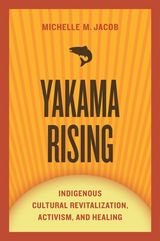
Yakama Rising
Indigenous Cultural Revitalization, Activism, and HealingMichelle M. Jacob
University of Arizona Press, 2013
Michelle M. Jacob employs ethnographic case studies to demonstrate the tension between reclaiming traditional cultural practices and adapting to change. Through interviewees’ narratives, she carefully tacks back and forth between the atrocities of colonization and the remarkable actions of individuals committed to sustaining Yakama heritage. Focusing on three domains of Indigenous revitalization—dance, language, and foods—Jacob carefully elucidates the philosophy underlying and unifying each domain while also illustrating the importance of these practices for Indigenous self-determination, healing, and survival.
In the impassioned voice of a member of the Yakama Nation, Jacob presents a volume that is at once intimate and specific to her home community and that also advances theories of Indigenous decolonization, feminism, and cultural revitalization. Jacob’s theoretical and methodological contributions make this work valuable to a range of students, academics, tribal community members, and professionals, and an essential read for anyone interested in the ways that grassroots activism can transform individual lives, communities, and society.
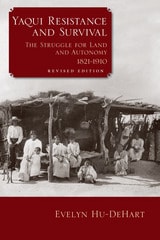
Yaqui Resistance and Survival
The Struggle for Land and Autonomy, 1821–1910Evelyn Hu-DeHart
University of Wisconsin Press, 2016
In this revised edition of her groundbreaking work, Hu-DeHart reviews and reflects on the growth in scholarship about the Yaqui, including advances in theoretical frameworks and methodologies on borderlands, transnationalism, diaspora, and collective memory that are especially relevant to their history.
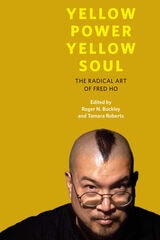
Yellow Power, Yellow Soul
The Radical Art of Fred HoEdited by Roger N. Buckley and Tamara Roberts
University of Illinois Press, 2013
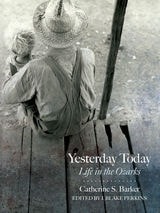
Yesterday Today
Life in the OzarksCatherine S. Barker
University of Arkansas Press, 2020
Catherine S. Barker's 1941 book Yesterday Today: Life in the Ozarks sought to illuminate another side of these “remnants of eighteenth-century life and culture”: poverty and despair. Drawing on her encounters and experiences as a federal social worker in the backwoods of the Ozarks in the 1930s, Barker described the mountaineers as “lovable and pathetic and needy and self-satisfied and valiant,” declaring that the virtuous and independent people of the hills deserved a better way and a more abundant life. Barker was also convinced that there were just as many contemptible facets of life in the Ozarks that needed to be replaced as there were virtues that needed to be preserved.
This reprinting of Yesterday Today—edited and introduced by historian J. Blake Perkins—situates this account among the Great Depression-era chronicles of the Ozarks.
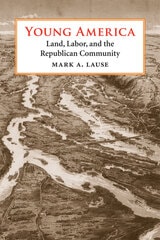
Young America
Land, Labor, and the Republican CommunityMark A. Lause
University of Illinois Press, 2005
Rooting the movement in contemporary economic structures and social ideology, Young America examines this urban and working-class "agrarianism," demonstrating how the political preoccupations of this movement transformed socialism by drawing its adherents from communitarian preoccupations into political action. The alliance of the NRA's land reformers and radical abolitionists led unprecedented numbers to petition Congress and established the foundations of what became the new Republican Party, promising "Free Soil, Free Labor, Free Men."
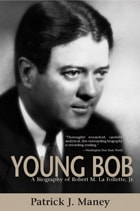
Young Bob
A Biography of Robert M. La Follette, Jr.Patrick J. Maney
Wisconsin Historical Society Press, 2002
United States senator "Young Bob" La Follette entered politics as a young reformer in the shadow of his legendary father, "Fighting Bob" La Follette. He made his own mark as a key architect of Roosevelt’s New Deal and as a champion of labor rights and civil liberties. But in 1946 he was unexpectedly unseated by Joseph McCarthy, whose rise to Cold War notoriety foreshadowed La Follette’s despair and suicide in 1953. This new edition updates the only full scale biography of La Follette,Jr., the first to exploit his voluminous collection of personal papers. Patrick J. Maney makes clear that Young Bob’s story is as relevant today as it was when he died. His life stands as dramatic evidence of how one of the most respected politicians of his time bridged the political spectrum and was admired by both liberals like FDR and Harry Truman and conservatives like Robert Taft and Richard Nixon.
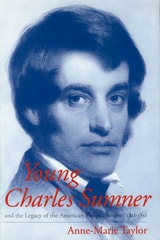
Young Charles Sumner and the Legacy of the American Enlightenment, 1811-1851
Anne-Marie Taylor
University of Massachusetts Press, 2001
In this book, Anne-Marie Taylor challenges that long-standing view, offering in its stead the portrait of a man animated more by principle than by impulse or ambition. According to Taylor, Sumner's reform-minded politics, including his fervent commitment to put an end to slavery, must be understood in the context of a young nation still struggling to live up to the Enlightenment ideals embraced by its founders and embodied in its Constitution.
Focusing on the first forty years of Sumner's life, before he took public office, Taylor traces the evolution of his character and thought among Boston's cultural elite. His belief in the virtues of cosmopolitanism, in the dignity of the human intellect and conscience, and in the possibility of a cultivated and just society, all find their roots in an education steeped in Enlightenment principles. At the same time, as a child of New England Puritanism and Revolutionary republicanism, Sumner was raised to believe in the moral obligation of the individual to work for the common good.
As Taylor shows in this richly drawn biography, much of the triumph and tragedy of Sumner's story—the energy of his idealism as well as the poignancy of his eventual disappointment— derives from the overpowering sense of duty and national destiny imbued by his upbringing.
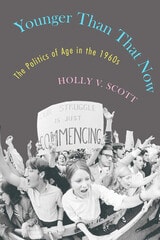
Younger Than That Now
The Politics of Age in the 1960sHolly V. Scott
University of Massachusetts Press, 2016
Retrospectives of the 1960s routinely include the face of youth rebellion: long-haired students occupying campus buildings, young men burning draft cards, hippies dancing at Woodstock. In Younger Than That Now, Holly V. Scott explores how the idea of “youth” served as a tactic in the political and social activism of these years. In the early part of that decade, young white activists began to learn from the civil rights movement's defiance of racism. They examined their own lives and concluded that campus rules and the draft were repression as well. As a group, they were ripe for revolution, and their age gave them a unique perspective for understanding and protesting against injustice. In short, young people began to use their youth as a political strategy.
Some in the New Left were dubious of this strategy and asked how it might damage long-term progress. Young feminists and people of color were particularly quick to question the idea that age alone was enough to sustain a movement. And the media often presented young people as impulsive and naive, undermining their political legitimacy. In tracing how “youth” took on multiple meanings as the 1960s progressed, Scott demonstrates the power of this idea to both promote and hinder social change.