Results by title
66 books match the query 'Year' and 8 start with y
Year of Grace
Margaret Hope Bacon
QuakerPress, 2002
Year of Plenty
A Family's Season of GriefB.J. Hollars
University of Wisconsin Press, 2024
So began the Hollars family’s year of plenty—a cancer diagnosis on top of the ongoing COVID pandemic, then feelings of falling short as parents, partners, and people. While Hollars traces his family’s daily devastations alongside his father-in-law’s decline, he recounts the small mercies along the way: birthdays, campfires, fishing trips, kayaking, and fireflies. As he, his wife, Meredith, and their three young children grapple with how best to say goodbye to the person they love, they are forced to reassess their own lives. How can we make the most of our time, they wonder, when time feels so short?
Written in vignettes and accompanied by photographs and family interviews, Year of Plenty provides a poignant and unflinching account of how death separates us not only from the people we love but from places and memories too. Hollars explores how death’s all-consuming weight has the potential to fracture—rather than strengthen—even those relationships we think we know the best. Ultimately, he cracks wide personal moments from his own life and allows the world to peer in.
Year of the Dog
A NovelBy Shelby Hearon
University of Texas Press, 2007
When her husband dumps her for an old girlfriend and sets all of Peachland, South Carolina, gossiping, Janey Daniels has to get away—far away—for a "sabbatical" year. She flees to Burlington, Vermont, home of Aunt May, her mother's only living relative. There she adopts Beulah, a Labrador puppy in training to become a companion dog for the blind. Not for a moment does Janey suspect that this "year of the dog" will change her life forever.
Shelby Hearon is an acknowledged master at illuminating the nuances of relationships. In Year of the Dog, she explores the surprising ways that the heart heals after a betrayal. While Janey is training Beulah, Beulah leads Janey to a new love, James Maarten, a smart, "fidgety" teacher they meet at the dog park. As Janey soon discovers, James has suffered a betrayal of his own that makes it hard for him to open up and trust her with even the smallest details of his past. While Janey tries to help James, she also reaches out to her enigmatic Aunt May, a retired librarian reputed to be the friend, perhaps even the lover, of popular mystery writer Bert Greenwood. When Janey attempts to solve the twin mysteries of why her great aunt has distanced herself from the family—and what her true relationship is with Bert Greenwood—Beulah provides the clues that lead Janey to uncover the secrets of her aunt's life. By the time Beulah's stay with Janey comes to an end, the people whose lives she's linked will discover that healing and reconciliation can come in the most unexpected ways.
Year of the Hangman
George Washington's Campaign Against the IroquoisGlenn F. Williams
Westholme Publishing, 2007
Winner of the 2005 Thomas Fleming Award for the Best Book in American Revolutionary War History
Finalist for the Army Historical Foundation Distinguished Writing Award
After two years of fighting, Great Britain felt confident that the American rebellion would be crushed in 1777, the "Year of the Hangman." Britain devised a bold new strategy. Turning its attention to the colonial frontiers, especially those of western New York, Pennsylvania, and Virginia, Britain enlisted its provincial rangers, Tories, and allied warriors, principally from the Iroquois Confederacy, to wage a brutal backwoods war in support of General John Burgoyne's offensive as it swept southward from Canada in an attempt to cut the colonies in half, divert the Continental Army, and weaken its presence around British-occupied New York City and Philadelphia.
Burgoyne's defeat at Saratoga sent shock waves through the British command. But the efforts along the frontier under the direction of Sir John Johnson, Colonel John Butler, and the charismatic Mohawk leader, Joseph Brant, appeared to be impairing the American ability to conduct the war. Destroying Patriot settlements and farms across hundreds of miles of frontier, the British and Indian forces threatened to reduce Continental army enlistment, and more importantly, precious food supplies. Following the massacres at the well-established colonial settlements of Wyoming, Pennsylvania, and Cherry Valley, New York, the Continental Congress persuaded General George Washington to conduct a decisive offensive to end the threat once and for all. Brewing for years, the conflict between the Iroquois and colonists would now reach its deadly climax.
Charging his troops "to not merely overrun, but destroy," Washington devised a two-prong attack to exact American revenge. The largest coordinated American military action against American Indians in the war, the campaign shifted the power in the east, ending the political and military influence of the Iroquois, forcing large numbers of loyalist to flee to Canada, and sealing Britain's fateful decision to seek victory in the south. In Year of the Hangman: George Washington's Campaign Against the Iroquois, historian Glenn F. Williams recreates the riveting events surrounding the action, including the checkered story of European and Indian alliances, the bitter frontier wars, and the bloody battles of Oriskany and Newtown.
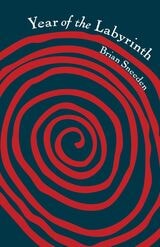
Year of the Labyrinth
Brian Sneeden
Carnegie Mellon University Press, 2026
In this folk-horror pastoral, poet Brian Sneeden threads paths of myth and ritual, fatherhood and climate collapse, ghost stories and grief.
Described by Kiki Petrosino as “a beautiful invasion,” Year of the Labyrinth draws upon Sneeden’s experiences as a translator and multilingual writer working in language preservation to explore boundaries between speech and ritual, myth and ecology. “In these fiercely imagined poems,” Petrosino writes, “our speaker passes between seemingly fixed physical and conceptual worlds—human/animal, past/present, forest/field. This voice finds lyric power in liminal spaces—in ‘the pollen line’ and ‘a change of wind.’ With the speaker, we travel through mirrors to places where you might grasp an animal if only ‘by the curve of its name,’ and where ‘a bird that ha[s]n’t yet been invented’ may sing. This poet’s imagination makes porous the landscapes we thought were familiar.” Kelly Link, in her judge’s citation for the Barthelme Prize, writes: “How wonderful it is, the marriage of economy and the arcane, as if a story could be a kind of lozenge that, slipped under the tongue, estranges us from our idea of how both life and language work. Every sentence has the effect of an acupuncturist’s needle, small pricks that let in strange energy.”
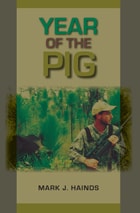
Year of the Pig
Hunting Feral HogsMark J. Hainds
University of Alabama Press, 2011
Exploring the ecology, culture, and challenge of America’s most controversial wild hogs.
What happens when a conservation-minded forester decides to spend an entire year hunting feral hogs across ten states? You get a book that’s equal parts adventure, ecology, and laugh-out-loud grit. In Year of the Pig, Mark J. Hainds straps on rifles, bows, and even a knife (yes, really) to tackle one of North America’s most destructive invasive species. Along the way, he delivers unforgettable stories from Alabama swamps to Hawaiian volcanoes, mixing adrenaline with insight into why pigs are an ecological nightmare and a hunter’s dream.
In it real-world and armchair hunters will find:
• Authentic Adventures: Belly-crawling through privet thickets, stalking pigs in palmetto jungles, and chasing razorbacks in the Ozarks.
• Ecological Wisdom: Learn how hogs impact forests, farms, and fragile ecosystems—and why hunting them matters.
• Humor & Humanity: From near-misses to triumphs, Hainds’ candid storytelling will keep you grinning (and maybe craving barbecue).
Hunters seeking real-world thrills, conservationists fighting invasive species, outdoor enthusiasts who savor gritty tales, and anyone who enjoys a good laugh with their environmental education. Perfect for reading—or gifting to that friend who thinks “hog hunting” is just a Southern stereotype. Spoiler: It’s not.
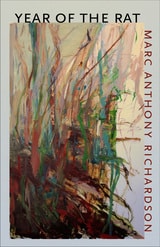
Year of the Rat
Marc Anthony Richardson
University of Alabama Press, 2016
Winner of the FC2 Ronald Sukenick Innovative Fiction Prize
Marc Anthony Richardson's Year of the Rat is a poignant and riveting literary debut narrated in an unabashedly exuberant voice.
In Year of the Rat, an artist returns to the dystopian city of his birth to tend to his invalid mother only to find himself torn apart by memories and longings. Narrated by this nameless figure whose rants, reveries, and Rabelaisian escapades take him on a Dantesque descent into himself, the story follows him and his mother as they share a one-bedroom apartment over the course of a year.
Despite his mother’s precarious health, the lingering memories of a lost love, an incarcerated sibling, a repressed sexuality, and an anarchic inability to support himself, he pursues his dream of becoming an avant-garde artist. His prospects grow dim until a devastating death provides a painful and unforeseeable opportunity. With a voice that is poetic and profane, ethereal and irreverent, cyclical and succinct, he roams from vignette to vignette, creating a polyphonic patchwork quilt of a family portrait.
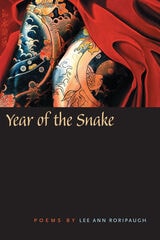
Year of the Snake
Lee Ann Roripaugh
Southern Illinois University Press, 2004
In her second collection of poems, Lee Ann Roripaugh probes themes of mixed-race female identities, evoking the molting processes of snakes and insects who shed their skins and shells as an ongoing metaphor for transformation of self. Intertwining contemporary renditions of traditional Japanese myths and fairy tales with poems that explore the landscape of childhood and early adolescence, she blurs the boundaries between myth and memory, between real and imagined selves. This collection explores cultural, psychological, and physical liminalities and exposes the diasporic arc cast by first-generation Asian American mothers and their second-generation daughters, revealing a desire for metamorphosis of self through time, geography, culture, and myth.