Results by title
4413 books match the query 'Anthropology' and 10 start with z
Zapotec Science
Farming and Food in the Northern Sierra of OaxacaBy Roberto J. González
University of Texas Press, 2001
2003 — Julian Steward Award – Anthropology & Environment Section, American Anthropological Association
2002 — A CHOICE Outstanding Academic Book
How Zapotec agricultural and dietary theories and practices constitute a valid local science.
Zapotec farmers in the northern sierra of Oaxaca, Mexico, are highly successful in providing their families with abundant, nutritious food in an ecologically sustainable fashion, although the premises that guide their agricultural practices would be considered erroneous by the standards of most agronomists and botanists in the United States and Europe. In this book, Roberto González convincingly argues that in fact Zapotec agricultural and dietary theories and practices constitute a valid local science, which has had a reciprocally beneficial relationship with European and United States farming and food systems since the sixteenth century.
González bases his analysis upon direct participant observation in the farms and fields of a Zapotec village. By using the ethnographic fieldwork approach, he is able to describe and analyze the rich meanings that campesino families attach to their crops, lands, and animals. González also reviews the history of maize, sugarcane, and coffee cultivation in the Zapotec region to show how campesino farmers have intelligently and scientifically adapted their farming practices to local conditions over the course of centuries. By setting his ethnographic study of the Talea de Castro community within a historical world systems perspective, he also skillfully weighs the local impact of national and global currents ranging from Spanish colonialism to the 1910 Mexican Revolution to NAFTA. At the same time, he shows how, at the turn of the twenty-first century, the sustainable practices of "traditional" subsistence agriculture are beginning to replace the failed, unsustainable techniques of modern industrial farming in some parts of the United States and Europe.
Zapotec Women
Gender, Class, and Ethnicity in Globalized OaxacaLynn Stephen
Duke University Press, 2005
Stephen presents new information about the weaving cooperatives women have formed over the last two decades in an attempt to gain political and cultural rights within their community and standing as independent artisans within the global market. She also addresses the place of Zapotec weaving within Mexican folk art and the significance of increased migration out of Teotitlán. The women weavers and merchants collaborated with Stephen on the research for this book, and their perspectives are key to her analysis of how gender relations have changed within rituals, weaving production and marketing, local politics, and family life. Drawing on the experiences of women in Teotitlán, Stephen considers the prospects for the political, economic, and cultural participation of other indigenous women in Mexico under the policies of economic neoliberalism which have prevailed since the 1990s.
Zapotecs on the Move
Cultural, Social, and Political Processes in Transnational PerspectiveCruz-Manjarrez, Adriana
Rutgers University Press, 2013
Based on multi-site fieldwork conducted over a five-year period, Adriana Cruz-Manjarrez analyzes how and why Yalálag Zapotec identity and culture have been reconfigured in the United States, using such cultural practices as music, dance, and religious rituals as a lens to bring this dynamic process into focus. By illustrating the sociocultural, economic, and political practices that link immigrants in Los Angeles to those left behind, the book documents how transnational migration has reflected, shaped, and transformed these practices in both their place of origin and immigration.

Zeroing In on the Year 2000
The Final EditionEdited by George E. Marcus
University of Chicago Press, 2000
The book begins with a fascinating, at times poignant, look back at the inception and progress of the series, in which the contributors reflect on how the shifting contexts for the production and reception of the series has been a reliable barometer of the profound ways in which traditional forms of knowledge about society are changing. Then, appropriate to the end of the century and of the series, the focus turns to pieces that deal with social phenomena that evoke the value of zero. They explore the idea of a zero state as it relates to artificial intelligence, euthanasia, cryonics, money, and the disappearing idea of society itself in the discourse of contemporary politics.
Far from being the loss of meaning, the consideration of zero entails the proliferation of meaning in the face of voids, absences, and ultimately, of puzzles like the contemplation of death in life. In this way, so many of the fin-de-siècle conditions that have been documented in this series have exemplified precisely this quest for meaning at or near zero points of change, of ends and beginnings, in social life.

Zion’s Last Frontier
LDS Ranchers, Federal Regulators, and the Clash of the New West in Capitol Reef Country, UtahThomas E. Sheridan
University of Arizona Press, 2026
Zion’s Last Frontier is a historical ethnography that documents the uniquely Latter-Day Saints (Mormon) ranching community around Capitol Reef National Park in south-central Utah over the last 150 years.
From the arrival of the first LDS pioneers in the 1870s to fifth- and sixth-generation descendants of those pioneers today, anthropologist Thomas E. Sheridan documents their ongoing struggles with the federal and state agencies that control 96 percent of the land they ranch. Changing policies and management philosophies profoundly impact the ranchers’ livelihoods and ways of life. Sheridan argues that the ranchers should qualify as Traditionally Associated People. Only one allotment on the Park remains, but the Park still allows ranchers to drive their cattle on horseback along the few canyons that cut through the Waterpocket Fold as they move their herds from their traditional summer grazing lands to their winter grazing lands.
Pushing beyond binary arguments, Sheridan offers an empathetic look at the lived experiences of rural communities often mischaracterized in debates over public lands and environmentalism. Tensions have been aggravated by a massive increase in the number of tourists that swarm the area in the warmer months and a steady increase in the number of seasonal residents who build second homes there.
Zion’s Last Frontier provides an in-depth look at the clash of cultures between the agrarian Old West and the New West of tourism and second-homers that is playing itself out across so many parts of the rural West today.

Zombies in the Academy
Living Death in Higher EducationEdited by Andrew Whelan, Ruth Walker, and Christopher Moore
Intellect Books, 2013

Zoo Culture
Bob Mullan and Garry Marvin
University of Illinois Press, 1999
In this provocative book, the authors demonstrate that zoos tell us as
much about humans as they do about animals and suggest that while animals
may not need zoos, urban societies seem to.
A new introduction takes note of dramatic changes in the perceived role
of zoos that have occurred since the book's original publication.
"Bob Mullan and Garry Marvin delve into the assumptions about animals
that are embedded in our culture. . . . A thought-provoking glimpse of
our own ideas about the exotic, the foreign." -- Tess Lemmon, BBC
Wildlife Magazine
"A thoughtful and entertaining guided tour." -- David White,
New Society
"[An] unusual and intriguing combination of historical survey, psychological
enquiry, and compendium of fascinating facts." -- Evening Standard
Zooarchaeology and Field Ecology
A Photographic AtlasJack M. Broughton and Shawn D. Miller
University of Utah Press, 2016
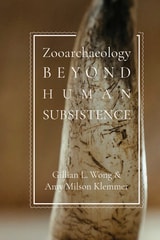
Zooarchaeology beyond Human Subsistence
Gillian L. Wong and Amy Milson Klemmer, eds.
University of Utah Press, 2025
In this dynamic volume, Gillian L. Wong and Amy Milson Klemmer present seven groundbreaking chapters that delve into the diverse ways humans have interacted with animals in the past, as revealed through archaeological research into animal remains. Zooarchaeology beyond Human Subsistence explores a wide range of topics, from the role of animals in trade and prestige to their influence on cultural development and the shared spaces humans and animals occupied. The studies also highlight the importance of community engagement, showcasing collaborations between archaeologists and heritage communities.
Ideal for professionals and enthusiasts in archaeology, anthropology, zoology, biology, ecology, history, and beyond, this book offers a fresh perspective on zooarchaeology, emphasizing human-animal bonds, trade, ritual, and environmental impacts. With Spanish translations for chapters on South America, this volume invites a broader audience to explore the intricate web of human-animal interactions throughout history, offering insights far beyond mere subsistence.
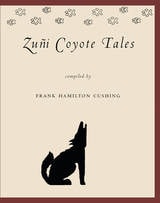
Zuñi Coyote Tales
Frank Hamilton Cushing
University of Arizona Press, 1998
These tales pit the wily Coyote against various demons and other creatures in order to convey simple lessons or explain animal characteristics or behavior. They tell how the tip of the coyote's tail became black after dancing with blackbirds and how coyotes learned never to insult horned-toads—and to keep clear of burrowing-owls. Through these tales, we learn why Coyote meddles with everything that does not concern him, makes a universal nuisance of himself, and is ready to jump into any trap laid for him.