Results by title
4155 books match the query 'State & Local' and 6 start with z
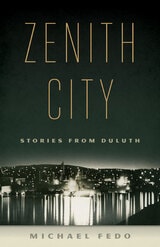
Zenith City
Stories from DuluthMichael Fedo
University of Minnesota Press, 2014
Duluth may be the city of “untold delights” as lampooned in a Kentucky congressman’s speech in 1871. Or it may be portrayed by a joke in Woody Allen’s film Manhattan. Or then again, it may be the “Zenith City of the unsalted seas” celebrated by Dr. Thomas Preston Foster, founder of the city’s first newspaper. But whatever else it may be, this city of granite hills, foghorns, and gritty history, the last stop on the shipping lanes of the Great Lakes, is undeniably a city with character—and characters. Duluth native Michael Fedo captures these characters through the happy-go-melancholy lens nurtured by the people and landscape of his youth. In Zenith City Fedo brings it back home. Framed by his reflections on Duluth’s colorful—and occasionally very dark—history and its famous visitors, such as Sinclair Lewis, Joe DiMaggio, and Bob Dylan, his memories make the city as real as the boy next door but with a better story.
Here, among the graceful, poignant, and often hilarious remembered moments—pranks played on a severe teacher, the family’s unlikely mob connections, a rare childhood affliction—are the coordinates of Duluth’s larger landscape: the diners and supper clubs, the baseball teams, radio days, and the smelt-fishing rites of spring. Woven through these tales of Duluth are Fedo’s curious, instructive, and ultimately deeply moving stories about becoming a writer, from the guidance of an English teacher to the fourteen-year-old reporter’s interview with Louis Armstrong to his absorption in the events that would culminate in his provocative and influential book The Lynchings in Duluth. These are the sorts of essays—personal, cultural, and historical, at once regional and far-reaching—that together create a picture of people in a place as rich in history and anecdote as Duluth and of the forces that forever bind them together.
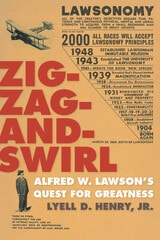
Zig-Zag-and-Swirl
Alfred W. Lawson's Quest for GreatnessLyell D. Henry
University of Iowa Press, 1991

Zion’s Last Frontier
LDS Ranchers, Federal Regulators, and the Clash of the New West in Capitol Reef Country, UtahThomas E. Sheridan
University of Arizona Press, 2026
Zion’s Last Frontier is a historical ethnography that documents the uniquely Latter-Day Saints (Mormon) ranching community around Capitol Reef National Park in south-central Utah over the last 150 years.
From the arrival of the first LDS pioneers in the 1870s to fifth- and sixth-generation descendants of those pioneers today, anthropologist Thomas E. Sheridan documents their ongoing struggles with the federal and state agencies that control 96 percent of the land they ranch. Changing policies and management philosophies profoundly impact the ranchers’ livelihoods and ways of life. Sheridan argues that the ranchers should qualify as Traditionally Associated People. Only one allotment on the Park remains, but the Park still allows ranchers to drive their cattle on horseback along the few canyons that cut through the Waterpocket Fold as they move their herds from their traditional summer grazing lands to their winter grazing lands.
Pushing beyond binary arguments, Sheridan offers an empathetic look at the lived experiences of rural communities often mischaracterized in debates over public lands and environmentalism. Tensions have been aggravated by a massive increase in the number of tourists that swarm the area in the warmer months and a steady increase in the number of seasonal residents who build second homes there.
Zion’s Last Frontier provides an in-depth look at the clash of cultures between the agrarian Old West and the New West of tourism and second-homers that is playing itself out across so many parts of the rural West today.
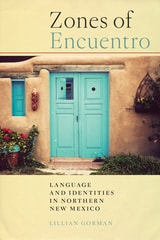
Zones of Encuentro
Language and Identities in Northern New MexicoLillian Gorman
The Ohio State University Press, 2024
Winner, 2025 New Mexico Book Awards, Multicultural Category
Finalist, New Mexico Book Awards, BIPOC Author or Subject Category and First Book Category
Working at the intersection of Latina/o/x cultural studies, sociocultural linguistics, and Chicana feminist studies, Lillian Gorman’s Zones of Encuentro takes an in-depth look at the cultural and linguistic interactions between two distinct Latina/o/x communities in the region: Nuevomexicanos (Hispanic people who trace their presence in the region to colonial times and whose families have historically spoken Traditional New Mexican Spanish, or TNMS) and first-generation Mexicano immigrants (who tend to speak Mexican Spanish). Gorman examines the everyday lived language experiences and ethnolinguistic identities of Mexicanos and Nuevomexicanos together, specifically through the case of mixed Mexicano-Nuevomexicano families. Through an interdisciplinary critical reading of ethnographic data, pláticas (informal conversations that gather family and community knowledge), interviews, articles, and historical memoirs, Gorman analyzes language ideologies, identity formations, and language practices by exploring complex spaces of encounter within Mexicano-Nuevomexicano families. Zones of Encuentro complicates homogeneous notions of language and identity and contemplates what a shared cultural and linguistic homeplace looks like for Mexicanos and Nuevomexicanos in northern New Mexico.
Zooarchaeology of Six Prehistoric Sites in the Sierra Blanca Region, New Mexico
Jonathan C. Driver
University of Michigan Press, 1985

Zoom-In to Madisonville
Penelope Ballard Drooker
University of Michigan Press, 0