Results by title
482 books match the query '17th century' and 37 start with a

A Collection of Ranter Writings
Spiritual Liberty and Sexual Freedom in the English RevolutionNigel Smith
Pluto Press, 2014
The Ranters - like the Levellers and the Diggers - were a group of religious libertarians who flourished during the English Civil War (1642–1651), a period of social and religious turmoil which saw, in the words of the historian Christopher Hill, 'the world turned upside down'.
A Collection of Ranter Writings is the most notable attempt to anthologise the key Ranter writings, bringing together some of the most remarkable, visionary and unforgettable texts. The subjects range from the limits to pleasure and divine right, to social justice and collective action.
The Ranters have intrigued and captivated generations of scholars and philosophers. This carefully curated collection will be of great interest to historians, philosophers and all those trying to understand past radical traditions.
A Fateful Day in 1698
The Remarkable Sobaipuri-O’odham Victory over the Apaches and Their AlliesDeni J. Seymour
University of Utah Press, 2014
Translations of original Spanish accounts by Father Kino and others convey important details about the battle, while the archaeological record and ethnographic and oral traditions provide important correctives to the historic account. A new battlefield signature of native American conflict is identified, and the fiery context of the battle provides unprecedented information about what the Sobaipuri grew and hunted in this out-of-the-way location, including the earliest known wheat.
That this tumultuous time was a period of flux is reflected in the defensive, communal, and ceremonial architecture of the O'odham, which accommodated Spanish tastes and techniques. Practices specific to the O’odham as they relate to the day’s events and to village life illuminate heretofore unexplained aspects of the battle. The book also records a visit by descendant O’odham, reinforcing the importance of identifying the historically documented location.
A Fateful Day in 1698 will be of significant interest to archaeologists and historians.
A Hebrew Chronicle from Prague, C. 1615
Abraham David
University of Alabama Press, 1993
"This slender anonymous work, spanning 1389 to 1611, presents the priorities and concerns of a Jewish community straddling the late medieval and early modern periods. Ample footnotes and explanations provide the lay reader with sufficient background to understand the references to historical events and figures, to ideologies and to institutions. A comprehensive introduction presents the realities of Prague and Bohemia, as well as offering a helpful discussion of the chronicle and other contemporary Jewish accounts."
—Conservative Jewish Quarterly
"In about 1615 an anonymous Jew from Prague composed a short Hebrew chronicle to recount 'the expulsions, miracles, and other occurrences befalling [the Jews] in Prague and the other lands of our long exile.' Abraham David discovered the manuscript [and] added glosses, historical notes, and an introduction. . . . The chronicle, with its brief annual entries, is not a continuous narrative, but does give a feeling of immediacy, like a newspaper."
—Polin: Studies in Polish Jewry
A Network of Converso Families in Early Modern Toledo
Assimilating a MinorityLinda Martz
University of Michigan Press, 2003
Linda M. Martz focuses on families that were immersed in the worlds of business and finance. They formed the backbone of the trade industry and, during the economic expansion of the sixteenth century, enjoyed a high degree of affluence. The seventeenth century, however, brought harder times. How these families rose to positions of commercial eminence and then adapted to this economic downturn is one of the questions addressed in this insightful book.
A Network of Converso Families in Early Modern Toledo relies heavily on archival evidence--notarial, parish, and city records--that offers new insights into the families' histories. Business endeavors, marriage alliances, involvement in local politics, and the pursuit of improved social status are all subjected to Martz's keen analysis.
These families appear to have been well integrated into their contemporary society; aside from their business and financial activities, many were members of the city's governing council. But how well did they integrate with the lower classes? Assimilating minorities in the majority culture is a task that confronts most modern societies, so the experience of Spain and this particular minority may serve as an example of how earlier societies viewed and confronted this challenge.
This book will appeal to historians of medieval and Renaissance Spain and those interested in the Inquisition's effect on Renaissance Spain. It will also prove to be indispensable for those interested in the history of the Jewish race, as well as for those pursuing the question of marginalization.
Linda M. Martz is an independent historian as well as a freelance editor and writer.
A Power to Do Justice
Jurisdiction, English Literature, and the Rise of Common LawBradin Cormack
University of Chicago Press, 2008
A Power to Do Justice shows how Renaissance writers engaged the practical and conceptual dynamics of jurisdiction, both as a subject for critical investigation and as a frame for articulating literature’s sense of itself. Reassessing the relation between English literature and law from More to Shakespeare, Cormack argues that where literary texts attend to jurisdiction, they dramatize how boundaries and limits are the very precondition of law’s power, even as they clarify the forms of intensification that make literary space a reality.
Tracking cultural responses to Renaissance jurisdictional thinking and legal centralization, A Power to Do Justice makes theoretical, literary-historical, and methodological contributions that set a new standard for law and the humanities and for the cultural history of early modern law and literature.
A Social History of Truth
Civility and Science in Seventeenth-Century EnglandSteven Shapin
University of Chicago Press, 1994
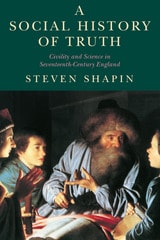
In A Social History of Truth, Shapin engages these universal questions through an elegant recreation of a crucial period in the history of early modern science: the social world of gentlemen-philosophers in seventeenth-century England. Steven Shapin paints a vivid picture of the relations between gentlemanly culture and scientific practice. He argues that problems of credibility in science were practically solved through the codes and conventions of genteel conduct: trust, civility, honor, and integrity. These codes formed, and arguably still form, an important basis for securing reliable knowledge about the natural world.
Shapin uses detailed historical narrative to argue about the establishment of factual knowledge both in science and in everyday practice. Accounts of the mores and manners of gentlemen-philosophers are used to illustrate Shapin's broad claim that trust is imperative for constituting every kind of knowledge. Knowledge-making is always a collective enterprise: people have to know whom to trust in order to know something about the natural world.
A Spectrum of Unfreedom
Captives and Slaves in the Ottoman EmpireLeslie Peirce
Central European University Press, 2021
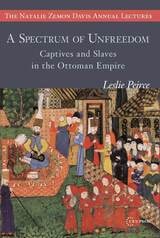
Without the labor of the captives and slaves, the Ottoman empire could not have attained and maintained its strength in early modern times. With Anatolia as the geographic focus, Leslie Peirce searches for the voices of the unfree, drawing on archives, histories written at the time, and legal texts.
Unfree persons comprised two general populations: slaves and captives. Mostly household workers, slaves lived in a variety of circumstances, from squalor to luxury. Their duties varied with the status of their owner. Slave status might not last a lifetime, as Islamic law and Ottoman practice endorsed freeing one’s slave.
Captives were typically seized in raids, generally to disappear, their fates unknown. Victims rarely returned home, despite efforts of their families and neighbors to recover them. The reader learns what it was about the Ottoman environment of the sixteenth and seventeenth centuries that offered some captives the opportunity to improve the conditions of their bondage. The book describes imperial efforts to fight against the menace of captive-taking despite the widespread corruption among the state’s own officials, who had their own interest in captive labor.
From the fortunes of captives and slaves the book moves to their representation in legend, historical literature, and law, where, fortunately, both captors and their prey are present.

A Tale of Two Colonies
What Really Happened in Virginia and Bermuda?Virginia Bernhard
University of Missouri Press, 2011
A Tale of Two Murders
Passion and Power in Seventeenth-Century FranceJames R. Farr
Duke University Press, 2005
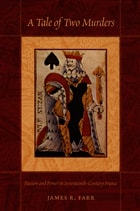
James R. Farr reveals the Giroux affair not only as a riveting murder mystery but also as an illuminating point of entry into the dynamics of power, justice, and law in seventeenth-century France. Drawing on the voluminous trial records, Farr uses Giroux’s experience in the court system to trace the mechanisms of power—both the formal power vested by law in judicial officials and the informal power exerted by the nobility through patron-client relationships. He does not take a position on Giroux’s guilt or innocence. Instead, he allows readers to draw their own conclusions about who did what to whom on that ill-fated evening in 1638.
A Taste for the Foreign
Worldly Knowledge and Literary Pleasure in Early Modern French FictionEllen R. Welch
University of Delaware Press, 2011
A Taste for the Foreign examines foreignness as a crucial aesthetic category for the development of prose fiction from Jacques Amyot’s 1547 translation of The Ethiopian Story to Antoine Galland’s early eighteenth-century version of The Thousand and One Nights. While fantastic storylines and elements of magic were increasingly shunned by a neo-classicist literary culture that valued verisimilitude above all else, writers and critics surmised that the depiction of exotic lands could offer a superior source for the novelty, variety, and marvelousness that constituted fiction’s appeal. In this sense, early modern fiction presents itself as privileged site for thinking through the literary and cultural stakes of exoticism, or the taste for the foreign. Long before the term exoticism came into common parlance in France, fiction writers thus demonstrated their understanding of the special kinds of aesthetic pleasure produced by evocations of foreignness, developing techniques to simulate those delights through imitations of the exotic. As early modern readers eagerly consumed travel narratives, maps, and international newsletters, novelists discovered ways to blur the distinction between true and imaginary representations of the foreign, tantalizing readers with an illusion of learning about the faraway lands that captured their imaginations.
This book analyzes the creative appropriations of those scientific or documentary forms of writing that claimed to inform the French public about exotic places. Concentrating on the most successful examples of some of the most important sub-genres of prose fiction in the long seventeenth century—heroic romances, shorter urban novels, fictional memoirs, and extraordinary voyages—the book examines how these types of fiction creatively appropriate the scientific or documentary forms of writing that claimed to inform the French public about exotic places.
Published by University of Delaware Press. Distributed worldwide by Rutgers University Press.
A True Account of My Life and Selected Meditations
Lady Anne Halkett
Iter Press, 2022
Born in the early 1620s, Anne, Lady Halkett (née Murray) grew up on the fringes of the English court during a period of increasing political tension. From 1644 to 1699, Halkett recorded her personal and political experiences in both England and Scotland in a series of manuscript meditations and an autobiographical narrative called A True Account of My Life. Royalism, romance, and contemporary religious debates are central to Halkett’s vivid portrayal of her life as a single woman, wife, mother, and widow. Collectively, the materials edited here offer the opportunity to explore how Halkett’s meditational practice informed her life writing in the only version of her writings to date available in a fully modernized edition. The forty-four meditations in this volume redefine the importance of Halkett’s contribution to seventeenth-century life writing.
Absolutist Attachments
Emotion, Media, and Absolutism in Seventeenth-Century FranceChloé Hogg
Northwestern University Press, 2019
In Absolutist Attachments, Chloé Hogg uncovers the affective and media connections that shaped Louis XIV’s absolutism. Studying literature, painting, engravings, correspondence, and the emerging periodic press, Hogg diagnoses the emotions that created absolutism’s feeling subjects and publics.
Louis XIV’s subjects explored new kinds of affective relations with their sovereign, joining with the king in acts of aesthetic judgment, tender feeling, or the “newsiness” of emerging print news culture. Such alternative modes of adhesion countered the hegemonic model of kingship upheld by divine right, reason of state, or corporate fidelities and privileges with subject-driven attachments and practices. Absolutist Attachments discovers absolutism’s alternative political and cultural legacy—not the spectacle of an unbound king but the binding connections of his subjects.
Across the Green Sea
Histories from the Western Indian Ocean, 1440-1640Sanjay Subrahmanyam
University of Texas Press, 2024
A history of two centuries of interactions among the areas bordering the western Indian Ocean, including India, Iran, and Africa.
Beginning in the mid-fifteenth century, the regions bordering the western Indian Ocean—“the green sea,” as it was known to Arabic speakers—had increasing contact through commerce, including a slave trade, and underwent cultural exchange and transformation. Using a variety of texts and documents in multiple Asian and European languages, Across the Green Sea looks at the history of the ocean from a variety of shifting viewpoints: western India; the Red Sea and Mecca; the Persian Gulf; East Africa; and Kerala.
Sanjay Subrahmanyam sets the scene for this region starting with the withdrawal of China's Ming Dynasty and explores how the western Indian Ocean was transformed by the growth and increasing prominence of the Ottoman Empire and the continued spread of Islam into East Africa. He examines how several cities, including Mecca and the vital Indian port of Surat, grew and changed during these centuries, when various powers interacted until famines and other disturbances upended the region in the seventeenth century. Rather than proposing an artificial model of a dominant center and its dominated peripheries, Across the Green Sea demonstrates the complexity of a truly dynamic and polycentric system through the use of connected histories, a method pioneered by Subrahmanyam himself.
Adulterous Alliances
Home, State, and History in Early Modern European Drama and PaintingRichard Helgerson
University of Chicago Press, 2000
Advertising the Self in Renaissance France
Lemaire, Marot, and RabelaisScott Francis
University of Delaware Press, 2019
Published by University of Delaware Press. Distributed worldwide by Rutgers University Press.
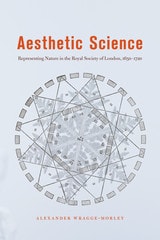
Aesthetic Science
Representing Nature in the Royal Society of London, 1650-1720Alexander Wragge-Morley
University of Chicago Press, 2020
To show how early modern naturalists conceived of the interplay between sensory experience and the production of knowledge, Aesthetic Science explores natural-historical and anatomical works of the Royal Society through the lens of the aesthetic. By underscoring the importance of subjective experience to the communication of knowledge about nature, Wragge-Morley offers a groundbreaking reconsideration of scientific representation in the early modern period and brings to light the hitherto overlooked role of aesthetic experience in the history of the empirical sciences.
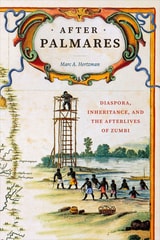
After Palmares
Diaspora, Inheritance, and the Afterlives of ZumbiMarc A. Hertzman
Duke University Press, 2024
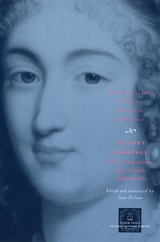
Against Marriage
The Correspondence of La Grande MademoiselleAnne-Marie-Louise d'Orléans, Duchesse de Montpensier
University of Chicago Press, 2002
In the daring letters presented in this bilingual edition, Montpensier condemns the alliance system of marriage, proposing instead to found a republic that she would govern, "a corner of the world in which . . . women are their own mistresses," and where marriage and even courtship would be outlawed. Her pastoral utopia would provide medical care and vocational training for the poor, and all the homes would have libraries and studies, so that each woman would have a "room of her own" in which to write books.
Joan DeJean's lively introduction and accessible translation of Montpensier's letters—four previously unpublished—allow us unprecedented access to the courageous voice of this extraordinary woman.
Air's Appearance
Literary Atmosphere in British Fiction, 1660-1794Jayne Elizabeth Lewis
University of Chicago Press, 2012
Alchemy Tried in the Fire
Starkey, Boyle, and the Fate of Helmontian ChymistryWilliam R. Newman and Lawrence M. Principe
University of Chicago Press, 2002
What actually took place in the private laboratory of a mid-seventeenth century alchemist? How did he direct his quest after the secrets of Nature? What instruments and theoretical principles did he employ?
Using, as their guide, the previously misunderstood interactions between Robert Boyle, widely known as "the father of chemistry," and George Starkey, an alchemist and the most prominent American scientific writer before Benjamin Franklin as their guide, Newman and Principe reveal the hitherto hidden laboratory operations of a famous alchemist and argue that many of the principles and practices characteristic of modern chemistry derive from alchemy. By analyzing Starkey's extraordinary laboratory notebooks, the authors show how this American "chymist" translated the wildly figurative writings of traditional alchemy into quantitative, carefully reasoned laboratory practice—and then encoded his own work in allegorical, secretive treatises under the name of Eirenaeus Philalethes. The intriguing "mystic" Joan Baptista Van Helmont—a favorite of Starkey, Boyle, and even of Lavoisier—emerges from this study as a surprisingly central figure in seventeenth-century "chymistry." A common emphasis on quantification, material production, and analysis/synthesis, the authors argue, illustrates a continuity of goals and practices from late medieval alchemy down to and beyond the Chemical Revolution.
For anyone who wants to understand how alchemy was actually practiced during the Scientific Revolution and what it contributed to the development of modern chemistry, Alchemy Tried in the Fire will be a veritable philosopher's stone.
Alchemy and Authority in the Holy Roman Empire
Tara Nummedal
University of Chicago Press, 2007
Drawing on criminal trial records, contracts, laboratory inventories, satires, and vernacular alchemical treatises, Alchemy and Authority in the Holy Roman Empire situates the everyday alchemists, largely invisible to modern scholars until now, at the center of the development of early modern science and commerce. Reconstructing the workaday world of entrepreneurial alchemists, Tara Nummedal shows how allegations of fraud shaped their practices and prospects. These debates not only reveal enormously diverse understandings of what the “real” alchemy was and who could practice it; they also connect a set of little-known practitioners to the largest questions about commerce, trust, and intellectual authority in early modern Europe.
Alva Ixtlilxochitl's Native Archive and the Circulation of Knowledge in Colonial Mexico
Amber Brian
Vanderbilt University Press, 2016
Born between 1568 and 1580, Alva Ixtlilxochitl was a direct descendant of Ixtlilxochitl I and Ixtlilxochitl II, who had been rulers of Texcoco, one of the major city-states in pre-Conquest Mesoamerica. After a distinguished education and introduction into the life of the empire of New Spain in Mexico, Ixtlilxochitl was employed by the viceroy to write histories of the indigenous peoples in Mexico. Engaging with this history and delving deep into the resultant archives of this life's work, Amber Brian addresses the question of how knowledge and history came to be crafted in this era.
Brian takes the reader through not only the history of the archives itself, but explores how its inheritors played as crucial a role in shaping this indigenous history as the author. The archive helped inspire an emerging nationalism at a crucial juncture in Latin American history, as Creoles and indigenous peoples appropriated the history to give rise to a belief in Mexican exceptionalism. This belief, ultimately, shaped the modern state and impacted the course of history in the Americas. Without the work of Ixtlilxochitl, that history would look very different today.
America's Early Whalemen
Indian Shore Whalers on Long Island, 1650–1750John A. Strong
University of Arizona Press, 2018
America’s Early Whalemen examines this early chapter of an iconic American historical experience. John A. Strong’s research draws on exhaustive sources, domestic and international, including little-known documents such as the whaling contracts of 340 Native American whalers, personal accounting books of whaling company owners, London customs records, estate inventories, and court records. Strong addresses labor relations, the role of alcohol and debt, the patterns of cultural accommodations by Native Americans, and the emergence of corporate capitalism in colonial America.
When Strong began teaching at Long Island University in 1964, he found little mention of the local Indigenous people in history books. The Shinnecocks and the neighboring tribes of Unkechaugs and Montauketts were treated as background figures for the celebratory narrative of the “heroic” English settlers. America’s Early Whalemen highlights the important contributions of Native peoples to colonial America.
Amphion
Lyre, Poetry, and Politics in ModernityLeah Middlebrook
University of Chicago Press, 2024
Amphion is the figure in Greek mythology who played so skillfully on a lyre that stones moved of their own accord to build walls for Thebes. While Amphion still presides over music and architecture, he was once fundamental to the concept of lyric poetry. Amphion figured the human power to inspire action, creating and undoing polities by means of language. In contrast to the individual inspiration we associate with the better-known Orpheus, Amphion represents the relentless, often violent, play of harmony and disorder in human social life.
In this wide-ranging study, Leah Middlebrook introduces readers to Amphion-inspired poetics and lyrics and traces the tradition of the Amphionic from the Renaissance through modernist and postmodern poetry and translation from the Hispanic, Anglophone, French, Italian, and ancient Roman worlds. Amphion makes a significant contribution to scholarship on the connection between poetry and politics and the history of the lyric, offering an account well-suited to our times.
Amplifications of Black Sound from Colonial Mexico
Vocality and BeyondSarah Finley
Vanderbilt University Press, 2024
Amplifications of Black Sound from Colonial Mexico is the first extensive study of Afro-descendant sonorities in New Spain or elsewhere in colonial Latin America. In this context, it attends to Black sounds through a framework that remixes Jacques Derrida’s reading of the ear’s anatomy with theories like Gilroy’s lower frequencies or Fred Moten’s phonic materiality. Sarah Finley’s aim is to unsettle the divide between self and other so the auditory archive might emerge as a polyphonic record that exceeds dichotomies of sounding object / listening subject. Through sampling the Afro-descendant sounds of this archive, this book recovers and rearticulates Black voices and auditory practices in New Spain.
Ancients against Moderns
Culture Wars and the Making of a Fin de SiecleJoan DeJean
University of Chicago Press, 1996
DeJean brilliantly reassesses our current culture wars from the perspective of that earlier fin de siècle (the first to think of itself as such), and rereads the seventeenth-century Quarrel from the vantage of our own warring "ancients" and "moderns." In so doing, DeJean shows that a fin de siècle taking place in the shadow of culture wars can be more a source of constructive cultural revolution than of apocalyptic gloom and doom. Just as the first fin de siècle's battle of the books served as the spark that set off the Enlightenment, introducing radically new sexual and social politics that laid the groundwork for modernity, so can our current culture wars result in radical, liberating changes—if we take an active stand against our own "ancients" who seek to stifle such reforms.
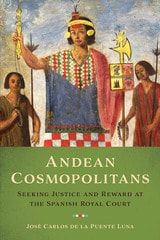
Andean Cosmopolitans
Seeking Justice and Reward at the Spanish Royal CourtBy José Carlos de la Puente Luna
University of Texas Press, 2018
Winner, Premio Flora Tristán Al Mejor Libro, Peru Section, Latin American Studies Association, 2019
After the Spanish victories over the Inca claimed Tawantinsuyu for Charles V in the 1530s, native Andeans undertook a series of perilous trips from Peru to the royal court in Spain. Ranging from an indigenous commoner entrusted with delivering birds of prey for courtly entertainment to an Inca prince who spent his days amid titles, pensions, and other royal favors, these sojourners were both exceptional and paradigmatic. Together, they shared a conviction that the sovereign’s absolute authority would guarantee that justice would be done and service would receive its due reward. As they negotiated their claims with imperial officials, Amerindian peoples helped forge the connections that sustained the expanding Habsburg realm’s imaginary and gave the modern global age its defining character.
Andean Cosmopolitans recovers these travelers’ dramatic experiences, while simultaneously highlighting their profound influences on the making and remaking of the colonial world. While Spain’s American possessions became Spanish in many ways, the Andean travelers (in their cosmopolitan lives and journeys) also helped to shape Spain in the image and likeness of Peru. De la Puente brings remarkable insights to a narrative showing how previously unknown peoples and ideas created new power structures and institutions, as well as novel ways of being urban, Indian, elite, and subject. As indigenous people articulated and defended their own views regarding the legal and political character of the “Republic of the Indians,” they became state-builders of a special kind, cocreating the colonial order.
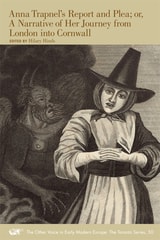
Anna Trapnel’s Report and Plea; or, A Narrative of Her Journey from London into Cornwall
Anna Trapnel
Iter Press, 2016
In 1654, Anna Trapnel — a Baptist, Fifth Monarchist, millenarian, and visionary from London — fell into a trance during which she prophesied passionately and at length against Oliver Cromwell and his government. The prophecies attracted widespread public attention, and resulted in an invitation to travel to Cornwall. Her Report and Plea, republished here for the first time, is a lively and engaging firsthand account of the visit, which concluded in her arrest, a court hearing, and imprisonment. Part memoir, part travelogue, and part impassioned defense of her beliefs and actions, the Report and Plea offers vivid and fascinating insight into the life and times of an early modern woman claiming her place at the center of the tumultuous political events of mid-seventeenth-century England.

Antiquarianism and Intellectual Life in Europe and China, 1500-1800
Peter N. Miller and François Louis, editors
University of Michigan Press, 2012
This book is a project in comparative history, but along two distinct axes, one historical and the other historiographical. Its purpose is to constructively juxtapose the early modern European and Chinese approaches to historical study that have been called "antiquarian." As an exercise in historical recovery, the essays in this volume amass new information about the range of antiquarian-type scholarship on the past, on nature, and on peoples undertaken at either end of the Eurasian landmass between 1500 and 1800. As a historiographical project, the book challenges the received---and often very much under conceptualized---use of the term "antiquarian" in both European and Chinese contexts. Readers will not only learn more about the range of European and Chinese scholarship on the past---and especially the material past---but they will also be able to integrate some of the historiographical observations and corrections into new ways of conceiving of the history of historical scholarship in Europe since the Renaissance, and to reflect on the impact of these European terms on Chinese approaches to the Chinese past. This comparison is a two-way street, with the European tradition clarified by knowledge of Chinese practices, and Chinese approaches better understood when placed alongside the European ones.

Antisatire
In Defense of Women, against Francesco BuoninsegniArcangela Tarabotti
Iter Press, 2020
The Other Voice in Early Modern Women: The Toronto Series volume 70
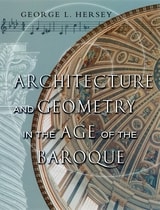
Architecture and Geometry in the Age of the Baroque
George L. Hersey
University of Chicago Press, 2001
Hersey first concentrates on specific problems in geometry and architectural design. He then explores the affinities between musical chords and several types of architectural form. He turns to advances in optics, such as artificial lenses and magic lanterns, to show how architects incorporated light, a heavenly emanation, into their impressive domes. With ample illustrations and lucid, witty language, Hersey shows how abstract ideas were transformed into visual, tactile form—the epicycles of the cosmos, the sexual mystique surrounding the cube, and the imperfections of heavenly bodies. Some two centuries later, he finds that the geometric principles of the Baroque resonate, often unexpectedly, in the work of architects such as Frank Lloyd Wright and Le Corbusier. A discussion of these surprising links to the past rounds out this brilliant reexamination of some of the long-forgotten beliefs and practices that helped produce some of Europe's greatest masterpieces.
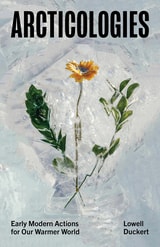
Arcticologies
Early Modern Actions for Our Warmer WorldLowell Duckert
University of Minnesota Press, 2025
Exploring the frozen past to rethink our warming future
Do we really know what cold is? In Arcticologies, Lowell Duckert delves into early modern European texts to trace how representations of frigidity from the sixteenth and seventeenth centuries have contributed to historical understandings of climate and contemporary debates on climate change. Arguing that human culture and science are, in fact, indebted to the cold, Duckert suggests that these early depictions offer critical terms for advancing the aims of climate-change activism and assisting in counterapocalyptic thinking.
An imaginative and intellectual journey, Arcticologies reveals the enduring role of cold in wide-ranging storytelling traditions. It draws on Shakespeare’s Hamlet and Othello and the works of Thomas Dekker, René Descartes, and Thomas Hobbes and is informed throughout by contemporary Indigenous writing, including that of Sheila Watt-Cloutier and Leanne Betasamosake Simpson. In reflecting on these assorted accounts, Duckert sees cold as not only an environmental hardship but a source of cultural creativity and resilience, highlighting moments of collaboration between humans and the icy world, from arctic exploration to urban fairs on frozen rivers.
Cold, Duckert makes clear, is more than the absence of warmth. Situating our contemporary obsession with impending planetary meltdown within the mazelike arcticologies of the past, Duckert shows how early modern cold brought about forms of curiosity, vocabulary, and interspecies relationality that can serve us today. In doing so, he asks us to identify what has been lost and who is at risk in today’s thinning cold—while also urging us to imagine alternative futures focused not on inevitable and total collapse but on adaptation and preserving what remains.
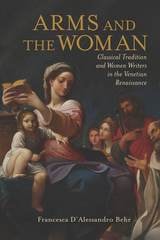
Arms and the Woman
Classical Tradition and Women Writers in the Venetian RenaissanceFrancesca D'Alessandro Behr
The Ohio State University Press, 2018
Arms and the Woman: Classical Tradition and Women Writers in the Venetian Renaissance by Francesca D’Alessandro Behr focuses on the classical reception in the works of female authors active in Venice during the Early Modern Age. Even in this relatively liberal city, women had restricted access to education and were subject to deep-seated cultural prejudices, but those who read and wrote were able, in part, to overcome those limitations.
In this study, Behr explores the work of Moderata Fonte and Lucrezia Marinella and demonstrates how they used knowledge of texts by Virgil, Ovid, and Aristotle to systematically reanalyze the biased patterns apparent both in the romance epic genre and contemporary society. Whereas these classical texts were normally used to bolster the belief in female inferiority and the status quo, Fonte and Marinella used them to envision societies structured according to new, egalitarian ethics. Reflecting on the humanist representation of virtue, Fonte and Marinella insisted on the importance of peace, mercy, and education for women. These authors took up the theme of the equality of genders and participated in the Renaissance querelle des femmes, promoting women’s capabilities and nature.
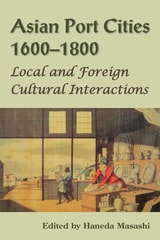
Asian Port Cities, 1600-1800
Local and Foreign Cultural InteractionsHaneda Masashi
National University of Singapore Press, 2009
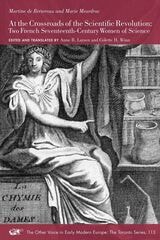
At the Crossroads of the Scientific Revolution
Two French Seventeenth-Century Women of ScienceMartine de Bertereau and Marie Meurdrac
Iter Press, 2026
The writings of mineralogist and hydrogeologist Martine de Bertereau (ca. 1584–ca. 1643) and alchemist and chemist Marie Meurdrac (ca. 1610–80) stand at the crossroads of the Scientific Revolution, a significant period between Copernicus and Newton that oversaw a new ferment in both the theoretical and empirical investigation of the natural world. Bertereau’s writings appear at the interface of a negotiation between an older form of knowledge, dating back to Aristotle, and a new scientific empiricism. She brilliantly addresses the relationship between knowledge and mining applications, as well as the roles of the king, the state, the market, and the public. Meurdrac published the first so-called chemistry book by a woman, which contributed to the various areas of scientific knowledge generally associated with alchemy in its development into chemistry, particularly medical cookery, botany, pharmacology, and cosmetology.
Bertereau’s and Meurdrac’s works illustrate this age of transition, a spectacular time of growth in ideas and discoveries for both men and women. This first-time translation of their works is an important step in restoring the voices of these early modern French women scientists.
At the Margins
Minority Groups in Premodern ItalyStephen J. Milner
University of Minnesota Press, 2005
Autobiography of an Aspiring Saint
Cecilia Ferrazzi
University of Chicago Press, 1996
Born in 1609 into an artisan family, Cecilia Ferrazzi wanted to become a nun. When her parents' death in the plague of 1630 made it financially impossible for her to enter the convent, she refused to marry and as a single laywoman set out in pursuit of holiness. Eventually she improvised a vocation: running houses of refuge for "girls in danger," young women at risk of being lured into prostitution.
Ferrazzi's frequent visions persuaded her, as well as some clerics and acquaintances among the Venetian elite, that she was on the right track. The socially valuable service she was providing enhanced this impresssion. Not everyone, however, was convinced that she was a genuine favorite of God. In 1664 she was denounced to the Inquisition.
The Inquisition convicted Ferrazzi of the pretense of sanctity. Yet her autobiographical act permits us to see in vivid detail both the opportunities and the obstacles presented to seventeenth-century women.