Results by title
9 books match the query 'Lure'

Divided Loyalties
Young Somali Americans and the Lure of ExtremismJoseph Weber
Michigan State University Press, 2020

Edible Memory
The Lure of Heirloom Tomatoes and Other Forgotten FoodsJennifer A. Jordan
University of Chicago Press, 2015
Jordan begins with the heirloom tomato, inquiring into its botanical origins in South America and its culinary beginnings in Aztec cooking to show how the homely and homegrown tomato has since grown to be an object of wealth and taste, as well as a popular symbol of the farm-to-table and heritage foods movements. She shows how a shift in the 1940s away from open pollination resulted in a narrow range of hybrid tomato crops. But memory and the pursuit of flavor led to intense seed-saving efforts increasing in the 1970s, as local produce and seeds began to be recognized as living windows to the past. In the chapters that follow, Jordan combines lush description and thorough research as she investigates the long history of antique apples; changing tastes in turnips and related foods like kale and parsnips; the movement of vegetables and fruits around the globe in the wake of Columbus; and the poignant, perishable world of stone fruits and tropical fruit, in order to reveal the connections—the edible memories—these heirlooms offer for farmers, gardeners, chefs, diners, and home cooks. This deep culinary connection to the past influences not only the foods we grow and consume, but the ways we shape and imagine our farms, gardens, and local landscapes.
From the farmers’ market to the seed bank to the neighborhood bistro, these foods offer essential keys not only to our past but also to the future of agriculture, the environment, and taste. By cultivating these edible memories, Jordan reveals, we can stay connected to a delicious heritage of historic flavors, and to the pleasures and possibilities for generations of feasts to come.

Franchising Dreams
The Lure of Entrepreneurship in AmericaPeter M. Birkeland
University of Chicago Press, 2002
Peter M. Birkeland worked for three years in the front-line operations of franchise units for three companies, met with CEOs and executives, and attended countless trade shows, seminars, and expositions. All this firsthand experience gave him unprecedented access to the hopes and aspirations of franchisees. His book closely traces different franchisees and follows them as their dreams of wealth and independence buckle beneath the weight of frustrating logistics and contractual technicalities. Through extensive interviews and research, Birkeland not only discovers what makes franchisees succeed or fail, he uncovers the difficulties in running a business according to someone else's system and values. Bearing witness to a market flooded with fierce competitors and dependent on the inscrutable whims of consumers, he uncovers the numerous challenges that franchisees face in making their businesses succeed.

Lure of the Big Screen
Cinema in Rural Australia and the United KingdomKarina Aveyard
Intellect Books, 2015

Nature as Event
The Lure of the PossibleDidier Debaise
Duke University Press, 2017

The Logic of the Lure
John Paul Ricco
University of Chicago Press, 2002

The Lure and the Truth of Painting
Selected Essays on ArtYves Bonnefoy
University of Chicago Press, 1995
The sixteen essays collected here show the breadth and depth of Bonnefoy's writings on art, aesthetics, and poetics. His lyrical ruminations range across centuries and cultures, from Byzantium to postwar France, from the paintings of Piero della Francesca to the sculptures of Alberto Giacometti and the photographs of Henri Cartier-Bresson, from the Italian Giorgio Morandi to the American Edward Hopper. Always fascinated in his poetry by the nature of color and light and the power of the image, Bonnefoy continues to pursue these themes in his discussion of the lure and truth of representation. He sees the painter as a poet whose language is a visual one, and seeks to find out what visual artists can teach those who work with words. More philosophical than historical and more poetic than critical, the essays express Bonnefoy's deep sympathy for the creative process and his great passion for individual works of art.
Bonnefoy's engagement with great art in The Lure and the Truth of Painting sheds light on the philosophy of presence and being that animates his poems. This book will be welcomed by lovers of Bonnefoy's poems and by everyone interested in the creation, history, and appreciation of art.
Yves Bonnefoy's numerous books include New and Selected Poems and In the Shadow's Light, both published by the University of Chicago Press. Richard Stamelman is director of the Center for Foreign Languages, Literatures, and Cultures and professor of romance languages at Williams College. He is the author of Lost beyond Telling: Representations of Death and Absence in Modern French Poetry.
"Few exponents of contemporary French letters deserve the attention of the reading public in America more than Yves Bonnefoy. . . . [His] writings . . . are an important lighthouse on the contemporary cultural coastline."—Emily Grosholz, The Hudson Review

The Lure of the Detail
Close Reading Today, Volume 14Elizabeth Weed and Ellen Rooney
Duke University Press, 0
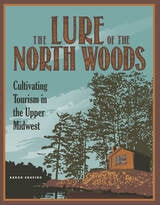
The Lure of the North Woods
Cultivating Tourism in the Upper MidwestAaron Shapiro
University of Minnesota Press, 2013
In the late nineteenth century, the North Woods offered people little in the way of a pleasant escape. Rather, it was a hub of production supplying industrial America with vast quantities of lumber and mineral ore. This book tells the story of how northern Minnesota, northern Wisconsin, and Michigan’s Upper Peninsula became a tourist paradise, turning a scarred countryside into the playground we know today.
Stripped of much of its timber and ore by the early 1900s, the North Woods experienced deindustrialization earlier than the Rust Belt cities that consumed its resources. In The Lure of the North Woods, Aaron Shapiro describes how residents and visitors reshaped the region from a landscape of exploitation to a vacationland. The rejuvenating North Woods profited in new ways by drawing on emerging connections between the urban and the rural, including improved transportation, promotion, recreational land use, and conservation initiatives. Shapiro demonstrates how this transformation helps explain the interwar origins of modern American environmentalism, when both the consumption of nature for pleasure and the work of the Civilian Conservation Corps in the North Woods and elsewhere led many Americans to cultivate a fresh perspective on the outdoors. At a time when travel and recreation are considered major economic forces, The Lure of the North Woods reveals how leisure—and tourism in particular—has shaped modern America.