Results by title
8 books match the query '1837-1901'
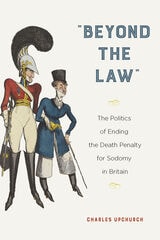
"Beyond the Law"
The Politics of Ending the Death Penalty for Sodomy in BritainCharles Upchurch
Temple University Press, 2021
In nineteenth-century England, sodomy was punishable by death; even an accusation could damage a man’s reputation for life. The last executions for this private, consensual act were in 1835, but the effort to change the law that allowed for those executions was intense and precarious, and not successful until 1861. In this groundbreaking book, “Beyond the Law,” noted historian Charles Upchurch pieces together fragments from history and uses a queer history methodology to recount the untold story of the political process through which the law allowing for the death penalty for sodomy was almost ended in 1841.
Upchurch recounts the legal and political efforts of reformers like Jeremy Bentham and Lord John Russell—the latter of whom argued that the death penalty for sodomy was “beyond the law and above the law.” He also reveals that a same-sex relationship linked the families of the two men responsible for co-sponsoring the key legislation. By recovering the various ethical, religious, and humanitarian arguments against punishing sodomy, “Beyond the Law” overturns longstanding assumptions of nineteenth-century British history. Upchurch demonstrates that social change came from an amalgam of reformist momentum, family affection, elitist politics, class privilege, enlightenment philosophy, and personal desires.
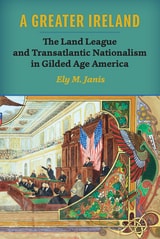
A Greater Ireland
The Land League and Transatlantic Nationalism in Gilded Age AmericaEly M. Janis
University of Wisconsin Press, 2014
As this "Greater Ireland" flourished, new opportunities arose for women and working-class men to contribute within Irish-American society. Exploring the complex interplay of ethnicity, class, and gender, Janis demonstrates the broad range of ideological, social, and political opinion held by Irish Americans in the 1880s. Participation in the Land League deeply influenced a generation that replaced their old county and class allegiances with a common cause, shaping the future of Irish-American nationalism.
Empire And Imperialism
Peter Cain
St. Augustine's Press, 1999
The 1870s is a key decade in the evolution of British thinking about the nature, purpose, and future of empire. Increasing economic competition began to disturb the complacent assumption about Britain's leadership in technology and in the world economy. The growth of other countries, most notably the United States and Germany, put in question Britain's survival as a great power. These changes set in motion a reappraisal of Britain's empire and its importance to the motherland, and a heated debated as to whether colonialism and imperialism were a burden rather than a benefit to Britain. The discussion of the 1870s set the agenda for the debates of the next half-century. This volume documents the writing central to the debate; it includes contributions by such leading British thinkers and statesmen as J. A. Froude, Robert Lowe, Edward Dicey, Frederic Seebohm, Lord Carnarvon, Gladstone, Julius Vogel, and Lord Blachford.
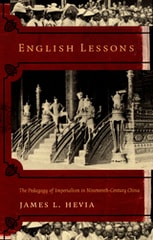
English Lessons
The Pedagogy of Imperialism in Nineteenth-Century ChinaJames L. Hevia
Duke University Press, 2003
Hevia analyzes British Foreign Office documents, diplomatic memoirs, auction house and museum records, nineteenth-century scholarly analyses of Chinese history and culture, campaign records, and photographs. He shows how Britain refigured its imperial project in
China as a cultural endeavor through examinations of the circulation of military loot in Europe, the creation of an art history of “things Chinese,” the construction of a field of knowledge about China, and the Great Game rivalry between Britain, Russia, and the Qing empire in Central Asia. In so doing, he illuminates the impact of these elements on the colonial project and the creation of a national consciousness in China.
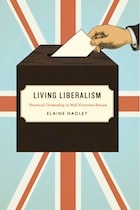
Living Liberalism
Practical Citizenship in Mid-Victorian BritainElaine Hadley
University of Chicago Press, 2010
In the mid-Victorian era, liberalism was a practical politics: it had a party, it informed legislation, and it had adherents who identified with and expressed it as opinion. It was also the first British political movement to depend more on people than property, and on opinion rather than interest. But how would these subjects of liberal politics actually live liberalism?
To answer this question, Elaine Hadley focuses on the key concept of individuation—how it is embodied in politics and daily life and how it is expressed through opinion, discussion and sincerity. These are concerns that have been absent from commentary on the liberal subject. Living Liberalism argues that the properties of liberalism—citizenship, the vote, the candidate, and reform, among others—were developed in response to a chaotic and antagonistic world. In exploring how political liberalism imagined its impact on Victorian society, Hadley reveals an entirely new and unexpected prehistory of our modern liberal politics. A major revisionist account that alters our sense of the trajectory of liberalism, Living Liberalism revises our understanding of the presumption of the liberal subject.
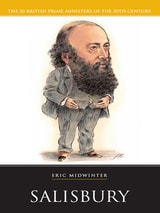
Salisbury
Eric Midwinter
Haus Publishing, 2006

The Humours of Parliament
Harry Furniss's View of Late-Victorian Political CultureEdited and with an Introduction by Gareth Cordery and Joseph S. Meisel
The Ohio State University Press, 2014
Reproducing some 150 images drawn from Furniss’s extensive graphic work, The Humours of Parliament: Harry Furniss’s View of Late-Victorian Political Culture, edited and with an introduction by Gareth Cordery and Joseph S. Meisel, presents Furniss’s unpublished lecture text for the first time. The extensive introduction places the show in its biographical, political, and performative contexts. Cordery and Meisel’s volume therefore both documents a pivotal moment in British political and social history and provides a rare case study of an important yet little studied nineteenth-century performance genre: the illustrated platform lecture.
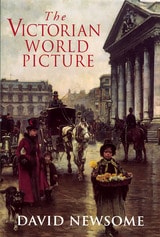
The Victorian World Picture
Newsome, David
Rutgers University Press, 1997
When did the Victorians come to regard themselves as "Victorians" and to use that term to describe the period in which they were living? David Newsome's monumental history takes a good, long look at the Victorian age and what distinguishes it so prominently in the history of both England and the world. The Victorian World Picture presents a vivid canvas of the Victorians as they saw themselves and as the rest of the world saw them.
The Victorian era was a time of unprecedented population growth and massive industrialization. Darwinian theory shook people's religious beliefs and foreign competition threatened industry and agriculture. The transformation of this nineteenth-century world was overhwelming, pervading the social, cultural, intellectual, economic, and political spheres. By the time of the Great Exhibition in 1851, the British were calling themselves Victorians and Prince Albert was able to proclaim, "We are living at a period of most wonderful transition." David Newsome weaves all these strands of Victorian life into a compelling evocation of the spirit of a fascinating time that laid the foundation for the modern age.