Results by title
16 books match the query 'Siberia'
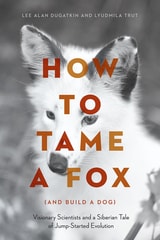
How to Tame a Fox (and Build a Dog)
Visionary Scientists and a Siberian Tale of Jump-Started EvolutionLee Alan Dugatkin and Lyudmila Trut
University of Chicago Press, 2017
Most accounts of the natural evolution of wolves place it over a span of about 15,000 years, but within a decade, Belyaev and Trut’s fox breeding experiments had resulted in puppy-like foxes with floppy ears, piebald spots, and curly tails. Along with these physical changes came genetic and behavioral changes, as well. The foxes were bred using selection criteria for tameness, and with each generation, they became increasingly interested in human companionship. Trut has been there the whole time, and has been the lead scientist on this work since Belyaev’s death in 1985, and with Lee Dugatkin, biologist and science writer, she tells the story of the adventure, science, politics, and love behind it all. In How to Tame a Fox, Dugatkin and Trut take us inside this path-breaking experiment in the midst of the brutal winters of Siberia to reveal how scientific history is made and continues to be made today.
To date, fifty-six generations of foxes have been domesticated, and we continue to learn significant lessons from them about the genetic and behavioral evolution of domesticated animals. How to Tame a Fox offers an incredible tale of scientists at work, while also celebrating the deep attachments that have brought humans and animals together throughout time.
I Think Again of Those Ancient Chinese Poets
Tom Sexton
University of Alaska Press, 2010

John Ledyard's Journey through Russia and Siberia, 1787–1788
The Journal and Selected LettersStephen D. Watrous
University of Wisconsin Press, 1966
Stephen D. Watrous provides a complete volume of pertinent information by and about John Ledyard, one of the most amazing explorers of all time. Including Ledyard’s own journal, letters between him and others, particularly Thomas Jefferson, and biographical information on eighteenth-century Siberia, Watrous offers an exceptional look at history, geography, and travel.

Khanty, People of the Taiga
Surviving the 20th CenturyAndrew Wiget and Olga Balalaeva
University of Alaska Press, 2011

On the Run in Siberia
Rane Willerslev
University of Minnesota Press, 2012
If I had let myself be ruled by reason alone, I would surely be lying dead somewhere or another in the Siberian frost.
The Siberian taiga: a massive forest region of roughly 4.5 million square miles, stretching from the Ural Mountains to the Bering Sea, breathtakingly beautiful and the coldest inhabited region in the world. Winter temperatures plummet to a bitter 97 degrees below zero, and beneath the permafrost lie the fossilized remains of mammoths, woolly rhinoceroses, and other ice age giants. For the Yukaghir, an indigenous people of the taiga, hunting sable is both an economic necessity and a spiritual experience—where trusting dreams and omens is as necessary as following animal tracks. Since the fall of Communism, a corrupt regional corporation has monopolized the fur trade, forcing the Yukaghir hunters into impoverished servitude.
Enter Rane Willerslev, a young Danish anthropologist who ventures into this frozen land on an idealistic mission to organize a fair-trade fur cooperative with the hunters. From the outset, things go terribly wrong. The regional fur company, with ties to corrupt public officials, proves it will stop at nothing to maintain its monopoly: one of Willerslev’s Yukaghir business partners is arrested on spurious charges of poaching and illegal trading; another drowns mysteriously. When police are sent to arrest him, Willerslev fears for his life, and he and a local hunter flee to a remote hunting lodge even deeper in the icy wilderness. Their situation turns even more desperate right away: they manage to kill a moose but lose the meat to predators and begin to starve, frostbitten and isolated in the frozen taiga.
Thus begins Willerslev’s extraordinary, chilling tale of one year living in exile among Yukaghir hunters in the stark Siberian taiga region. At turns shocking and quietly moving, On the Run in Siberia is a pulse-pounding tale of idealism, political corruption, starvation, and survival (with a timely assist from Vladimir Putin) as well as a striking portrait of the Yukaghirs’ shamanistic tradition and their threatened way of life, a drama unfolding daily in one of the world’s coldest, most enthralling landscapes.
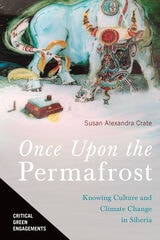
Once Upon the Permafrost
Knowing Culture and Climate Change in SiberiaSusan Alexandra Crate
University of Arizona Press, 2021
The author, anthropologist Susan Alexandra Crate, has spent three decades working with Sakha, the Turkic-speaking horse and cattle agropastoralists of northeastern Siberia, Russia. Crate reveals Sakha’s essential relationship with alaas, the foundational permafrost ecosystem of both their subsistence and cultural identity. Sakha know alaas via an Indigenous knowledge system imbued with spiritual qualities. This counters the scientific definition of alaas as geophysical phenomena of limited range. Climate change now threatens alaas due to thawing permafrost, which, entangled with the rural changes of economic globalization, youth out-migration, and language loss, make prescient the issues of ethnic sovereignty and cultural survival.
Through careful integration of contemporary narratives, on-site observations, and document analysis, Crate argues that local understandings of change and the vernacular knowledge systems they are founded on provide critical information for interdisciplinary collaboration and effective policy prescriptions. Furthermore, she makes her message relevant to a wider audience by clarifying linkages to the global permafrost system found in her comparative research in Mongolia, Arctic Canada, Kiribati, Peru, and Chesapeake Bay, Virginia. This reveals how permafrost provides one of the main structural foundations for Arctic ecosystems, which, in turn, work with the planet’s other ecosystems to maintain planetary balance.
Metaphorically speaking, we all live on permafrost.
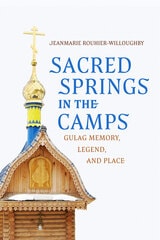
Sacred Springs in the Camps
Gulag Memory, Legend, and PlaceJeanmarie Rouhier-Willoughby
University of Wisconsin Press, 2026
Grounded by detailed ethnography, Sacred Springs in the Camps explores how legend creates, negotiates, and challenges collective memory; how lived religious practices intersect with the current revival of the Russian Orthodox Church; how politics intertwine with belief; and how the social construction of sacred places affects folk narratives, faith, and local identity. These unlikely holy waters thus reflect important facets of contemporary Russian religion, politics, and society, refracting and reframing memories of the socialist past even as they offer important lessons for the present moment.
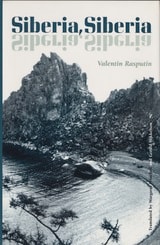
Siberia, Siberia
Valentin Rasputin
Northwestern University Press, 1997

Storytelling in Siberia
The Olonkho Epic in a Changing WorldRobin P. Harris
University of Illinois Press, 2017
Drawing on her ten years of living in the Russian North, Robin P. Harris documents how the Sakha have used the Masterpiece program to revive olonkho and strengthen their cultural identity. Harris’s personal relationships with and primary research among Sakha people provide vivid insights into understanding olonkho and the attenuation, revitalization, transformation, and sustainability of the Sakha’s cultural reemergence. Interdisciplinary in scope, Storytelling in Siberia considers the nature of folklore alongside ethnomusicology, anthropology, comparative literature, and cultural studies to shed light on how marginalized peoples are revitalizing their own intangible cultural heritage.

T-Bone Whacks and Caviar Snacks
Cooking with Two Texans in Siberia and the Russian Far EastSharon Hudgins
University of North Texas Press, 2018

The Constructed Mennonite
History, Memory, and the Second World WarHans Werner
University of Manitoba Press, 2013

The Paleolithic of Siberia
New Discoveries and InterpretationsEdited and Compiled by Anatoli P. Derev'anko: Demitri B. Shimkin and W. Roger Powers (American Editors). Translated by Inna P. Laricheva
University of Illinois Press, 1998
It traces the routes of human migration throughout Eurasia, shows Siberian lithic industries as they evolved from the Early through the Middle and Late Paleolithic, and correlates them with reports from Mongolia, China, Japan, and America.

The Socialist Way of Life in Siberia
Transformation in BuryatiaMelissa Chakars
Central European University Press, 2014
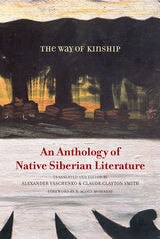
The Way of Kinship
An Anthology of Native Siberian LiteratureAlexander Vaschenko
University of Minnesota Press, 2010
The first anthology of Native Siberian literature in English, The Way of Kinship represents writers from regions extending from the Ob River in the west to the Chukotka peninsula, the easternmost point of the Siberian Russian Arctic. Drawn from seven distinct ethnic groups, this diverse body of work-prose fiction, poetry, drama, and creative nonfiction-chronicles ancient Siberian cultures and traditions threatened with extinction in the contemporary world.
Translated and edited by Alexander Vaschenko and Claude Clayton Smith, leading scholars in Native Siberian literature, The Way of Kinship is an essential collection that will introduce readers to new writers and new worlds.
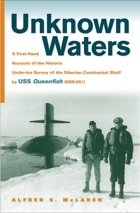
Unknown Waters
A First-Hand Account of the Historic Under-Ice Survey of the Siberian Continental Shelf by USS Queenfish (SSN-651)Alfred S. McLaren
University of Alabama Press, 2008
“A first-person view of submarine under-ice operations that appears in very few other works.” —Gary E. Weir, author of Rising Tide: The Untold Story of the Russian Submarines that Fought the Cold War
Unknown Waters tells the story of the brave officers and men of the nuclear attack submarine USS Queenfish (SSN-651), who made the first survey of an extremely important and remote region of the Arctic Ocean. The unpredictability of deep-draft sea ice, shallow water, and possible Soviet discovery, all played a dramatic part in this engrossing 1970 voyage.
Covering 3,100 miles over a period of some 20 days at a laborious average speed of 6.5 knots or less, the attack submarine carefully threaded its way through innumerable underwater canyons of ice and over irregular seafloors, at one point becoming entrapped in an “ice garage.” Only cool thinking and skillful maneuvering of the nearly 5,000-ton vessel enabled a successful exit.
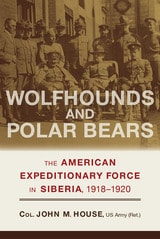
Wolfhounds and Polar Bears
The American Expeditionary Force in Siberia, 1918–1920Col. John M. House, US Army (Ret.)
University of Alabama Press, 2016
In the final months of World War I, President Woodrow Wilson and many US allies decided to intervene in Siberia in order to protect Allied wartime and business interests, among them the Trans-Siberian Railroad, from the turmoil surrounding the Russian Revolution. American troops would remain until April 1920 with some of our allies keeping troops in Siberia even longer.
Few American citizens have any idea that the United States ever deployed soldiers to Siberia and that those soldiers eventually played a role in the Russian revolution while protecting the Trans-Siberian Railroad. Wolfhounds and Polar Bears relies on the detailed reports of the American Expeditionary Force (AEF) as well as on personal stories to bring this rarely discussed expedition to life.
Initial chapters recount the period in World War I when conditions in Russia pointed to the need for intervention as well as the varied reasons for that decision. A description of the military forces and the geographic difficulties faced by those forces operating in Siberia provide the baseline necessary to understand the AEF’s actions in Siberia. A short discussion of the Russian Railway Service Corps explains their essential and sometimes overlooked role in this story, and subsequent chapters provide a description of actual operations by the AEF.
Wolfhounds and Polar Bears: The American Expeditionary Force in Siberia, 1918–1920 may well be the most detailed study of the military aspects of the American intervention in Siberia ever undertaken, offering a multitude of details not available in any other book-length history.