Results by title
3 books match the query '1857-1903'
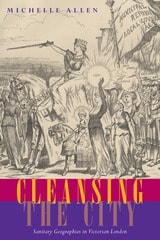
Cleansing the City
Sanitary Geographies in Victorian LondonMichelle Allen
Ohio University Press, 2008
From the novels of Charles Dickens and George Gissing to anonymous magazine articles and pamphlets, resistance to reform found expression in the nostalgic appreciation of a threatened urban landscape and anxiety about domestic autonomy in an era of networked sanitary services. Cleansing the City emphasizes the disruptions and disorientation occasioned by purification—a process we are generally inclined to see as positive. By recovering these sometimes oppositional, sometimes ambivalent responses, Michelle Allen elevates a significant undercurrent of Victorian thought into the mainstream and thus provides insight into the contested nature of sanitary modernization.

The Collected Letters of George Gissing Volume 5
1892-1895George Gissing
Ohio University Press, 1994
Gissing’s career, which spanned the period of about 1877 to his death in 1903, was characterized by prodigious output (almost a novel a year in the early days), modest recognition, and modest income. He wrote of poverty, socialism, class differences, social reform, and later on, about the problems of women and industrialization. His best known works are New Grub Street (1891) and Private Papers of Henry Ryecroft (1903), rich sources of social commentary that reflect a literary transition from the Victorian to the modern period.
For many years, the only Gissing letters available to the public were those in the modest selection of letters to his family published in 1927. Now the editors have culled widely scattered sources—private and public collections, journals, newspapers, memoirs, biographies, and sales catalogs—to gather and organize Gissing’s correspondence, including letters to him, and to provide an editorial context.
The years 1892-1895 saw an increase in the bulk and scope of Gissing’s literary production, coinciding with his new and cordial association with publishers Bullen and Lawrence. During this period, the partners published Denzil Quarrier, The Odd Women, In the Year of Jubilee, ad Eve’s Ransom, while A. and C. Black brought out Born in Exile. Gissing’s correspondence with his publishers, some of which is printed here for the first time, is matched in significance by his letters to his literary agent William Morris Colles and to editors such as Clement Shorter, who were instrumental in turning Gissing to the short story. His domestic life remained grim: his unfortunate marriage ruled out the possibility of satisfactory social relationships, and his anxiety over the care of his son Walter was eased only by sending the infant away to stay with strangers. New friends, especially Clara Collet and Edward Clodd, were a precious asset—in their presence he could be his better self, a highly cultured, joy-loving individual whose work was finding greater favor with the public.
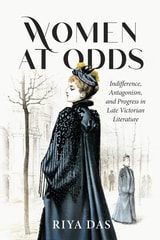
Women at Odds
Indifference, Antagonism, and Progress in Late Victorian LiteratureRiya Das
The Ohio State University Press, 2024
In Women at Odds, Riya Das demonstrates the limitations of female solidarity for the New Woman in Victorian society. On the one hand, feminist antagonism disrupts the status quo in unanticipated ways, and it helps open new domestic and professional pathways for women. On the other hand, the urban professional New Woman’s rhetoric recycles distinctly sexist, racist, and classist conventions, thereby bringing middle-class Englishwomen dialectically—what Das terms “retro-progressively”—into the labor pool of the British empire.
While foregrounding the figure of the New Woman as a white imperialist reformer, Das illustrates how the New Woman movement detaches itself from the domestic politics of female friendship. In works by George Eliot, George Gissing, Olive Schreiner, Bram Stoker, and others, antagonism and indifference enable the fin de siècle New Woman to transcend traditionally defined roles and fashion social progress for herself at the expense of femininities she excludes as “other.” By contesting the critical notion of solidarity as the only force that brings Victorian women’s narratives to fruition, Women at Odds reveals the troubled but effective role of antagonistic and indifferent reformist politics in loosening rigid social structures for privileged populations.