Results by title
2 books match the query '1895-1978'
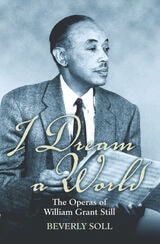
I Dream a World
The Operas of William Grant StillBeverly Soll
University of Arkansas Press, 2005
William Grant Still (1895–1978) dreamed of a world in which his eight operas—for him the ultimate form of musical expression—would be heard in the major opera houses in the United States, devoting most of his career toward the pursuit of this goal. The first part of I Dream a World creates a context for Still’s operas and explores commonalities among them, including structural elements and musical characteristics. The second part traces the research, composition, and perform-ances of the operas as a way of documenting the history of the composer and his contributions to American opera. Although I Dream a World is not intentionally biographical, it is very pers-onal. It is more than the story of William Grant Still’s love of operatic music, of the libretti that reflect his own life and philosophy, and of the world he dreamed through his work. It opens a window on Still the man as well as on Still the composer that offers important insights into the social milieu of this pioneering figure.
[more]
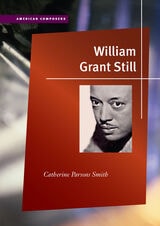
William Grant Still
Catherine Parsons Smith
University of Illinois Press, 2008
Once called the dean of African American composers, William Grant Still created a unique version of musical modernism that influenced commercial music, symphonic music, and opera. The acclaimed and enormously popular Afro-American Symphony, like many of his works, drew on Black American musical heritage, and Still was the first Black composer to have his work performed by a major symphony orchestra.
Catherine Parsons Smith’s biography tracks the composer's interrelated careers in popular and concert music. Still’s artistic journey took him from conservatory study with George W. Chadwick to collaborating with Langston Hughes, working as a commercial arranger and composer on Broadway and radio, arranging for artists like Sophie Tucker and Artie Shaw, and serving as the recording director for the first Black-owned record label. But despite his prolific production and multidimensional talents, Still endured financial struggles and declining attention to his work.
[more]