Results by title
24 books match the query '1931-'
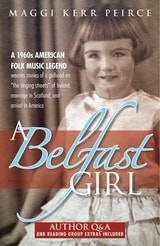
A Belfast Girl
A 1960s American folk music legend weaves stories of a girlhood on “the singing streets” of Ireland, marriage in Scotland, and arrival in AmericaMaggi Kerr Peirce
Parkhurst Brothers, Inc., 2013
A 1960s American folk music legend weaves stories of a girlhood on “the singing streets” of Ireland, marriage in Scotland, and arrival in America
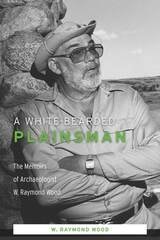
A White-Bearded Plainsman
The Memoirs of Archaeologist W. Raymond WoodW. Raymond Wood
University of Utah Press, 2011
W. Raymond Wood played a leading role in the early days of Great Plains archaeology. In A White-Bearded Plainsman, he tells how his own career emerged, as the discipline of Plains archaeology developed during the post-World War II era. Readers will learn of the childhood influences that lead Wood to pursue the path of archaeologist, and of the events and people that shaped his professional life. In addition to telling Wood’s personal story, the book provides an intellectual history of the discipline of mid-continental archaeology over the last half century. It will thus be valuable to students and scholars in the field, as it describes how the paradigms in Plains and midwestern prehistory have changed over time. To understand the discipline, one must understand the cultural and intellectual underpinnings that shaped it. Wood’s book helps map for a new generation of archaeologists from whence they’ve come, and his role in the developments along the way.
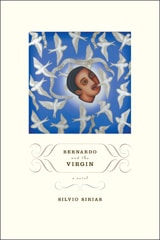
Bernardo and the Virgin
A NovelSilvio Sirias
Northwestern University Press, 2007
Silvio Sirias' sweeping novel tells many stories: that of a humble man touched by the transcendent; that same man as a devout boy denied the priesthood because of poverty; and those in his orbit, past and present. It is also the stormy epic of Nicaragua through the long Somoza years to the Sandinista revolution. Sirias' beautiful language mixes English with Spanish and details of dusty village life with wondrous images of Catholic mysticism. His portrayal of the rich recent past of Central America resonates with the experiences of both the natives and the thriving communities of Nicaraguans, Salvadorans, and others putting down roots in the United States.
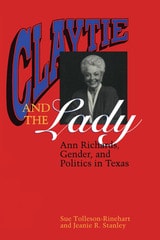
Claytie and the Lady
Ann Richards, Gender, and Politics in TexasBy Sue Tolleson-Rinehart and Jeanie R. Stanley
University of Texas Press, 1994
It was like a remake of The Cowboy and the Lady, except that this time they weren't friends. The 1990 Texas governor's race pitted Republican Clayton Williams, a politically conservative rancher and oil millionaire, against Democrat Ann Richards, an experienced progressive politician noted for her toughness and quick wit. Their differences offered voters a choice not only of policies and programs but also of stereotypes and myths of men's and women's proper roles.
Claytie and the Lady is the first in-depth look at how gender affected the 1990 governor's race. The authors' analysis reveals that Ann Richards' victory was a result of a unique combination of characteristics. She was simultaneously tough enough to convince voters that she could lead and feminine enough to put them at ease. At the same time, she remained committed to the progressive and women's issues that had won her the early support of feminists and progressives. The authors also show how Clayton Williams' appeal to the Texas cowboy myth backfired when he broke the cowboy code of chivalry to women.
The authors set their discussion within the historical context of twentieth-century Texas politics and the theoretical context of gender politics in order to pose a number of thought-provoking questions about the effects of women's participation in political life. Interviews with key players in the 1990 election, including Governor Ann Richards, add a lively and insightful counterpoint to the text.
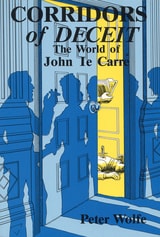
Corridors of Deceit
The World of John le CarréPeter Wolfe
University of Wisconsin Press, 1987
Peter Wolfe has produced an informative study of le Carré’s works, showing how le Carré’s five years in the Service (British Intelligence) helped him become a keen observer, social historian, and expert in bureaucratic politics. He has supplanted the technological flair marking much of today's spy fiction with moral complexity and psychological depth. He shows us what spies are like, how they feel about spying, and how spying affects their minds and hearts.
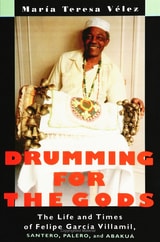
Drumming For The Gods
Maria Velez
Temple University Press, 2000
This book focuses on three periods of Felipe's life, each marked by changes in his personal life and by important historical events. The first period covers his formative years during which he received his initial training. Through Felipe's story, we explore the legacy of slavery in Cuba, the nature of Afro-Cuban religions and their musical traditions, and the history of bata drums. The second period covers the critical years of the Cuban Revolution. Here we see the effect of social turmoil both n music and religious practice (santero, palero, and abakua). The third period covers Felipe's life in New York as a refugee/immigrant, and the role of music in rebuilding his identity. Felipe's story illuminates his cultural practices and beliefs as well as the ways in which an individual musician selects and modifies the elements of his cultural heritage to create a voice that is personal and unique. Felipe not only lives through history but also makes history, shaping an identity that cannot be described as "Cuban immigrant," "Afro-Cuban," "religious drummer," or "santeria initiate," but is composed of all of them.
Through Felipe's experiences, Maria Teresa Velez reveals the interaction between social, political, economic, and cultural forces and an individual's own actions. The professionalization of musicians in Cuba following the Revolution and the plight of Afro-Cuban immigrants in New York are seen as large historical and social problems to which Felipe must personally respond. A noted ethnomusicologist, Velez provides the most insightful and comprehensive English-language study of an individual Cuban religious drummer available.
Drumming for the Gods is a must-read for those interested in ethnomusicology, Caribbean studies, and Afro-Cuban religions and culture.
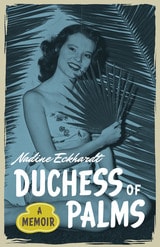
Duchess of Palms
A MemoirBy Nadine Eckhardt
University of Texas Press, 2009
A “fifties girl” tells the fascinating story of her marriages to novelist Billy Lee Brammer and Congressman Bob Eckhardt, and how these relationships propelled her into the multifaceted life she led on her own terms.
Child of the Great Depression, teenage "Duchess of Palms" beauty queen, wife of an acclaimed novelist and later of a brilliant U.S. congressman, and ultimately a successful single working woman and mother, Nadine Eckhardt has lived a fascinating life. In this unique, funny, and honest memoir, she recounts her journey from being a "fifties girl" who lived through the men in her life to becoming a woman in her own right, working toward her own goals.
Eckhardt's first marriage to writer Billy Lee Brammer gave her entrée to liberal political and literary circles in Austin and Washington, where she and Brammer both worked for Senator Lyndon B. Johnson. She describes the heady excitement of LBJ's world—a milieu that Brammer vividly captured in his novel The Gay Place. She next recalls her second marriage to Bob Eckhardt, whom she helped get elected to the U.S. House of Representatives, as well as her growing involvement with the counterculture of social protest, sexual revolution, and drug use. Eckhardt honestly recounts how the changing times changed her perception of herself, recalling that "I didn't know how to achieve for myself, only for others, and I felt ripped off and empty." This painful realization opened the door to a new life for Eckhardt. Her memoir concludes with a joyful description of her multifaceted later life as a restaurateur, assistant to Molly Ivins, writer, and center of a wide circle of friends.
Expanding historical counsciousness
the development of the Holocaust Educational FoundationAnita. Weiner
Northwestern University Press, 2003
Grace and Freedom in a Secular Age
Contingency, Vulnerability, and HospitalityPhilip J. Rossi
Catholic University of America Press, 2022
Have I Reasons
Work and Writings, 1993–2007Robert Morris
Duke University Press, 2008
The writings are arranged chronologically, beginning with “Indiana Street,” a vivid autobiographical account of the artist’s early years in Kansas City, Missouri. Have I Reasons includes reflections on Morris’s own site-specific installations; transcripts of seminars he conducted in conjunction with exhibitions; and the textual element of The Birthday Boy, the two-screen video-and-sound piece he installed at the Galleria dell’Accademia in Florence, Italy, on the occasion of the five hundredth anniversary of Michelangelo’s David. Essays range from original interpretations of Cézanne’s Mont Sainte-Victoire paintings and Jasper Johns’ early work to engagements with one of Morris’s most significant interlocutors, the philosopher Donald Davidson. Have I Reasons conveys not only Morris’s enduring deep interest in philosophy and issues of resemblance and representation but also his more recent turn toward directly addressing contemporary social and political issues such as corporate excess and preemptive belligerence.
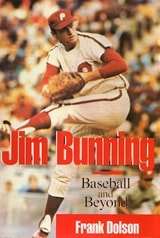
Jim Bunning
Frank Dolson
Temple University Press, 1998
He was the second pitcher in major league history to win 100 games in each league. The first was CY Young. He was the second pitcher to strike out 1000 in each league; again, only Cy Young beat hims to it. When Bunning retired at the end of the 1971 season, only one man -- Walter Johnson -- had more career strikeouts.
A proud, intensely competitive man, Bunning relished his duels with Ted Williams, Micky Mantle, and other slugging superstars of the day. What he didn't relish was dealing with sportswriter who didn't do their homework and with baseball leaders whose mismanagement, Bunning felt, jeopardized the game's place in the nation's heart. He waged battles with the likes of former commissioner Peter Ueberroth and club-owner-turned-interim-commissioner Bud Selig.
But Bunning did more than play baseball. He was a driving force in the early years of the Players Association, one of the men responsible for choosing Marvin Miller as head of the union. Bunning also was a manager in the minor leagues and in Puerto Rico and the Dominican Republic and was even a player's agent for a time. His baseball career behind him, he began a second career in politics. With a huge assist from his wife, Mary, the mother of their nine children, he waged an unsuccessful gubernational campaign in Kentucky and then became a six-term congressman. Bunning is currently running for the U.S. Senate seat in Kentucky.
John le Carré’s Post–Cold War Fiction
Robert Lance Snyder
University of Missouri Press, 2017
This is an analysis of the first 10 post—Cold War novels of one of the most significant ethicists in contemporary fiction.
This book challenges distinctions between “popular” and “serious” literature by recognizing le Carré as one of the most significant ethicists in contemporary fiction, contributing to an overdue reassessment of his literary stature. Le Carré’s ten post–Cold War novels constitute a distinctive subset of his espionage fiction in their response to the momentous changes in geopolitics that began in the 1990s. Through a close reading of these novels, Snyder traces how—amid the “War on Terror” and transnationalism—le Carré weighs what is at stake in this conflict of deeply invested ideologies.
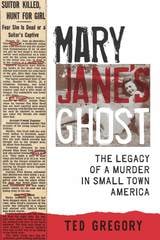
Mary Jane's Ghost
The Legacy of a Murder in Small Town AmericaTed Gregory
University of Iowa Press, 2017
Fast forward fifty years. Eccentric entrepreneur Michael Arians moves to Oregon, opens a roadhouse, gets elected mayor, and becomes obsessed with the crime. He comes up with a scandalous conspiracy theory and starts to believe that Mary Jane’s ghost is haunting his establishment. He also reaches out to the Chicago Tribune for help.
Arians’s letter falls on the desk of general assignment reporter Ted Gregory. For the next thirteen years, while he ricochets from story to story and his newspaper is deconstructed around him, Gregory remains beguiled by the case of the teenaged telephone operator Mary Jane and twenty-eight-year-old Navy vet Stanley—and equally fascinated by Arians’s seemingly hopeless pursuit of whoever murdered them. Mary Jane’s Ghost is the story of these two odysseys.

Murdoch's Politics
How One Man's Thirst For Wealth and Power Shapes our WorldDavid McKnight
Pluto Press, 2013
Rupert Murdoch's News Corporation is the most powerful media organisation in the world. Murdoch's commercial success is obvious, but less well understood is his successful pursuit of political goals, using News Corporation as his vehicle.
In Murdoch's Politics David McKnight tracks Murdoch's influence, from his support for Reagan and Thatcher, his deal with Tony Blair and attacks on Barack Obama. He examines the secretive corporate culture of News Corporation: its private political seminars for editors, its support for think tanks and its global campaigns on issues like Iraq and climate change.
Including analysis of the phone hacking crisis, possible bribery charges and Murdoch's appearance at the Leveson enquiry, this book is a highly topical study of one of the most influential and controversial figures of the modern age.

Nurturing Doubt
From Mennonite Missionary to Anthropologist in the Argentine ChacoElmer S. Miller
University of Illinois Press, 1995
POINTS OF RESISTANCE
Lauren Rabinovitz
University of Illinois Press, 2003
POINTS OF RESISTANCE
Lauren Rabinovitz
University of Illinois Press, 2003
At a time when there were few women directors in commercial films, the postwar avant-garde movement offered an opportunity. Rabinovitz argues that avant-garde cinema, open to women because of its marginal status in the art world, included women as filmmakers, organizers, and critics.
Focusing on Maya Deren, Shirley Clarke, and Joyce Wieland, Rabinovitz illustrates how women used bold physical images to enhance their work and how each provided entrée to her subversive art while remaining culturally acceptable. She combines archival materials with her own interviews to show how the women’s labor and films, even their identities as women filmmakers, were produced, disseminated, and understood. With a new preface and an updated bibliography, Points of Resistance simultaneously demonstrates the avant-garde’s importance as an organizational network for women filmmakers and the processes by which women remained marginal figures within that network.
Ranch Wife
Jo Jeffers; Foreword by Katherine Jensen
University of Arizona Press, 1993

Strong Advocate
The Life of a Trial LawyerThomas Strong
University of Missouri Press, 2012
In Strong Advocate, Thomas Strong, one of the most successful trial lawyers in Missouri’s history, chronicles his adventures as a contemporary personal injury attorney. Though the profession is held in low esteem by the general public, Strong entered the field with the right motives: to help victims who have been injured by defective products or the negligence of others.
The Hybrid Muse
Postcolonial Poetry in EnglishJahan Ramazani
University of Chicago Press, 2001
In The Hybrid Muse, Jahan Ramazani argues that postcolonial poets have also dramatically expanded the atlas of literature in English, infusing modern and contemporary poetry with indigenous metaphors and creoles. A rich and vibrant poetry, he contends, has issued from the hybridization of the English muse with the long resident muses of Africa, India, and the Caribbean. Starting with the complex case of Ireland, Ramazani closely analyzes the work of leading postcolonial poets and explores key questions about the relationship between poetry and postcolonialism. As inheritors of both imperial and native cultures, poets such as W. B. Yeats, Derek Walcott, Louise Bennett, A. K. Ramanujan, and Okot p'Bitek invent compelling new forms to articulate the tensions and ambiguities of their cultural in-betweeness. They forge hybrid figures, vocabularies, and genres that embody the postcolonial condition.
Engaging an array of critical topics, from the aesthetics of irony and metaphor to the politics of nationalism and anthropology, Ramazani reconceptualizes issues central to our understanding of both postcolonial literatures and twentieth-century poetry. The first book of its kind, The Hybrid Muse will help internationalize the study of poetry, and in turn, strengthen the place of poetry in postcolonial studies.
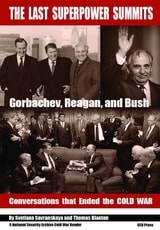
The Last Superpower Summits
Reagan, Gorbachev and Bush. Conversations that Ended the Cold War.The National Security Archive Savranskaya
Central European University Press, 2017
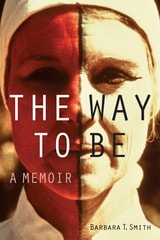
The Way to Be
A MemoirBarbara T. Smith
J. Paul Getty Trust, The, 0
For over fifty years, Barbara T. Smith has been at the forefront of artistic movements in California. Her work across many mediums explores concepts that strike at the core of human nature, including sexuality, physical and spiritual sustenance, technology, and death. In this memoir, Smith weaves together descriptive accounts of her pioneering performances with an intimate narrative of her life.
The Way to Be covers the years 1931 to 1981, up to the artist’s fiftieth birthday, resulting in an exhaustive catalogue of her early work. It reveals the personal stories and events behind her pieces and the challenges she faced in an art world dominated by sexism and machismo. Drawing on Smith’s archive at the Getty Research Institute, this enthralling book presents previously unpublished notes, documents, photographs, and firsthand accounts of her life and practice, as well as her more recent reflections on the past. The Way to Be demonstrates Smith’s lasting contributions to the field of contemporary art and provides an engaging commentary on a recent period of great cultural and political change.
This volume is published to accompany an exhibition on view at the Getty Research Institute at the Getty Center from February 28 to July 16, 2023.
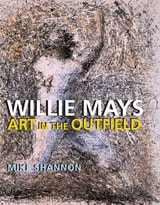
Willie Mays
Art in the OutfieldMike Shannon
University of Alabama Press, 2007
As much as any other sports figure, Willie Mays embodies the changes that racial integration brought to America’s game fields and its larger culture in the mid-20th century. Playing baseball with grace, skill, flair, and obvious delight, Willie Mays broke color barriers for more than just himself. He combined the ability to stroke majestic home runs while with an equal ability to outrun and catch what would have been home runs for opponents most famously when he turned Vic Wertz’s titantic blast into a long out in the 1954 World Series. As is often said of great players but never more true than in his case, Willie Mays could do it all.
Assembled in this work are 40 representations of how contemporary artists respond to and portray the skill, fame, and sheer love of the game that make Mays so remarkable and memorable. The art includes a broad range of styles and media from impressionistic graphite pencil drawings on paper through realistic Kodachrome photographic prints to expressionistic colored acrylics on canvas or glass. Mike Shannon offers a perceptive introductory essay on Mays’s long career and places the art in the context of his times. First curated as a traveling exhibit to honor Willie Mays’s 75th birthday, the exhibit opened at the Louisville Slugger Museum in Louisville, Kentucky, and is currently on tour.
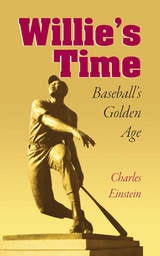
Willie's Time
Baseball's Golden AgeCharles Einstein
Southern Illinois University Press, 2004
To a generation of fans, Willie Mays was the greatest ballplayer they had ever seen. The prowess and speed of the Say Hey Kid were unmatched on the diamond before his time, prompting Joe DiMaggio to label him, “the closest you can come to perfection.” He was the first player to hit fifty home runs and steal twenty bases in a single season. Mays played for the New York Giants (1951–1957), San Francisco Giants (1958–1972), and New York Mets (1972–1973), and in his glory days with the Giants he not only set the major league mark for consecutive seasons by appearing in 150 games or more but by winning his two MVP awards a record twelve seasons apart. When Mays retired, he ranked third in career home runs (behind Aaron and Ruth), a record of 660 soon to be surpassed by Mays’s godson, Barry Bonds.
This twenty-fifth anniversary edition of the only ballplayer biography ever named a finalist for the Pulitzer Prize, Willie’s Time: Baseball’s Golden Age, restores to print Charles Einstein’s vivid biography of one of the game’s foremost legends. With a new preface from the author, this volume replays the most dramatic moments of the Say Hey Kid’s career—from the 1951 Miracle Giants to the Amazing Mets of 1973—and takes us inside the lives of Ruth, DiMaggio, Aaron, Durocher, and others along the way. Einstein offers a compelling and complete look at Mays: as a youth in racist Birmingham, a triumphant symbol of African American success, a sports hero lionized by fans, and yet all the while, still a very human figure destined to play for two decades amid baseball’s Golden Age.