Results by title
16 books match the query '1962-'
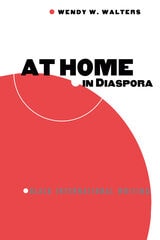
At Home in Diaspora
Black International WritingWendy Walters
University of Minnesota Press, 2005
In At Home in Diaspora, Wendy Walters investigates the work of Himes, Cliff, and three other twentieth-century black international writers—Caryl Phillips, Simon Njami, and Richard Wright—who have lived in and written from countries they do not call home. Unlike other authors in exile, those of the African diaspora are doubly displaced, first by the discrimination they faced at home and again by their life abroad. Throughout, Walters suggests that in the absence of a recoverable land of origin, the idea of diaspora comes to represent a home that is not singular or exclusionary. In this way, writing in exile is much more than a literary performance; it is a profound political act.
Wendy W. Walters is assistant professor of literature at Emerson College.
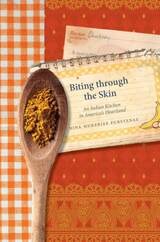
Biting through the Skin
An Indian Kitchen in America's HeartlandNina Mukerjee Furstenau
University of Iowa Press, 2013
As a girl and a young woman, Nina traveled to her ancestral India as well as to college and to Peace Corps service in Tunisia. Through her journeys and her marriage to an American man whose grandparents hailed from Germany and Sweden, she learned that her family was not alone in being a small pocket of culture sheltered from the larger world. Biting through the Skin shows how we maintain our differences as well as how we come together through what and how we cook and eat. In mourning the partial loss of her heritage, the author finds that, ultimately, heritage always finds other ways of coming to meet us. In effect, it can be reduced to a 4 x 6-inch recipe card, something that can fit into a shirt pocket. It’s on just such tiny details of life that belonging rests.
In this book, the author shares her shirt-pocket recipes and a great deal more, inviting readers to join her on her journey toward herself and toward a vital sense of food as culture and the mortar of community.

Can This Marriage Be Saved?
A MemoirNancy McCabe
University of Missouri Press, 2020

Crossing the Blue Willow Bridge
A Journey to My Daughter's Birthplace in ChinaNancy McCabe
University of Missouri Press, 2011
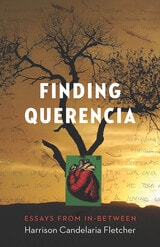
Finding Querencia
Essays from In-BetweenHarrison Candelaria Fletcher
The Ohio State University Press, 2022
With its roots in the Spanish verb querer—“to want, to love”—the term querencia has been called untranslatable but has come to mean a place of safety and belonging, that which we yearn for when we yearn for home. In this striking essay collection, Harrison Candelaria Fletcher shows that querencia is also a state of being: the peace that arises when we reconcile who we are. A New Mexican of mixed Latinx and white ethnicity, Candelaria Fletcher ventures into the fault lines of culture, landscape, and spirit to discover the source of his lifelong hauntings. Writing in the persona of coyote, New Mexican slang for “mixed,” he explores the hyphenated elements within himself, including his whiteness. Blending memory, imagination, form, and language, each essay spirals outward to investigate, accept, and embrace hybridity. Ultimately, Finding Querencia offers a new vocabulary of mixed-ness, a way to reconcile the crosscurrents of self and soul.
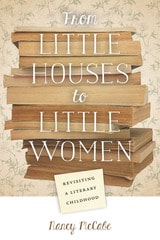
From Little Houses to Little Women
Revisiting a Literary ChildhoodNancy McCabe
University of Missouri Press, 2018
McCabe, who grew up in Kansas just a few hours from the Ingalls family’s home in Little House on the Prairie, always felt a deep connection with Laura Ingalls Wilder, author of the Little House series. McCabe read Little House on the Prairie during her childhood and visited Wilder sites around the Midwest with her aunt when she was thirteen. But then she didn’t read the series again until she decided to revisit in adulthood the books that had so influenced her childhood. It was this decision that ultimately sparked her desire to visit the places that inspired many of her childhood favorites, taking her on a journey that included stops in the Missouri of Laura Ingalls Wilder, the Minnesota of Maud Hart Lovelace, the Massachusetts of Louisa May Alcott, and even the Canada of Lucy Maud Montgomery.
From Little Houses to Little Women reveals McCabe’s powerful connection to the characters and authors who inspired many generations of readers. Traveling with McCabe as she rediscovers the books that shaped her and ultimately helped her to forge her own path, readers will enjoy revisiting their own childhood favorites as well.
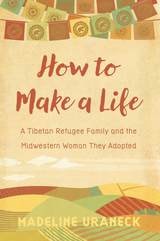
How to Make a Life
A Tibetan Refugee Family and the Midwestern Woman They AdoptedMadeline Uraneck
Wisconsin Historical Society Press, 2018
When Madeline Uraneck said hello to the Tibetan woman cleaning her office cubicle, she never imagined the moment would change her life. After learning that Tenzin Kalsang had left her husband and four children behind in a Tibetan refugee settlement in India to try to forge a better life for them, Madeline took on the task of helping her apply for US visas. When the family reunited in their new Midwestern home, Madeline became swept up in their lives, from homework and soccer games to family dinners and shared holiday traditions. By reaching out, she found more than she bargained for—a family who welcomed her as their own and taught her more than she offered them.
An evocative blend of immersion journalism and memoir, How to Make a Life shares the immigration story of a Tibetan refugee family who crossed real and cultural bridges to make a life in Madison, Wisconsin, with the assistance of the Midwestern woman they befriended. From tales of escaping Tibet over the Himalayas, to striking a balance between old traditions with new, to bridging divides one friendly gesture at a time, readers will expand their understanding of family, culture, and belonging.

Kore-eda Hirokazu
Marc Yamada
University of Illinois Press, 2023
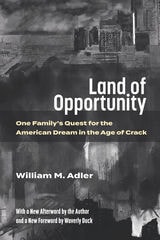
Land of Opportunity
One Family's Quest for the American Dream in the Age of CrackWilliam M. Adler
University of Michigan Press, 2021
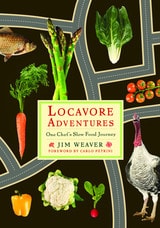
Locavore Adventures
One Chef's Slow Food JourneyWeaver, Jim
Rutgers University Press, 2012
America’s fast food culture reflects not only what we eat—foods that are processed and packaged for convenience—but also how we eat—munching as we multitask and not really tasting the super-sized meals we ingest. But in recent years, a more thoughtful philosophy about food has emerged. Developed in Italy, where fresh ingredients and artisanal techniques are prized, the Slow Food movement has rapidly gained a following in North America. The skeptics among us might wonder if it is possible truly to enjoy a Slow Food lifestyle—one based around local, seasonal ingredients—in our fast-paced world.
In Locavore Adventures, acclaimed New Jersey chef and restaurateur Jim Weaver shares his personal story of how he came to solve this problem—building a local slow food culture that is ecologically responsible and also yields delicious results. Weaver tells of his odyssey founding the Central New Jersey chapter of Slow Food, connecting local farmers, food producers, and chefs with the public to forge communities that value the region’s unique bounty. More than forty recipes throughout the book, from Hot Smoked Brook Trout with Asparagus Puree and Pickled Cippollini Onions to Zuppa di Mozzarella, will inspire readers to be creative in their own kitchens. Locavore Adventures is a thoughtful memoir about growing a sustainable food culture and a guide to slowing down, savoring locally grown food, and celebrating life.
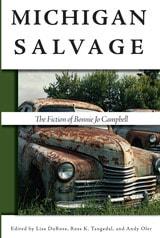
Michigan Salvage
The Fiction of Bonnie Jo CampbellLisa DuRose
Michigan State University Press, 2023
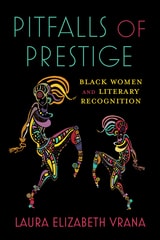
Pitfalls of Prestige
Black Women and Literary RecognitionLaura Elizabeth Vrana
The Ohio State University Press, 2024
Winner, 2025 College Language Association Book Award
From 1987, when Rita Dove won the Pulitzer Prize for Poetry, to 2021, when Amanda Gorman skyrocketed to celebrity status after performing during Biden’s inauguration and the Super Bowl, Black women have seemingly attained secure, stable positions at the forefront of American poetry. But this prominence comes at a price. As figures like Dove and Elizabeth Alexander have become well known, receiving endorsements and gaining visible platforms from major prizes, academic institutions, and publishing houses, the underlying terms of evaluation that greet Black women’s poetics often remain superficial, reflecting efforts to co-opt and contain rather than meaningfully consider new voices and styles. In Pitfalls of Prestige, Laura Elizabeth Vrana surveys how developments in American literary institutions since 1980 have shaped—and been shaped by—Black women poets. Grappling with the refulgent works of the most acclaimed contemporary figures alongside those of lesser-known poets, Vrana both elucidates how seeming gestures of inclusion can actually result in constraining Black women poets’ works and also celebrates how these writers draw on a rich lineage and forge alternative communities in order to craft continually innovative modes of transgressing such limits, on the page and in life.
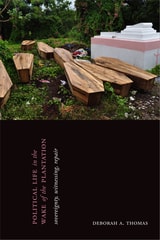
Political Life in the Wake of the Plantation
Sovereignty, Witnessing, RepairDeborah A. Thomas
Duke University Press, 2019
The Counterpunch (and Other Horizontal Poems)/El contragolpe (y otros poemas horizontales)
Juan Carlos Flores
University of Alabama Press, 2016
Mapping contemporary Cuba through the architecture of poetry and place.
Alamar, the home of award-winning Cuban poet Juan Carlos Flores, is the setting for his collection, The Counterpunch and Other Horizontal Poems) / El contragolpe (y otros poemas horizontales). Constructed as a self-help community in eastern Havana, Alamar is the largest housing complex in the world. Flores’s highly structured texts, organized into “art galleries,” present prose paintings of a big place in very small form.
Flores builds a poetic landscape with repeating structures that mirror Alamar’s five-floor walkups. Exploring life and dream on the flat surfaces of the poems, he gives fleeting glimpses of perception and survival at the urban margins. As the poet ages, so ages Alamar itself. Yet both find renewal through poetry.
The eighty poems in this bilingual edition offer the first English translation of a complete Flores collection. It will also be of interest to Spanish-language readers seeking access to Cuban literature abroad. Award-winning scholar and translator Kristin Dykstra has compiled an introduction in which she presents Flores, his literary contexts, and references in his poems. Because Flores made specific requests regarding translation, fascinating notes also clarify and expound on choices Dykstra makes in the English version.

The Mountain
Journeys in High PlacesRobin Patten
University of Utah Press, 2025
Since antiquity, mountains have captured the human imagination. The Mountain takes readers into higher realms, exploring the complex kinship between mountains and human thought, traditions, and ways of being. Told through the author’s own journeys, the narrative ranges across cultures and iconic naturalists to consider how varied ideas and experiences related to mountains—from sacred to scientific, romantic to retreat, to simply home—are all facets of the same intricate topography.
No matter where one starts on the spectrum of understanding, an intimate encounter with a mountain leads to a broader perspective. High places create a simultaneous humbleness at our human insignificance and a sense of belonging within the greater world. That quality of belonging, and the associated commitment of caring for the planet and all that it holds, has never been more important than it is today.

Transition & Development in Algeria
Economic, Social and Cultural ChallengesMohammed Saad
Intellect Books, 2013
The contributors represent a range of expertise in economics, business management, sociology, linguistics, political science and cultural studies. Their diverse backgrounds and perspectives permit this publication to explore new avenues of debate, which represent a significant contribution to the understanding of the present problems and solutions.