Results by title
25 books match the query '1963-1969'
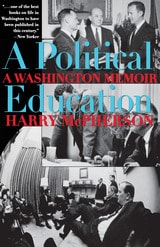
A Political Education
A Washington MemoirBy Harry McPherson
University of Texas Press, 1995
This insider's view of Washington in the 1950s and 1960s, of the tumultuous presidency of Lyndon Johnson, and of the conflicts and factions of the president's staff has become a political classic since its original publication in 1972. In this reissue, Harry McPherson adds a new preface in which he reflects on changes in Washington since the Johnson era and on the lessons Bill Clinton could learn from the presidency of Lyndon Johnson.
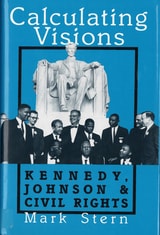
Calculating Visions
Kennedy, Johnson, and Civil RightsMark Stern
Rutgers University Press, 1992
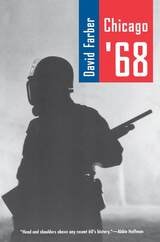
Chicago '68
David Farber
University of Chicago Press, 1988
"Chicago '68 was a watershed summer. Chicago '68 is a watershed book. Farber succeeds in presenting a sensitive, fairminded composite portrait that is at once a model of fine narrative history and an example of how one can walk the intellectual tightrope between 'reporting one's findings' and offering judgements about them."—Peter I. Rose, Contemporary Sociology
Intergovernmental Relations in the American Administrative State
The Johnson PresidencyBy David M. Welborn and Jesse Burkhead
University of Texas Press, 1989
During the 1960s, President Lyndon Johnson and his administration substantially altered the structure of the American administrative state. Creating intergovernmental programs to forward the goal of the Great Society, they changed the contours of national-state-local relationships, and these changes largely have remained, despite the attempts of later administrations to reverse them. Intergovernmental Relations in the American Administrative State is the first comprehensive study of how and why these changes occurred.
Drawn from a wealth of primary material in the Lyndon Baines Johnson Library, the study probes the objectives of the president and other framers of new policies and programs, within the institutional and political context of the time. The authors give special attention to the inherent incongruities that arise when intergovernmental programs are used to address problems defined in national terms. In addition, they reveal how certain programs actually challenged the power of established national bureaucracies. They conclude with a thoughtful overview of the Johnson legacy in intergovernmental relations during subsequent administrations.

Johnson, Nixon, and the Doves
Small, Melvin
Rutgers University Press, 1988
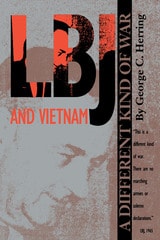
LBJ and Vietnam
A Different Kind of WarBy George C. Herring
University of Texas Press, 1994
Decades later, the Vietnam War remains a divisive memory for American society. Partisans on all sides still debate why the war was fought, how it could have been better fought, and whether it could have been won at all.
In this major study, a noted expert on the war brings a needed objectivity to these debates by examining dispassionately how and why President Lyndon Johnson and his administration conducted the war as they did. Drawing on a wealth of newly released documents from the LBJ Library, including the Tom Johnson notes from the influential Tuesday Lunch Group, George Herring discusses the concept of limited war and how it affected President Johnson's decision making, Johnson's relations with his military commanders, the administration's pacification program of 1965-1967, the management of public opinion, and the "fighting while negotiating" strategy pursued after the Tet Offensive in 1968.
The author's in-depth analysis exposes numerous flaws in Johnson's management of the war. In Herring's view, the Johnson administration lacked any overall strategy for conducting the war. No change in approach was ever discussed, despite popular and even administration dissatisfaction with the progress of the war, and no oversight committee coordinated the activities of the military services and various governmental agencies, which were left to follow their own, often conflicting, agendas.
LBJ and the Presidential Management of Foreign Relations
By Paul Y. Hammond
University of Texas Press, 1993
In this insightful study, Paul Y. Hammond, an experienced analyst of bureaucratic politics, adapts and extends that approach to explain and evaluate the Johnson administration’s performance in foreign relations in terms that have implications for the post–Cold War era.
The book is structured around three case studies of Johnson’s foreign policy decision making. The first study examines economic and political development. It explores the way Johnson handled the provision of economic and food assistance to India during a crisis in India’s food policies. This analysis provides lessons not only for dealing with African famine in later years but also for assisting Eastern Europe and the former Soviet Union.
The second case study focuses on U.S. relations with Western Europe at a time that seemed to require a major change in the NATO alliance. Here, Hammond illuminates the process of policy innovation, particularly the costs of changing well-established policies that embody an elaborate network of established interests. The third case study treats the Vietnam War, with special emphasis on how Johnson decided what to do about Vietnam. Hammond critiques the rich scholarship available on Johnson’s advisory process, based on his own reading of the original sources.
These case studies are set in a larger context of applied theory that deals more generally with presidential management of foreign relations, examining a president’s potential for influence on the one hand and the constraints on his or her capacity to control and persuade on the other. It will be important reading for all scholars and policymakers interested in the limits and possibilities of presidential power in the post–Cold War era.
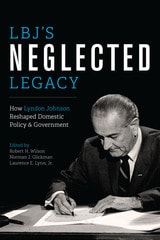
LBJ's Neglected Legacy
How Lyndon Johnson Reshaped Domestic Policy and GovernmentEdited by Robert H. Wilson, Norman J. Glickman, and Laurence E. Lynn, Jr.
University of Texas Press, 2015
During the five full years of his presidency (1964–1968), Lyndon Johnson initiated a breathtaking array of domestic policies and programs, including such landmarks as the Civil Rights Act, Head Start, Food Stamps, Medicare and Medicaid, the Immigration Reform Act, the Water Quality Act, the Voting Rights Act, Social Security reform, and Fair Housing. These and other “Great Society” programs reformed the federal government, reshaped intergovernmental relations, extended the federal government’s role into new public policy arenas, and redefined federally protected rights of individuals to engage in the public sphere. Indeed, to a remarkable but largely unnoticed degree,Johnson’s domestic agenda continues to shape and influence current debates on major issues such as immigration, health care, higher education funding, voting rights, and clean water, even though many of his specific policies and programs have been modified or, in some cases, dismantled since his presidency.
LBJ’s Neglected Legacy examines the domestic policy achievements of one of America’s most effective, albeit controversial, leaders. Leading contributors from the fields of history, public administration, economics, environmental engineering, sociology, and urban planning examine twelve of LBJ’s key domestic accomplishments in the areas of citizenship and immigration, social and economic policy, science and technology, and public management. Their findings illustrate the enduring legacy of Johnson’s determination and skill in taking advantage of overwhelming political support in the early years of his presidency to push through an extremely ambitious and innovative legislative agenda, and emphasize the extraordinary range and extent of LBJ’s influence on American public policy and administration.
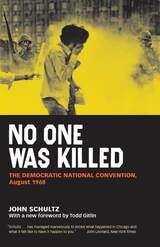
No One Was Killed
The Democratic National Convention, August 1968John Schultz
University of Chicago Press, 2009
While other writers contemplated the events of the 1968 Chicago riots from the safety of their hotel rooms, John Schultz was in the city streets, being threatened by police, choking on tear gas, and listening to all the rage, fear, and confusion around him. The result, No One Was Killed, is his account of the contradictions and chaos of convention week, the adrenalin, the sense of drama and history, and how the mainstream press was getting it all wrong.
"A more valuable factual record of events than the city’s white paper, the Walker Report, and Theodore B. White’s Making of a President combined."—Book Week
"As a reporter making distinctions between Yippie, hippie, New Leftist, McCarthyite, police, and National Guard, Schultz is perceptive; he excels in describing such diverse personalities as Julian Bond and Eugene McCarthy."—Library Journal
"High on my short list of true, lasting, inspired evocations of those whacked-out days when the country was fighting a phantasmagorical war (with real corpses), and police under orders were beating up demonstrators who looked at them funny."—Todd Gitlin, from the foreword
Paper Soldiers
The American Press and the Vietnam WarClarence R. Wyatt
University of Chicago Press, 1994
"Wyatt makes the Diem period in Saigon come to life—the primitive communications, the police crackdowns, the quarrels within the news organizations between the pessimists in Saigon and the optimists in Washington and New York."—Peter Braestrup, Washington Times
"An important, readable study of the Vietnam press corps—the most maligned group of journalists in modern American history. Clarence Wyatt's insights and assessments are particularly valuable now that the media is rapidly growing in its influence on domestic and international affairs."—Peter Arnett, CNN foreign correspondent
President Johnson's War On Poverty
Rhetoric and HistoryDavid Zarefsky
University of Alabama Press, 1986
How words waged war—and shaped the fate of a nation’s boldest social crusade.
In January 1964, in his first State of the Union address, President Lyndon Johnson announced a declaration of “unconditional war” on poverty. By the end of the year the Economic Opportunity Act became law.
War on Poverty illustrates the interweaving of rhetorical and historical forces in shaping public policy. Zarefsky suggests that an important problem lay in its discourse. He assumes that language plays a central role in the formulation of social policy by shaping the context within which people view the social world. By terming the anti-poverty effort a war, President Johnson imparted significant symbolism to the effort: it called for total victory and gave confidence that the “war” was winnable. It influenced the definition of the enemy as an intergenerational cycle of poverty, rather than the shortcomings of the individual; and it led to the choice of community action, manpower programs, and prudent management as weapons and tactics. Each of these implications involves a choice of language and symbols, a decision about how to characterize and discuss the world. Zarefsky contends that each of these rhetorical choices was helpful to the Johnson administration in obtaining passage of the Economic Opportunity Ac of 1964, but that each choice invited redefinition or reinterpretation of a symbol in a way that threatened the program.
Presidential Management of Science and Technology
The Johnson PresidencyBy W. Henry Lambright
University of Texas Press, 1985
How do science and technology issues become important to a particular presidency? Which issues gain priority? How? Why? What is the role of the presidency in the adoption of national policies affecting science and technology? In their implementation? How does the presidency try to curtail certain programs? Eliminate others? Or rescue programs Congress might seek to terminate? How does implementation vary between a president's own program and one that is inherited?
Such are the questions raised in this book, one of the first to address the relationship between scientists, few of whom have political backgrounds, and presidents, few of whom are knowledgeable in matters of science and technology. Drawing on extensive research performed at the Lyndon B. Johnson Library in Austin, Texas, and the National Archives in Washington, as well as on secondary sources and interviews, W. Henry Lambright describes, discusses, and analyzes this relationship and shows how one presidency set its agenda, adopted, implemented, and curtailed or eliminated science and technology programs.
Twenty-four case studies of specific decision processes occurring in the era of Lyndon Johnson anchor the book in the world of real events. Some programs adopted under Johnson are now all but forgotten, such as the Manned Orbiting Laboratory, nuclear desalting, and electronic barrier. The effects of many more, initiated, maintained, or enlarged under LBJ, lasted far beyond his administration. These include environmental pollution control, Project Apollo, and the application of Agent Orange in Vietnam. Finally, there are those that were redirected, placed on hold, or terminated under Johnson, such as the supersonic transport, antiballistic missile, and Project Mohole.
In this important book, Lambright has provided a framework for analyzing how the presidency as an institution deals with such issues, and he has established a strong foundation on which all future students of presidential policy management can build.
Presidents and Protestors
Political Rhetoric in the 1960sTheodore O. Windt
University of Alabama Press, 1990
The decade of the 1960s was a time of passionate politics and resounding rhetoric. The “resounding rhetoric,” from Kennedy’s celebrated inaugural address, to the outlandish antics of the Yippies, is the focus of this book. The importance of this volume is its consideration of both people in power (presidents) and people out of power (protesters), and its delineation of the different rhetorical bases that each had to work from in participating in the politics of the 1960s.
Presidents and Protesters places rhetorical acts within their specific political contexts, changing the direction of previous rhetorical studies from the sociological to the historical-political. Above all, this is an intellectual history of the 1960s as seen through the rhetoric of the participants, which ultimately shows that the major participants utilized every form of political discourse available and, consequently, exhausted not only themselves but the rhetorical forms as well.
Regulation in the White House
The Johnson PresidencyBy David M. Welborn
University of Texas Press, 1993
Regulation in the White House is an examination of regulatory policy and its development in the Johnson administration and the first comprehensive study of any presidency and regulation. Based upon a thorough analysis of presidential papers in the Lyndon B. Johnson Library, the book investigates the working relationships linking the presidency, regulatory commissions, and executive agencies with regulatory responsibilities in both the economic and social spheres.
David Welborn finds that the president's business included regulation as a major component. Johnson's concerns in regulation were varied and complex. He and his aides worked assiduously and successfully to establish effective, cooperative relationships with regulators and to avoid the exercise of undue influence on particular regulatory determinations. In Welborn's view, Johnson traversed the treacherous ground of regulatory politics with adeptness and achieved his major purposes in regulation.
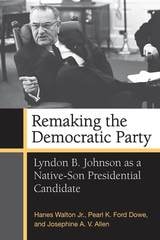
Remaking the Democratic Party
Lyndon B. Johnson as a Native-Son Presidential CandidateHanes Walton Jr., Pearl K. Ford Dowe, and Josephine A. V. Allen
University of Michigan Press, 2016
Although ridiculed by contemporaries for his apparent lack of control over formal party politics and the national committee, Johnson excelled at leading the Democratic Party’s policy agenda. While a senator and as president, Johnson advocated for—and secured—liberal social welfare and civil rights legislation, forcing the party to break with its Southern tradition of elitism, conservatism, and white supremacy. In a way, Johnson set the terms for the continuing partisan battle because, by countering the Democrats’ new ideology, the Republican Party also underwent a transformation.
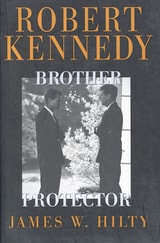
Robert Kennedy
Brother ProtectorJames Hilty
Temple University Press, 2000
The centerpiece of the book is the remarkable political partnership that formed between Robert and John. As the manager of John's political campaigns Robert proved himself "hard as nails" (in his father's admiring words), relentless in securing his brother's victory and unforgiving in overseeing his brother's presidency. Hilty marshals a great deal of evidence to show that while they did not always see eye to eye -- Lyndon Johnson's selection as John's running mate being a notable disagreement -- Robert and John discussed virtually every issue, gauging the likely political effects of every position. Robert was so close to the President that insiders called him "number one and a-half"; their consultations were so intimate that they spoke in a kind of code, barely intelligible to those around them. In Hilty's evocative but unsentimental recounting of the political crises of the Kennedy Administration, Robert and John prove to have been more calculating and astute leaders than today's pundits allow. Theirs was a partnership that was unprecedented and, thanks to an act signed into law by Lyndon Johnson, is never to be equaled.
The Kennedy family's story seems to have been lived in the public eye and Americans apparently never tire of the photographs and familiar anecdotes. Most of the written accounts, however, either highlight the multiple tragedies and scandals, preserve the latter-day Camelot myth, or follow the elusive traces of some conspiracy.
In contrast, Hilty's concern is for historical perspective -- for accuracy, plausibility, and thoroughness. With facts and reasoned conclusions, he challenges the stories about the Kennedys in relation to Marilyn Monroe, J. Edgar Hoover, and Martin Luther King, Jr. that have passed into American folklore. He develops a portrait of Robert Kennedy as a complex public figure, a man of centrist political allegiances and firm moral convictions who easily adapted to the crusader's role in working for Joseph McCarthy or pursuing James Hoffa for racketeering. Hilty's great care in sifting through the evidence and weighing competing theories gives us a sense of Kennedy as a public servant whose dedication to social justice intensified after he was in office and further deepened after his brother's assassination.
Even as he took charge of family matters and supported Jacqueline during the long ordeal of the state funeral, Robert's own crushing pain was evident to the world. It was then that "Bobby" ceased being a disparaging term and became a mark of respect and affection.
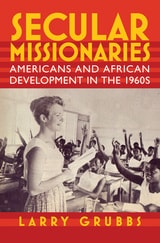
Secular Missionaries
Americans and African Development in the 1960sLarry Grubbs
University of Massachusetts Press, 2010
Social Controversy and Public Address in the 1960s and Early 1970s
A Rhetorical History of the United States, Volume IXRichard J. Jensen
Michigan State University Press, 2017
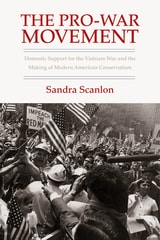
The Pro-War Movement
Domestic Support for the Vietnam War and the Making of Modern American ConservatismSandra Scanlon
University of Massachusetts Press, 2013
In the vast literature on the Vietnam War, much has been written about the antiwar movement and its influence on U.S. policy and politics. In this book, Sandra Scanlon shifts attention to those Americans who supported the war and explores the war's impact on the burgeoning conservative political movement of the 1960s and early 1970s.
Believing the Vietnam War to be a just and necessary cause, the pro-war movement pushed for more direct American military intervention in Southeast Asia throughout the Kennedy administration, lobbied for intensified bombing during the Johnson years, and offered coherent, if divided, endorsements of Nixon's policies of phased withdrawal. Although its political wing was dominated by individuals and organizations associated with Barry Goldwater's presidential bids, the movement incorporated a broad range of interests and groups united by a shared antipathy to the New Deal order and liberal Cold War ideology.
Appealing to patriotism, conservative leaders initially rallied popular support in favor of total victory and later endorsed Nixon's call for “peace with honor.” Yet as the war dragged on with no clear end in sight, internal divisions eroded the confidence of pro-war conservatives in achieving their aims and forced them to reevaluate the political viability of their hardline Cold War rhetoric. Conservatives still managed to make use of grassroots patriotic campaigns to marshal support for the war, particularly among white ethnic workers opposed to the antiwar movement. Yet in so doing, Scanlon concludes, they altered the nature and direction of the conservative agenda in both foreign and domestic policy for years to come.
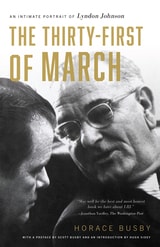
The Thirty-first of March
An Intimate Portrait of Lyndon JohnsonHorace Busby, with a Preface by Scott Busby and an Introduction by Hugh Sidey
University of Texas Press, 2023
An intimate retelling of Lyndon B. Johnson’s politics and presidency by one of his closest advisors.
Horace Busby was one of LBJ’s most trusted advisors; their close working and personal relationship spanned twenty years. In The Thirty-First of March he offers an indelible portrait of a president and a presidency at a time of crisis. From the aftereffects of the Kennedy assassination, when Busby was asked by the newly sworn-in president to sit by his bedside during his first troubled nights in office, to the concerns that defined the Great Society—civil rights, the economy, social legislation, housing, and the Vietnam War—Busby not only articulated and refined Johnson's political thinking, he also helped shape the most ambitious, far-reaching legislative agenda since FDR's New Deal.
Here is Johnson the politician, Johnson the schemer, Johnson who advised against JFK’s choice of an open limousine that fateful day in Dallas, and Johnson the father, sickened by the deaths of young men fighting and dying in Vietnam on his orders. The Thirty-first of March is a rare glimpse into the inner sanctum of Johnson's presidency, as seen through the eyes of one of the people who understood him best.
Vietnam
The Early DecisionsEdited by Lloyd C. Gardner and Ted Gittinger
University of Texas Press, 1997
Haunting questions remain about our involvement in Vietnam. Perhaps the most persistent of these is whether President Kennedy would have ended American involvement in Vietnam if he had lived.
For many Americans, Oliver Stone's film JFK left no doubt that before his assassination Kennedy had determined to quit Vietnam. Yet the historical record offers a more complex answer. In this fresh look at the archival evidence, noted scholars take up the challenge to provide us with their conclusions about the early decisions that put the United States on the path to the greatest American tragedy since the Civil War. The tensions and turmoil that accompanied those decisions reveal the American presidency at the center of a storm of conflicting advice.
The book is divided into four sections. Parts one and two delve into the political and military contexts of the early decisions. Part three raises the intriguing questions of Kennedy's and Johnson's roles in the conflict, particularly the thorny issue of whether Kennedy did, in fact, intend to withdraw from Vietnam and whether Johnson reversed that policy. Part four reveals an uncanny parallel between early Soviet policy toward Hanoi and U.S. policy toward Saigon.
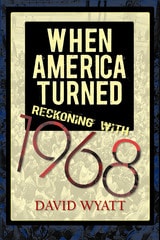
When America Turned
Reckoning with 1968David Wyatt
University of Massachusetts Press, 2013
Wyatt explores these questions as he retraces the decisive moments of 1968—the Tet Offensive, the McCarthy campaign, the assassinations of Martin Luther King Jr. and Robert Kennedy, the student revolt at Columbia, the "police riot" at the Democratic Convention in Chicago, Lyndon Johnson's capitulation, and Richard Nixon's ascendency to power. Seeking to recover the emotions surrounding these events as well as analyze their significance, Wyatt draws on the insights of what Michael Herr has called "straight" and "secret" histories. The first category consists of work by professional historians, traditional journalists, public figures, and political operatives, while the second includes the writings of novelists, poets, New Journalists, and memoirists.
The aim of this parallel approach is to uncover two kinds of truth: a "scholarly truth" grounded in the documented past and an "imaginative truth" that occupies the more ambiguous realm of meaning. Only by reckoning with both, Wyatt believes, can Americans come to understand the true legacy of the 1960s.
White House Operations
The Johnson PresidencyBy Emmette S. Redford; and Richard T. McCulley
University of Texas Press, 1986
The relation of White House assistants to the president, their appropriate role in the governmental process, and the most effective means for organizing and managing the White House have been subjects of both public concern and academic dispute. White House Operations addresses these and related questions by providing the first thorough analysis of how the thirty-sixth president managed his staff. By grounding their study in original documents from the Lyndon B. Johnson Presidential Library, the authors lift the veil of secrecy that clouds the inner workings of the White House. The result is an insightful elaboration of the complex, extensive, and diverse roles of White House aides—and av fascinating look at such key White House figures as McGeorge Bundy, Joseph Califano, Bill Moyers, George Reedy, Walt Rostow, Lawrence O’Brien, and Johnson himself.
This exploration of Johnson’s highly personalized White House operations provides far-reaching implications for the nature of effective presidential management. The comprehensive analysis of the range of work done under Johnson and the unique nature of White House assistance leads the authors to a strong and vigorous assertion for a positive role for the White House staff that clashes sharply with the thrust of many recommendations for reorganizing the presidency. Redford and McCulley convincingly demonstrate that management of the White House staff and other parts of the president’s advisory system will remain crucial for successful presidential performance.
The book is the fifth volume in a series designed to provide a comprehensive administrative history of the Johnson presidency. The book will be of interest to the informed general reader, presidential scholars, political scientists, U.S. historians, and students of public management and will be an important addition to academic library collections.
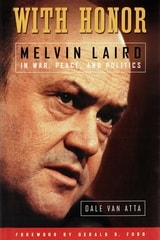
With Honor
Melvin Laird in War, Peace, and PoliticsVan Atta
University of Wisconsin Press, 2008
The first book ever to focus on Laird’s legacy, this authorized biography reveals his central and often unrecognized role in managing the crisis of national identity sparked by the Vietnam War—and the challenges, ethical and political, that confronted him along the way. Drawing on exclusive interviews with Laird, Henry Kissinger, Gerald Ford, and numerous others, author Dale Van Atta offers a sympathetic portrait of a man striving for open government in an atmosphere fraught with secrecy. Van Atta illuminates the inner workings of high politics: Laird’s behind-the-scenes sparring with Kissinger over policy, his decisions to ignore Nixon’s wilder directives, his formative impact on arms control and health care, his key role in the selection of Ford for vice president, his frustration with the country’s abandonment of Vietnamization, and, in later years, his unheeded warning to Donald Rumsfeld that “it’s a helluva lot easier to get into a war than to get out of one.”
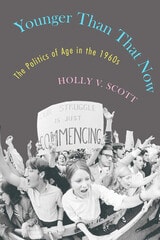
Younger Than That Now
The Politics of Age in the 1960sHolly V. Scott
University of Massachusetts Press, 2016
Retrospectives of the 1960s routinely include the face of youth rebellion: long-haired students occupying campus buildings, young men burning draft cards, hippies dancing at Woodstock. In Younger Than That Now, Holly V. Scott explores how the idea of “youth” served as a tactic in the political and social activism of these years. In the early part of that decade, young white activists began to learn from the civil rights movement's defiance of racism. They examined their own lives and concluded that campus rules and the draft were repression as well. As a group, they were ripe for revolution, and their age gave them a unique perspective for understanding and protesting against injustice. In short, young people began to use their youth as a political strategy.
Some in the New Left were dubious of this strategy and asked how it might damage long-term progress. Young feminists and people of color were particularly quick to question the idea that age alone was enough to sustain a movement. And the media often presented young people as impulsive and naive, undermining their political legitimacy. In tracing how “youth” took on multiple meanings as the 1960s progressed, Scott demonstrates the power of this idea to both promote and hinder social change.