Results by title
17 books match the query '1966-'
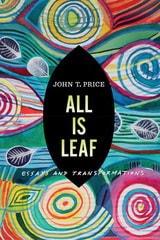
All Is Leaf
Essays and TransformationsJohn T Price
University of Iowa Press, 2022
He employs an array of forms and voices, whether penning a break-up letter to America or a literary rock-n-roll road song dedicated to prairie scientists, or giving pregame pep talks to his son’s losing football team. Here, too, are moving portrayals of his father’s last effort as a small-town lawyer to defend the rights of abused women, and his own efforts as a writing teacher to honor the personal stories of his students.
From his Iowa backyard to the edge of the Arctic Circle, from the forgotten recesses of the body to the far reaches of the solar system, this book demonstrates the ways imagination and informed compassion can, as Price describes it, expand thousandfold the boundaries of what we might “have naïvely considered an individual self.”
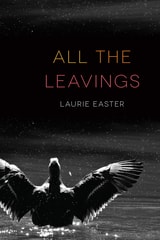
All the Leavings
Laurie Easter
Oregon State University Press, 2021
Whether recounting the home birth of her second child, encounters with cougars, the fraught dynamics of mother-daughter relationships, the destructive power of wildfires, or the community bonds challenged by a tragic suicide, Easter’s writing is firmly grounded in place. She takes readers deep into the heart of a still-wild Oregon, perilous yet rich with natural beauty.
Written from one woman’s perspective as a mother, wife, and friend, All the Leavings is ultimately a book about love—for the child who faces a health crisis, for the friend dying of AIDS, for the one entangled by addiction who then disappears. Long after the final page is turned, it will resonate with readers interested in essays, memoir, alternative lifestyles, and the literature of the West.
Anti-Blackness and Human Monstrosity in Black American Horror Fiction
Jerry Rafiki Jenkins
The Ohio State University Press, 2024
Anti-Politics Machine
Development, Depoliticization, and Bureaucratic Power in LesothoJames Ferguson
University of Minnesota Press, 1994
Divergent Trajectories
Interviews with Innovative Fiction WritersFlore Chevaillier
The Ohio State University Press, 2017
Including interviews with R. M. Berry, Debra Di Blasi, Percival Everett, Thalia Field, Renee Gladman, Bhanu Kapil, Lance Olsen, Michael Martone, Carole Maso, Joseph McElroy, Christina Milletti, Alan Singer, and Steve Tomasula, Divergent Trajectories provides a framework that allows innovative authors to discuss in some depth their works, backgrounds, formal research, thematic preferences, genre treatment, aesthetic philosophies, dominant linguistic expressions, cultural trends, and the literary canon. Through an examination of these concepts, writers ask what “traditional” and “innovative” writing is, and most of all, what fiction is today.
Goodbye, My Tribe
An Evangelical ExodusVic Sizemore
University of Alabama Press, 2020
Sizemore began writing these essays with the aim of exploring and understanding what happened when the mythology of his “tribe” crumbled from beneath his feet. He draws heavily on his upbringing and his family history as a framework for how his “tribe” of white evangelicals have found ways to reconcile Christianity with what the author finds to be troubling stances on many social issues, among them race, gender, sexuality, materialism, anti-intellectualism, and white supremacy.
In a clear-eyed and eloquent voice, Sizemore grapples movingly with his own bewilderment and chagrin as he struggles to reconcile the essential philosophical and moral decay that he believes many evangelicals have come to embrace. His insights, arranged topically and thematically and told through graceful and accessible prose, toggle between memoir and literary journalism, along a spectrum that touches on history, philosophy, theology, and personal reflections.
.
Home Ice
Confessions of a Blackhawks FanKevin Cunningham
University of Iowa Press, 2017
Home Ice combines memoir and history to explore how the mysteries of Blackhawks fandom explain big questions like tribal belonging, masculinity, and why you would ever trade Chris Chelios. In recounting the team’s—and his own—wins and losses (and ties), Cunningham covers everything from Keith Magnuson’s bachelor pad to the grim early aughts to Patrick Kane’s Cup-winner. Throughout, he explores how we come to love the things we love. Funny and touching, Home Ice is one Blackhawk fan’s attempt to understand why sports fandom is utterly ridiculous and entirely necessary.
Israeli Culture between the Two Intifadas
A Brief RomanceBy Yaron Peleg
University of Texas Press, 2008
Over the past two decades, profound changes in Israel opened its society to powerful outside forces and the dominance of global capitalism. As a result, the centrality of Zionism as an organizing ideology waned, prompting expressions of anxiety in Israel about the coming of a post-Zionist age. The fears about the end of Zionism were quelled, however, by the Palestinian uprising in 2000, which spurred at least a partial return to more traditional perceptions of homeland. Looking at Israeli literature of the late twentieth century, Yaron Peleg shows how a young, urban class of Israelis felt alienated from the Zionist values of their forebears, and how they adopted a form of escapist romanticism as a defiant response that replaced traditional nationalism.
One of the first books in English to identify the end of the post-Zionist era through inspired readings of Hebrew literature and popular media, Israeli Culture between the Two Intifadas examines Israel's ambivalent relationship with Jewish nationalism at the end of the twentieth century.
Lucrecia Martel
Gerd Gemünden
University of Illinois Press, 2019
Man Killed by Pheasant and Other Kinships
John T. Price
University of Iowa Press, 2012
Man Made
Searching for Dads, Daddies, Father Figures, and FatherhoodSteve Majors
University of Wisconsin Press, 2025
In this poignant and provocative memoir, Steve Majors takes us on a journey of his own self-discovery as he grows from a gay boy in search of a father figure to a gay man grappling with what it means to be a father himself. In doing so, Majors creates various snapshots of time in which his—and the world’s—understanding of what it means to be a gay man changes.
My Mother’s Funeral
Adriana Páramo
CavanKerry Press, 2013
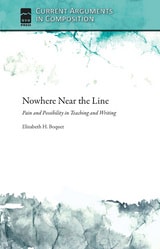
Nowhere Near the Line
Pain and Possibility in Teaching and WritingElizabeth H. Boquet
Utah State University Press, 2016
In this short work, Elizabeth Boquet explores the line Lawrence Schall describes above, tracing the overlaps and intersections of a lifelong education around guns and violence, as a student, a teacher, a feminist, a daughter, a wife, a citizen and across the dislocations and relocations that are part of a life lived in and around school. Weaving narratives of family, the university classroom and administration, her husband’s work as a police officer, and her work with students and the Poetry for Peace effort that her writing center sponsors in the local schools, she recounts her efforts to respond to moments of violence with a pedagogy of peace. “Can we not acknowledge that our experiences with pain anywhere should render us more, not less, capable of responding to it everywhere?” she asks. “Compassion, it seems to me, is an infinitely renewable resource.”
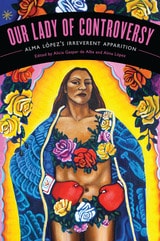
Our Lady of Controversy
Alma López's “Irreverent Apparition”Edited by Alicia Gaspar de Alba and Alma López
University of Texas Press, 2011
Months before Alma López's digital collage Our Lady was shown at the Museum of International Folk Art in 2001, the museum began receiving angry phone calls from community activists and Catholic leaders who demanded that the image not be displayed. Protest rallies, prayer vigils, and death threats ensued, but the provocative image of la Virgen de Guadalupe (hands on hips, clad only in roses, and exalted by a bare-breasted butterfly angel) remained on exhibition.
Highlighting many of the pivotal questions that have haunted the art world since the NEA debacle of 1988, the contributors to Our Lady of Controversy present diverse perspectives, ranging from definitions of art to the artist's intention, feminism, queer theory, colonialism, and Chicano nationalism. Contributors include the exhibition curator, Tey Marianna Nunn; award-winning novelist and Chicana historian Emma Pérez; and Deena González (recognized as one of the fifty most important living women historians in America).
Accompanied by a bonus DVD of Alma López's I Love Lupe video that looks at the Chicana artistic tradition of reimagining la Virgen de Guadalupe, featuring a historic conversation between Yolanda López, Ester Hernández, and Alma López, Our Lady of Controversy promises to ignite important new dialogues.
Pitfalls of Prestige
Black Women and Literary RecognitionLaura Elizabeth Vrana
The Ohio State University Press, 2024
Winner, 2025 College Language Association Book Award
From 1987, when Rita Dove won the Pulitzer Prize for Poetry, to 2021, when Amanda Gorman skyrocketed to celebrity status after performing during Biden’s inauguration and the Super Bowl, Black women have seemingly attained secure, stable positions at the forefront of American poetry. But this prominence comes at a price. As figures like Dove and Elizabeth Alexander have become well known, receiving endorsements and gaining visible platforms from major prizes, academic institutions, and publishing houses, the underlying terms of evaluation that greet Black women’s poetics often remain superficial, reflecting efforts to co-opt and contain rather than meaningfully consider new voices and styles. In Pitfalls of Prestige, Laura Elizabeth Vrana surveys how developments in American literary institutions since 1980 have shaped—and been shaped by—Black women poets. Grappling with the refulgent works of the most acclaimed contemporary figures alongside those of lesser-known poets, Vrana both elucidates how seeming gestures of inclusion can actually result in constraining Black women poets’ works and also celebrates how these writers draw on a rich lineage and forge alternative communities in order to craft continually innovative modes of transgressing such limits, on the page and in life.
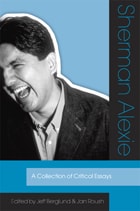
Sherman Alexie
A Collection of Critical EssaysJeff Berglund
University of Utah Press, 2010
Sherman Alexie is, by many accounts, the most widely read American Indian writer in the United States and likely in the world. A literary polymath, Alexie's nineteen published books span a variety of genres and include his most recent National Book Award-winning The Absolutely True Diary of a Part-Time Indian.
Now, for the first time, a volume of critical essays is devoted to Alexie's work both in print and on the big screen. Editors Jeff Berglund and Jan Roush have assembled twelve leading scholars of American Indian literature to provide new perspectives on a writer with his finger on the pulse of America.
Interdisciplinary in their approach to Alexie's work, these essays cover the writer's entire career, and are insightful and accessible to scholars and lay readers alike. This volume is a worthy companion to the work of one of our nations's most recognized contemporary voices.
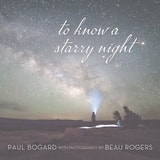
To Know a Starry Night
Paul Bogard
University of Nevada Press, 2021