Results by title
15 books match the query 'Islamic'
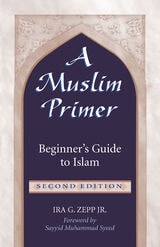
A Muslim Primer
A Beginner's Guide to IslamIra G. Zepp
University of Arkansas Press, 2000
A Muslim Primer covers the basic beliefs of Islam and provides an informative source for both lay and professional readers. First published in 1992, it has proven to be a valuable handbook for all attempting to better understand the tenets of the religion of a major portion of the world’s population. The reader is introduced to the authority of the Quran, the prophethood of Muhammad, the Wisdom of the Law, the Five Pillars of Islam, and to other fundamental principles of the religion. Distinctions are made between Sunni and Shiite traditions and the Sufi mystical dimension of Islam.
Well organized, visually appealing, and accurate, A Muslim Primer is useful to pre-collegiate and collegiate students of Islam, church and community study groups, and travelers, both tourists and business people.
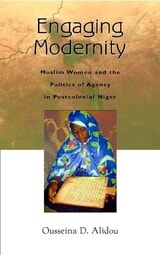
Engaging Modernity
Muslim Women and the Politics of Agency in Postcolonial NigerOusseina Alidou
University of Wisconsin Press, 2005
Engaging Modernity is Ousseina Alidou’s rich and compelling portrait of Muslim women in Niger as they confront the challenges and opportunities of the twentieth century. Contrary to Western stereotypes of passive subordination, these women are taking control of their own lives and resisting domination from indigenous traditions, westernization, and Islam alike.
Based on thorough scholarly research and extensive fieldwork—including a wealth of interviews—Alidou’s work offers insights into the meaning of modernity for Muslim women in Niger. Mixing biography with sociological data, social theory and linguistic analysis, this is a multilayered vision of political Islam, education, popular culture, and war and its aftermath. A gripping look at one of the Muslim world’s most powerful untold stories.
Runner-up for the Aidoo-Snyder Book Prize, Women’s Caucus of the African Studies Association
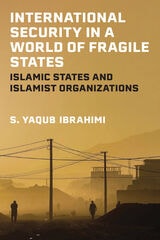
International Security in a World of Fragile States
Islamic States and Islamist OrganizationsS. Yaqub Ibrahimi
University of Michigan Press, 2022
Following the 9/11 attacks on New York and Washington, DC, there has been an increasing interest among scholars, students, and the interested public to study and learn about the Islamist-oriented terrorist organizations called Jihadi Salafi Groups (JSGs). Considering that these organizations emerged in highly fragile states, S. Yaqub Ibrahimi asks: how and why is state fragility linked to the emergence of JSGs?
Ibrahimi bases his study on three events: the establishment of al-Qaeda in Afghanistan in 1998, the rise of Islamic State in the post-Saddam Hussein Iraq, and the failed al-Qaeda effort to establish a base in Saudi Arabia in 2003. These case studies contain major aspects and features of the rise of JSGs and, together, explain the contribution of state fragility to the process of the formation and expansion of these terrorist organizations.
International Security in a World of Fragile States stands out as a pivotal work on the interconnection between the root causes of JSGs and state fragility conditions and their amalgamated role in the formation and evolution of these organizations. It contributes to IR and international security debates by developing a comprehensive but readily understandable narrative of the rise of JSGs in Islamic countries, and examining them in an analytical framework in which their root causes are categorized on individual, group, and international levels.
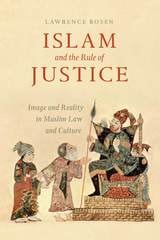
Islam and the Rule of Justice
Image and Reality in Muslim Law and CultureLawrence Rosen
University of Chicago Press, 2018
With Islam and the Rule of Justice, Lawrence Rosen analyzes a number of these misperceptions. Drawing on specific cases, he explores the application of Islamic law to the treatment of women (who win most of their cases), the relations between Muslims and Jews (which frequently involve close personal and financial ties), and the structure of widespread corruption (which played a key role in prompting the Arab Spring). From these case studie the role of informal mechanisms in the resolution of local disputes. The author also provides a close reading of the trial of Zacarias Moussaoui, who was charged in an American court with helping to carry out the 9/11 attacks, using insights into how Islamic justice works to explain the defendant’s actions during the trial. The book closes with an examination of how Islamic cultural concepts may come to bear on the constitutional structure and legal reforms many Muslim countries have been undertaking.
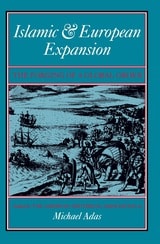
Islamic and European Expansion
The Forging of a Global OrderMichael Adas
Temple University Press, 1993
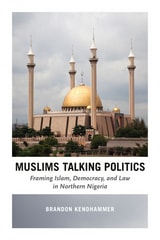
Muslims Talking Politics
Framing Islam, Democracy, and Law in Northern NigeriaBrandon Kendhammer
University of Chicago Press, 2016
Kendhammer argues that despite Nigeria’s struggles with jihadist insurgency, its recent history is really one of tenuous and fragile reconciliation between mass democratic aspirations and concerted popular efforts to preserve Islamic values in government and law. Combining an innovative analysis of Nigeria’s Islamic and political history with visits to the living rooms of working families, he sketches how this reconciliation has been constructed in the conversations, debates, and everyday experiences of Nigerian Muslims. In doing so, he uncovers valuable new lessons—ones rooted in the real politics of ordinary life—for how democracy might work alongside the legal recognition of Islamic values, a question that extends far beyond Nigeria and into the Muslim world at large.
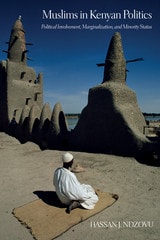
Muslims in Kenyan Politics
Political Involvement, Marginalization, and Minority StatusHassan J. Ndzovu
Northwestern University Press, 2014
Kenya’s Muslim population comprises ethnic Arabs, Indians, and black Africans, and its status has varied historically. Under British rule, an imposed racial hierarchy affected Muslims particularly, thwarting the development of a united political voice. Drawing on a broad range of interviews and historical research, Ndzovu presents a nuanced picture of political associations during the postcolonial period and explores the role of Kenyan Muslims as political actors.
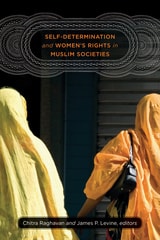
Self-Determination and Women’s Rights in Muslim Societies
Edited by Chitra Raghavan and James P. Levine
Brandeis University Press, 2012
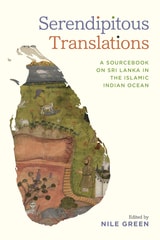
Serendipitous Translations
A Sourcebook on Sri Lanka in the Islamic Indian OceanEdited by Nile Green
University of Texas Press, 2025
The most comprehensive anthology of primary sources on Sri Lanka’s links with the Islamic world ever assembled in English.
Sri Lanka is an underappreciated focal point of global history. Known to Persian and Arab traders as Serendib, the island has long been a site of intensive cultural and material exchange, as well as a holy place—Islamic tradition holds that the biblical Adam arrived there after his expulsion from Eden. Assembling centuries of texts, this volume presents an array of sources from the Indian Ocean.
Serendipitous Translations gathers travelogues, literary works, commercial records, inscriptions, religious tracts, pilgrim manuals, and more—an unprecedented range of Muslim voices from Sri Lanka between the 1200s and 1990s. These works vividly document medieval pilgrimages, maritime mysticism, diplomatic encounters, colonial-era commerce, and the bustling everyday affairs of a cosmopolitan Asian nexus. Expert translations bring Arabic, Malay, Turkish, Urdu, Dhivehi, Sinhala, Arabic-Tamil, and Tamil texts to readers of English for the first time. Editor Nile Green situates these texts in their Indian Ocean contexts by introducing the broad sweep of Sri Lanka’s story. An invaluable collection, Serendipitous Translations is the most comprehensive anthology of primary sources ever assembled on Sri Lanka’s thousand-year links to the Muslim world.
Slandering the Sacred
Blasphemy Law and Religious Affect in Colonial IndiaJ. Barton Scott
University of Chicago Press, 2023
Why is religion today so often associated with giving and taking offense? To answer this question, Slandering the Sacred invites us to consider how colonial infrastructures shaped our globalized world. Through the origin and afterlives of a 1927 British imperial law (Section 295A of the Indian Penal Code), J. Barton Scott weaves a globe-trotting narrative about secularism, empire, insult, and outrage. Decentering white martyrs to free thought, his story calls for new histories of blasphemy that return these thinkers to their imperial context, dismantle the cultural boundaries of the West, and transgress the borders between the secular and the sacred as well as the public and the private.
The Expert Witness in Islamic Courts
Medicine and Crafts in the Service of LawRon Shaham
University of Chicago Press, 2010
Shaham begins with a history of expert testimony in medieval Islamic culture, analyzing the different roles played by male experts, especially physicians and architects, and females, particularly midwives. From there, he focuses on the case of Egypt, tracing the country’s reform of its traditional legal system along European lines beginning in the late nineteenth century. Returning to a broader perspective, Shaham draws on a variety of legal and historical sources to place the phenomenon of expert testimony in cultural context. A truly comprehensive resource, The Expert Witness in Islamic Courts will be sought out by a broad spectrum of scholars working in history, religion, gender studies, and law.
The Institutionalization of Islam in Southern Senegal
Intermarriage, Qur'anic Education, and JihadAly Dramé
University of Michigan Press, 2025
Drawing on archival documents, oral history and traditions, travelers’ accounts, the Arabic text Pakao al-Qurano (Holy Book of Pakao), and original ethnography, The Institutionalization of Islam in Southern Senegal demonstrates how these communities reframe the debates about the institutionalization of Islam in Senegambia geographically, chronologically, and thematically.
The Music of Stones
Sohail Hashmi
Seagull Books, 2025
In The Music of Stones, Sohail Hashmi delves into the intricate history and misconceptions surrounding Islamic architecture and culture. Challenging colonial and orientalist narratives, Hashmi reveals that iconic elements like domes and minarets were not originally part of early Islamic structures but later additions influenced by various cultures, primarily Persian and Turkish. Through engaging anecdotes and thought-provoking theories, Hashmi deconstructs the monolithic view of Islamic culture, emphasizing its rich and diverse heritage shaped by Sufi, Central Asian, and other regional influences. He highlights the importance of historical context and the dangers of oversimplifying complex cultural identities.
The Music of Stones invites readers to reconsider the architectural and cultural legacy of Islam, advocating for a more inclusive and evidence-based understanding that transcends reductive labels and celebrates the richness of its diverse traditions.
The Politics of Islamic Law
Local Elites, Colonial Authority, and the Making of the Muslim StateIza R. Hussin
University of Chicago Press, 2016
Drawing on extensive archival work in English, Arabic, and Malay—from court records to colonial and local papers to private letters and visual material—Hussin offers a view of politics in the colonial period as an iterative series of negotiations between local and colonial powers in multiple locations. She shows how this resulted in a paradox, centralizing Islamic law at the same time that it limited its reach to family and ritual matters, and produced a transformation in the Muslim state, providing the frame within which Islam is articulated today, setting the agenda for ongoing legislation and policy, and defining the limits of change. Combining a genealogy of law with a political analysis of its institutional dynamics, this book offers an up-close look at the ways in which global transformations are realized at the local level.
Times of History
Universal Topics in Islamic HistoriographyAziz Al-Azmeh
Central European University Press, 2007