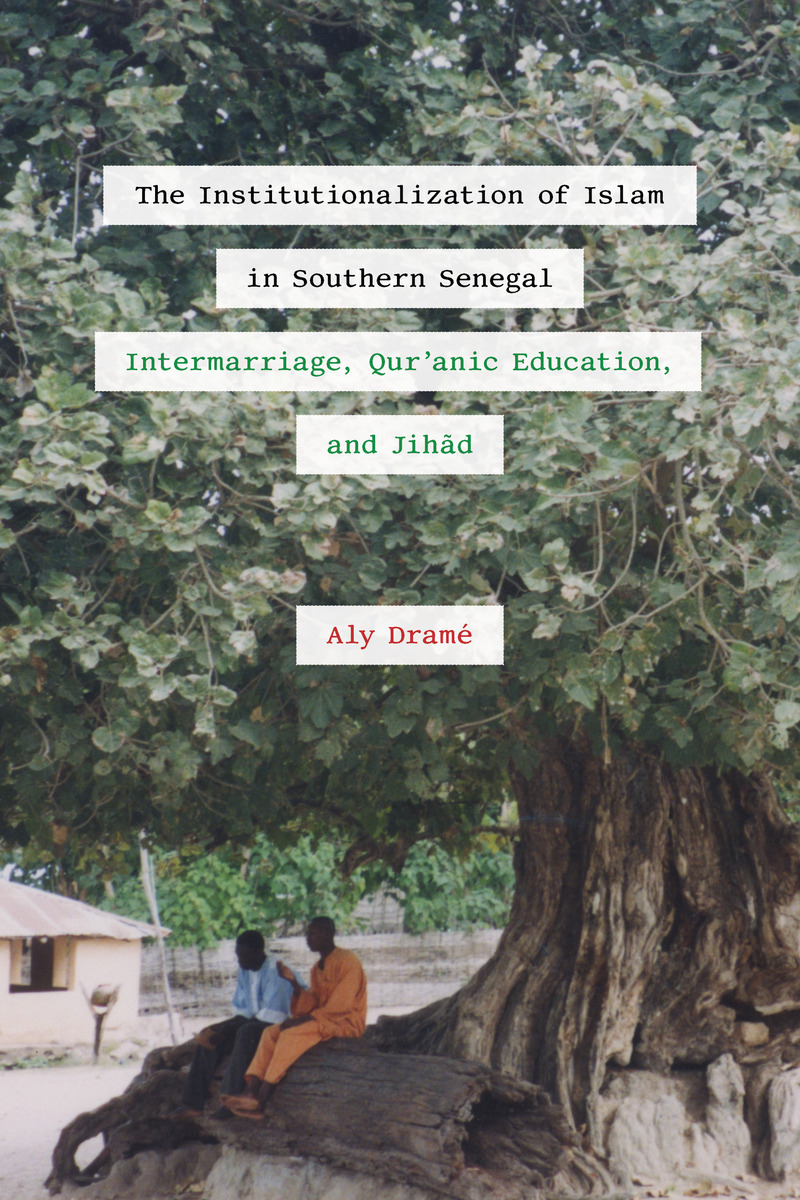
The Institutionalization of Islam in Southern Senegal: Intermarriage, Qur'anic Education, and Jihad
University of Michigan Press, 2025
Cloth: 978-0-472-07750-2 | Paper: 978-0-472-05750-4 | eISBN: 978-0-472-90515-7 (OA)
Library of Congress Classification BP64.S4D725 2025
Dewey Decimal Classification 297.09663
Cloth: 978-0-472-07750-2 | Paper: 978-0-472-05750-4 | eISBN: 978-0-472-90515-7 (OA)
Library of Congress Classification BP64.S4D725 2025
Dewey Decimal Classification 297.09663
ABOUT THIS BOOK | AUTHOR BIOGRAPHY | REVIEWS | TOC | REQUEST ACCESSIBLE FILE
ABOUT THIS BOOK
Weaving together oral and written sources, The Institutionalization of Islam in Southern Senegal investigates previously overlooked dimensions of Islamization in Senegambia through the processes of intermarriage, Qur’anic education, and jihãd. Due to its geographic location at the point where Senegal, The Gambia, and Guinea-Bissau meet, the Middle Casamance has historically been a melting pot where centralized and decentralized societies have coexisted for generations. In the past, historians have failed to consider the contributions of the Middle Casamance region and Mandinka Muslim settlements to the development of Islam, despite centers for Islamic education having existed in the region centuries before the emergence of the Sufi and jihãd movements of the eighteenth and nineteenth centuries. Aly Dramé seeks to close this gap by conceptualizing the leading role played by these Mandinka settlements and how religious spaces are negotiated, acquired, and transformed through intermarriage, Qur’anic education, and jihãd when peoples from distinct backgrounds encounter one another.
Drawing on archival documents, oral history and traditions, travelers’ accounts, the Arabic text Pakao al-Qurano (Holy Book of Pakao), and original ethnography, The Institutionalization of Islam in Southern Senegal demonstrates how these communities reframe the debates about the institutionalization of Islam in Senegambia geographically, chronologically, and thematically.
Drawing on archival documents, oral history and traditions, travelers’ accounts, the Arabic text Pakao al-Qurano (Holy Book of Pakao), and original ethnography, The Institutionalization of Islam in Southern Senegal demonstrates how these communities reframe the debates about the institutionalization of Islam in Senegambia geographically, chronologically, and thematically.
See other books on: Institutionalization | Intermarriage | Islamic | Jihad | Senegal
See other titles from University of Michigan Press