Results by title
20 books match the query '1967-'

Arrival
David Roche
University of Texas Press, 2024
A study of Denis Villeneuve’s genre-transcendent film.
In Denis Villeneuve’s Arrival (2016), scientists must decipher the language of and peacefully communicate with aliens who have landed on Earth before the world’s military attacks. In this first book-length study of the film, scholar David Roche argues that it is one of the most important films of this century, and the most brilliant science fiction film since Blade Runner. Roche posits Arrival as a blockbuster with artistic ambitions—an argument supported by the film’s several Academy Award nominations—and looks closely at how the film engages with theoretical questions posed by contemporary film studies and philosophy alike. Each section explores a central aspect of the film: its status as an auteur adaptation; its relation to the science fiction genre; its themes of communication on narrative and meta-narrative levels; its aesthetics of time and space; and the political and ethical questions it raises. Ultimately, Roche declares Arrival a unique, multifaceted experience in the world of hard science fiction films, placing it in context with works like 2001: A Space Odyssey, Close Encounters of the Third Kind, and Contact while also examining how it bridges the gap between genre and art house cinema.
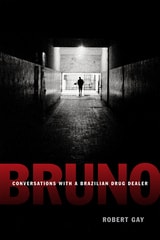
Bruno
Conversations with a Brazilian Drug DealerRobert Gay
Duke University Press, 2015
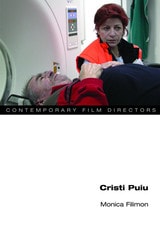
Cristi Puiu
Monica Filimon
University of Illinois Press, 2017
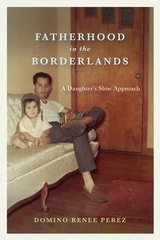
Fatherhood in the Borderlands
A Daughter's Slow ApproachDomino Renee Perez
University of Texas Press, 2022
2026 Best Book Award, Association for Borderlands Studies
2023 Finalist, Best Academic Themed Book, College Level – English, International Latino Book Awards
A contemplative exploration of cultural representations of Mexican American fathers in contemporary media.
As a young girl growing up in Houston, Texas, in the 1980s, Domino Perez spent her free time either devouring books or watching films—and thinking, always thinking, about the media she consumed. The meaningful connections between these media and how we learn form the basis of Perez’s “slow” research approach to race, class, and gender in the borderlands. Part cultural history, part literary criticism, part memoir, Fatherhood in the Borderlands takes an incisive look at the value of creative inquiry while it examines the nuanced portrayal of Mexican American fathers in literature and film.
Perez reveals a shifting tension in the literal and figurative borderlands of popular narratives and shows how form, genre, and subject work to determine the roles Mexican American fathers are allowed to occupy. She also calls our attention to the cultural landscape that has allowed such a racialized representation of Mexican American fathers to continue, unopposed, for so many years. Fatherhood in the Borderlands brings readers right to the intersection of the white cultural mainstream in the United States and Mexican American cultural productions, carefully considering the legibility and illegibility of Brown fathers in contemporary media.
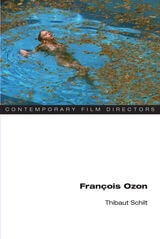
Francois Ozon
Thibaut Schilt
University of Illinois Press, 2011
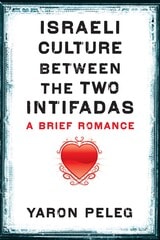
Israeli Culture between the Two Intifadas
A Brief RomanceBy Yaron Peleg
University of Texas Press, 2008
Over the past two decades, profound changes in Israel opened its society to powerful outside forces and the dominance of global capitalism. As a result, the centrality of Zionism as an organizing ideology waned, prompting expressions of anxiety in Israel about the coming of a post-Zionist age. The fears about the end of Zionism were quelled, however, by the Palestinian uprising in 2000, which spurred at least a partial return to more traditional perceptions of homeland. Looking at Israeli literature of the late twentieth century, Yaron Peleg shows how a young, urban class of Israelis felt alienated from the Zionist values of their forebears, and how they adopted a form of escapist romanticism as a defiant response that replaced traditional nationalism.
One of the first books in English to identify the end of the post-Zionist era through inspired readings of Hebrew literature and popular media, Israeli Culture between the Two Intifadas examines Israel's ambivalent relationship with Jewish nationalism at the end of the twentieth century.
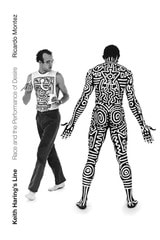
Keith Haring's Line
Race and the Performance of DesireRicardo Montez
Duke University Press, 2020
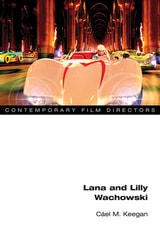
Lana and Lilly Wachowski
Cael M. Keegan
University of Illinois Press, 2018
Cáel M. Keegan views the Wachowskis' films as an approach to trans* experience that maps a transgender journey and the promise we might learn "to sense beyond the limits of the given world." Keegan reveals how the filmmakers take up the relationship between identity and coding (be it computers or genes), inheritance and belonging, and how transgender becoming connects to a utopian vision of a post-racial order. Along the way, he theorizes a trans* aesthetic that explores the plasticity of cinema to create new social worlds, new temporalities, and new sensory inputs and outputs. Film comes to disrupt, rearrange, and evolve the cinematic exchange with the senses in the same manner that trans* disrupts, rearranges, and evolves discrete genders and sexes.
Mendings
Megan Sweeney
Duke University Press, 2023

Phantom Skies and Shifting Ground
Landscape, Culture, and Rephotography in Eadweard Muybridge's Illustrations of Central AmericaByron Wolfe and Scott Brady
Temple University Press, 2017
In 1875, after being acquitted for the murder of his wife’s lover, Eadweard Muybridge spent a year photographing along the Central American Pacific Coast, particularly in Guatemala and Panamá. Upon his return to California in 1876, he published a very limited number of albums of the photographs (11 are known), each of which was unique in size and scope. In 2007, photographer Byron Wolfe (born 1967) tracked down and cataloged every known Muybridge Central American photograph. Then, with cultural geographer Scott Brady, he traveled to many of Muybridge’s sites to rephotograph them. Through photographic collage, interpretive rephotography, illustrations and essays, this book examines an exceptionally rare series by Muybridge. Also included is a catalogue of every known Muybridge Central American picture.
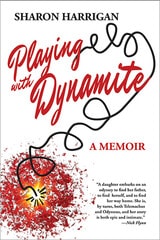
Playing with Dynamite
Sharon Harrigan
University of Wisconsin Press, 2017
Playing with Dynamite is about the family secrets that can distance us from each other and the honesty that can bring us closer. It’s about a daughter who goes looking for her father but finds her mother instead. It’s about memory and truth, grieving and growing, and what it means to go home again.

Probably Someday Cancer
Genetic Risk and Preventative MastectomyKim Horner
University of North Texas Press, 2019
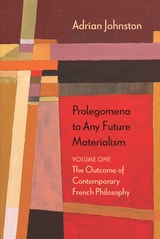
Prolegomena to Any Future Materialism
The Outcome of Contemporary French PhilosophyAdrian Johnston
Northwestern University Press, 2013
Adrian Johnston’s Prolegomena to Any Future Materialism, planned for three volumes, will lay the foundations for a new materialist theoretical apparatus, his “transcendental materialism.” In this first volume, Johnston clears an opening within contemporary philosophy and theory for his unique position. He engages closely with Lacan, Badiou, and Meillassoux, demonstrating how each of these philosophers can be seen as failing to forge an authentically atheistic materialism. Johnston builds a new materialism both profoundly influenced by these brilliant comrades of a shared cause as well as making up for the shortcomings of their own creative attempts to bring to realization the Lacanian vision of an Other-less, One-less ontology. The Outcome of Contemporary French Philosophy yields intellectual weapons suitable for deployment on multiple fronts simultaneously, effective against the mutually entangled spiritualist and scientistic foes of our post-Enlightenment, biopolitical era of nothing more than commodities and currencies.
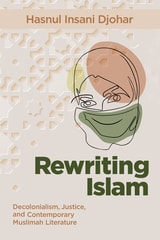
Rewriting Islam
Decolonialism, Justice, and Contemporary Muslimah LiteratureHasnul Insani Djohar
The Ohio State University Press, 2024
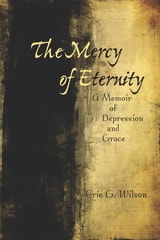
The Mercy of Eternity
A Memoir of Depression and GraceEric G. Wilson
Northwestern University Press, 2010
As a bright student-athlete on his way to West Point, Eric Wilson seemed to be well on the way to a fulfilling life. Yet he was haunted by overwhelming feelings of his deep insignificance. As he grew older, the traditional means of fulfillment—marriage and professional success—did nothing to assuage the descents into darkness and destructive behavior. Therapy and medication have offered some relief, but the birth of his daughter ultimately forces his hand. In some ways, the answer has been in front of him the whole time, for English professor Wilson finds in the literature of Coleridge, Blake, and others the lessons that depression might teach. When he comes upon “negative theology”—the school of thought that finds God in the “dark night of the soul”—Wilson discovers the framework for a radical call to forgive depression.
Only by forgiving this capricious, impersonal force is Wilson able to find the grace to move beyond the cycles of destructive self-absorption.Wilson admits that he continues to struggle, but in facing his depression instead of trying to escape it, he finds wisdom and grace.
Beautifully and accessibly written, The Mercy of Eternity is a brief yet profound meditation on the largest question of life.
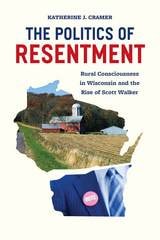
The Politics of Resentment
Rural Consciousness in Wisconsin and the Rise of Scott WalkerKatherine J. Cramer
University of Chicago Press, 2016
With The Politics of Resentment, Katherine J. Cramer uncovers an oft-overlooked piece of the puzzle: rural political consciousness and the resentment of the “liberal elite.” Rural voters are distrustful that politicians will respect the distinct values of their communities and allocate a fair share of resources. What can look like disagreements about basic political principles are therefore actually rooted in something even more fundamental: who we are as people and how closely a candidate’s social identity matches our own. Using Scott Walker and Wisconsin’s prominent and protracted debate about the appropriate role of government, Cramer illuminates the contours of rural consciousness, showing how place-based identities profoundly influence how people understand politics, regardless of whether urban politicians and their supporters really do shortchange or look down on those living in the country.
The Politics of Resentment shows that rural resentment—no less than partisanship, race, or class—plays a major role in dividing America against itself.
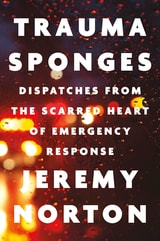
Trauma Sponges
Dispatches from the Scarred Heart of Emergency ResponseJeremy Norton
University of Minnesota Press, 2027
Beyond an adrenaline ride or a chronicle of bravura heroics, this unflinching view of a Minneapolis firefighter reveals the significant toll of emergency response
In this remarkable memoir, Jeremy Norton marshals twenty-two years of professional experience to offer, with compassion and critique, an extraordinary portrayal of emergency responders. Trauma Sponges captures in arresting detail the personal and social toll the job exacts, as well as the unique perspective afforded by sustained direct encounters with the sick, the dying, and the dead.
From his first days as a rookie firefighter and emergency medical technician to his command of a company as a twenty-year veteran, Norton documents the life of an emergency responder in Minneapolis: the harrowing, heartbreaking calls, from helping the sick and hurt, to reassuring the scared and nervous, to attempting desperate measures and providing final words. In the midst of the uncertainty, fear, and loss caused by the Covid pandemic, Norton and his crew responded to the scene of George Floyd’s murder. The social unrest and racial injustice Norton had observed for years exploded on the streets of Minneapolis, and he and his fellow firefighters faced the fires, the injured, and the anguish in the days and months that followed.
Norton brings brutally honest insight and grave social conscience to his account, presenting a rare insider’s perspective on the insidious role of sexism and machismo in his profession, as well as an intimate observer’s view of individuals trapped in dire circumstances and a society ill equipped to confront trauma and death. His thought-provoking, behind-the-scenes depiction of the work of first response and last resort starkly reveals the realities of humanity at its finest and its worst.

Unnatural Selection
A Memoir of Adoption and WildernessAndrea Ross
CavanKerry Press, 2021
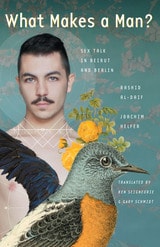
What Makes a Man?
Sex Talk in Beirut and BerlinRashid al-Daif and Joachim Helfer. Translated by Ken Seigneurie and Gary Schmidt
University of Texas Press, 2015
In 2003, Lebanese writer Rashid al-Daif spent several weeks in Germany as part of the “West-East Divan” program, a cultural exchange effort meant to improve mutual awareness of German and Middle Eastern cultures. He was paired with German author Joachim Helfer, who then returned the visit to al-Daif in Lebanon. Following their time together, al-Daif published in Arabic a literary reportage of his encounter with Helfer in which he focuses on the German writer’s homosexuality. His frank observations have been variously read as trenchant, naïve, or offensive. In response, Helfer provided an equally frank point-by-point riposte to al-Daif’s text. Together these writers offer a rare exploration of attitudes toward sex, love, and gender across cultural lines. By stretching the limits of both fiction and essay, they highlight the importance of literary sensitivity in understanding the Other.
Rashid al-Daif’s “novelized biography” and Joachim Helfer’s commentary appear for the first time in English translation in What Makes a Man? Sex Talk in Beirut and Berlin. Also included in this volume are essays by specialists in Arabic and German literature that shed light on the discourse around sex between these two authors from different cultural contexts.
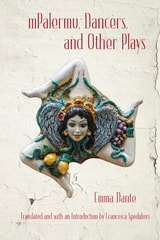
mPalermu, Dancers, and Other Plays
Emma Dante
Swan Isle Press, 2019
This exquisite first English translation of Emma Dante’s work enables English-speaking readers, theatre scholars, and directors alike to encounter character-driven “civic theatre” with its portraits of individuals existing at the fringes of Italy. Ultimately, it allows us to “listen” to those who are not given a voice anywhere else.