Results by title
3 books match the query '1979-1993'
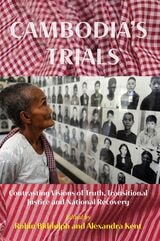
Cambodia's Trials
Contrasting Visions of Truth, Transitional Justice and National RecoveryEdited by Robin Biddulph and Alexandra Kent
National University of Singapore Press, 2023
New insights into understanding how Cambodia grapples with its traumatic historical past.
More than four decades have passed since the end of Khmer Rouge rule in Cambodia in 1979. Even so, the country is still coming to terms with the destruction wrought by the Khmer Rouge during both the time they were in power and during the period of guerrilla resistance that lasted until 1998. The Khmer Rouge Tribunal, or the Extraordinary Chambers in the Court of Cambodia (ECCC), was established in 2006 to bring the Khmer Rouge leadership to justice. In many ways a product of the 1990s, when liberal democracy appeared to be on the rise both in Cambodia and internationally, the ECCC was imagined as a transitional justice initiative that would help ease the transition to liberal democracy.
The ECCC has long been the focus of scholarly attention in Cambodia’s recovery, but this compelling study argues that such an approach is dated, noting that the political circumstances in which the ECCC was born have since changed profoundly, both globally and locally. Cambodia’s current situation can no longer be analyzed solely in terms of transitional justice narratives or the work of the ECCC, and other ways in which Cambodians have come to terms with their past and built new lives must be considered. By decentering the ECCC in the scholarly narrative of Cambodia’s recovery, the volume’s authors offer fascinating new insights into the Khmer Rouge period and more recent years of social, cultural, and political change in Cambodia.
[more]
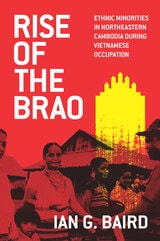
Rise of the Brao
Ethnic Minorities in Northeastern Cambodia during Vietnamese OccupationIan G. Baird
University of Wisconsin Press, 2022
In the early 1970s, the Khmer Rouge had become suspicious of communist Vietnam and began to persecute Cambodian ethnic groups who had ties to the country, including the Brao Amba in the northeast. Many fled north as political refugees, and some joined the Vietnamese effort to depose the Khmer Rouge a few years later. The subsequent ten-year occupation is remembered by many Cambodians as a time of further oppression, but this volume reveals an unexpected dimension of this troubled past. Trusted by the Vietnamese, the Brao were installed in positions of great authority in the new government only to gradually lose their influence when Vietnam withdrew from Cambodia.
Based on detailed research and interviews, Ian G. Baird documents this golden age of the Brao, including the voices of those who are too frequently omitted from official records. Rise of the Brao challenges scholars to look beyond the prevailing historical narratives to consider the nuanced perspectives of peripheral or marginal regions.
Based on detailed research and interviews, Ian G. Baird documents this golden age of the Brao, including the voices of those who are too frequently omitted from official records. Rise of the Brao challenges scholars to look beyond the prevailing historical narratives to consider the nuanced perspectives of peripheral or marginal regions.
[more]
Vietnam's Strategic Thinking during the Third Indochina War
Kosal Path
University of Wisconsin Press, 2023
When costly efforts to cement a strategic partnership with the Soviet Union failed, the combined political pressure of economic crisis at home and imminent external threats posed by a Sino-Cambodian alliance compelled Hanoi to reverse course. Moving away from the Marxist-Leninist ideology that had prevailed during the last decade of the Cold War era, the Vietnamese government implemented broad doi moi ("renovation") reforms intended to create a peaceful regional environment for the country's integration into the global economy.
In contrast to earlier studies, Path traces the moving target of these changing policy priorities, providing a vital addition to existing scholarship on asymmetric wartime decision-making and alliance formation among small states. The result uncovers how this critical period had lasting implications for the ways Vietnam continues to conduct itself on the global stage.
In contrast to earlier studies, Path traces the moving target of these changing policy priorities, providing a vital addition to existing scholarship on asymmetric wartime decision-making and alliance formation among small states. The result uncovers how this critical period had lasting implications for the ways Vietnam continues to conduct itself on the global stage.
[more]