Results by title
45 books match the query '1990-'
A Mandarin and the Making of Public Policy
ReflectionsTong Dow Ngiam
National University of Singapore Press, 2001
Being Jewish in the New Germany
Being Jewish in the New Germany, First Paperback EditionJeffrey M. Peck
Rutgers University Press, 2007
Germany today boasts the fastest growing population of Jews in Europe. The streets of Berlin abound with signs of a revival of Jewish culture, ranging from bagel shops to the sight of worshipers leaving synagogue on Saturday. With the new energy infused by Jewish immigration from Russia and changes in immigration and naturalization laws in general, Jeffrey M. Peck argues that we must now begin considering how Jews live in Germany rather than merely asking why they would choose to do so.
In Being Jewish in the New Germany, Peck explores the diversity of contemporary Jewish life and the complex struggles within the community-and among Germans in general-over history, responsibility, culture, and identity. He provides a glimpse of an emerging, if conflicted, multicultural country and examines how the development of the European Community, globalization, and the post-9/11 political climate play out in this context. With sensitive, yet critical, insight into the nation's political and social life, chapters explore issues such as the shifting ethnic/national makeup of the population, changes in political leadership, and the renaissance of Jewish art and literature. Peck also explores new forms of anti-Semitism and relations between Jews and Turks-the country's other prominent minority population.
In this surprising description of the rebirth of a community, Peck argues that there is, indeed, a vibrant and significant future for Jews in Germany. Written in clear and compelling language, this book will be of interest to the general public and scholars alike.
Beyond The Barricades
Nicaragua and the Struggle for the Sandinista Press, 1979–1998Adam Jones
Ohio University Press, 2002
Throughout the 1980s, Barricada, the official daily newspaper of the ruling Sandinista Front, played the standard role of a party organ, seeking the mobilize the Nicaraguan public to support the revolutionary agenda. Beyond the Barricades, however, reveals a story that is both more intriguing and much more complex. Even during this period of sweeping transformation and outside military siege, another, more professional agenda also motivated Barricada’s journalists and editors.
When the Sandinistas unexpectedly fell from power in the 1990 elections, Barricada gained a substantial degree of autonomy that allowed it to explore a more balanced and nuanced journalism “in the national interest.” This new orientation, however, ran afoul of more orthodox party leaders, who gradually gained the upper hand in the bitter internal struggle that wracked the Sandinista Front in the early 1990s. The paper closed its doors in January 1998.
Adam Jones’s outstanding study offers an unprecedented behin-the-scenes looks at Barricada’s two decades of evolution and dissolution. It also presents an intimate portrait of a key revolutionary institution and the memorable individuals who were a part of it.
Contradiction and Conflict
The Popular Church in NicaraguaDebra Sabia
University of Alabama Press, 2013
Debra Sabia describes and analyzes the rise, growth, and fragmentation of the popular church and assesses the effect of the Christian base communities on religion, politics, and the nation's social revolutionary experiment.
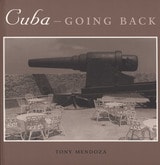
Cuba--Going Back
By Tony Mendoza
University of Texas Press, 1999
Imagine being unable to return to your homeland for thirty-six years. What would you do if you finally got a chance to go back?
In 1996, after travel restrictions between the United States and Cuba were relaxed, Cuban exile Tony Mendoza answered that question. Taking his cameras, notebooks, and an unquenchable curiosity, he returned for his first visit to Cuba since summer of 1960, when he emigrated with his family at age eighteen. In this book he presents over eighty evocative photographs accompanied by a beautifully written text that mingles the voices of many Cubans with his own to offer a compelling portrait of a resilient people awaiting the inevitable passing of the socialist system that has failed them.
His photographs and interviews bear striking witness to the hardships and inequalities that exist in this workers' "paradise," where the daily struggle to make ends meet on an average income of eight dollars a month has created a longing for change even in formerly ardent revolutionaries. At the same time, Cuba—Going Back is an eloquent record of a personal journey back in time and memory that will resonate with viewers and readers both within and beyond the Cuban American community. It belongs on the shelves of anyone who values excellent photography and well-crafted prose.
Decisiveness and Fear of Disorder
Political Decision-Making in Times of CrisisJulius Maximilian Rogenhofer
University of Michigan Press, 2024
Rogenhofer shows how his theoretical approach allows us to reinterpret a range of crisis situations beyond the irregular migration context, including democracies’ initial responses to Covid-19, the European Sovereign Debt Crisis, and United States climate politics. These additional case studies help position concerns with decisiveness amid the challenges that populism and technocracy increasingly pose to representative democracies.

Development Prospects in Cuba
An Agenda in the MakingEdited by Pedro Monreal
University of London Press, 2002
Contributors include Julio Carranza, Anicia Garcia, Hiram Marquetti, Lazaro Pena, Omar Everleny Perez, and Julio Diaz Vazquez (University of Havana, Cuba), Claes Brundenius (Centre for Development Research, Copenhagen, Denmark), David Dapice (Tufts University and Harvard University, USA), Francisco Leon (United Nations Economic Commission for Latin America and the Caribbean), and Mauricio de Miranda (Pontificia Universidad Javeriana, Colombia).
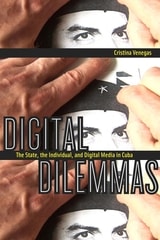
Digital Dilemmas
The State, the Individual, and Digital Media in CubaVenegas, Cristina
Rutgers University Press, 2010
Digital Dilemmas views Cuba from the Soviet Union's demise to the present, to assess how conflicts over media access play out in their both liberating and repressive potential. Drawing on extensive scholarship and interviews, Cristina Venegas questions myths of how Internet use necessarily fosters global democracy and reveals the impact of new technologies on the country's governance and culture. She includes film in the context of broader media history, as well as artistic practices such as digital art and networks of diasporic communities connected by the Web. This book is a model for understanding the geopolitic location of power relations in the age of digital information sharing.
Finance Capitalism Unveiled
Banks and the German Political EconomyRichard Deeg
University of Michigan Press, 1999
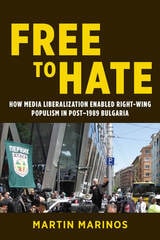
Free to Hate
How Media Liberalization Enabled Right-Wing Populism in Post-1989 BulgariaMartin Marinos
University of Illinois Press, 2023
Bulgaria’s media-driven pivot to right-wing populism parallels political developments taking place around the world. Martin Marinos applies a critical political economy approach to place Bulgarian right-wing populism within the structural transformation of the country’s media institutions. As Marinos shows, media concentration under Western giants like Westdeutsche Allgemeine Zeitung and News Corporation have led to a neoliberal turn of commercialization, concentration, and tabloidization across media. The Right have used the anticommunism and racism bred by this environment to not only undermine traditional media but position their own outlets to boost new political entities like the nationalist party Ataka. Marinos’s ethnographic observations and interviews with local journalists, politicians, and media experts add on-the-ground detail to his account. He also examines several related issues, including the performative appeal of populist media and the money behind it.
A timely and innovative analysis, Free to Hate reveals where structural changes in media intersect with right-wing populism.
Gender, Intersections, and Institutions
Intersectional Groups Building Alliances and Gaining Voice in GermanyEdited by Louise K. Davidson-Schmich
University of Michigan Press, 2017

Globalization and Its Discontents
The Rise of Postmodern SocialismsEdited by Roger Burbach, Boris Kagarlitsky, and Orlando Nunez
Pluto Press, 1997
Hezbollah
The Political Economy of Lebanon's Party of GodJoseph Daher
Pluto Press, 2016
By discarding more common approaches to the party that focus on religious discourse or military questions, Daher is freed up to analyze what the party actually is: an organization that is operating within a specific political and socio-economic context, one that simultaneously offers it a rich ground of support and limits its range of action. Daher clearly and carefully positions Hezbollah within that context, focusing on its historic ties with its main sponsor, Iran, its media and cultural wings, its relationship with Western economic policies, and the impact of the Shi’a population on the sectarian politics of Lebanon. Offering additional attention to the party’s positions on worker’s rights and women’s issues, this fresh take on Hezbollah will be incredibly useful for understanding the world’s most tumultuous region.
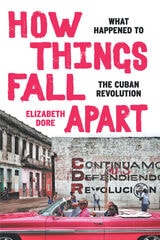
How Things Fall Apart
What Happened to the Cuban RevolutionElizabeth Dore
Duke University Press, 2023
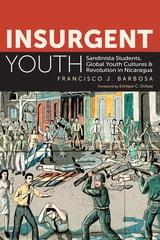
Insurgent Youth
Sandinista Students, Global Youth Cultures, and Revolution in NicaraguaFrancisco J. Barbosa
University Press of Colorado, 2026
This history of the Sandinista student movement is a window into the cultural milieu that produced a revolution where it seemed least likely to occur: among the youth of a country under the firm grip of a US-backed dictatorship whose power was secured by one of the best armed and most highly trained military forces in the region. By examining the articulation of political, gendered, and age-specific identities within the revolutionary process, Insurgent Youth sheds light on the everyday struggles of young Nicaraguans.
In the early 1970s a new emphasis on personal freedom and pleasure, under the influence of a global counterculture, challenged Sandinista gender ideology, especially masculinity, from within. This shift transformed the social world of Nicaraguan youth in general and Sandinista students in particular, eventually affecting the character of clandestine struggle and debates over revolutionary praxis within the Sandinista National Liberation Front (FSLN). Insurgent Youthshows how this new youth identity, which included the classic 1960s triumvirate of “sex, drugs, and rock ‘n’ roll,” constituted a social vernacular among young Nicaraguans of all classes—a common language and array of social practices that ultimately aided FSLN recruitment efforts among working-class youth. At the same time, this new identity posed a danger to the movement in that it embodied a tacit questioning of both mainstream and Sandinista notions of gender and the political, bringing threatening class and ideological contradictions present within the movement to the surface.
Insurgent Youth places what was happening in Nicaragua into the context of the worldwide student movement, challenging patriarchy and colonialism in Latin America and across the globe. This deep dive into the Nicaraguan revolution and the youth culture surrounding it provides a unique perspective on, and understanding of, modern Latin American history.

Interrogating Integration
Sport, Celebrity, and Scandal in the Making of New GermanyKate Zambon
University of Michigan Press, 2025
Using touchstones of public memory, including events surrounding men’s World Cup soccer and the record-breaking success of a book blaming Muslims for Germany’s decline, Zambon examines persistent problems in European conceptions of race, where racializing projects take place under an “ideology of racelessness” and the atrocities of historical and transnational racisms are used to deny current local forms of racism.

Intimate Activism
The Struggle for Sexual Rights in Postrevolutionary NicaraguaCymene Howe
Duke University Press, 2013
Jewish Life in Austria and Germany Since 1945
Identity and Communal ReconstructionSusanne Cohen-Weisz
Central European University Press, 2016
Jews, Germans, Memory
Reconstructions of Jewish Life in GermanyY. Michal Bodemann, Editor
University of Michigan Press, 1996
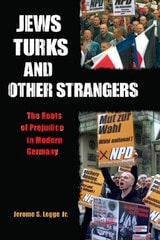
Jews, Turks, and Other Strangers
Roots of Prejudice in Modern GermanyJerome S. Legge, Jr.
University of Wisconsin Press, 2003
Scholarly, objective, insightful, and analytical, Jews, Turks, and Other Strangers studies the causes of prejudice against Jews, foreign workers, refugees, and emigrant Germans in contemporary Germany. Using survey material and quantitative analyses, Legge convincingly challenges the notion that German xenophobia is rooted in economic causes. Instead, he sees a more complex foundation for German prejudice, particularly in a reunified Germany where perceptions of the "other" sometimes vary widely between east and west, a product of a traditional racism rooted in the German past. By clarifying the foundations of xenophobia in a new German state, Legge offers a clear and disturbing picture of a conflicted country and a prejudice that not only affects Jews but also fuels a larger, anti-foreign sentiment.

Labor and Democracy in Namibia, 1971–1996
Gretchen Bauer
Ohio University Press, 1998
In this compelling study of labor and nationalism during and after Namibia's struggle for liberation, Gretchen Bauer addresses the very difficult task of consolidating democracy in an independent Namibia. Labor and Democracy in Namibia, 1971-1996 argues that a vibrant and autonomous civil society is crucial to the consolidation of new democracies, and it identifies trade unions, in particular, as especially important organizations of civil society. In Namibia, however, trade unions have emerged from the liberation struggle and the first years of independence in a weakened state. Dr. Bauer gives a lucid explanation for this phenomenon by tracing the origins and evolution of the trade unions in Namibia and discusses the implications thereof for the future of democracy in Namibia.
Based on material not widely available before independence in 1990, this study takes a critical look at the nationalist movement in Namibia. Through the use of dozens of interviews with political leaders, trade unionists, community activists, and others, Bauer offers the controversial suggestion that there are many within the nationalist movement (now the ruling party in government) who would rather not see a strong trade union movement (or any other potential rival) emerge in independent Namibia.
Leading Questions
How Hegemony Affects the International Political EconomyRobert Pahre
University of Michigan Press, 1999
Learning Democracy
Citizen Engagement and Electoral Choice in Nicaragua, 1990-2001Leslie E. Anderson and Lawrence C. Dodd
University of Chicago Press, 2005
By analyzing nationwide surveys conducted during the 1990, 1996, and 2001 Nicaraguan presidential elections, Leslie E. Anderson and Lawrence C. Dodd provide insight into one of the most unexpected and intriguing recent advancements in third world politics. They offer a balanced account of the voting patterns and forward-thinking decisions that led Nicaraguans to first support the reformist Sandinista revolutionaries only to replace them with a conservative democratic regime a few years later. Addressing issues largely unexamined in Latin American studies, Learning Democracy is a unique and probing look at how the country's mass electorate moved beyond revolutionary struggle to establish a more stable democratic government by realizing the vital role of citizens in democratization processes.
Living Ideology in Cuba
Socialism in Principle and PracticeKatherine A. Gordy
University of Michigan Press, 2015
Nicaraguan Exceptionalism? Debating the Legacy of the Sandinista Revolution
Edited by Hilary Francis
University of London Press, 2019
Opposing Power
Building Opposition Alliances in Electoral AutocraciesElvin Ong
University of Michigan Press, 2022
Out of the Red
Building Capitalism and Democracy in Postcommunist EuropeMitchell A. Orenstein
University of Michigan Press, 2001
A detailed analysis of Poland and the Czech Republic suggests that alternation between strategies has been the secret to the success of East-Central European countries.
This comparative case analysis identifies the significance of reform mistakes during transition and the corrective benefits of policy alternation, its claims illustrated with an in-depth study of privatization policy in the two countries.
Mitchell A. Orenstein delves into the historic struggle to build capitalism and democracy during a decade of post- communist transition in East-Central Europe and develops a model that explains why democratic policy alternation may accelerate policy learning under conditions of uncertainty and constraint.
Out of the Red is accessible to a general audience and as such is suitable for both graduate and undergraduate courses on political economy. It will be of particular interest to economists, political scientists, sociologists, students of postcommunism, and anyone interested in the relations between capitalism and democracy in the contemporary world.
Mitchell A. Orenstein is Assistant Professor of Political Science, Syracuse University.
Peasants In Arms
War and Peace in the Mountains of Nicaragua, 1979–1994Lynn Horton
Ohio University Press, 1999
Drawing on testimonies from contra collaborators and ex-combatants, as well as pro-Sandinista peasants, this book presents a dynamic account of the growing divisions between peasants from the area of Quilalí who took up arms in defense of revolutionary programs and ideals such as land reform and equality and those who opposed the FSLN.
Peasants in Arms details the role of local elites in organizing the first anti-Sandinista uprising in 1980 and their subsequent rise to positions of field command in the contras. Lynn Horton explores the internal factors that led a majority of peasants to turn against the revolution and the ways in which the military draft, and family and community pressures reinforced conflict and undermined mid-decade FSLN policy shifts that attempted to win back peasant support.
Rebuilding Jewish Life in Germany
Jay Howard Geller
Rutgers University Press, 2020
Reconstructing Beirut
Memory and Space in a Postwar Arab CityBy Aseel Sawalha
University of Texas Press, 2010
Once the cosmopolitan center of the Middle East, Beirut was devastated by the civil war that ran from 1975 to 1991, which dislocated many residents, disrupted normal municipal functions, and destroyed the vibrant downtown district. The aftermath of the war was an unstable situation Sawalha considers "a postwar state of emergency," even as the state strove to restore normalcy. This ethnography centers on various groups' responses to Beirut's large, privatized urban-renewal project that unfolded during this turbulent moment.
At the core of the study is the theme of remembering space. The official process of rebuilding the city as a node in the global economy collided with local day-to-day concerns, and all arguments invariably inspired narratives of what happened before and during the war. Sawalha explains how Beirutis invoked their past experiences of specific sites to vie for the power to shape those sites in the future. Rather than focus on a single site, the ethnography crosses multiple urban sites and social groups, to survey varied groups with interests in particular spaces. The book contextualizes these spatial conflicts within the discourses of the city's historical accounts and the much-debated concept of heritage, voiced in academic writing, politics, and journalism. In the afterword, Sawalha links these conflicts to the social and political crises of early twenty-first-century Beirut.
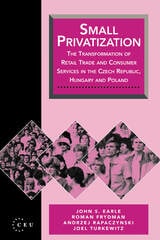
Small Privatization
The Transformation of Retail Trade and Consumer Services in the Czech Republic, Hungary and PolandRoman Frydman
Central European University Press, 1994
Socialism, Capitalism, Transformation
Leszek Balcerowicz
Central European University Press, 1995

Start-Up Poland
The People Who Transformed an EconomyJan Cienski
University of Chicago Press, 2018
As the Warsaw bureau chief for the Financial Times, Jan Cienski spent more than a decade talking with the people who did something that had never been done before: recreating a market economy out of a socialist one. Poland had always lagged behind wealthier Western Europe, but in the 1980s the gap had grown to its widest in centuries. But the corrupt Polish version of communism also created the conditions for its eventual revitalization, bringing forth a remarkably resilient and entrepreneurial people prepared to brave red tape and limited access to capital. In the 1990s, more than a million Polish people opened their own businesses, selling everything from bicycles to leather jackets, Japanese VCRs, and romance novels. The most business-savvy turned those primitive operations into complex corporations that now have global reach.
Well researched and accessibly and entertainingly written, Start-Up Poland tells the story of the opening bell in the East, painting lively portraits of the men and women who built successful businesses there, what their lives were like, and what they did to catapult their ideas to incredible success. At a time when Poland’s new right-wing government plays on past grievances and forms part of the populist and nationalist revolution sweeping the Western world, Cienski’s book also serves as a reminder that the past century has been the most successful in Poland’s history.

The Backwards Hand
A MemoirMatt Lee
Northwestern University Press, 2024
Told in lyric fragments, The Backwards Hand traces Matt Lee’s experience living in the United States for more than thirty years with a rare congenital defect. Weaving in historical research and pop culture references, Lee dissects how the disabled body has been conflated with impurity, worthlessness, and evil. His voice swirls amid those of artists, criminals, activists, and philosophers. With a particular focus on horror films, Lee juxtaposes portrayals of fictitious monsters with the real-life atrocities of the Nazi regime and the American eugenics movement. Through examining his struggles with physical and mental health, Lee confronts his own beliefs about monstrosity and searches for atonement as he awaits the birth of his son.
The Backwards Hand interrogates what it means to be a cripple in a predominantly ableist society, deconstructing how perceptions of disability are—and are not—reflected in art and media.
The Cuban Revolution in the 21st Century
George Lambie
Pluto Press, 2010
While most books and articles on Cuba seek to analyse the island’s socialist experiment from the perspective of internal dynamics or international relations, this book attempts to understand the revolutionary process as part of a counter-current against neoliberal globalisation.
Rather than presenting Cuba as a socialist survivor, whose performance must be measured against the standards set by the ‘international community’, George Lambie judges Cuban socialism on the goals which the revolution sets for itself. He shows that despite Cuba’s isolation in the ‘New World Order’, and the enormous pressures it has faced to ‘conform’, its faith in an alternative socialist project has continued and grown.
Now that neoliberalism is in crisis, Cuba’s promotion of socialist values is finding a renewed relevance. In this fascinating study Lambie argues that Cuba is again becoming a symbol, and practical example, of socialism in action. This book is essential reading for students of politics and Latin American studies.
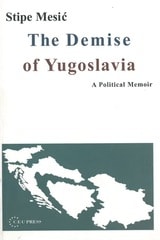
The Demise of Yugoslavia
A Political MemoirStipe Mesic
Central European University Press, 2004
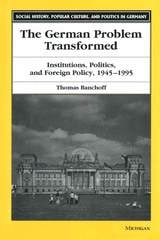
The German Problem Transformed
Institutions, Politics, and Foreign Policy, 1945-1995Thomas Banchoff
University of Michigan Press, 1999
The Many Faces of Sandinista Democracy
Katherine Hoyt
Ohio University Press, 1997
Taking power in Nicaragua in 1979 as a revolutionary party, the Sandinista National Liberation Front (FSLN) was willing to put its fate in the hands of the Nicaraguan people twice, in 1984 and 1990. The party wrote a democratic constitution and then, remarkably, accepted the decision of the majority by relinquishing power upon its defeat in the 1990 election.
The Many Faces of Sandinista Democracy explores the conflicts involving different visions of political and economic democracy, as well as new radical thought on participatory democracy. The latter addresses the problems popular organizations encountered as they moved from subservience to the FSLN in the 1980s to the liberating but disorientating electoral defeat of 1990. Up until the moment of defeat, the Sandinistas saw themselves as the true vanguard of the Nicaraguan people, able to submit themselves to free elections, because they felt they truly represented the general will of the people.
Dr. Hoyt brings to an international audience for the first time a study of the ideas of several Nicaraguan thinkers. She examines the conflicts surrounding the development of ideas within the FSLN, as well as the strengths and weaknesses of its rare combination of democratic and vanguard principles.
The New Berlin
Memory, Politics, PlaceKaren E. Till
University of Minnesota Press, 2005
“The New Berlin is a notable contribution to human geography and to the interdisciplinary literature on social memory and place making. Till’s methods and scholarship have provided the conceptual groundwork for the exploration and development of place making, social memory, and spatial haunting through the particular practices and politics of the new Berlin. Her readable style is marked by a narrative economy in which every word and sentence serves the larger purposes of the book. I recommend this book to anyone—student, scholar, or practitioner—who is interested in the social dynamics of memory formation and place making.” —The Professional Geographer
“This book is a well-written ‘first-hand’ account, though it also thoroughly covers academic literature, contemporary news accounts, and archival records.” —German Studies Review
“Karen E. Till's The New Berlin describes the modern metropolis and the ghosts of the past that it has to deal with.” —German World
“Well illustrated and copiously footnoted, this is a cutting-edge study of the power of identity-construction/analysis. Highly recommended.” —CHOICE
The Politics of Sectarianism in Postwar Lebanon
Bassel Salloukh, Rabie Barakat, Jinan S. Al-Habbal, Lara W. Khattab and Shoghig Mikaelian
Pluto Press, 2015
The Politics of Sectarianism in Postwar Lebanon builds on extensive field work to find the answers to those questions and more. Bassel Salloukh, Lebanon’s leading political scientist, analyses the mix of institutional, clientelist, and discursive practices that sustain the sectarian nature of Lebanon, revealing an expanding sectarian web that occupies ever-more-substantial areas of everyday life in Lebanon. It also highlights the struggles waged by opponents of the system, including women, public sector employees, teachers, students, and NGO-based coalitions, and how their efforts often fail to bear fruit because of sabotage by various systematic forces.
Theory in the Practice of the Nicaraguan Revolution
Bruce E. Wright
Ohio University Press, 1995
Even in the period following the electoral defeat of the Sandinista National Liberation Front (FSLN) in 1990, the revolution of 1979 continues to have a profound effect on the political economy of Nicaragua. Wright’s study, which is based on interviews with people from all walks of life—from government and party officials to academics and campesinos—as well as on the large volume of literature in both English and Spanish, focuses on the FSLN understanding of the relationships between the state, the party, and mass actors, and the nature of social classes. Wright considers the topics of agrarian reform, the development of mass organizations, the role of labor, and other aspects of the Nicaraguan political economy in order to assess their significance in theoretical as well as practical terms.

To Defend This Sunrise
Black Women’s Activism and the Authoritarian Turn in NicaraguaCourtney Desiree Morris
Rutgers University Press, 2023
Voices From the Other Side
An Oral History of Terrorism Against CubaKeith Bolender
Pluto Press, 2010
Keith Bolender brings to bear the enormous impact that terrorism has had on Cuba’s civilian population, with over 1,000 documented incidents resulting in more than 3,000 deaths and 2,000 injuries. Bolender allows the victims to articulate the atrocities the Cuban people have suffered - which largely originate from Cuban counter-revolutionaries based in the US, often with the active help of the CIA.
Voices From The Other Side includes first-person interviews with more than 75 Cuban citizens who have been victims of these terrorist acts, or have had family members or close friends die from the attacks. It is a unique resource for activists, journalists and students interested in Cuba's torrid relationship with the US.
What the Mirror Said
The Necessity of Black Women in PoetryAshley M. Jones
University of Michigan Press, 2026
Part critical essay, part personal essay collection, What the Mirror Said traces the influence of nine Black women poets in Jones’s writing and life. She brings together historical biographical information, personal reflection, and close readings as she explores personal connections to poets from Phillis Wheatley to Patricia Smith. This book is expansive in its study, from classical metrical scansion to metaphorical explication. In offering new ways to interpret poems by important contemporary poets, What the Mirror Said makes the case for the need to study and celebrate Black women poets.
Women on the Polish Labor Market
Henryk Domanski
Central European University Press, 2001