Results by title
6 books match the query '50th Anniversary Edition'
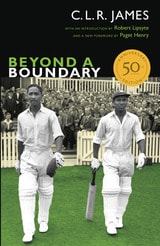
Beyond a Boundary
50th Anniversary EditionC. L .R. James
Duke University Press, 2013
Named one of the Top 50 Sports Books of All Time by Sports Illustrated
"Beyond a Boundary . . . should find its place on the team with Izaak Walton, Ivan Turgenev, A. J. Liebling, and Ernest Hemingway."—Derek Walcott, The New York Times Book Review
"As a player, James the writer was able to see in cricket a metaphor for art and politics, the collective experience providing a focus for group effort and individual performance. . . . [In] his scintillating memoir of his life in cricket, Beyond a Boundary (1963), James devoted some of his finest pages to this theme."—Edward Said, The Washington Post
"A work of double reverence—for the resilient, elegant ritualism of cricket and for the black people of the world."—Whitney Balliett, The New Yorker
"Beyond a Boundary is a book of remarkable richness and force, which vastly expands our understanding of sports as an element of popular culture in the Western and colonial world."—Mark Naison, The Nation
"Everything James has done has had the mark of originality, of his own flexible, sensitive, and deeply cultured intelligence. He conveys not a rigid doctrine but a delight and curiosity in all the manifestations of life, and the clue to everything lies in his proper appreciation of the game of cricket."—E. P. Thompson, author of The Making of the English Working Class
"Beyond a Boundary is . . . first and foremost an autobiography of a living legend—probably the greatest social theorist of our times."—Manning Marable, Journal of Sport & Social Issues
"The great triumph of Beyond a Boundary is its ability to rise above genre and in its very form explore the complex nature of colonial West Indian society."—Caryl Phillips, The New Republic
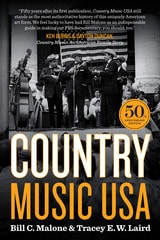
Country Music USA
50th Anniversary EditionBy Bill C. Malone and Tracey E. W. Laird
University of Texas Press, 2018
“Fifty years after its first publication, Country Music USA still stands as the most authoritative history of this uniquely American art form. Here are the stories of the people who made country music into such an integral part of our nation’s culture. We feel lucky to have had Bill Malone as an indispensable guide in making our PBS documentary; you should, too.”
—Ken Burns and Dayton Duncan, Country Music: An American Family Story
From reviews of previous editions:
“Considered the definitive history of American country music.”
—Los Angeles Times
“If anyone knows more about the subject than [Malone] does, God help them.”
—Larry McMurtry, from In a Narrow Grave
“With Country Music USA, Bill Malone wrote the Bible for country music history and scholarship. This groundbreaking work, now updated, is the definitive chronicle of the sweeping drama of the country music experience.”
—Chet Flippo, former editorial director, CMT: Country Music Television and CMT.com
“Country Music USA is the definitive history of country music and of the artists who shaped its fascinating worlds.”
—William Ferris, University of North Carolina at Chapel Hill, former chairman of the National Endowment for the Humanities and coeditor of the Encyclopedia of Southern Culture
Since its first publication in 1968, Bill C. Malone’s Country Music USA has won universal acclaim as the definitive history of American country music. Starting with the music’s folk roots in the rural South, it traces country music from the early days of radio into the twenty-first century. In this fiftieth-anniversary edition, Malone, the featured historian in Ken Burns’s 2019 documentary on country music, has revised every chapter to offer new information and fresh insights. Coauthor Tracey Laird tracks developments in country music in the new millennium, exploring the relationship between the current music scene and the traditions from which it emerged.
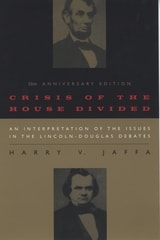
Crisis of the House Divided
An Interpretation of the Issues in the Lincoln-Douglas Debates, 50th Anniversary EditionHarry V. Jaffa
University of Chicago Press, 2009
The definitive account of the Lincoln-Douglas debates and their importance to American history
A lasting classic, Crisis of the House Divided offers an unparalleled account of the Lincoln-Douglas debates. Harry Jaffa provides the definitive analysis of the political principles that guided Lincoln from his reentry into politics in 1854 through his Senate campaign against Douglas in 1858.
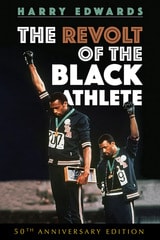
The Revolt of the Black Athlete
50th Anniversary EditionHarry Edwards
University of Illinois Press, 2017
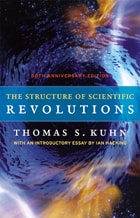
The Structure of Scientific Revolutions
50th Anniversary EditionThomas S. Kuhn
University of Chicago Press, 2012
A good book may have the power to change the way we see the world, but a great book actually becomes part of our daily consciousness, pervading our thinking to the point that we take it for granted, and we forget how provocative and challenging its ideas once were—and still are. The Structure of Scientific Revolutions is that kind of book. When it was first published in 1962, it was a landmark event in the history and philosophy of science. Fifty years later, it still has many lessons to teach.
With The Structure of Scientific Revolutions, Kuhn challenged long-standing linear notions of scientific progress, arguing that transformative ideas don’t arise from the day-to-day, gradual process of experimentation and data accumulation but that the revolutions in science, those breakthrough moments that disrupt accepted thinking and offer unanticipated ideas, occur outside of “normal science,” as he called it. Though Kuhn was writing when physics ruled the sciences, his ideas on how scientific revolutions bring order to the anomalies that amass over time in research experiments are still instructive in our biotech age.
This new edition of Kuhn’s essential work in the history of science includes an insightful introduction by Ian Hacking, which clarifies terms popularized by Kuhn, including paradigm and incommensurability, and applies Kuhn’s ideas to the science of today. Usefully keyed to the separate sections of the book, Hacking’s introduction provides important background information as well as a contemporary context. Newly designed, with an expanded index, this edition will be eagerly welcomed by the next generation of readers seeking to understand the history of our perspectives on science.
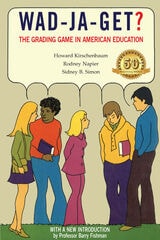
Wad-Ja-Get?
The Grading Game in American Education, 50th Anniversary EditionHoward Kirschenbaum, Rodney Napier, and Sidney B. Simon; With a new introduction by Professor Barry Fishman
Michigan Publishing Services, 2020
Grades and grading are an accepted part of modern education. But why? Why do we accept a system that is more focused on ranking students than on learning? Why do we accept the negative effects of standard grading approaches, including turning students off from learning, increasing stress, creating winners and losers, and perpetuating racial and economic inequality? Why do we accept these things when there are better alternatives?
Wad-Ja-Get? is a unique discussion of grading and its effects on students. The book was written by three education professors who have had first-hand contact with the problems of grading in all its forms. Written in the form of a novel, the topic is explored through the eyes of students, teachers, and parents in one high school embroiled in a controversy around grading. Possible alternatives to the grading system are examined in detail and the research on grading is summarized in an appendix. This 50th anniversary edition of the book includes a new introduction by Professor Barry Fishman, updating the research and setting the original book in the context of today’s educational and societal challenges. Wad-Ja-Get? remains timely five decades after its original publication, and will be inspiring to students, parents, educators, and policymakers.