Results by title
9 books match the query 'Above'
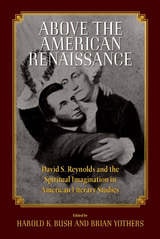
Above the American Renaissance
David S. Reynolds and the Spiritual Imagination in American Literary StudiesHarold K. Bush
University of Massachusetts Press, 2018
In addition to the editors and David S. Reynolds, contributors include Jeffrey Bilbro, Dawn Coleman, Jonathan A. Cook, Tracy Fessenden, Zachary Hutchins, Richard Kopley, Mason I. Lowance Jr., John Matteson, Christopher N. Phillips, Vivian Pollak, Michael Robertson, Gail K. Smith, Claudia Stokes, and Timothy Sweet.
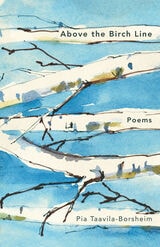
Above the Birch Line
PoemsPia Taavila-Borsheim
Gallaudet University Press, 2021
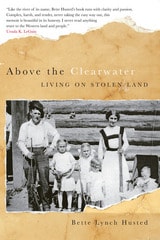
Above the Clearwater
Living on Stolen LandBette Lynch Husted
Oregon State University Press, 2004
Like her father before her, Bette Husted grew up on stolen land. The bench land above the Clearwater River in north-central Idaho had been a home for the Nez Perce Indians until the Dawes Act opened their reservation to settlement in 1895. As a child on the family homestead, Husted felt the presence of the Nez Perce: "But they were always just out of sight, like a smoky shadow behind me that I couldn't quite turn around quickly enough to catch."
Above the Clearwater chronicles her family's history on the land, revealing their joys and sorrows, their triumphs and tragedies. In a series of graceful and moving essays, Husted traces this intimate history, from her Cold War childhood to her struggles as a parent and finally to her life as a woman and teacher in the rural West. Her family's stories echo those of countless other families in the American West: the conflicts with guns, the struggles over land ownership and water rights, the isolation of women, the separations by race and class, the family secrets of mental illness and suicide.
With a powerful, poetic voice, Husted illuminates the tangled relationship between the history of a particular place and the history of the families who inhabit that place over time. As Above the Clearwater explores one family's search for a home on land taken from its original inhabitants, it quietly asks all readers to examine their own homes in the same light.
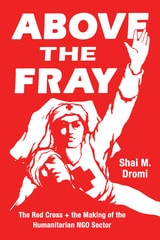
Above the Fray
The Red Cross and the Making of the Humanitarian NGO SectorShai M. Dromi
University of Chicago Press, 2020
Drawing on archival research, Dromi traces the genesis of the Red Cross to a Calvinist movement working in mid-nineteenth-century Geneva. He shows how global humanitarian policies emerged from the Red Cross founding members’ faith that an international volunteer program not beholden to the state was the only ethical way to provide relief to victims of armed conflict. By illustrating how Calvinism shaped the humanitarian field, Dromi argues for the key role belief systems play in establishing social fields and institutions. Ultimately, Dromi shows the immeasurable social good that NGOs have achieved, but also points to their limitations and suggests that alternative models of humanitarian relief need to be considered.
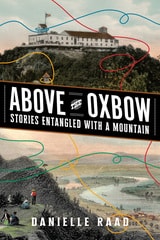
Above the Oxbow
Stories Entangled with a MountainDanielle R. Raad
West Virginia University Press, 2026
Above the Oxbow is a journey through the tangle of rich narratives surrounding Mount Holyoke, a locally cherished mountain in Western Massachusetts. It explores how visitors have forged connections with the mountain through various activities over the past two centuries. In an accessible blend of storytelling and scholarly analysis, Danielle Raad shows the significance of the landscape, historic sites, and material culture, revealing how cultural perspectives, community activism, collective memory, and personal experiences shape our understanding of a place. Situated at the intersection of public history and environmental history, this ethnography of place also discloses the curious stories of the Summit House, an erstwhile tramway, an airplane crash, and the local fight to conserve Mount Holyoke as a natural space and celebrates its myriad uses today.
Above the Well
An Antiracist Literacy Argument from a Boy of ColorAsao B. Inoue
University Press of Colorado, 2021
Aerial Aftermaths
Wartime from AboveCaren Kaplan
Duke University Press, 2018
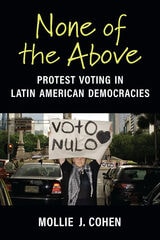
None of the Above
Protest Voting in Latin American DemocraciesMollie J. Cohen
University of Michigan Press, 2024
Winner of the 2025 International Society of Political Psychology David O. Sears Best Book on Mass Politics Award
Around the world each year, millions of citizens turn out to vote but leave their ballots empty or spoil them. Increasingly, campaigns have emerged that promote “invalid” votes like these. Why do citizens choose to cast blank and spoiled votes? And how do campaigns mobilizing the invalid vote influence this decision? None of the Above answers these questions using evidence from presidential and gubernatorial elections in eighteen Latin American democracies. Author Mollie J. Cohen draws on a broad range of methods and sources, incorporating data from electoral management bodies, nationally representative surveys, survey experiments, focus groups, semi-structured interviews, and news sources.
Contrary to received wisdom, this book shows that most citizens cast blank or spoiled votes in presidential elections on purpose. By participating in invalid vote campaigns, citizens can voice their concerns about low-quality candidates while also expressing a preference for high-quality democracy. Campaigns promoting blank and spoiled votes come about more often, and succeed at higher rates, when incumbent politicians undermine the quality of elections. Surprisingly, invalid vote campaigns can shore up the quality of democracy in the short term. None of the Above shows that swings in blank and spoiled vote rates can serve as a warning about the trajectory of a country’s democracy.
Urban Latin America
The Political Condition from Above and BelowBy Alejandro Portes and John Walton
University of Texas Press, 1976
Much research on the city in developing societies has focused mainly on one of three areas—planning, demography, or economics—and has emphasized either power elites or the masses, but not both. The published literature on Latin America has reflected these interests and has so far failed to provide a comprehensive view of Latin American urbanization. Urban Latin America is an attempt to integrate research on Latin American social organization within a single theoretical framework: development as fundamentally a political problem. Alejandro Portes and John Walton have included material on both elites and marginal populations and on the three major areas of research in order to formulate and address some of the key questions about the structure of urban politics in Latin America.
Following an introduction that delineates the scope of Latin American urban studies, Portes discusses the Latin American city as a creation of European colonialism. He goes on to examine political behavior among the poor, with central reference to system support and countersystem potential. Walton provides material for a comparative study of four cities: Monterrey and Guadalajara in Mexico and Medellín and Cali in Colombia. He also summarizes a large number of urban elite studies and develops a theoretical interpretation of their collective results, based on class structure and vertical integration. Material in each chapter is cross-referenced to other chapters, and the authors have used a common methodological approach in synthesizing and interpreting the research literature. In the final chapter they generalize current findings, elaborating on the interface between elite and mass politics in the urban situation. They make some observations on approaching changes and pinpoint possible research strategies for the future.