Results by title

3 books match the query 'Absentee fathers'
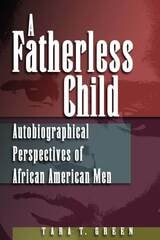
cover of A Fatherless Child: Autobiographical Perspectives of African American Men

A Fatherless Child

Autobiographical Perspectives of African American Men

Tara T. Green

University of Missouri Press, 2009

The impact of absent fathers on sons in the black community has been a subject for cultural critics and sociologists who often deal in anonymous data. Yet many of those sons have themselves addressed the issue in autobiographical works that form the core of African American literature.
 
A Fatherless Child examines the impact of fatherlessness on racial and gender identity formation as seen in black men’s autobiographies and in other constructions of black fatherhood in fiction. Through these works, Tara T. Green investigates what comes of abandonment by a father and loss of a role model by probing a son’s understanding of his father’s struggles to define himself and the role of community in forming the son’s quest for self-definition in his father’s absence.
 
Closely examining four works—Langston Hughes’s The Big Sea, Richard Wright’s Black Boy, Malcolm X’s The Autobiography of Malcolm X, and Barack Obama’s Dreams from My Father—Green portrays the intersecting experiences of generations of black men during the twentieth century both before and after the Civil Rights movement. These four men recall feeling the pressure and responsibility of caring for their mothers, resisting public displays of care, and desiring a loving, noncontentious relationship with their fathers. Feeling vulnerable to forces they may have identified as detrimental to their status as black men, they use autobiography as a tool for healing, a way to confront that vulnerability and to claim a lost power associated with their lost fathers.

Through her analysis, Green emphasizes the role of community as a father-substitute in producing successful black men, the impact of fatherlessness on self-perceptions and relationships with women, and black men’s engagement with healing the pain of abandonment. She also looks at why these four men visited Africa to reclaim a cultural history and identity, showing how each developed a clearer understanding of himself as an American man of African descent.
 
A Fatherless Child conveys important lessons relevant to current debates regarding the status of African American families in the twenty-first century. By showing us four black men of different eras, Green asks readers to consider how much any child can heal from fatherlessness to construct a positive self-image—and shows that, contrary to popular perceptions, fatherlessness need not lead to certain failure.
[more]
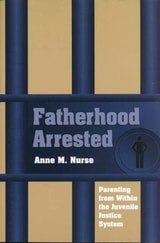
cover of Fatherhood Arrested: Parenting from Within the Juvenile Justice System

Fatherhood Arrested

Parenting from Within the Juvenile Justice System

Anne M. Nurse

Vanderbilt University Press, 2002

Crime and young fatherhood have generally been viewed as separate social problems. Increasingly, researchers are finding that these problems are closely related and highly concentrated in low-income communities. Fatherhood Arrested is an in-depth study of these issues and the difficulties of parenting while in prison and on parole.

By taking us inside the prison system, Nurse shows how its structure actively shapes an inmate's relationship with his children. For example, visitation is sometimes restricted to blood relatives and wives. Because relationships between unmarried men and the mothers of their children are often strained, some mothers are unwilling to allow their children to go to the prison with the inmate's family. Or the father may be allowed to receive visits from only one "girlfriend," which forces a man with multiple relationships, or with children by different women, to make impossible choices. Special attention is paid to the gendered nature of prison, its patriarchal and punitive structure, and its high-stress environment. The book then follows newly paroled men as they are released and return to their children.

The author spent four years doing research at the California Youth Authority, during which time she surveyed 258 paroled fathers. The group included young white, black, and Latino men, ages sixteen to twenty-five. She conducted in-depth interviews with men selected from this group, participated in forty parenting class sessions, and observed visiting hours at three different institutions. The data provide fascinating information about the characteristics of the men, their attitudes toward fatherhood, and the ways they are involved with their children. The diversity of the fathers allows for an analysis of racial and ethnic variation in their attitudes and involvement. The study concludes with a series of policy suggestions, especially important in light of the large number of fathers now living under the care and control of the juvenile justice system.
[more]
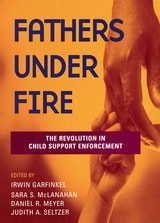
cover of Fathers Under Fire: The Revolution in Child Support Enforcement

Fathers Under Fire

The Revolution in Child Support Enforcement

Irwin Garfinkel

Russell Sage Foundation, 1998

"This important and highly informative collection of studies on nonresidentfathers and child support should be of great value to scholars and policymakers alike." —American Journal of Sociology Over half of America's children will live apart from their fathers at some point as they grow up, many in the single-mother households that increasingly make up the nation's poor. Federal efforts to improve the collection of child support from fathers appear to have little effect on payments, and many critics have argued that forcing fathers to pay does more harm than good. Much of the uncertainty surrounding child support policies has stemmed from a lack of hard data on nonresident fathers. Fathers Under Fire presents the best available information on the financial and social circumstances of the men who are at the center of the debate. In this volume, social scientists and legal scholars explore the issues underlying the child support debate, chief among them on the potential repercussions of stronger enforcement. Who are nonresident fathers? This volume calls upon both empirical and theoretical data to describe them across a broad economic and social spectrum. Absentee fathers who do not pay child support are much more likely to be school dropouts and low earners than fathers who pay, and nonresident fathers altogether earn less than resident fathers. Fathers who start new families are not significantly less likely to support previous children. But can we predict what would happen if the government were to impose more rigorous child support laws? The data in this volume offer a clearer understanding of the potential benefits and risks of such policies. In contrast to some fears, stronger enforcement is unlikely to push fathers toward. But it does seem to have more of an effect on whether some fathers remarry and become responsible for new families. In these cases, how are subsequent children affected by a father's pre-existing obligations? Should such fathers be allowed to reduce their child support orders in order to provide for their current families? Should child support guidelines permit modifications in the event of a father's changed financial circumstances? Should government enforce a father's right to see his children as well as his obligation to pay support? What can be done to help under- or unemployed fathers meet their payments? This volume provides the information and insight to answer these questions. The need to help children and reduce the public costs of welfare programs is clear, but the process of achieving these goals is more complex. Fathers Under Fire offers an indispensable resource to those searching for effective and equitable solutions to the problems of child support.
[more]