Results by title
26 books match the query 'Acoustics & Sound'
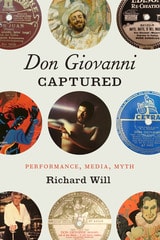
"Don Giovanni" Captured
Performance, Media, MythRichard Will
University of Chicago Press, 2022
Mozart’s opera Don Giovanni has long inspired myths about eros and masculinity. Over time, its performance history has revealed a growing trend toward critique—an increasing effort on the part of performers and directors to highlight the violence and predatoriness of the libertine central character, alongside the suffering and resilience of his female victims.
In “Don Giovanni” Captured, Richard Will sets out to analyze more than a century’s worth of recorded performances of the opera, tracing the ways it has changed from one performance to another and from one generation to the next. Will consults audio recordings, starting with wax cylinders and 78s, as well as video recordings, including DVDs, films, and streaming videos. As Will argues, recordings and other media shape our experience of opera as much as live performance does. Seen as a historical record, opera recordings are also a potent reminder of the refusal of works such as Don Giovanni to sit still. By choosing a work with such a rich and complex tradition of interpretation, Will helps us see Don Giovanni as a standard-bearer for evolving ideas about desire and power, both on and off the stage.
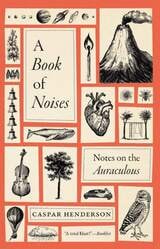
A Book of Noises
Notes on the AuraculousCaspar Henderson
University of Chicago Press, 2023
The crackling of a campfire. The scratch, hiss, and pop of a vinyl record. The first glug of wine as it is poured from a bottle. These are just a few of writer Caspar Henderson’s favorite sounds. In A Book of Noises, Henderson invites readers to use their ears a little better—to tune in to the world in all its surprising noisiness.
Describing sounds from around the natural and human world, the forty-eight essays that make up A Book of Noises are a celebration of all things “auraculous.” Henderson calls on his characteristic curiosity to explore sounds related to humans (anthropophony), other life (biophony), the planet (geophony), and space (cosmophony). Henderson finds the beauty in everyday sounds, like the ringing of a bell, the buzz of a bee, or the “earworm” songs that get stuck in our heads. A Book of Noises also explores the marvelous, miraculous sounds we may never get the chance to hear, like the deep boom of a volcano or the quiet, rustling sound of the Northern Lights.
A Book of Noises will teach readers to really listen to the sounds of the world around them, to broaden and deepen their appreciation of the humans, animals, rocks, and trees simultaneously broadcasting across the whole spectrum of sentience.
A Resonant Ecology
Max Ritts
Duke University Press, 2024
Acoustic Colonialism
Acts of Mapuche InterferenceLuis E. Cárcamo-Huechante
Duke University Press, 2025

Active Sound and Vibration Control
Theory and applicationsOsman Tokhi
The Institution of Engineering and Technology, 2002

Amplifying Power
The Shaping of the Jamaican Sound SystemJulian Henriques
Duke University Press, 2027
Aurality
Listening and Knowledge in Nineteenth-Century ColombiaAna María Ochoa Gautier
Duke University Press, 2014
Designing Sound
Audiovisual Aesthetics in 1970s American CinemaBeck, Jay
Rutgers University Press, 2016
Disappearing Tricks
Silent Film, Houdini, and the New Magic of the Twentieth CenturyMatthew Solomon
University of Illinois Press, 2010
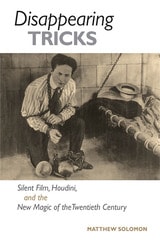
Disappearing Tricks revisits the golden age of theatrical magic and silent film to reveal how professional magicians shaped the early history of cinema. Where others have called upon magic as merely an evocative metaphor for the wonders of cinema, Matthew Solomon focuses on the work of the professional illusionists who actually made magic with moving pictures between 1895 and 1929.
The first to reveal fully how powerfully magic impacted the development of cinema, the book combines film and theater history to uncover new evidence of the exchanges between magic and filmmaking in the United States and France during the silent period. Chapters detailing the stage and screen work of Harry Houdini and Georges Méliès show how each transformed theatrical magic to create innovative cinematic effects and thrilling new exploits for twentieth-century mass audiences. The book also considers the previously overlooked roles of anti-spiritualism and presentational performance in silent film.
Highlighting early cinema's relationship to the performing body, visual deception, storytelling, and the occult, Solomon treats cinema and stage magic as overlapping practices that together revise our understanding of the origins of motion pictures and cinematic spectacle.
Geographies of the Ear
The Cultural Politics of Sound in Contemporary BarcelonaTania Gentic
Duke University Press, 2025
Good Vibes Only
Phenomenology and the Biopolitics of Algorithmic LegitimationRobin James
Duke University Press, 2026
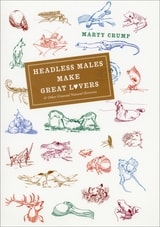
Headless Males Make Great Lovers
And Other Unusual Natural HistoriesMarty Crump
University of Chicago Press, 2005
Headless Males Make Great Lovers and Other Unusual Natural Histories celebrates the extraordinary world of animals with essays on curious creatures and their amazing behaviors. In five thematic chapters, Marty Crump—a tropical field biologist well known for her work with the reproductive behavior of amphibians—examines the bizarre conduct of animals as they mate, parent, feed, defend themselves, and communicate. Crump's enthusiasm for the unusual behaviors she describes-from sex change and free love in sponges to aphrodisiac concoctions in bats-is visible on every page, thanks to her skilled storytelling, which makes even sea slugs, dung beetles, ticks, and tapeworms fascinating and appealing. Steeped in biology, Headless Males Make Great Lovers points out that diverse and unrelated animals often share seemingly bizarre behaviors—evidence, Crump argues, that these natural histories, though outwardly weird, are successful ways of living.
Illustrated throughout, and filled with vignettes of personal and scientific interest, Headless Males Make Great Lovers will enchant the general reader with its tales of blood-squirting horned lizards and intestine-ejecting sea cucumbers—all in the service of a greater appreciation of the diversity of the natural histories of animals.
Instruments of Music Theory
Alexander Rehding
University of Chicago Press, 2027
Shows how musical instruments and the sounds they produce are not incidental, but an integral part of music theory.
Many musicians dread music theory: Its rules and diagrams can feel stern and lifeless, far removed from the sounds that make music so thrilling. In this book, Alexander Rehding looks at music theory from a different angle. He argues that the sounds of the instruments on which music theory is demonstrated—starting with the piano in the music classroom—play a much more active role than we usually notice. They are “instruments” in a double sense: musical noisemakers, but also tools in a kind of scientific experiment. Rehding strips these devices down to their sound-generating mechanisms to show us how to read musical instruments for their theoretical content.
Instruments of Music Theory turns our attention to instruments such as multiphonic sirens, tuning forks, Chladni plates, Aeolian harps, and Wheatstone concertinas—these devices generate sounds that call for new ways of listening, measuring, and thinking about music. Bringing together music theory, critical organology, and media theory, this book can be read as a user’s manual for how to put sound back into music theory. Rehding shows us how instruments do not only produce sound—they produce knowledge about music. Through the lens of these new instruments, Instruments of Music Theory recasts fundamental musical ideas such as pitch, harmony, form, and scale from the ground up to give new meaning to the stuff we call music.
Knowing by Ear
Listening to Voice Recordings with African Prisoners of War in German Camps (1915–1918)Anette Hoffmann
Duke University Press, 2024
Lowering the Boom
Critical Studies in Film SoundEdited by Jay Beck and Tony Grajeda
University of Illinois Press, 2007
As the first collection of new work on sound and cinema in over a decade, Lowering the Boom addresses the expanding field of film sound theory and its significance in rethinking historical models of film analysis. The contributors consider the ways in which musical expression, scoring, voice-over narration, and ambient noise affect identity formation and subjectivity. Lowering the Boom also analyzes how shifting modulation of the spoken word in cinema results in variations in audience interpretation. Introducing new methods of thinking about the interaction of sound and music in films, this volume also details avant-garde film sound, which is characterized by a distinct break from the narratively based sound practices of mainstream cinema. This interdisciplinary, global approach to the theory and history of film sound opens the eyes and ears of film scholars, practitioners, and students to film's true audio-visual nature.
Contributors are Jay Beck, John Belton, Clark Farmer, Paul Grainge, Tony Grajeda, David T. Johnson, Anahid Kassabian, David Laderman, James Lastra, Arnt Maasø, Matthew Malsky, Barry Mauer, Robert Miklitsch, Nancy Newman, Melissa Ragona, Petr Szczepanik, Paul Théberge, and Debra White-Stanley.
Out of Sync
Ventriloquism in Popular Media from Vinyl to TikTokSarah Rebecca Kessler
Duke University Press, 2026
Principles of Soundscape Ecology
Discovering Our Sonic WorldBryan C. Pijanowski
University of Chicago Press, 2024
What do the sounds of a chorus of tropical birds and frogs, a clap of thunder, and a cacophony of urban traffic have in common? They are all components of a soundscape, acoustic environments that have been identified by scientists as a combination of the biophony, geophony, and anthrophony, respectively, of all of Earth’s sound sources. As sound is a ubiquitous occurrence in nature, it is actively sensed by most animals and is an important way for them to understand how their environment is changing. For humans, environmental sound is a major factor in creating a psychological sense of place, and many forms of sonic expression by people embed knowledge and culture. In this book, soundscape ecology pioneer Bryan C. Pijanowski presents the definitive text for both students and practitioners who are seeking to engage with this thrilling new field. Principles of Soundscape Ecology clearly outlines soundscape ecology’s critical foundations, key concepts, methods, and applications. Fundamentals include concise and valuable descriptions of the physics of sound as well as a thorough elucidation of all sounds that occur on Earth. Pijanowski also presents a rich overview of the ecological, sociocultural, and technical theories that support this new science, illustrating the breadth of this amazingly transdisciplinary field. In methods, he describes the principles of data mining, signal processing, and mixed methods approaches used to study soundscapes in ecological, social, or socio-ecological contexts. The final section focuses on terrestrial, aquatic, urban, and music applications, demonstrating soundscape ecology’s utility in nearly all spaces.
Rhythm and Noise
An Aesthetics of RockTheodore Gracyk
Duke University Press, 1996
What’s in a name? “Rock” or “Rock ’n’ Roll?” Grayck argues that rock and roll is actually a performance style, one in a number of musical styles comprising rock. What distinguishes rock, Gracyk tells us, is how it is mediated by technology: The art is in the recording. The lesson is a heady one, entailing a tour through the history of rock music from Elvis Presley’s first recordings in 1954 to Kurt Cobain’s suicide in 1994. Gracyk takes us through key recordings, lets us hear what rock musicians and their critics have to say, shows us how other kinds of music compare, and gives us the philosophical background to make more than passing sense of the medium. His work takes up the common myths and stereotypes about rock, popular and academic, and focuses on the features of the music that electrify fans and consistently generate controversy. When Elvis came to town, did southern sheriffs say that rock was barbaric and addictive? Well so did Theodor Adorno, in his way, and Allan Bloom, in his, and Gracyk takes aim at this charge as it echoes through the era of recorded music. He looks at what rock has to do with romanticism and, even more, with commercialism. And he questions the orthodoxy of making grand distinctions between “serious” and “popular” art.
Keenly attuned to the nuances of music and of all the ways that we can think about it, this exhilarating book tunes us in, as no other has, to the complex role of rock in American culture.
Sonic Persuasion
Reading Sound in the Recorded AgeGreg Goodale
University of Illinois Press, 2011

Sound Ideas
Music, Machines, and ExperienceAden Evens
University of Minnesota Press, 2005
Sounds of Black Switzerland
Blackness, Music, and Unthought VoicesJessie Cox
Duke University Press, 2025
The Acoustic World of Early Modern England
Attending to the O-FactorBruce R. Smith
University of Chicago Press, 1999
In this ear-opening journey into the sound-worlds of Shakespeare's contemporaries, Bruce R. Smith explores both the physical aspects of human speech (ears, lungs, tongue) and the surrounding environment (buildings, landscape, climate), as well as social and political structures. Drawing on a staggeringly wide range of evidence, he crafts a historical phenomenology of sound, from reconstructions of the "soundscapes" of city, country, and court to detailed accounts of the acoustic properties of the Globe and Blackfriars theaters and how scripts designed for the two spaces exploited sound very differently.
Critical for anyone who wants to understand the world of early modern England, Smith's pathbreaking "ecology" of voice and listening also has much to offer musicologists and acoustic ecologists.
The Archive and the Aural City
Sound, Knowledge, and the Politics of ListeningAlejandro L. Madrid
Duke University Press, 2025
Thinking with Sound
A New Program in the Sciences and Humanities around 1900Viktoria Tkaczyk
University of Chicago Press, 2023
When the outside world is silent, all sorts of sounds often come to mind: inner voices, snippets of past conversations, imaginary debates, beloved and unloved melodies. What should we make of such sonic companions? Thinking with Sound investigates a period when these and other newly perceived aural phenomena prompted a far-reaching debate. Through case studies from Paris, Vienna, and Berlin, Viktoria Tkaczyk shows that the identification of the auditory cortex in late nineteenth-century neuroanatomy affected numerous academic disciplines across the sciences and humanities. “Thinking with sound” allowed scholars and scientists to bridge the gaps between theoretical and practical knowledge, and between academia and the social, aesthetic, and industrial domains. As new recording technologies prompted new scientific questions, new auditory knowledge found application in industry and the broad aesthetic realm. Through these conjunctions, Thinking with Sound offers a deeper understanding of today’s second “acoustic turn” in science and scholarship.
Tuning the World
The Rise of 440 Hertz in Music, Science, and Politics, 1859–1955Fanny Gribenski
University of Chicago Press, 2023
Tuning the World tells the unknown story of how the musical pitch A 440 became the global norm.
Now commonly accepted as the point of reference for musicians in the Western world, A 440 hertz only became the standard pitch during an international conference held in 1939. The adoption of this norm was the result of decades of negotiations between countries, involving a diverse group of performers, composers, diplomats, physicists, and sound engineers. Although there is widespread awareness of the variability of musical pitches over time, as attested by the use of lower frequencies to perform early music repertoires, no study has fully explained the invention of our current concert pitch. In this book, Fanny Gribenski draws on a rich variety of previously unexplored archival sources and a unique combination of musicological perspectives, transnational history, and science studies to tell the unknown story of how A 440 became the global norm. Tuning the World demonstrates the aesthetic, scientific, industrial, and political contingencies underlying the construction of one of the most “natural” objects of contemporary musical performance and shows how this century-old effort was ultimately determined by the influence of a few powerful nations.
Wild Tongue
A Borderlands MixtapeJonathan Leal
Duke University Press, 2026