Results by title
4 books match the query 'Active learning'
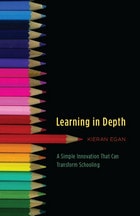
Learning in Depth
A Simple Innovation That Can Transform SchoolingKieran Egan
University of Chicago Press, 2011
For generations, schools have aimed to introduce students to a broad range of topics through curriculum that ensure that they will at least have some acquaintance with most areas of human knowledge by the time they graduate. Yet such broad knowledge can’t help but be somewhat superficial—and, as Kieran Egan argues, it omits a crucial aspect of true education: deep knowledge.
Real education, Egan explains, consists of both general knowledge and detailed understanding, and in Learning in Depth he outlines an ambitious yet practical plan to incorporate deep knowledge into basic education. Under Egan’s program, students will follow the usual curriculum, but with one crucial addition: beginning with their first days of school and continuing until graduation, they will eachalso study one topic—such as apples, birds, sacred buildings, mollusks,circuses, or stars—in depth. Over the years, with the help and guidance of their supervising teacher, students will expand their understanding of their one topic and build portfolios of knowledge that grow and change along with them. By the time they graduate each student will know as much about his or her topic as almost anyone on earth—and in the process will have learned important, even life-changing lessons about the meaning of expertise, the value of dedication, and the delight of knowing something in depth.
Though Egan’s program may be radical in its effects, it is strikingly simple to implement—as a number of schools have already discovered—and with Learning in Depth as a blueprint, parents, educators, and administrators can instantly begin taking the first steps toward transforming our schools and fundamentally deepening their students’ minds.

Let the Games Begin!
Engaging Students with Interactive Information Literacy InstructionTheresa R. McDevitt
American Library Association, 2011
Move, Play, Learn
Interactive Storytimes With Music, Movement, And MoreAlyssa Jewell
American Library Association, 2020
Foreword by Jamie Campbell Naidoo
Get ready to break out of your storytime routine by encouraging children’s natural instincts to move, sing, and play! Unlike traditional storytimes, where children are expected to sit quietly and just watch, music and movement storytimes encourage children to learn by getting inside stories while interacting with others. Research shows that this kind of play stimulates the senses, provides connections to all four lobes of the brain, touches on a variety of intelligences, and heightens social and emotional awareness—all while extending the early literacy practices of Every Child Ready to Read® and preparing children for school. And because there are no crafts to cut out, no snacks to pack, no scripts to memorize, and no story kits to make, it’s one of the simplest, most cost-effective storytime models to implement. Jewell’s complete guide shows the way, offering
- 20 ready-to-use storytime plans tailored to specific age groups, including babies, toddlers, preschool and all-ages programs, a real time-saver for storytime organizers and presenters;
- advice and best practices gleaned from interviews with professionals who specialize in storytimes, music making with children and families, yoga storytime, and drama education; and
- lists of recommended resources, from interactive print books to children’s music and videos available digitally, with tips on choosing the best materials.
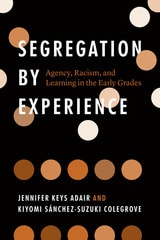
Segregation by Experience
Agency, Racism, and Learning in the Early GradesJennifer Keys Adair and Kiyomi Sánchez-Suzuki Colegrove
University of Chicago Press, 2021
Early childhood can be a time of rich discovery, a period when educators have an opportunity to harness their students’ fascination to create unique learning opportunities. Some teachers engage with their students’ ideas in ways that make learning collaborative--but not all students have access to these kinds of learning environments.
In Segregation by Experience, the authors filmed and studied a a first-grade classroom led by a Black immigrant teacher who encouraged her diverse group of students to exercise their agency. When the researchers showed the film to other schools, everyone struggled. Educators admired the teacher but didn’t think her practices would work with their own Black and brown students. Parents of color—many of them immigrants—liked many of the practices, but worried that they would compromise their children. And the young children who viewed the film thought that the kids in the film were terrible, loud, and badly behaved; they told the authors that learning was supposed to be quiet, still, and obedient. In Segregation by Experience Jennifer Keys Adair and Kiyomi Sánchez-Suzuki Colegrove show us just how much our expectations of children of color affect what and how they learn at school, and they ask us to consider which children get to have sophisticated, dynamic learning experiences at school and which children are denied such experiences because of our continued racist assumptions about them.