Results by title
5 books match the query 'Actor'

Beyond the Mask
Gordon Craig, Movement, and the ActorIrene Eynat-Confino
Southern Illinois University Press, 1987
Eynat-Confino goes beyond the usual consideration of Craig’s purported theories of the actor, scenery, and the scene painter to get at the heart of Craig’s idea of theater.
She draws not only on the research of contemporary Craig scholars but on material hitherto unavailable—his writings and daybooks and the writings of friends. She ties Craig’s encounter with Isadora Duncan to a decisive modification in his notion of movement. To have an instrument more controllable than the actor, he invented the über-marionette, a giant puppet. Craig also invented the “Scene,” a kinetic stage, the “screens” that brought him worldwide fame were simply an adaptation of this concept.
Eynat-Confino argues that a scenario Craig wrote in 1905, here published for the first time, reveals a theosophical system like that of Blake, a system that was the main force motivating Craig’s artistic quest. In her final chapter, she carefully examines the psychological, aesthetic, and circumstantial factors that kept Craig from completing his work to bring “friendliness—humor—love—ease—peace” to the world.
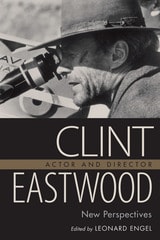
Clint Eastwood, Actor and Director
New PerspectivesLeonard Engel
University of Utah Press, 2007
The contributors to this volume revisit and examine his career as an actor and director, and are part of a growing critical evaluation of Eastwood's films. A common thread, however, is their respect for his cinematic storytelling. They examine how he put his individual stamp on particular genres, while extending and enriching our understanding of his achievements.
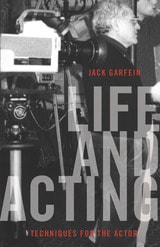
Life and Acting
Techniques for the ActorJack Garfein
Northwestern University Press, 2010
Arriving in America as a teenage Holocaust refugee, Jack Garfein would soon rise to the top of his field. Life and Acting is the product of more than sixty years in the world of theater and film, offering the kind of insight only gained by experience as both a teacher and practitioner. In Garfein’s case, his experience is unparalleled—he has worked with a who’s who of twentieth-century acting, especially those associated with the Actors Studio, the West Coast arm of which Garfein cofounded.
In Life and Acting, Garfein distills his experience into a holistic technique for learning and teaching. “The Beginning” functions as a kind of memoir, focusing on Garfein’s own education in the theater. “The Art” describes how Garfein’s exposure to nontheater artists, particularly painters and writers, has contributed to his understanding of acting. “Basic Training” offers thirty-seven detailed lessons for teaching acting. In “Training for Film,” Garfein applies his principles to acting in front of a camera.
Like Uta Hagen’s Respect for Acting and other classics of this genre, Life and Acting will be an invaluable resource for teachers as well as students.
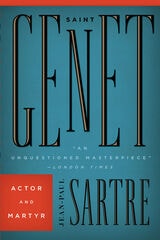
Saint Genet
Actor and MartyrJean-Paul Sartre
University of Minnesota Press, 2012
Saint Genet is Jean-Paul Sartre’s classic biography of Jean Genet—thief, convict, and great artist—a character of almost legendary proportions whose influence grows stronger with time. Bringing together two of the century’s greatest minds and artists, Saint Genet is at once a compelling psychological portrait, masterpiece of literary criticism, and one of Sartre’s most personal and inspired philosophical creations.

Shakespeare the Actor and the Purposes of Playing
Meredith Anne Skura
University of Chicago Press, 1993
Despite the obvious differences between our theater and Shakespeare's, sixteenth-century testimony suggests that the experience of acting has not changed much over the centuries. Beginning with a psychoanalytically informed account of acting today, Skura shows how this intense and ambivalent experience appears not only in literal references to acting in Shakespearean drama but also in recurring narrative concerns, details of language, and dramatic strategies used to engage the audience. Looking at the plays in the context of both public and private worlds outside the theater, Skura rereads the canon to identify new configurations in the plays and new ways of understanding theatrical self-consciousness in Renaissance England. Rich in theatrical, psychoanalytic, biographical, and historical insight, this book will be invaluable to students of Shakespeare and instructive to all readers interested in the dynamics of performance.