Results by title
9 books match the query 'Adaptation (Biology)'
Adaptation in Metapopulations
How Interaction Changes EvolutionMichael J. Wade
University of Chicago Press, 2016
With Adaptation in Metapopulations, Michael J. Wade explores a key component of this new understanding of evolution: interaction. Synthesizing decades of work in the lab and in the field in a book both empirically grounded and underpinned by a strong conceptual framework, Wade looks at the role of interaction across scales from gene selection to selection at the level of individuals, kin, and groups. In so doing, he integrates molecular and organismal biology to reveal the true complexities of evolutionary dynamics from genes to metapopulations.

Adaptive Strategies and Population Ecology of Northern Grouse
Volume 1. Population StudiesArthur T. Bergerud and Michael W. Gratson, Editors
University of Minnesota Press, 1988
Adaptive Strategies and Population Ecology of Northern Grouse was first published in 1988. Minnesota Archive Editions uses digital technology to make long-unavailable books once again accessible, and are published unaltered from the original University of Minnesota Press editions.
This book is at once a major reference to the species of grouse that inhabit North America and the Holarctic and a synthesis of all the available data on their ecology, sociobiology, population dynamics, and management. The book undertakes to answer two long-standing questions in population ecology: what actually regulates the numbers within a population, and what are the breeding and survival strategies evolved in this northern environment? For Volume I, editors Arthur T. Bergerud and Michael W. Gratson have drawn together their own work and that of colleagues in North America, Iceland, and Norway—in all, eleven research studies, averaging six years' duration, on eight species of grouse. These studies deal with the blue and ruffed grouse of the forest habitat; the sharp-tailed grouse, prairie chicken, and sage grouse of the prairie or steppe; and the white-tailed, rick, and willow ptarmigan found in alpine and arctic tundras. The authors describe the rich repertoire of behavior patterns developed by the hen and the cock to achieve their two primary objectives—first, to stay alive, and then to breed. Volume II, primarily the work of Bergerud, synthesizes the evidence in Volume I and in the grouse research literature from a theoretical perspective. Several potentially controversial sociobiological hypotheses are advanced to account for flocking behavior, migration, dispersal, roosting and feeding behavior, mate choice and mating systems. The demographic analysis provides new insights into cycles of abundance, the limitation of numbers, and the demographic factors that determine densities. The contributors, besides Bergerud and Gratson: R.C. Davies, A. Gardarson, J.E. Hartzler, R.A. Huempfner, D.A. Jenni, D.H. Mossop, S. Myrberget, R.E. Page, R.K. Schmidt, W.D. Svedarsky, and J.R. Tester.
Adaptive Strategies and Population of Northern Grouse
Volume II. Theory and SynthesisArthur T. Bergerud and Michael W. Gratson, Editors
University of Minnesota Press, 1988
Adaptive Strategies and Population of Northern Grouse was first published in 1988. Minnesota Archive Editions uses digital technology to make long-unavailable books once again accessible, and are published unaltered from the original University of Minnesota Press editions.
The first volume contains eleven studies of eight grouse species; the second contains primarily the work of Bergerud, which utilizes the evidence in the first volume to advance theories of behavior and offer new demographic insights.
This second volume contains primarily the work of Bergerud, which utilizes the evidence in the first volume to advance theories of behavior and offer new demographic insights.
Ecological Morphology
Integrative Organismal BiologyEdited by Peter C. Wainwright and Stephen M. Reilly
University of Chicago Press, 1994
Through this interdisciplinary study, scientists have been able to understand, for instance, how bat wing design affects habitat use and bat diet; how the size of a predator affects its ability to capture and eat certain prey; and how certain mosquitoes have evolved physiologically and morphologically to tolerate salt-water habitats. Ecological Morphology also covers the history of the field, the role of the comparative method in studying adaptation, and the use of data from modern organisms for understanding the ecology of fossil communities.
This book provides an overview of the achievements and potential of ecological morphology for all biologists and students interested in the way animal design, ecology, and evolution interact.
Ecology of Pastoralism
P. Nick Kardulias
University Press of Colorado, 2015
In The Ecology of Pastoralism, diverse contributions from archaeologists and ethnographers address pastoralism’s significant impact on humanity’s basic subsistence and survival, focusing on the network of social, political, and religious institutions existing within various societies dependent on animal husbandry.
Pastoral peoples, both past and present, have organized their relationships with certain animals to maximize their ability to survive and adapt to a wide range of conditions over time. Contributors show that despite differences in landscape, environment, and administrative and political structures, these societies share a major characteristic—high flexibility. Based partially on the adaptability of various domestic animals to difficult environments and partially on the ability of people to establish networks allowing them to accommodate political, social, and economic needs, this flexibility is key to the survival of complex pastoral systems and serves as the connection among the varied cultures in the volume.
In The Ecology of Pastoralism, a variety of case studies from a broad geographic sampling uses archaeological and contemporary data and offers a new perspective on the study of pastoralism, making this volume a valuable contribution to current research in the area.

Life Out of Balance
Homeostasis and Adaptation in a Darwinian WorldJoel B. Hagen
University of Alabama Press, 2021
Exploring how scientists came to understand life's balance between stability and adaptation.
Life Out of Balance focuses on a period in history when new ideas of self-regulation, adaptation, and fitness became central to a variety of biological disciplines. During the decades surrounding World War II, these ideas developed in several quite different contexts and led to greater debates about the merits of such models as applied to larger systems, including society at large. Particularly in its later cybernetic form, homeostasis seemed to provide new ways of discussing balance and regulation that avoided discredited approaches of earlier champions of vitalism and mechanism. It provided a common perspective and terminology for discussing self-regulating “systems,” whether biological, mechanical, or social. Although enormously fruitful and influential, homeostatic perspectives also generated numerous controversies when critics questioned the degree to which biological systems are characterized by balance and self-regulation. Resolving these controversies continues to be a challenge in modern biology.
If natural selection constitutes the first law of biology, scientists who champion homeostasis as a theoretical model claim that it is a second law, equally important and closely related to the first. Such claims notwithstanding, homeostasis has generated a series of controversies since it was formalized by Walter Cannon in the late 1920s. Critics contended that Cannon took a too-optimistic view of life, not only ignoring pathological deviations from normality but also failing to adequately explain the ability of living things to respond adaptively to environmental challenges.
Underlying these controversies was the unresolved problem of integrating physiology and other areas of functional biology with the emerging evolutionary synthesis of Mendelian genetics and Darwinian natural selection. The physiological idea of homeostasis as the adaptive “fit” between the organism and its environment and the Darwinian idea of adaptation and fitness in terms of reproductive success might seem to be complementary in an unproblematic way, but historically they have had an uneasy relationship.
Relentless Evolution
John N. Thompson
University of Chicago Press, 2013
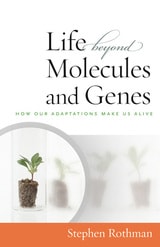
The Life Beyond Molecules and Genes
In Search of Harmony between Life and ScienceStephen Rothman
Templeton Press, 2009
What makes us alive? Is it our DNA? Our genetics? Is it our atomic composition that gives us life? Somehow, all of this feels radically dissonant from our everyday experience. In Life Beyond Molecules and Genes, experimental biologist Stephen Rothman makes the bold case that it is, in fact, our adaptive abilities, hewn by evolution, that make us alive. In making this point, he reveals a hidden harmony between science and life as we live it.
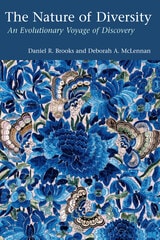
The Nature of Diversity
An Evolutionary Voyage of DiscoveryDaniel R. Brooks and Deborah A. McLennan
University of Chicago Press, 2002
Daniel R. Brooks and Deborah A. McLennan argue that it is impossible to comprehend the nature of life on earth unless evolution—the history of organisms—is restored to a central position in research. They demonstrate how the phylogenetic approach can be integrated with ecological and behavioral studies to produce a richer and more complete picture of evolution. Clearly setting out the conceptual, methodological, and empirical foundations of their research program, Brooks and McLennan show how scientists can use it to unravel the evolutionary history of virtually any characteristic of any living thing, from behaviors to ecosystems. They illustrate and test their approach with examples drawn from a wide variety of species and habitats.
The Nature of Diversity provides a powerful new tool for understanding, documenting, and preserving the world's biodiversity. It is an essential book for biologists working in evolution, ecology, behavior, conservation, and systematics. The argument in The Nature of Diversity greatly expands upon and refines the arguments made in the authors' previous book Phylogeny, Ecology, and Behavior.