Results by title
2 books match the query 'Aden, Roger C.'
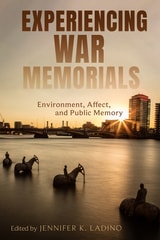
Experiencing War Memorials
Environment, Affect, and Public MemoryEdited by Jennifer K. Ladino
University of Alabama Press, 2026
Examines the emotional, formal, and environmental dimensions of war commemoration
Experiencing War Memorials is a compelling edited collection of essays that examines how war is commemorated through public memorials and the powerful emotions and ideologies these sites generate. Drawing on fields such as war studies, affect studies, public memory studies, and the environmental humanities, the volume demonstrates that commemoration is not only an intellectual act but an embodied, affective experience.
Through diverse case studies, contributors analyze how memorials shape public feelings about fast and slow violence, including battles, massacres, and incarceration. The essays reveal how materials, landscapes, narrative conventions, and innovative memorial forms guide emotional responses such as grief, pride, ambivalence, and outrage while making injustice perceptible. Against the backdrop of ongoing debates over heritage and violence, the collection insists on the importance of attending to the messy and disordered emotional dimensions of public memory. Some essays explore varied human and animal experiences, including military working dogs; scrutinize unsettling sites such as Confederate monuments and overlooked Holocaust locations; and consider digital, ecological, and pandemic-era memorials that expand the boundaries of commemoration.
Edited by Jennifer K. Ladino, Experiencing War Memorials offers nuanced insights into how memorial practices shape national identities, ethical understanding, and the possibilities for social change, illuminating the profound ways public remembrance influences how societies feel, remember, and reckon with violence in all its forms. This volume will appeal to scholars and students of memory studies, war and cultural studies, environmental humanities, and American studies, as well as museum professionals, artists, and readers interested in the politics and emotions of public commemoration.
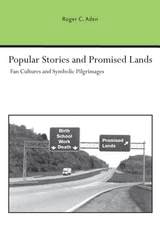
Popular Stories and Promised Lands
Fan Cultures and Symbolic PilgrimagesRoger C. Aden
University of Alabama Press, 2007
A conversation about who we are, where we’ve been, and where we might be going.
Popular Stories and Promised Lands enters a conversation about who we are, where we’ve been, and where we might be going by suggesting that possible answers to those questions can be found in the popular stories we encounter at the movies, on television, in popular magazines, and even on the funny pages.
As countless scholars and popular writers have noted, those of us living in the United States find ourselves at a cultural crossroads. We are increasingly aware that the stories that once permeated life in these United States, stories that tell us that social and economic progress comes from working hard, that everyone has an equal opportunity to experience such progress, do not resonate to the degree they once did. Because many Americans have traditionally defined themselves, others, and their unique sense of place through these stories, we find ourselves displaced socially, economically, politically, and/or culturally.
So, Roger Aden says, we go to places of our own making. Fans of the television series The X-Files return to the Funhouse each week for a dose of frightening fun. Fans of the weekly magazine Sports Illustrated play in the American Elysian Fields where democratic efforts at balancing work and play are valued. Fans of the movie Field of Dreams work as altruistic producers in an alternative garden spot.
Grounded in the author’s own experiences and reinforced by the voices of approximately two hundred additional fans of the four popular stories, this book offers a compelling case for understanding the alleged wasteland of popular culture as a fertile site of individually and communally created sacred places.