Results by title
29 books match the query 'Disease'
A Guide to Performing Systematic Reviews of Health and Disease
Kurinchi Gurusamy
University College London, 2025
Systematic reviews are the foundation of evidence-based healthcare, shaping treatment decisions and public health policies. A Guide to Performing Systematic Reviews of Health and Disease is a practical, step-by-step resource designed to help students and health professionals conduct high-quality reviews with confidence, even without extensive statistical training. This guide walks readers through the entire review process using free, open-source software. Each chapter features clear learning objectives and integrated videos to support hands-on learning.
Written by leading expert Kurinchi Gurusamy, this book simplifies complex research methodologies, making systematic reviews more accessible to a broad audience. Whether you are a novice researcher or a healthcare professional seeking to refine your evidence-based practice, this guide provides the essential tools to critically synthesize medical research. With an emphasis on clarity and real-world application, A Guide to Performing Systematic Reviews of Health and Disease is an indispensable resource for anyone looking to contribute to the ever-evolving landscape of healthcare research.
Beasts of the Earth
Animals, Humans, and DiseaseTorrey, E. Fuller
Rutgers University Press, 2014
Humans have lived in close proximity to other animals for thousands of years. Recent scientific studies have even shown that the presence of animals has a positive effect on our physical and mental health. People with pets typically have lower blood pressure, show fewer symptoms of depression, and tend to get more exercise.
But there is a darker side to the relationship between animals and humans. Animals are carriers of harmful infectious agents and the source of a myriad of human diseases. In recent years, the emergence of high-profile illnesses such as AIDS, SARS, West Nile virus, and bird flu has drawn much public attention, but as E. Fuller Torrey and Robert H. Yolken reveal, the transfer of deadly microbes from animals to humans is neither a new nor an easily avoided problem.
Beginning with the domestication of farm animals nearly 10,000 years ago, Beasts of the Earth traces the ways that human-animal contact has evolved over time. Today, shared living quarters, overlapping ecosystems, and experimental surgical practices where organs or tissues are transplanted from non-humans into humans continue to open new avenues for the transmission of infectious agents. Other changes in human behavior like increased air travel, automated food processing, and threats of bioterrorism are increasing the contagion factor by transporting microbes further distances and to larger populations in virtually no time at all.
While the authors urge that a better understanding of past diseases may help us lessen the severity of some illnesses, they also warn that, given our increasingly crowded planet, it is not a question of if but when and how often animal-transmitted diseases will pose serious challenges to human health in the future.
Bio-Imperialism
Disease, Terror, and the Construction of National FragilityGwen Shuni D'Arcangelis
Rutgers University Press, 2021

City Of Plagues
Disease, Poverty, And Deviance In San FranciscoSusan Craddock
University of Minnesota Press, 2004
An eye-opening discussion of the ways disease shapes urban society
Disease may not discriminate, but it helps those who do. In this fascinating book, Susan Craddock examines the role of disease and health policy in the construction of race, gender, and class, and in urban development in nineteenth- and twentieth-century San Francisco. An absorbing look at the role of disease and health policy in the construction of race, gender, and class in urban development during nineteenth- and twentieth-century San Francisco. Susan Craddock considers tuberculosis, plague, smallpox, and syphilis as diseases whose devastations were derived in part from their use as political tools and disciplinary mechanisms
Diet and the Disease of Civilization
Adrienne Rose Bitar
Rutgers University Press, 2017
Diet books contribute to a $60-billion industry as they speak to the 45 million Americans who diet every year. Yet these books don’t just tell readers what to eat: they offer complete philosophies about who Americans are and how we should live. Diet and the Disease of Civilization interrupts the predictable debate about eating right to ask a hard question: what if it’s not calories—but concepts—that should be counted?
Cultural critic Adrienne Rose Bitar reveals how four popular diets retell the “Fall of Man” as the narrative backbone for our national consciousness. Intensifying the moral panic of the obesity epidemic, they depict civilization itself as a disease and offer diet as the one true cure.
Bitar reads each diet—the Paleo Diet, the Garden of Eden Diet, the Pacific Island Diet, the detoxification or detox diet—as both myth and manual, a story with side effects shaping social movements, driving industry, and constructing fundamental ideas about sickness and health. Diet and the Disease of Civilization unearths the ways in which diet books are actually utopian manifestos not just for better bodies, but also for a healthier society and a more perfect world.

Digestion, Diet, and Disease
Irritable Bowel Syndrome and Gastrointestinal FunctionJoneja, Janice Vickerstaff
Rutgers University Press, 2004
Malfunction in the digestive tract can arise from a variety of causes, and it requires the sciences of immunology, physiology, biochemistry, microbiology, and nutrition to fully explain the basis of the dysfunction as well as effective treatment options. Now Dr. Janice Vickerstaff Joneja has written the first book that:
- Applies current research data in all of the relevant sciences into a practical resource for the management of gastrointestinal disease, in particular irritable bowel syndrome (IBS).
- Supplies complete scientific references for the research scientist, the clinician, and the student.
- Provides specific dietary management strategies for IBS and related dysfunction in the gastrointestinal tract, based on scientific data.
- Includes meal plans, recipes, and dietary advice for balanced nutrition, while avoiding the foods most likely to trigger or exacerbate IBS.
These unique qualities make Digestion, Diet, and Disease the ideal choice for practitioners, educators, and researchers in the field of nutritional medicine, as well as nurses, alternative medicine professionals, and the educated general public suffering from IBS.
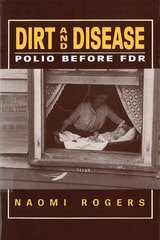
Dirt and Disease
Polio Before FDRRogers, Naomi
Rutgers University Press, 1992
Dirt and Disease is a social, cultural, and medical history of the polio epidemic in the United States. Naomi Rogers focuses on the early years from 1900 to 1920, and continues the story to the present. She explores how scientists, physicians, patients, and their families explained the appearance and spread of polio and how they tried to cope with it. Rogers frames this study of polio within a set of larger questions about health and disease in twentieth-century American culture.
In the early decades of this century, scientists sought to understand the nature of polio. They found that it was caused by a virus, and that it could often be diagnosed by analyzing spinal fluid. Although scientific information about polio was understood and accepted, it was not always definitive. This knowledge coexisted with traditional notions about disease and medicine.
Polio struck wealthy and middle-class children as well as the poor. But experts and public health officials nonetheless blamed polio on a filthy urban environment, bad hygiene, and poverty. This allowed them to hold slum-dwelling immigrants responsible, and to believe that sanitary education and quarantines could lessen the spread of the disease. Even when experts acknowledged that polio struck the middle-class and native-born as well as immigrants, they tried to explain this away by blaming the fly for the spread of polio. Flies could land indiscriminately on the rich and the poor.
In the 1930s, President Franklin Delano Roosevelt helped to recast the image of polio and to remove its stigma. No one could ignore the cross-spread of the disease. By the 1950s, the public was looking to science for prevention and therapy. But Rogers reminds us that the recent history of polio was more than the history of successful vaccines. She points to competing therapies, research tangents, and people who died from early vaccine trials.
Disease And Medical Care In The Mountain West
Essays On Region, History, And PracticeMartha L. Hildreth
University of Nevada Press, 1998
This collection of eight essays examines the health, disease, and medical care of the American West—an area flanked by the Rocky Mountains, Sierra Nevada, and Cascade Mountains. Topics include Mormons and the Thomsonian Movement in the nineteenth century, the silicosis epidemic in hardrock mining, Native American health, frontier nursing, and Chinese medicine.

Disease and Class
Tuberculosis and the Shaping of Modern North American SocietyGeorgina D. Feldberg
Rutgers University Press, 1995
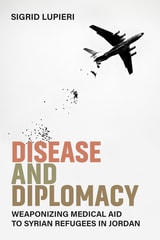
Disease and Diplomacy
Weaponizing Medical Aid to Syrian Refugees in JordanSigrid Lupieri
University of Michigan Press, 2026
When millions of Syrians fled civil war after 2011, international donors and humanitarian organizations mobilized to provide assistance to neighboring countries. Focusing on Jordan—one of the world’s largest refugee hosting states—Disease and Diplomacy investigates how medical aid to refugees operates as an instrument of diplomacy and control within the global refugee system. It argues that health, far from being an apolitical humanitarian good, is a bargaining tool that states commodify to extract resources and concessions.
Drawing on years of field research, interviews, and policy analysis, the book shows how the Jordanian government, international donors, and humanitarian agencies turned healthcare for refugees into a tool for negotiating power, resources, and responsibility. In these cases, refugees, caught within these negotiations, often found their access to care determined not by medical need, but by political calculation. Developing the concept of the weaponization of medical aid, the book extends theories of migration diplomacy and refugee rentierism to show how global power dynamics shape who receives healthcare. The analysis identifies a self-reinforcing “crisis loop” that privileges short-term, highly visible responses while neglecting chronic and long-term needs. Disease and Diplomacy advances an interdisciplinary framework for understanding how humanitarian practices reinforce global inequalities and argues for more equitable approaches to refugee health and responsibility-sharing in the international system.
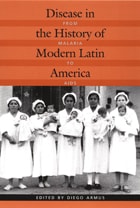
Disease in the History of Modern Latin America
From Malaria to AIDSDiego Armus, ed.
Duke University Press, 2003
Based on the idea that the meanings of sickness—and health—are contestable and subject to controversy, Disease in the History of Modern Latin America displays the richness of an interdisciplinary approach to social and cultural history. Examining diseases in Mexico, Brazil, Argentina, Colombia, Peru, and Bolivia, the contributors explore the production of scientific knowledge, literary metaphors for illness, domestic public health efforts, and initiatives shaped by the agendas of international agencies. They also analyze the connections between ideas of sexuality, disease, nation, and modernity; the instrumental role of certain illnesses in state-building processes; welfare efforts sponsored by the state and led by the medical professions; and the boundaries between individual and state responsibilities regarding sickness and health. Diego Armus’s introduction contextualizes the essays within the history of medicine, the history of public health, and the sociocultural history of disease.
Contributors. Diego Armus, Anne-Emanuelle Birn, Kathleen Elaine Bliss, Ann S. Blum, Marilia Coutinho, Marcus Cueto, Patrick Larvie, Gabriela Nouzeilles, Diana Obregón, Nancy Lays Stepan, Ann Zulawski

Disease, War, and the Imperial State
The Welfare of the British Armed Forces during the Seven Years' WarErica Charters
University of Chicago Press, 2014
In Disease, War, and the Imperial State, Erica Charters demonstrates how disease played a vital role in shaping strategy and campaigning, British state policy, and imperial relations during the Seven Years’ War. Military medicine was a crucial component of the British war effort; it was central to both eighteenth-century scientific innovation and the moral authority of the British state. Looking beyond the traditional focus of the British state as a fiscal war-making machine, Charters uncovers an imperial state conspicuously attending to the welfare of its armed forces, investing in medical research, and responding to local public opinion. Charters shows military medicine to be a credible scientific endeavor that was similarly responsive to local conditions and demands.
Disease, War, and the Imperial State is an engaging study of early modern warfare and statecraft, one focused on the endless and laborious task of managing manpower in the face of virulent disease in the field, political opposition at home, and the clamor of public opinion in both Britain and its colonies.

Excited Delirium
Race, Police Violence, and the Invention of a DiseaseAisha M. Beliso-De Jesús
Duke University Press, 2024
Fighting For Our Lives
New York's AIDS Community and the Politics of DiseaseChambré, Susan M
Rutgers University Press, 2006
In the first decade of the AIDS epidemic, New York City was struck like no other. By the early nineties, it was struggling with more known cases than the next forty most infected cities, including San Francisco, combined.
Fighting for Our Lives is the first comprehensive social history of New York's AIDS community-a diverse array of people that included not only gay men, but also African Americans, Haitians, Latinos, intravenous drug users, substance abuse professionals, elite supporters, and researchers. Looking back over twenty-five years, Susan Chambré focuses on the ways that these disparate groups formed networks of people and organizations that-both together and separately-supported persons with AIDS, reduced transmission, funded research, and in the process, gave a face to an epidemic that for many years, whether because of indifference, homophobia, or inefficiency, received little attention from government or health care professionals.
Beyond the limits of New York City, and even AIDS, this case study also shows how any epidemic provides a context for observing how societies respond to events that expose the inadequacies of their existing social and institutional arrangements. By drawing attention to the major faults of New York's (and America's) response to a major social and health crisis at the end of the twentieth century, the book urges more effective and sensitive actions-both governmental and civil-in the future.
Healing the Herds
Disease, Livestock Economies, and the Globalization of Veterinary MedicineKaren Brown
Ohio University Press, 2010
During the early 1990s, the ability of dangerous diseases to pass between animals and humans was brought once more to the public consciousness. These concerns continue to raise questions about how livestock diseases have been managed over time and in different social, economic, and political circumstances. Healing the Herds: Disease, Livestock Economies, and the Globalization of Veterinary Medicine brings together case studies from the Americas, western Europe, and the European and Japanese colonies to illustrate how the rapid growth of the international trade in animals through the nineteenth century engendered the spread of infectious diseases, sometimes with devastating consequences for indigenous pastoral societies. At different times and across much of the globe, livestock epidemics have challenged social order and provoked state interventions, often opposed by farmers and herders. The intensification of agriculture has transformed environments, with consequences for animal and human health.
But the last two centuries have also witnessed major changes in the way societies have conceptualized diseases and sought to control them. From the late nineteenth century, advances in veterinary technologies afforded veterinary scientists a new professional status and allowed them to wield greater political influence. While older methods have remained important to strategies of control and prevention, as demonstrated during the outbreak of foot-and-mouth disease in Britain in 2001, the rise of germ theories and the discovery of vaccines against some infections made it possible to move beyond the blunt tools of animal culls and restrictive quarantines of the past. Healing the Herds: Disease, Livestock Economies, and the Globalization of Veterinary Medicine offers a new and exciting comparative approach to the complex interrelationships of microbes, markets, and medicine in the global economy.
Health and Disease in the Neolithic Lengyel Culture
Edited by Václav Smrcka and Olivér Gábor
Karolinum Press, 2020
Landscapes of Disease
Malaria in Modern GreeceKaterina Gardikas
Central European University Press, 2018
Malaria has existed in Greece since prehistoric times. Its prevalence fluctuated depending on climatic, socioeconomic and political changes. The book focuses on the factors that contributed to the spreading of the disease in the years between independent statehood in 1830 and the elimination of malaria in the 1970s.
By the nineteenth century, Greece was the most malarious country in Europe and the one most heavily infected with its lethal form, falciparum malaria. Owing to pressures on the environment from economic development, agrarian colonization and heightened mobility, the situation became so serious that malaria became a routine part of everyday life for practically all Greek families, further exacerbated by wars. The country’s highly fragmented geography and its variable rainfall distribution created an environment that was ideal for sustaining and spreading of diseases, which, in turn, affected the tolerance of the population to malaria. In their struggle with physical suffering and death, the Greeks developed a culture of avid quinine consumption and were likewise eager to embrace the DDT spraying campaign of the immediate post WW II years, which, overall, had a positive demographic effect.

Maraña
War and Disease in the Jungles of ColombiaLina Pinto-García
University of Chicago Press, 2025
Cutaneous leishmaniasis, transmitted by female sandflies, produces skin lesions of varying size and shape. In Colombia, the insect vector of the disease is native to the same forested environments that have served as the main stage for one of the longest and most violent wars in Latin American history. As a result, the populations most affected by leishmaniasis in Colombia are members of the state army and nonstate armed groups.
Lina Pinto-García explores how leishmaniasis and the armed conflict are inextricably connected and mutually reinforcing. Maraña means “tangle” in Spanish but is also commonly used in Colombia to name the entangled greenery, braided lianas, and dense foliage that characterize the tropical forests where leishmaniasis transmission typically occurs. Pinto-García argues that leishmaniasis and the war are not merely linked but enmarañadas to each other through narratives, technologies, and practices produced by the state, medicine, biomedical research, and the armed conflict itself. All told, Maraña is a passionate study of how war has shaped the production of scientific knowledge about leishmaniasis and access to its treatments in Colombia.

Strategies for Primary Health Care
Technologies Appropriate for the Control of Disease in the Developing WorldEdited by Julia A. Walsh and Kenneth S. Warren
University of Chicago Press, 1986
The Burdens of Disease
Epidemics and Human Response in Western HistoryJ.N. Hays
Rutgers University Press, 2009
In this updated volume, with revisions and additions to the original content, including the evolution of drug-resistant diseases and expanded coverage of HIV/AIDS, along with recent data on mortality figures and other relevant statistics, J. N. Hays chronicles perceptions and responses to plague and pestilence over two thousand years of western history. Disease is framed as a multidimensional construct, situated at the intersection of history, politics, culture, and medicine, and rooted in mentalities and social relations as much as in biological conditions of pathology. This revised edition of The Burdens of Disease also studies the victims of epidemics, paying close attention to the relationships among poverty, power, and disease.
The Burdens of Disease
Epidemics and Human Response in Western HistoryHays, J. N
Rutgers University Press, 1998
In this sweeping approach to the history of disease, historian J. N. Hays chronicles perceptions and responses to plague and pestilence over two thousand years of western history. Hays frames disease as a multi-dimensional construct, situated at the intersection of history, politics, culture, and medicine, and rooted in mentalities and social relations as much as in biological conditions of pathology. He shows how diseases affect social and political change, reveal social tensions, and are mediated both within and outside the realm of scientific medicine.
Beginning with the legacy of Greek, Roman, and early Christian ideas about disease, the book then discusses many of the dramatic epidemics from the fourteenth through the twentieth centuries, moving from leprosy and bubonic plague through syphilis, smallpox, cholera, tuberculosis, influenza, and poliomyelitis to AIDS. Hays examines the devastating exchange of diseases between cultures and continents that ensued during the age of exploration. He also describes disease through the lenses of medical theory, public health, folk traditions, and government response. The history of epidemics is also the history of their victims. Hays pays close attention to the relationships between poverty and power and disease, using contemporary case studies to support his argument that diseases concentrate their pathological effects on the poor, while elites associate the cause of disease with the culture and habits of the poor.
The Chemical Age
How Chemists Fought Famine and Disease, Killed Millions, and Changed Our Relationship with the EarthFrank A. von Hippel
University of Chicago Press, 2020
For thousands of years, we’ve found ways to scorch, scour, and sterilize our surroundings to make them safer. Sometimes these methods are wonderfully effective. Often, however, they come with catastrophic consequences—consequences that aren’t typically understood for generations.
The Chemical Age tells the captivating story of the scientists who waged war on famine and disease with chemistry. With depth and verve, Frank A. von Hippel explores humanity’s uneasy coexistence with pests, and how their existence, and the battles to exterminate them, have shaped our modern world. Beginning with the potato blight tragedy of the 1840s, which led scientists on an urgent mission to prevent famine using pesticides, von Hippel traces the history of pesticide use to the 1960s, when Rachel Carson’s Silent Spring revealed that those same chemicals were insidiously damaging our health and driving species toward extinction. Telling the story of these pesticides in vivid detail, von Hippel showcases the thrills and complex consequences of scientific discovery. He describes the invention of substances that could protect crops, the emergence of our understanding of the way diseases spread, the creation of chemicals used to kill pests and people, and, finally, how scientists turned those wartime chemicals on the landscape at a massive scale, prompting the vital environmental movement that continues today.
The Chemical Age is a dynamic, sweeping history that exposes how humankind’s affinity for pesticides made the modern world possible—while also threatening its essential fabric.
The Death of a Disease
A History of the Eradication of PoliomyelitisSeytre, Bernard
Rutgers University Press, 2005
In 1988, the World Health Organization launched a campaign for the global eradication of polio. Today, this goal is closer than ever. Fewer than 1,300 people were paralyzed from the disease in 2004, down from approximately 350,000 in 1988.
In The Death of a Disease, science writers Bernard Seytre and Mary Shaffer tell the dramatic story of this crippling virus that has evoked terror among parents and struck down healthy children for centuries. Beginning in ancient Egypt, the narrative explores the earliest stages of research, describes the wayward paths taken by a long line of scientists-each of whom made a vital contribution to understanding this enigmatic virus-and traces the development of the Salk and Sabin vaccines. The book also tracks the contemporary polio story, detailing the remaining obstacles as well as the medical, governmental, and international health efforts that are currently being focused on developing countries such as India, Pakistan, Nigeria, and Niger.
At a time when emerging diseases and the threat of bioterrorism are the focus of much media and public attention, this book tells the story of a crippling disease that is on the verge of disappearing. In the face of tremendous odds, the near-eradication of polio offers an inspiring story that is both encouraging and instructive to those at the center of the continued fight against communicable diseases.
The Fats of Life
Essential Fatty Acids in Health and DiseaseLawrence, Glen D
Rutgers University Press, 2010
The Fats of Life delineates the importance of essential fatty acids, with a focus on distinctions between omega-3 and omega-6 fatty acid variants. The chemical and biochemical characteristics of these fatty acids and their metabolism to a vast array of potent bioactive messengers are described in the context of their potential effects on general health and impact on various diseases and neurological disorders. Glen D. Lawrence addresses in detail the capacity for polyunsaturated fatty acids to influence asthma, atherosclerosis, heart disease, inflammation, cancer, and immunity. Lawrence makes clear that our understanding of the biochemical and physiological effects of dietary fats has advanced tremendously as a result of careful research, but he also stresses that this knowledge has not easily translated into sound dietary recommendations.

The Health of the Commonwealth
A Brief History of Medicine, Public Health, and Disease in PennsylvaniaJames E. Higgins
Temple University Press, 2020
“The history of medicine in Pennsylvania is no less vital to understanding the state’s past than is its political or industrial history,” writes James Higgins in The Health of the Commonwealth, his overview of medicine and public health in the state. Covering the outbreak of yellow fever in 1793 through the 1976 Legionnaire’s Disease epidemic, and the challenges of the present day, he shows how Pennsylvania has played a central role in humanity’s understanding of—and progress against—disease.
Higgins provides close readings of specific medical advances—for instance, scientists at the University of Pittsburgh discovered the polio vaccine—and of disease outbreaks, like AIDS. He examines sanitation and water purification efforts, allopathic medicine and alternative therapies, and the building of the state’s tuberculosis sanitaria. Higgins also describes Native American and pre-modern European folk medicine, the rise of public health in the state, and women’s roles in both folk and scientific medicine.
The Health of the Commonwealth places Pennsylvania’s unique contribution to the history of public health and medicine in a larger narrative of health and disease throughout the United States and the world.
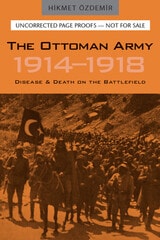
The Ottoman Army 1914 - 1918
Disease and Death on the BattlefieldHikmet Ozdemir
University of Utah Press, 2008
What kind of relationship exists between wars and epidemics? It is widely held that epidemics affected the outcomes of many wars and, until World War II, more victims of war died of disease than of battle wounds. Many disease vectors are present in times of conflict, including mass movements of people across borders and increased contact between persons of different geographic regions, yet disease is rarely treated in depth in histories of war.
Hikmet Özdemir’s The Ottoman Army, 1914–1918 provides extensive documentation of disease and death across the Ottoman Empire during World War I, when epidemic diseases annihilated armies and caused civilians to perish en masse. Drawing on hospital records and information on regional disease prevalence, Özdemir examines the effects that disease and epidemic had on the outcome of the war.
The information on disease mortality explains much that has never been properly understood about wartime events and government actions, events that only begin to make sense when the disease factor is considered. Rich in detail, this is an extremely valuable book that illuminates a facet of the war that has not been adequately considered until now.

The Public's Health
A Narrative History Of Health And Disease In ArkansasSam Taggert
Arkansas Times Press, 2013

The Wages of Sin
Sex and Disease, Past and PresentPeter Lewis Allen
University of Chicago Press, 2000
Throughout history, Western society has often viewed sickness as a punishment for sin. It has failed to prevent and cure diseases—especially diseases tied to sex—that were seen as the retribution of a wrathful God. The Wages of Sin, the remarkable history of these diseases, shows how society's views of particular afflictions often heightened the suffering of the sick and substituted condemnation for care. Peter Allen moves from the medieval diseases of lovesickness and leprosy through syphilis and bubonic plague, described by one writer as "a broom in the hands of the Almighty, with which He sweepeth the most nasty and uncomely corners of the universe." More recently, medical and social responses to masturbation in the eighteenth and nineteenth centuries and AIDS in the twentieth round out Allen's timely and erudite study of the intersection of private morality and public health. The Wages of Sin tells the fascinating story of how ancient views on sex and sin have shaped, and continue to shape, religious life, medical practice, and private habits.
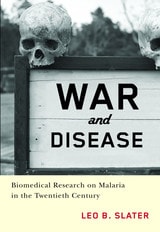
War and Disease
Biomedical Research on Malaria in the Twentieth CenturyLeo B. Slater
Rutgers University Press, 2009
A massive undertaking, the antimalarial program was to biomedical research what the Manhattan Project was to the physical sciences.
A volume in the Critical Issues in Health and Medicine series, edited by Rima D. Apple and Janet Golden.