Results by title
17 books match the query 'Administration & Management'

A Right to Read
Segregation and Civil Rights in Alabama's Public Libraries, 1900–1965Patterson Toby Graham
University of Alabama Press, 2006
This original and significant contribution to the historiography of the civil rights movement and education in the South details a dramatic and disturbing chapter in American cultural history.
The tradition of American public libraries is closely tied to the perception that these institutions are open to all without regard to social background. Such was not the case in the segregated South, however, where public libraries barred entry to millions of African Americans and provided tacit support for a culture of white supremacy. A Right to Read is the first book to examine public library segregation from its origins in the late 19th century through its end during the tumultuous years of the 1960s civil rights movement. Graham focuses on Alabama, where African Americans, denied access to white libraries, worked to establish and maintain their own "Negro branches." These libraries-separate but never equal-were always underfunded and inadequately prepared to meet the needs of their constituencies.
By 1960, however, African Americans turned their attention toward desegregating the white public libraries their taxes helped support. They carried out "read-ins" and other protests designed to bring attention and judicial pressure upon the segregationists. Patterson Toby Graham contends that, for librarians, the civil rights movement in their institutions represented a conflict of values that pitted their professional ethics against regional mores. He details how several librarians in Alabama took the dangerous course of opposing segregationists, sometimes with unsettling results.
This groundbreaking work built on primary evidence will have wide cross-disciplinary appeal. Students and scholars of southern and African-American history, civil rights, and social science, as well as academic and public librarians, will appreciate Graham's solid research and astute analysis.
A Trauma-Informed Framework for Supporting Patrons
The PLA Workbook of Best PracticesThe Public Library Association Social Worker Task Force
American Library Association, 2022
- delve into what trauma is and how it impacts library work;
- be introduced to a framework for utilizing a trauma-informed lens in your interactions;
- practice exercises to spur personal reflection on common concerns bound up with library work and the policies relating to these issues; and
- gain hand-on tools and techniques, including strategies for de-escalation and guidance on the impacts of involving law-enforcement and banning patrons.
You will also explore various scenarios which provide the opportunity to integrate what you’ve learned and practice responding through a trauma-informed lens, including
- Mental Health Challenges
- Sleeping at the Library
- Strong Personal Odor
- Personal Belongings
- Suspected Intoxication/Under the Influence
- Substance Use
- Threatening Verbal and Nonverbal Behavior
- Unsheltered Teens
- Adult Self-Neglect
- Child Abuse or Assault
- Solicitation or Panhandling
- Stealing
- Child Unattended After Closing
Charleston Conference Proceedings 2023
Edited by Beth Bernhardt, Leah Hinds, and Lars Meyer
Against the Grain, LLC, 2024
With strong numbers for 2023, conference attendees continue to remark on the informative and thought‐provoking sessions. The conference provides a casual, collegial atmosphere where librarians, publishers, and vendors talk freely and directly about issues facing their libraries and information providers. All of this interaction occurs in the beautiful city of Charleston, South Carolina. The proceedings continue to be edited by: Beth R. Bernhardt, Consortia Account Manager at Oxford University Press; Leah Hinds, Executive Director of the Charleston Hub; and Lars Meyer, Associate University Librarian for Access and Resource Services, Emory University Libraries. We are pleased to share some of the learning experiences that we and other attendees had at the conference.
Charleston Conference Proceedings 2024
Edited by Beth Bernhardt, Leah Hinds, and Lars Meyer
Against the Grain, LLC, 2025
The Charleston Conference remains a leading international gathering for the exchange of ideas among librarians, publishers, and vendors. Now in its forty-fourth year, the conference continues to thrive as one of the most dynamic and engaging events in the library and information community. Building on the momentum of 2023, when the Charleston Hub joined nonprofit science publisher Annual Reviews, the 2024 conference marked the first full year of this exciting collaboration. The partnership has strengthened Charleston’s mission to foster open dialogue, innovation, and collaboration across all sectors of scholarly communication while preserving the collegial, independent spirit that makes Charleston unique.
The 2024 meeting once again delivered strong participation and rich discussion on emerging issues shaping libraries, publishing, and research. Attendees consistently highlight the Charleston Conference’s relaxed, inclusive atmosphere, where professionals from all corners of the information world come together to share insights and challenge assumptions. Set against the historic and welcoming backdrop of Charleston, South Carolina, the event continues to inspire and connect our global community.
The proceedings are edited by Beth R. Bernhardt, Consortia Account Manager at Oxford University Press; Leah Hinds, Executive Director of the Charleston Hub; and Lars Meyer, Associate University Librarian for Access and Resource Services at Emory University Libraries. We are pleased to share highlights, key themes, and reflections from another memorable year of learning and exchange at the Charleston Conference.
Charleston Conference Proceedings, 2020
Lars Meyer
Against the Grain, LLC, 2020
The Charleston Conference continues to be a major event for information and idea exchange among librarians, vendors, and publishers. 2020 was a year for the history books in every way, with a global pandemic shutting down the world for most of the year. Events pivoted from in-person to virtual in record-breaking times and the Charleston Conference was no exception. The Conference saw a surge in attendance with an almost 150% increase from 2019, and Conference attendees continued to remark on the informative and thought‐ provoking sessions in a virtual environment.
This is the sixteenth year that Beth R. Bernhardt, Consortia Account Manager at Oxford University Press, has put together the proceedings from the Conference. It’s the twelfth year for Leah Hinds, Executive Director, and the fourth year that we are joined by Lars Meyer, Director, Access & Resource Services, Library & Information Technology Services at Emory University. We are pleased to share some of the learning experiences that we, and other attendees, had at the conference.
Charleston Proceedings 2021
Lars Meyer
Against the Grain, LLC, 2022
This is the seventeenth year that Beth R. Bernhardt, Consortia Account Manager at Oxford University Press, has put together the proceedings from the Conference. It’s the thirteenth year for Leah Hinds, Executive Director, and the fifth year that we are joined by Lars Meyer, Associate University Librarian, Access and Resource Services at Emory University. We are pleased to share some of the learning experiences that we, and other attendees, had at the conference.
With contributions from: Brent Appling, Scott D. Bacon, Sarah Rachel Benson, Gaëlle Béquet, Vida Damijonaitis, Denis Galvin, Alicia Wise, Bradley Wade Bishop, David Eby, Claire Jordan, Katerina Ozment, Rebecca Blakiston, Shelby Carroll, Sarah Guy, Angela Carreño, Travis Clamon, Jennifer Young, Ashley Sergiadis, Michelle E. Colquitt, Jennifer A. Mezick, Steve M. Cramer, Summer Krstevska, Corey Seeman, Sara F. Hess, Jill Dawson, Laurel Crawford Claire, Sara Duff, Bob Nardini, Pamela Smith, Emily Tufts, Susan Garrison, Dan Hawkins, Shawn Hendrikx, David McCord, Sara F. Ashley Hosbach, Brittany Kester, Mihoko Hosoi, Sarah Philbrick Hunter, Maridath Wilson, Marc Jaffy, Maureen James, Carol Macheak, Donna Rose, Charlotte M. Johnson, Boaz Nadav Manes, Linda Wobbe, Heather McMullen, Annie Johnson, Jillian Kehoe, Michael Levine-Clark, Tim Lloyd, Tricia Miller, Sara Scheib, Arielle Lomness, Rob Tiessen, Dean Smith, Michael Zeoli, Elizabeth Lorbeer, Karen Gau, Tim Butzen-Cahill, Lindsay Barnett, Daniel C. Mack, Maggie Z. Saponaro, Leigh Ann DePope, Alexis Smith Macklin, Tim Schlak, Jennifer Matthews, Christine Davidian, Antje Mays, Brittany Haynes, Rachelle McLain, Hannah McKelvey, Wendy Michelle Moore, Ida Sofie Reher, James G. Rhoades, Rob Tench, Sion Patrick Romaine, Barbara Albee, Laura A. Sill, George Stachokas, Rebekah Lahue, David Stern Sandy Stift, Roxy M. Garstad, Matthew Torrence, Cory Tucker, Chris Vidas, Bobby Hollandsworth Maureen P. Walsh, Gene R. Springs, Anita K. Foster, Mary Wegmann, Laura Krier, Hilary Smith, George Wrenn, and Angelina Zaytsev.
Creating Generative AI Policies
A Guide for Public and Academic LibrariesRobin Hastings
American Library Association, 2026
Though it’s challenging to set policies for a technology that is so young and still in flux, the need is urgent. Because usage of AI presents both opportunities and risks, libraries must be proactive. The WEF (World Economic Forum) predicts that while there may be a loss of 92 million jobs to various AI tools, they see 170 million new jobs and roles emerging from the use of this new technology. Whether or not this proves correct, there are already digital literacy skills, including a basic understanding of the technology around AI, that libraries can help their patrons master; and because of data privacy, security, and ethics issues, library workers require clear AI policies too. Technology expert Hastings highlights the first attempts of libraries across the country to set up policies for the use of AI in their organizations, as well as policies created by cities and other similar institutions, to guide stakeholders in creating their own smart, forward-thinking course of action. Succinct and pragmatic, this timely resource
- provides a short overview of Generative AI history, basic technical knowledge, and the key arguments put forth by those in favor and those opposed to this technology;
- offers advice on discovering how library staff encounter AI in their day-to-day work, both in their own usage and by patrons, to inform what policies the library needs and which policies to consider adjusting for particular use cases;
- includes separate chapters focusing on staff-side policy and patron/public-facing policy, delving into essential considerations like staff training, privacy and data protection, security, AI usage for reference, patron education and AI literacy, and setting limits and boundaries on patron AI use;
- suggests useful approaches to ensure that AI policies are easy to follow and understand by library workers, patrons, and the wider community;
- discusses how to craft flexible procedures that can be updated as AI continues to change, drawing on technology management best practices; and
- offers links to additional resources like sample policy documents and a curated reading list for understanding the environment around AI.
Five Steps of Outcome-Based Planning & Evaluation for Youth Services
Melissa Gross, Cindy Mediavilla, and Virginia A. Walter
American Library Association, 2022
Outcome-based planning and evaluation (OBPE), with its straightforward approach built on a flexible framework, is the perfect model to enable youth services professionals to deliver effective services regardless of uncertainties. An outcome-based approach can help youth services stay grounded in producing desired outcomes with and for youth through responsive programs, services, and processes that can adapt to changing conditions. Clarifying the relationship between planning, program development, and evaluation, the five simple steps outlined in this book will help youth services staff conduct solid community assessments and integrate OBPE into their work. Inside its pages you will learn
- a short history of OBPE and its evolution;
- why it is crucially important to involve youth in all stages of program development, with guidance on navigating challenges;
- how to think about planning as the need to react quickly, whether due to natural or human-made disasters, changing demographics, or economic swings;
- the five steps of OBPE, from gathering information about your community and determining the outcomes that will serve your community to crafting accurate outcome statements, developing an evaluation plan, and maximizing the results of successful outcome-based programs;
- how to visualize the steps needed to successfully plan, implement, and evaluate an outcome-based program, using the template included in the book;
- ways to share your data to let people know the library’s important role in the community; and
- additional useful tools to bolster your work, including environmental scan forms and ideas for creating relevant family storytimes.
Fundamentals of Library Supervision, Fourth Edition
Beth McNeil; Foreword by Janice Welburn
American Library Association, 2026
Supervising a library, managing people, stepping forward as a mentor, and being a leader in your community, whether you run a small, one-person library or work in a large research university library, is no small feat. The new fourth edition of this "classic text" (Library Journal) shares practical advice on many of today’s management opportunities and challenges. Whether you're new to supervision or already have experience, you will find that the topics covered here, along with examples from various libraries, provide an overview of the many tasks and responsibilities of a manager and supervisor. Packed with clear and concise wisdom that will give you confidence in the role, inside this handbook you will discover
- step-by-step guidance on fundamental skills such as hiring, onboarding and orientation, scheduling and service provision, performance appraisal and management, budgeting, space planning and safety, and conducting meetings;
- insights on core leadership competencies essential for supervisors to balance organizational priorities with the individual needs and desires of staff;
- guidance on helping library employees to learn and grow in their jobs, becoming adept at change management, setting priorities and managing time effectively and efficiently, being a good collaborator, modeling self-awareness and emotional intelligence, and other keys to success as a supervisor;
- a new discussion of the changed organizational climate and how to create and sustain environments that foster a sense of belonging among all staff;
- chapter summaries with critical takeaways; and
- helpful extras like a positive messaging worksheet, new employee welcome email template, and information about additional resources.
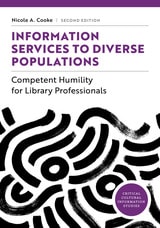
Information Services to Diverse Populations
Competent Humility for Library ProfessionalsNicole A. Cooke
American Library Association, 2026
Foreword by Cynthia Sturgis Landrum
The development of cultural competency skills and social awareness benefits LIS students, their future employers, and the library profession at large―not to mention library customers and society as a whole. Cooke's freshly updated text introduces readers to the contexts and situations that promote the development of empathy and build cultural competence. It marshals cutting edge research and relevant best practices to give readers a strong grasp of the political, social, economic, and technological divides among library patrons. It also covers outreach and library services to diverse populations, how to evaluate such services, and many other key topics. Complete with an updated syllabus, lesson plans, and exercises ready-made for course use, Cooke’s text
- demonstrates why social responsibility is a foundational value of librarianship;
- considers library services to members of marginalized racial or ethnic groups, older adults, people with mental health or physical disabilities, neurodiverse library users, refugees and immigrants, people experiencing homelessness or hunger, those growing up in or experiencing poverty, members of the LGBTQIA+ communities, and people who are incarcerated;
- features a myriad of testimonials drawn from a wide variety of settings that highlight the experiences of library and museum practitioners who are working with diverse populations;
- introduces a new model of cultural competence and cultural humility;
- authoritatively covers such essential concepts as intersectionality, privilege, marginalization, cultural competence, cultural humility, and counter-storytelling along with discussions of how they interplay in the communities that libraries serve;
- explores the impact of overwhelming whiteness of the library profession and what can be done to recruit, welcome, mentor, and retain racially and ethnically diverse library workers; and
- identifies potential employment and networking opportunities related to diversity and social justice in librarianship.
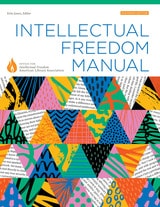
Intellectual Freedom Manual, Eleventh Edition
Erin Office for Intellectual Freedom
American Library Association, 2026
When someone faces a difficult intellectual freedom (IF) issue, they usually don’t have time to wade through dense text to find the answers they need. Designed as a real-world reference, OIF’s Intellectual Freedom Manual provides trusted, comprehensive guidance for every library worker, from the volunteer to the director, in plain language. Whether you’re developing or reviewing policies, on-boarding new staff or trustees, responding to challenges and controversies, or studying librarianship, you’ll find this a vital tool, with features such as
- contributions that center the voices of Black, Indigenous, and other People of Color (BIPOC) and LGBTQIA+ people, who are often targeted by censorship efforts;
- chapters that begin with an overview explaining the big ideas and offering reflection questions;
- an introduction to IF and why it matters, drawing on ALA's core IF documents and supported with adaptable policy worksheets;
- information and best practice guidance on key topics such as access, children and youth, censorship and internet filtering, collection development and management, copyright, meeting rooms and exhibit spaces, library programming, politics and religion, privacy, and visits and requests from law enforcement;
- stories from real people whose lives have been impacted by IF, showing how library policies shape culture, protect staff and users, and affect real people;
- concise breakdowns of IF issues from legal experts, helping you understand the laws and how they apply in real situations;
- practical advice on advocating for IF, getting help when challenges arise, lobbying, and working with your elected officials;
- a thorough index to help you quickly find the information you need; and
- a helpful glossary and selected bibliography of additional resources.
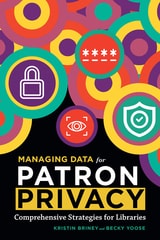
Managing Data for Patron Privacy
Comprehensive Strategies for LibrariesKristin Briney and Becky Yoose
American Library Association, 2022
- succinct summaries of major U.S. laws and other regulations and standards governing patron data management;
- information security practices to protect patrons and libraries from common threats;
- how to navigate barriers in organizational culture when implementing data privacy measures;
- sources for publicly available, customizable privacy training material for library workers;
- the data life cycle from planning and collecting to disposal;
- how to conduct a data inventory;
- understanding the associated privacy risks of different types of library data;
- why the current popular model of library assessment can become a huge privacy invasion;
- addressing key topics while keeping your privacy policy clear and understandable to patrons; and
- data privacy and security provisions to look for in vendor contracts.

Strategic Planning for Public Libraries
Joy L. Fuller
American Library Association, 2021
Strategic Planning for Public Libraries is a complete planning toolkit. This book provides a framework that any library, whether it serves urban, suburban, or rural communities, can use as a basis for its strategic planning.
Supported by research conducted across more than 200 public library professionals and in-depth interviews with more than twenty library directors and leaders throughout the country, this book addresses some of the key areas of strategic planning that librarians care about most:
- Engaging the community
- Measuring progress against the plan
- Reaching non-users
- Creating a living document that can be continually updated
- How to conduct a community assessment
- Engaging staff
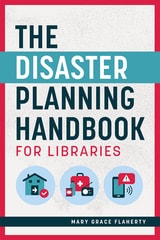
The Disaster Planning Handbook for Libraries
Mary Grace Flaherty
American Library Association, 2021
Your library is a vital information hub and resource provider every single day, and that’s doubly true when calamity strikes. In fact, your library’s role as an “essential community function” during disasters is now encoded in U.S. law. Engaging as a partner in planning and preparedness will build much-needed community support should disaster strike, and even a basic plan will also save you time and stress later on. No matter where your library is in the disaster planning cycle, this handbook will make the process clearer and less daunting. You’ll get tools, activities, easy-to-adapt templates, and hands-on guidance on such topics as
- the six phases of disaster response;
- 15 first-hand accounts of library disaster planning or responses, helping you identify the library services most needed during a disaster;
- three essential factors that will shape the form of your disaster plan;
- preparing for hurricanes, tornadoes, fires, floods, and earthquakes;
- ideas for connecting with your community’s emergency response teams;
- federal government planning resources;
- pointers on working with state and local governments;
- a sample Memorandum of Understanding to outline mutual support for a speedier recovery;
- recommended courses and training, many of which are free;
- targeted advice for archives and special collections;
- sample building inspection checklists; and
- recommended games to help children and families prepare.
The Public Librarian's Guide to Answering Health Questions
Bobbi L. Newman and Carolyn Martin
American Library Association, 2026
It often starts with a patron’s simple question. Librarians play a central role in helping people navigate information, evaluate sources, and find answers they can trust. That includes health information, something many people come to the library looking for every day. Maybe they need more information about a diagnosis, a medication, or something they came across online. Perhaps they’re helping a family member with a medical issue or trying to better understand their own health. These are everyday interactions in libraries. And this book is about helping you approach them with confidence, clarity, and a strong sense of your role. You do not need a medical background to provide excellent health information service — just the right frameworks, tools, and reassurance to apply your core skills in a health context. No matter your comfort level or prior experience, you will
- understand why health information work is both practical and people-centered, requiring an approach that combines information skills with communication and care;
- gain an overview of health information and the role libraries play in supporting health literacy;
- learn about evaluating health information and identifying trustworthy, evidence-based sources;
- receive guidance on building and maintaining a relevant, reliable collection;
- walk through health reference interview scenarios, bolstered with strategies for effective and respectful interactions;
- discover reflection prompts to help you consider your own approach, your library’s practices, and the ways you can continue to build confidence over time;
- grasp the ethical and legal considerations related to health information work, such as privacy, boundaries, and professional responsibilities;
- find practical wisdom for sustaining yourself in this work and building practices that support your own long-term well-being; and
- get access to a companion website that provides checklists, tools, and additional resources you can use in your day-to-day work.
The Public Library Director's Toolkit
Kate Hall and Kathy Parker
American Library Association, 2019
New public library directors quickly learn what seasoned directors already know: running a library means you’ve always got your hands full—balancing the needs of staff, patrons, facilities, library boards, and other stakeholders with professional responsibilities like community interactions, legal and financial requirements, and whole lot else that wasn’t exactly in the job description. Whether you are considering becoming a public library director, are brand new to the role, or have settled in but find yourself thinking “there’s got to be a better way,” authors Hall and Parker are here to help. This book walks you through the core components of getting up to speed and then provides templates, sample documents, checklists, and other resources that will make your job easier. Gleaned from their own decades of experience in library leadership positions, in this toolkit they
- cover such key topics as employees, trustees, finances, legal issues, library policies, emergency planning, and technology;
- discuss strategic planning and share advice on keeping up with trends;
- offer nearly two dozen ready-to-use resources, including a Director’s Report Template, a Social Media Policy, an Employee Exit Questionnaire, a Library Cleaning Checklist, a Vision Statement worksheet, and more; and
- suggest additional learning opportunities in each chapter to help you continue your learning journey.
Winning Library Grants
Herbert B. Landau
American Library Association, 2011