Results by title
16 books match the query 'Adult & Continuing Education'
A Student-Friendly Guide to Move from Civil Law to U.S. Common Law
Nancy Daspit and Kirsten Schaetzel
University of Michigan Press, 2025
To help students who may feel overwhelmed adjusting to a new approach to legal education, this book focuses on these key differences between civil law and common law jurisdictions. It defines and demonstrates the application of key concepts with examples, illustrations, and exercises. While relatively brief, it provides numerous references to the other texts and sources for students wanting or needing more depth for some of the topics. The book also includes numerous examples illustrating the differences, with an emphasis on common law examples, of key documents and processes used in the practice of law. Further, it includes student-focused exercises and questions on the analytical and rhetorical skills needed for a successful law practice, whether the student will continue in a common law jurisdiction or merely needs to understand the common law for continued practice in their civil law jurisdiction.
Within this book, students will find
- a brief historical background regarding the development of the common law system;
- a description of the US government structure, with an emphasis on the judicial branch;
- key rhetorical and analytical differences between civil law and common law;
- numerous examples of differences between the two systems, with an emphasis on common law requirements;
- and exercises for practice with key concepts and terminology.

Adult Abilities
A Study of University Extension StudentsHerbert Sorenson
University of Minnesota Press, 1950
Adult Literacy and American Identity
The Moonlight Schools and Americanization ProgramsSamantha NeCamp
Southern Illinois University Press, 2014
The release of U.S. census data in 1910 sparked rhetoric declaring the nation had a literacy crisis and proclaiming illiterate citizens a threat to democratic life. While newspaper editors, industrialists, and officials in the federal government frequently placed the blame on newly arrived immigrants, a smaller but no less vocal group of rural educators and clubwomen highlighted the significant number of native-born illiterate adults in the Appalachian region. Author Samantha NeCamp looks at the educational response to these two distinct literacy narratives—the founding of the Moonlight Schools in eastern Kentucky, focused on native-born nonliterate adults, and the establishment of the Americanization movement, dedicated to the education of recent immigrants.
Drawing on personal correspondence, conference proceedings, textbooks, and speeches, NeCamp demonstrates how the Moonlight Schools and the Americanization movement competed for public attention, the interest of educators, and private and governmental funding, fueling a vibrant public debate about the definition of literacy. The very different pedagogical practices of the two movements—and how these practices were represented to the public—helped shape literacy education in the United States. Reading the Moonlight Schools and the Americanization movement in relation to one another, Adult Literacy and American Identity expands the history and theory of literacy and literacy education in the United States. This book will be of interest to scholars in literacy, Appalachian studies, and rhetoric and composition.
Anay's Will to Learn
A Woman's Education in the Shadow of the MaquiladorasBy Elaine Hampton with Anay Palomeque de Carrillo
University of Texas Press, 2013
The opening of free trade agreements in the 1980s caused major economic changes in Mexico and the United States. These economic activities spawned dramatic social changes in Mexican society. One young Mexican woman, Anay Palomeque de Carrillo, rode the tumultuous wave of these economic activities from her rural home in tropical southern Mexico to the factories in the harsh desert lands of Ciudad Juárez during the early years of the city’s notorious violence.
During her years as an education professor at the University of Texas at El Paso, author Elaine Hampton researched Mexican education in border factory (maquiladora) communities. On one trip across the border into Ciudad Juárez, she met Anay, who became her guide in uncovering the complexities of a factory laborer’s experiences in these turbulent times.
Hampton here provides an exploration of education in an era of dramatic social and economic upheaval in rural and urban Mexico. This critical ethnographic case study presents Anay’s experiences in a series of narrative essays addressing the economic, social, and political context of her world. This young Mexican woman leads us through Ciudad Juárez in its most violent years, into women’s experiences in the factories, around family and religious commitments as well as personal illness, and on to her achievement of an education through perseverance and creativity.

Black Tech Ecosystems
How Black Adult Learners Use Computer Code Bootcamps for LiberationAntonio Byrd
University Press of Colorado, 2025
Black Tech Ecosystems reports on a year-long ethnographic study of low-income Black adult learners attending Clearwater Academy, a nonprofit computer code bootcamp that teaches coding literacy to help end racism and poverty. While Clearwater Academy offers pathways into a lucrative career that promotes Black social mobility and a diverse tech industry, Antonio Byrd describes a more complicated story. The core challenges of weak social-support networks, embedded cultures in tech, financial strains, and racism persistently present roadblocks to Clearwater Academy’s Black adult learners’ success. However, through this experience, Black adult learners develop new knowledge and frameworks that change their relationship with coding literacy and labor. Instead of solely focusing on learning computer programming for work, Black Tech Ecosystems describes a liberatory and transformative use of computer programming that centers Black lives instead of the tech industry.
Creating a Vigorous Online Course
A Step-by-Step GuideBerlin Fang
Bridwell Press, 2026
Creating a Vigorous Online Course by Berlin Fang is a comprehensive, step-by-step guide for educators looking to build meaningful, engaging, and structurally sound online learning experiences. Drawing on decades of instructional design expertise and educational research, Fang bridges the gap between conceptual pedagogy and real-world teaching practices. The book is uniquely structured to walk educators through the entire course creation process—from planning and tool selection to assessment design, interaction strategies, and multimedia integration.
Unlike many overly technical or abstract resources, this book offers platform-agnostic guidance enriched with clear tasks, practical tips, checklists, and real examples. It emphasizes principles such as granularity, modular design, reusability, accessibility, and equivalence to in-person learning—all while respecting instructors' time and creativity.
Fang’s conversational tone and thoughtful analogies (like course design as translation or architecture) make complex ideas approachable, and his deep respect for both teachers and students is evident throughout. Whether you're teaching fully online, hybrid, HyFlex, or simply looking to digitize parts of your course, this book provides actionable strategies to craft student-centered experiences without sacrificing academic rigor.
An invaluable companion for K-12 educators, higher ed faculty, and instructional designers alike, Creating a Vigorous Online Course transforms course design from a technical burden into an empowering, iterative, and creative endeavor.
Developing Educators for The Digital Age
A Framework for Capturing Knowledge in ActionPaul Breen
University of Westminster Press, 2018
Evaluating skills and knowledge capture lies at the cutting edge of contemporary higher education where there is a drive towards increasing evaluation of classroom performance and use of digital technologies in pedagogy. Developing Educators for the Digital Age is a book that provides a narrative account of teacher development geared towards the further usage of technologies (including iPads, MOOCs and whiteboards) in the classroom presented via the histories and observation of a diverse group of teachers engaged in the multiple dimensions of their profession.
Drawing on the insights of a variety of educational theories and approaches (including TPACK) it presents a practical framework for capturing knowledge in action of these English language teachers – in their own voices – indicating how such methods, processes and experiences shed light more widely on related contexts within HE and may be transferable to other situations.
This book will be of interest to the growing body of scholars interested in TPACK theory, or communities of practice theory and more widely anyone concerned with how new pedagogical skills and knowledge with technology may be incorporated in better practice and concrete instances of teaching.
Doing Time, Writing Lives
Refiguring Literacy and Higher Education in PrisonPatrick W. Berry
Southern Illinois University Press, 2018
Doing Time, Writing Lives offers a much-needed analysis of the teaching of college writing in U.S. prisons, a racialized space that—despite housing more than 2 million people—remains nearly invisible to the general public. Through the examination of a college-in-prison program that promotes the belief that higher education in prison can reduce recidivism and improve life prospects for the incarcerated and their families, author Patrick W. Berry exposes not only incarcerated students’ hopes and dreams for their futures but also their anxieties about whether education will help them.
Combining case studies and interviews with the author’s own personal experience of teaching writing in prison, this book chronicles the attempts of incarcerated students to write themselves back into a society that has erased their lived histories. It challenges polarizing rhetoric often used to describe what literacy can and cannot deliver, suggesting more nuanced and ethical ways of understanding literacy and possibility in an age of mass incarceration.
From Military to Academy
The Writing and Learning Transitions of Student-VeteransMark Blaauw-Hara
Utah State University Press, 2021
From Military to Academy is a detailed picture of how student-veterans may experience the shift to the college experience and academic writing. Grounding his research in the experiences of student-veterans at a community college, Blaauw-Hara integrates adult learning theory, threshold concepts, genre analysis, and student-veteran scholarship to help readers understand the challenges student-veterans experience and the strengths they bring as they enter the academic writing environment. Each chapter takes a different theoretical approach to frame student-veterans’ experiences, and Blaauw-Hara ends each chapter with specific, actionable pedagogical suggestions.
Composition studies scholars especially have demonstrated an ongoing interest in and commitment to understanding the experiences of student-veterans from military service to postsecondary education. From Military to Academy helps college writing faculty and writing program administrators understand and support the growing numbers of student-veterans who are making the transition to higher education.
Grassroots Engagement and Social Justice through Cooperative Extension
Nia Imani Fields
Michigan State University Press, 2022
Grounded in Nevada
A Place-Based Literary Approach to English Language LearningLee Olsen
University of Nevada Press, 2027
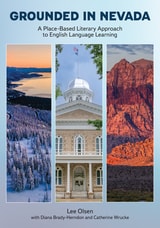
Successfully learning English entails engaging with the places and communities around you. Grounded in Nevada brings real-world connections to students’ learning experience. Through stories set in the Silver State, and excerpts from Nevada writers, they will strengthen their reading, writing, speaking, and grammar skills while exploring the state’s histories and cultures. Each chapter encourages learners to connect their own experiences to what they read, allowing them to build confidence, foster agency, and internalize a deeper sense of belonging.
Chapters are organized into four parts: fictional readings about life in Nevada; published fiction and nonfiction by Nevada authors; realistic conversations to support speaking and listening practice; and grammar review and test-preparation activities. Every selection is paired with questions and prompts that invite reflection and discussion. An interactive grammar review appendix provides additional support as students continue developing their English skills and finding their place within Nevada’s communities.
Laboring to Learn
Women's Literacy and Poverty in the Post-Welfare EraLorna Rivera
University of Illinois Press, 2007
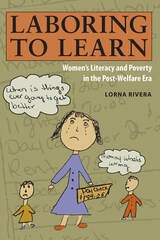
The American adult education system has become an alternative for school dropouts, with some state welfare policies requiring teen mothers and women without high school diplomas to participate in adult education programs to receive aid. Currently, low-income women of color are more likely to be enrolled in the lowest levels of adult basic education. Very little has been published about women's experiences in these mandatory programs and whether the programs reproduce the conditions that forced women to drop out in the first place.
Lorna Rivera bridges the gap with this important study, the product of ten years' active ethnographic research with formerly homeless women who participated in adult literacy education classes before and after welfare reform. She draws on rich interviews with organizers and participants in the Adult Learners Program at Project Hope, a women's shelter and community development organization in Boston's Dudley neighborhood, one of the poorest in the city.
Analyzing the web of ideological contradictions regarding "work first" welfare reform policies, Rivera argues that poverty is produced and reproduced when women with low literacy skills are pushed into welfare-to-work programs and denied education. She examines how various discourses about individual choice and self-sufficiency shape the purposes of literacy, how low-income women express a sense of personal responsibility for being poor, and how neoliberal ideologies and practices compromise the goals of critical literacy programs. Throughout this study, the voices and experiences of formerly homeless women challenge cultural stereotypes about poor women, showing in personal and structural terms how social and economic forces shape and restrict opportunities for low-income women of color.
Preparing Adult English Learners to Read for College and the Workplace
Edited by Kirsten Schaetzel, Joy Kreeft Peyton, and Rebeca Fernández
University of Michigan Press, 2024
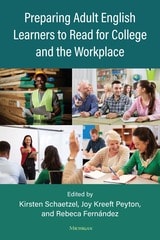
After reading this book, adult ESL practitioners will be able to
- Prepare adults learning English to apply appropriate reading strategies to a variety of academic and professional contexts and purposes
- Use instructional strategies, including digital technology, to help struggling and developing readers close gaps in skills and conceptual knowledge
- Improve reading comprehension through robust vocabulary instruction
- Enhance reading skills and comprehension through writing instruction that balances sentence-level, discourse, and interactive processes and practices
- Inspire students to become lifelong readers who engage in extensive reading outside of school and professional contexts

The Para-Academic Handbook
A Toolkit for Making-Learning-Creating-ActingAlex Wardrop
Intellect Books, 2014
Para-academics mimic academic practices so they are liberated from the confines of the university. Our work, and our lives, reflect how the idea of a university as a place for knowledge production, discussion and learning, has become distorted by neo-liberal market forces.
We create alternative, genuinely open access, learning-thinking-making-acting spaces on the internet, in publications, in exhibitions, discussion groups or through other mediums that seem appropriate to the situation. We don’t sit back and worry about our career developments paths. We write for the love of it; we think because we have to; we do it because we care.
Theory and Practice
Bite-Sized Activities for Teaching Reading SkillsAviva Katzenell
University of Michigan Press, 2023
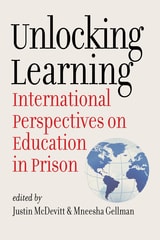
Unlocking Learning
International Perspectives on Education in PrisonEdited by Justin McDevitt and Mneesha Gellman
Brandeis University Press, 2024
Countries around the world have disparate experiences with education in prison. For decades, the United States has been locked in a pattern of exceptionally high mass incarceration. Though education has proven to be an impactful intervention, its role and the level of support it receives vary widely. As a result, effective opportunities for incarcerated people to reroute their lives during and after incarceration remain diffuse and inefficient. This volume highlights unique contributions from the field of education in prison globally. In this volume, academics and practitioners highlight new approaches and interesting findings from carceral interventions across twelve countries. From a college degree-granting program in Mexico to educational best practices in Norway and Belgium that support successful reentry, innovations in education are being developed in prison spaces around the world. As contributors from many countries share their insights about providing effective educational programs to incarcerated people, the United States can learn from the models and struggles beyond its borders.