Results by title
8 books match the query 'Aeronautics, Military'
Air Power and Armies
Sir John Cotesworth Slessor, and foreword by Phillip Meilinger
University of Alabama Press, 2009
An account of Sir John Cotesworth Slessor (1897–1979), one of Great Britain's most influential airmen.
Sir John Slessor played a significant role in building the World War II Anglo-American air power partnership as an air planner on the Royal Air Force Staff, the British Chiefs of Staff, and the Combined Chiefs of Staff. He coordinated allied strategy in 1940–41, helped create an Anglo-American bomber alliance in 1942, and drafted the compromise at the Casablanca Conference that broke a deadlock in Anglo-American strategic debate.
Slessor was instrumental in defeating the U-boat menace as RAF Coastal Commander, and later shared responsibility for directing Allied air operations in the Mediterranean. Few aspects of the allied air effort escaped his influence: pilot training, aircraft procurement, and dissemination of operational intelligence and information all depended to a degree on Slessor. His influence on Anglo-American operational planning paved the way for a level of cooperation and combined action never before undertaken by the military forces of two great nations.
Drones and the Future of Armed Conflict
Ethical, Legal, and Strategic ImplicationsEdited by David Cortright, Rachel Fairhurst, and Kristen Wall
University of Chicago Press, 2015
Presenting a robust conversation among leading scholars in the areas of international legal standards, counterterrorism strategy, humanitarian law, and the ethics of force, Drones and the Future of Armed Conflict takes account of current American drone campaigns and the developing legal, ethical, and strategic implications of this new way of warfare. Among the contributions to this volume are a thorough examination of the American government’s legal justifications for the targeting of enemies using drones, an analysis of American drone campaigns’ notable successes and failures, and a discussion of the linked issues of human rights, freedom of information, and government accountability.
Performing Flight
From the Barnstormers to Space TourismScott Magelssen
University of Michigan Press, 2020
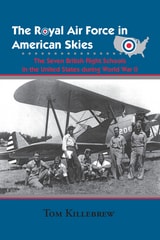
The Royal Air Force in American Skies
The Seven British Flight Schools in the United States during World War IITom Killebrew
University of North Texas Press, 2015
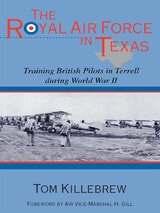
The Royal Air Force in Texas
Training British Pilots in Terrell during World War IITom Killebrew
University of North Texas Press, 2003
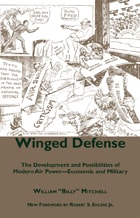
Winged Defense
The Development and Possibilities of Modern Air Power--Economic and MilitaryWilliam "Billy" Mitchell, with a new foreword by Robert S. Ehlers Jr.
University of Alabama Press, 2009
This book is the basis for airpower doctrine in the US, and demonstrates how forward looking Gen Mitchell was even though the technology for conducting air operations was in its infancy when it was written. It is essential reading for anyone concerned with airpower history or aerospace doctrine.
William Lendrum "Billy" Mitchell (December 28, 1879 – February 19, 1936) was an American Army general who is regarded as the father of the U.S. Air Force, and is one of the most famous and most controversial figures in the history of American airpower.
Mitchell served in France during the First World War and, by the conflict's end, commanded all American air combat units in that country. After the war, he was appointed deputy director of the Air Service and began to advocate increased investment in air power, claiming this would prove vital in future wars. He particularly stressed the ability of bombers to sink battleships and organized a series of dramatic bombing runs against stationary ships designed to test the idea that attracted wide notice from the public.
He antagonized many in both the Army and Navy with his arguments and criticism and, in 1925, was demoted to Colonel. Later that year, he was court-martialed for insubordination after accusing military chiefs of an "almost treasonable administration of the national defense." He resigned from the service shortly thereafter.
Mitchell received many honors following his death, including a commission by the President as a Major General. He is also the only individual after whom a type of American military aircraft is named: the B-25 "Mitchell."
Wings of Gold
An Account of Naval Aviation Training in World War II, The Correspondence of Aviation Cadet/Ensign Robert R. ReaWesley Phillips Newton
University of Alabama Press, 1987
Millions of Americans underwent military training during World War II, and contemporary historians and readers have begun to recognize the significance and value of primary sources related not only to combat but also to training and preparedness.
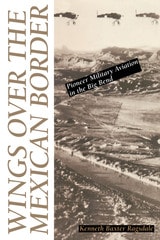
Wings over the Mexican Border
Pioneer Military Aviation in the Big BendBy Kenneth Baxter Ragsdale
University of Texas Press, 1997
Against a backdrop of revolution, border banditry, freewheeling aerial dramatics, and World War II comes this compelling look at the rise of U.S. combat aviation at an unlikely proving ground—a remote airfield in the rugged reaches of the southwestern Texas borderlands. Here, at Elmo Johnson's Big Bend ranch, hundreds of young Army Air Corps pilots demonstrated the U.S. military's reconnaissance and emergency response capabilities and, in so doing, dramatized the changing role of the airplane as an instrument of war and peace.
Kenneth Ragsdale's gripping account not only sets the United States squarely in the forefront of aerial development but also provides a reflective look at U.S.-Mexican relations of the 1920s, 1930s, and 1940s, particularly the tense days and aftermath of the Escobar Rebellion of 1929. He paints a vivid picture of the development of the U.S. aerial strike force; the character, ideals, and expectations of the men who would one day become combat leaders; and the high esteem in which U.S. citizens held the courageous pilots.
Particularly noteworthy is Ragsdale's portrait of Elmo Johnson, the Big Bend rancher, trader, and rural sage who emerges as the dominant figure at one of the most unusual facilities in the annals of the Air Corps. Wings over the Mexican Border tells a stirring story of the American frontier juxtaposed with the new age of aerial technology.