Results by title

5 books match the query 'Aesthetics, British'
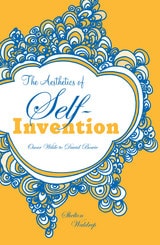
cover of Aesthetics of Self-Invention: Oscar Wilde To David Bowie

Aesthetics of Self-Invention

Oscar Wilde To David Bowie

Shelton Waldrep

University of Minnesota Press, 2004

Traces the influence of Oscar Wilde as the precursor of twentieth-century artists of self-performance

By printing the title “Professor of Aesthetics” on his visiting cards, Oscar Wilde announced yet another transformation—and perhaps the most significant of his career, proclaiming his belief that he could redesign not just his image but his very self. Shelton Waldrep explores the cultural influences at play in Wilde’s life and work and his influence on the writing and performance of the twentieth century, particularly on the lives and careers of some of its most aestheticized performers: Truman Capote, Andy Warhol, David Hockney, and David Bowie. As Waldrep reveals, Wilde’s fusing of art with commerce foresaw the coming century’s cultural producers who would blend works of both “high art” and mass-market appeal.

Whether as a gay man or as a postmodern performance artist ahead of his time, Wilde ultimately emerges here as the embodiment of the twentieth-century media-savvy artist who is both subject and object of the aesthetic and economic systems in which he is enmeshed.
[more]
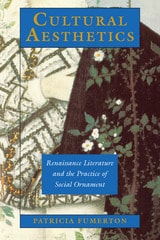
cover of Cultural Aesthetics: Renaissance Literature and the Practice of Social Ornament

Cultural Aesthetics

Renaissance Literature and the Practice of Social Ornament

Patricia Fumerton

University of Chicago Press, 1991
A brilliant postmodern critique of Renaissance subjectivity, Cultural Aesthetics explores the simultaneous formation and fragmentation of aristocratic "selfhood" in the late sixteenth and early seventeenth centuries. Patricia Fumerton situates the self within its sumptuous array of "trivial" arts—including the court literatures of chivalric romance, sonnet, and masque and the arts of architecture, miniature painting, stage design, and cuisine. Her integration of historicist and aesthetic perspectives makes this a provocative contribution to the vigorous field of Renaissance cultural studies.
[more]
cover of Inquiry into the Picturesque

Inquiry into the Picturesque

Sidney K. Robinson

University of Chicago Press, 1991
The aesthetic mode of the picturesque has undergone so many transformations since its initial discussion in eighteenth-century England that it is hard to say just what it is. In these probing essays, Sidney K. Robinson re-examines the picturesque in its late eighteenth-century phase.
[more]
cover of Sidney's Poetics: Imitating Creation

Sidney's Poetics

Imitating Creation

Michael Mack

Catholic University of America Press, 2005
Sidney's Poetics is essential reading not only for students and scholars of Renaissance literature and literary theory but also for all who want to understand how human beings write and read creatively.
[more]
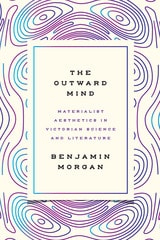
cover of The Outward Mind: Materialist Aesthetics in Victorian Science and Literature

The Outward Mind

Materialist Aesthetics in Victorian Science and Literature

Benjamin Morgan

University of Chicago Press, 2017

Though underexplored in contemporary scholarship, the Victorian attempts to turn aesthetics into a science remain one of the most fascinating aspects of that era. In The Outward Mind, Benjamin Morgan approaches this period of innovation as an important origin point for current attempts to understand art or beauty using the tools of the sciences. Moving chronologically from natural theology in the early nineteenth century to laboratory psychology in the early twentieth, Morgan draws on little-known archives of Victorian intellectuals such as William Morris, Walter Pater, John Ruskin, and others to argue that scientific studies of mind and emotion transformed the way writers and artists understood the experience of beauty and effectively redescribed aesthetic judgment as a biological adaptation. Looking beyond the Victorian period to humanistic critical theory today, he also shows how the historical relationship between science and aesthetics could be a vital resource for rethinking key concepts in contemporary literary and cultural criticism, such as materialism, empathy, practice, and form. At a moment when the tumultuous relationship between the sciences and the humanities is the subject of ongoing debate, Morgan argues for the importance of understanding the arts and sciences as incontrovertibly intertwined.
[more]