Results by title
18 books match the query 'African American college students'
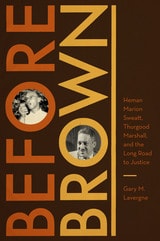
Before Brown
Heman Marion Sweatt, Thurgood Marshall, and the Long Road to JusticeBy Gary M. Lavergne
University of Texas Press, 2010
Winner, Coral Horton Tullis Memorial Prize for Best Book on Texas History, Texas State Historical Association, 2010
Carr P. Collins Award, Texas Institute of Letters, 2011
On February 26, 1946, an African American from Houston applied for admission to the University of Texas School of Law. Although he met all of the school's academic qualifications, Heman Marion Sweatt was denied admission because he was black. He challenged the university's decision in court, and the resulting case, Sweatt v. Painter, went to the U.S. Supreme Court, which ruled in Sweatt's favor. The Sweatt case paved the way for the landmark Brown v. Board of Education of Topeka rulings that finally opened the doors to higher education for all African Americans and desegregated public education in the United States.
In this engrossing, well-researched book, Gary M. Lavergne tells the fascinating story of Heman Sweatt's struggle for justice and how it became a milestone for the civil rights movement. He reveals that Sweatt was a central player in a master plan conceived by the National Association for the Advancement of Colored People (NAACP) for ending racial segregation in the United States. Lavergne masterfully describes how the NAACP used the Sweatt case to practically invalidate the "separate but equal" doctrine that had undergirded segregated education for decades. He also shows how the Sweatt case advanced the career of Thurgood Marshall, whose advocacy of Sweatt taught him valuable lessons that he used to win the Brown v. Board of Education case in 1954 and ultimately led to his becoming the first black Associate Justice of the Supreme Court.
Black Deaf Students
A Model for Educational SuccessCarolyn E. Williamson
Gallaudet University Press, 2007
Contemporary research has identified resilience — the ability to rebound and learn despite obstacles and adversities — as a key element to success in school. Black Deaf Students: A Model for Educational Success searches out ways to develop, reinforce, and alter the factors that encourage resilience in African American deaf and hard of hearing students. To find the individual characteristics and outside influences that foster educational achievement, author Carolyn E. Williamson conducted extensive interviews with nine African American deaf and hard of hearing adults who succeeded in high school and postsecondary programs.
Until now, the majority of studies of African American deaf and hard of hearing students concentrated upon their underachievement. The only success stories available involved high-achieving African American hearing students. To create an effective model in Black Deaf Students, Williamson focuses on the factors that contributed to her subjects’ successes in postsecondary programs, what they viewed as obstacles and how they overcame them, and their recommendations for facilitating graduation from postsecondary programs. Her work gives “voice” to a group rarely heard in research, which enables readers to view them as a heterogeneous rather than homogeneous group. Their stories provide vital information for parents, school personnel, community stakeholders, and those enrolled in education and mental health preparation programs. In addition, the insights about how these adults succeeded can be useful in facilitating positive outcomes for students who are going into two-year colleges, vocational training, and work settings.
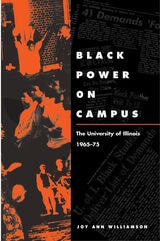
Black Power on Campus
The University of Illinois, 1965-75Joy Ann Williamson
University of Illinois Press, 2003
Drawing on student publications of the late 1960s and early 1970s, as well as interviews with student activists, former administrators, and faculty, Williamson discusses the emergence of Black Power ideology, what constituted "blackness," and notions of self-advancement versus racial solidarity. Promoting an understanding of the role of black youth in protest movements, Black Power on Campus is an important contribution to the literature on African American liberation movements and the reform of American higher education.
Black Space
Negotiating Race, Diversity, and Belonging in the Ivory TowerSherry L. Deckman
Rutgers University Press, 2022
Black and Smart
How Black High-Achieving Women Experience CollegeAdrianne Musu Davis
Rutgers University Press, 2023
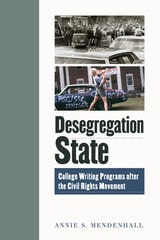
Desegregation State
College Writing Programs after the Civil Rights MovementAnnie S. Mendenhall
Utah State University Press, 2021
Formerly segregated state university systems crafted desegregation plans that gave them more control over policies for admissions, remediation, and retention. These plans created literacy requirements—admissions and graduation tests, remedial classes, and even writing centers and writing across the curriculum programs—that reshaped the landscape of college writing instruction and denied the demands of Black students, civil rights activists, and historically Black colleges and universities for major changes to university systems. This history details the profound influence of desegregation—and resistance to desegregation—on the ways that writing is taught and assessed in colleges today.
Desegregation State provides WPAs and writing teachers with a disciplinary history for understanding racism in writing assessment and writing programs. Mendenhall brings emerging scholarship on the racialization of institutions into the field, showing why writing studies must pay more attention to how writing programs have institutionalized racist literacy ideologies through arguments about student placement, individualized writing instruction, and writing assessment.
Forever in the Path
The Black Experience at Michigan State UniversityPero G Dagbovie
Michigan State University Press, 2025
Michigan State University—founded in 1855 as the Agricultural College of the State of Michigan—has a fascinating past, a history shaped by vacillating local and national contexts as well as by people from different walks of life. The first Black students arrived on campus during the late nineteenth and early twentieth centuries, and the first full-time Black faculty member was hired in the late 1940s. Before and after the modern Civil Rights Movement, African Americans from various backgrounds were transformed by MSU while also profoundly contributing in vital ways to the institution’s growth and evolving identity.

Inside Separate Worlds
Life Stories of Young Blacks, Jews, and LatinosDavid Schoem, Editor
University of Michigan Press, 1991
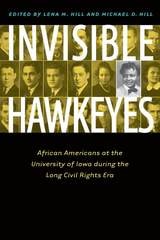
Invisible Hawkeyes
African Americans at the University of Iowa during the Long Civil Rights EraLena M. Hill and Michael D. Hill
University of Iowa Press, 2016
By examining the quieter collisions between Iowa’s polite midwestern progressivism and African American students’ determined ambition, Invisible Hawkeyes focuses attention on both local stories and their national implications. By looking at the University of Iowa and a smaller midwestern college town like Iowa City, this collection reveals how fraught moments of interracial collaboration, meritocratic advancement, and institutional insensitivity deepen our understanding of America’s painful conversion into a diverse republic committed to racial equality.
SUBJECTS COVERED
Edison Holmes Anderson, George Overall Caldwell, Elizabeth Catlett, Fanny Ellison, Oscar Anderson Fuller, Michael Harper, James Alan McPherson, Herbert Franklin Mells, Herbert Nipson, Thomas Pawley, William Oscar Smith, Mitchell Southall, Margaret Walker
CONTRIBUTORS
Dora Martin Berry, Richard M. Breaux, Kathleen A. Edwards, Lois Eichaker, Brian Hallstoos, Lena M. Hill, Michael D. Hill, Dianna Penny, Donald W. Tucker, Ted Wheeler
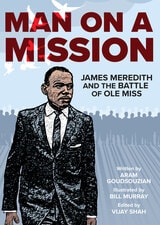
Man on a Mission
James Meredith and the Battle of Ole MissAram Goudsouzian
University of Arkansas Press, 2022
In 1962, James Meredith famously desegregated the University of Mississippi (a.k.a. Ole Miss). As the first Black American admitted to the school, he demonstrated great courage amidst the subsequent political clashes and tragic violence. After President Kennedy summoned federal troops to help maintain order, the South—and America at large—would never be the same.
Man on a Mission depicts Meredith’s relentless pursuit of justice, beginning with his childhood in rural Mississippi and culminating with the confrontation at Ole Miss. A blend of historical research and creative inspiration, this graphic history tells Meredith’s dramatic story in his own singular voice.
From the dawn of the modern civil rights movement, Meredith has offered a unique perspective on democracy, racial equality, and the meaning of America. Man on a Mission presents his captivating saga for a new generation in the era of Black Lives Matter.
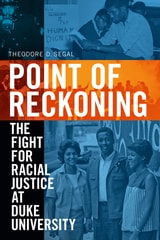
Point of Reckoning
The Fight for Racial Justice at Duke UniversityTheodore D. Segal
Duke University Press, 2021
Race and Class on Campus
Conversations with Ricardo’s DaughterJay M. Rochlin
University of Arizona Press, 1997
Here are some insights into the hot issues sparking debate over equal opportunity and American education. In these pages, through the use of a fictional character, author Jay Rochlin presents more than forty very real African American and Mexican American men and women who struggled to earn degrees at a large, nationally recognized university in the west. Their goals, their gains, and their disappointments echo the experiences of millions of others around the country during much of the twentieth century. Perhaps most important, their true stories will provide inspiration to the many young people who wonder whether pursuing the dream of a college education is possible for them.
Readers will warm to the words of Carlos Vélez-Ibáñez, learning as a toddler from his father that the university represented toda la sabiduría del mundo,"all the wisdom in the world." Their hearts will go out to young Laura Banks, barred as a black woman from a "whites only" pool and the swimming class required for her degree in physical education. In the face of open hostility and closed doors, these students and many others persevered. When they were shunned by Anglo social clubs, they created their own. When they were assigned "back of the room" seating because of discrimination, they rose above it. And when their ultimate goal--graduation--was threatened by racism, they fought it.
Looking back, many in the book remember coming from poor families who nonetheless considered themselves middle class and, as such, simply expected their children to go to college. This family support--bolstered by the students' own drive, ambition, and sense of responsibility--seemed to be pivotal to their success. Thus the book comes out strongly on the side of critical race theorists, who emphasize individual effort as a means of combating racism and personal narratives as a way of analyzing the complex issue.
These pages are filled with the voices of everyday men and women. Their language is straightforward and from the heart. Their message is timely, in the midst of current debates over race, class, and affirmative action. And their words--for American education and for the country as a whole--carry force and meaning guaranteed to reach far into the future.
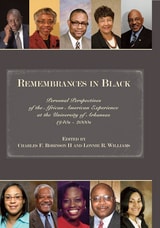
Remembrances in Black
Personal Perspectives of the African American Experience at the University of Arkansas, 1940s–2000sCharles F. Robinson II
University of Arkansas Press, 2015
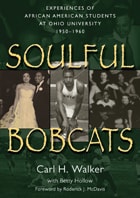
Soulful Bobcats
Experiences of African American Students at Ohio University, 1950–1960Carl H. Walker
Ohio University Press, 2013
During the 1950s, when less than 20 percent of American high school graduates attended college, a group of ambitious young African Americans enrolled at Ohio University, a predominantly white school in Athens, Ohio. Because they were a tiny, barely tolerated minority, they banded together, supported each other, and formed lasting bonds. Years later, at a series of “Soulful Reunions,” they recalled the joys and challenges of living on a white campus before the civil rights era, and eighteen of them decided to share their stories.
The authors of the eighteen autobiographical sketches in Soulful Bobcats were a diverse group. They were athletes, rhetoricians, musicians, and actresses; they aspired to professions in the military, business, education, government, architecture, and the arts. Some grew up in poor families, while others enjoyed the comforts of the middle class. But they had several things in common. They all came from families that believed education was important. They had been taught to avoid trouble, to persist despite setbacks, and to expect to encounter prejudice and even discrimination.
The authors vividly describe instances in which they were humiliated—by other students, by professors, or by townspeople—as well as the few occasions when violence seemed inevitable. In addition, they describe their “first,” including becoming the first African American students at Ohio University to be awarded scholarships for their prowess in football, basketball, track, and tennis; the first to compete for titles such as “Mr. Fraternity” or “Queen of the Military Ball”; the first to appear in theatrical performances alongside their white schoolmates. They also tell of their success in providing a social life for themselves by organizing two Greek letter fraternities and one sorority, holding their own off-campus dances, and joining the few campus organizations that were open to them. Above all, their stories speak to a resilience that allowed these “Soulful Bobcats” to learn from their experiences at Ohio University, to engage in meaningful careers, and to lead rich, fulfilling lives.
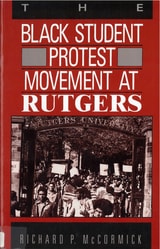
The Black Student Protest Movement at Rutgers
Richard P. McCormick
Rutgers University Press, 1990
Richard P. McCormick has chronicled the black student protest movement at Rutgers University, from the 1960s to today. He examines the forces that produced the protest movement, the tactics that were employed, and the qualified gains that were achieved. He tells us about demonstrations, building occupations, committee hearings, and countless meetings, but he also paints portraits of the many student leaders who mobilized protest. This is the story of a lot of pain, some blunders, and some successes.
In the mid-sixties, the University established committees to recruit black students and to add more blacks to the faculty. These efforts produced only modest results. By 1968, there were still not enough black students on campus, but there were enough to create a political presence for the first time. They were committed to acting against the racism they perceived within the University. To respond to their protests, in March 1969 the Board of Governors passed a dramatically new and controversial policy to encourage disadvantaged students who lived in Camden, Newark, and New Brunswick to apply to Rutgers, where they would take college-preparatory classes as unmatriculated students, and then enter Rutgers as matriculated students. This program, never very successful, lasted only two years.
Unrest did not end with the sixties. During the seventies, black students sporadically voiced protests against what they perceived to be an unsupportive environment. During the eighties, black enrollment actually declined, as did the black graduation rate. In conclusion, McCormick points to the effort that has been made but even more to the effort that still needs to be made and the social cost of ignoring the problem.
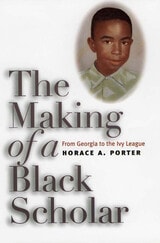
The Making of a Black Scholar
From Georgia to the Ivy LeagueHorace A. Porter
University of Iowa Press, 2003
The Making of a Black Scholar is structured around schools. Porter attends Georgia's segregated black schools until he enters the privileged world of Amherst College. He graduates (spending one semester at Morehouse College) and moves on to graduate study at Yale. He starts his teaching career at Detroit's Wayne State University and spends the 1980s at Dartmouth College and the 1990s at Stanford University.
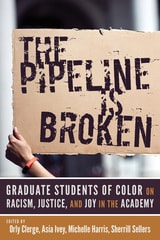
The Pipeline Is Broken
Graduate Students of Color on Racism, Justice, and Joy in the AcademyOrly Clerge
Utah State University Press, 2026
The Pipeline Is Broken explores the reality of racial exclusion and bias in graduate student education, arguing that the insidious effects of structural and institutional racism substantially chip away at the very pipeline of future BIPOC academics—already limited for other racialized reasons.
A series of letters written by graduate students of color, this collection offers a multifaceted account of the challenges, oppositions, microaggressions, and outright discrimination that these students face in higher education settings. Graduate students describe navigating hostile mentoring relationships and unwelcoming campus cultures and peers and laboring for poverty wages to earn their degrees. Yet these letters celebrate joy, community, and agency, offering a more complete and affirming view of graduate student life. Through these brave personal stories, The Pipeline Is Broken asks readers to interrogate what it means to navigate higher education as a person of color and to understand that the reality of faculty of color’s numerical-minority status is a complicated phenomenon whose genesis rests not at the moment of job interview. Rather, these letters show, this status is an intricate manifestation of a process that begins in elementary schools, is reinforced in high schools and colleges, and is part and parcel of the minefield that is graduate education in America.
Essential reading for anyone who cares about racial equity in education, mentorship, leadership development, or student well-being, The Pipeline Is Broken is a guide, a mirror, and a call to action all in one, challenging graduate programs, faculty, and administrators to examine their complicity in maintaining inequitable systems and offering suggestions for building cultures of care.
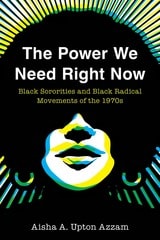
The Power We Need Right Now
Black Sororities and Black Radical Movements of the 1970sAisha A. Upton Azzam
Temple University Press, 2026
There is a long history of sororities such as Alpha Kappa Alpha (AKA) and Delta Sigma Theta (Delta) participating in activism and social justice efforts—from the Civil Rights Movement in the 1960s to Kamala Harris’s recent political campaigns. But radical movements like Black Lives Matter have posed more challenging questions for these organizations.
In The Power We Need Right Now, Aisha Upton Azzam investigates the legacies of AKA and Delta to understand the considerations that weigh on their engagement with present day Black movements. These organizations wield a significant amount of political power to mobilize in support of their causes. The response each sorority has had to movements fifty years apart is strikingly similar—even if their approaches are quite different.
Using a Black feminist theoretical framework, Upton Azzam brings context and meaning to the interactions of these sororities with Black radical movements. She highlights the costs communities bear from sororities’ adherence to respectability and racial uplift ideologies by tracing each sorority’s history and response to emerging Black feminist and Black Power movements during the tumultuous 1970s.
The Power We Need Right Now emphasizes that Black communities still have the ability to wield their political power and influence to further the struggle for Black liberation.