Results by title
16 books match the query 'African American jazz musicians'
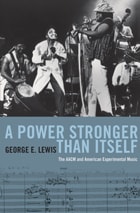
A Power Stronger Than Itself
The AACM and American Experimental MusicGeorge E. Lewis
University of Chicago Press, 2008
Founded in 1965 and still active today, the Association for the Advancement of Creative Musicians (AACM) is an American institution with an international reputation. George E. Lewis, who joined the collective as a teenager in 1971, establishes the full importance and vitality of the AACM with this communal history, written with a symphonic sweep that draws on a cross-generational chorus of voices and a rich collection of rare images.
Moving from Chicago to New York to Paris, and from founding member Steve McCall’s kitchen table to Carnegie Hall, A Power Stronger Than Itself uncovers a vibrant, multicultural universe and brings to light a major piece of the history of avant-garde music and art.
Ain't But a Few of Us
Black Music Writers Tell Their StoryWillard Jenkins, editor
Duke University Press, 2022
Contributors
Eric Arnold, Bridget Arnwine, Angelika Beener, Playthell Benjamin, Herb Boyd, Bill Brower, Jo Ann Cheatham, Karen Chilton, Janine Coveney, Marc Crawford, Stanley Crouch, Anthony Dean-Harris, Jordannah Elizabeth, Lofton Emenari III, Bill Francis, Barbara Gardner, Farah Jasmine Griffin, Jim Harrison, Eugene Holley Jr., Haybert Houston, Robin James, Willard Jenkins, Martin Johnson, LeRoi Jones, Robin D. G. Kelley, Tammy Kernodle, Steve Monroe, Rahsaan Clark Morris, John Murph, Herbie Nichols, Don Palmer, Bill Quinn, Guthrie P. Ramsey Jr., Ron Scott, Gene Seymour, Archie Shepp, Wayne Shorter, A. B. Spellman, Rex Stewart, Greg Tate, Billy Taylor, Greg Thomas, Robin Washington, Ron Welburn, Hollie West, K. Leander Williams, Ron Wynn
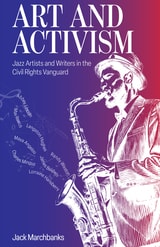
Art and Activism
Jazz Artists and Writers in the Civil Rights VanguardJack Marchbanks
Ohio University Press, 2026
Explore how jazz legends and literary icons united art and activism, shaping the civil rights movement and transforming American culture during the pivotal period between 1955 and 1965.
Art and Activism explores the powerful, symbiotic relationships among artists such as Nina Simone, Abbey Lincoln, and Lena Horne and their literary counterparts—Lorraine Hansberry, Maya Angelou, and Langston Hughes. These creative figures positioned themselves as cultural thought leaders within the evolving civil rights movement. While the Jim Crow South was the movement’s operational front, Jack Marchbanks argues that New York City’s intellectual, cultural, and fundraising communities functioned as its strategic command center.
Readers who admire jazz legends like Duke Ellington, Dave Brubeck, Miles Davis, and Charles Mingus—and those fascinated by prominent African American writers like James Baldwin and Ralph Ellison—will discover how these artists intertwined their work with the civil rights struggle. The book examines their involvement in pivotal confrontations and their connections with key leaders such as the Reverend Dr. Martin Luther King Jr., Daisy Bates, Ella Baker, and Malcolm X.
By illuminating the intersection of art and activism, this study offers a fresh perspective on the pivotal decade from 1955 to 1965. It is an essential resource for undergraduate courses and an engaging read for anyone seeking to understand the civil rights era through a cultural lens.
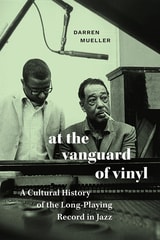
At the Vanguard of Vinyl
A Cultural History of the Long-Playing Record in JazzDarren Mueller
Duke University Press, 2024
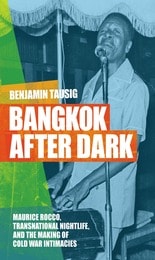
Bangkok after Dark
Maurice Rocco, Transnational Nightlife, and the Making of Cold War IntimaciesBenjamin Tausig
Duke University Press, 2025
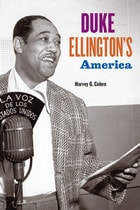
Duke Ellington's America
Harvey G. Cohen
University of Chicago Press, 2010
Few American artists in any medium have enjoyed the international and lasting cultural impact of Duke Ellington. From jazz standards such as “Mood Indigo” and “Don’t Get Around Much Anymore,” to his longer, more orchestral suites, to his leadership of the stellar big band he toured and performed with for decades after most big bands folded, Ellington represented a singular, pathbreaking force in music over the course of a half-century. At the same time, as one of the most prominent black public figures in history, Ellington demonstrated leadership on questions of civil rights, equality, and America’s role in the world.
With Duke Ellington’s America, Harvey G. Cohen paints a vivid picture of Ellington’s life and times, taking him from his youth in the black middle class enclave of Washington, D.C., to the heights of worldwide acclaim. Mining extensive archives, many never before available, plus new interviews with Ellington’s friends, family, band members, and business associates, Cohen illuminates his constantly evolving approach to composition, performance, and the music business—as well as issues of race, equality and religion. Ellington’s own voice, meanwhile, animates the book throughout, giving Duke Ellington’s America an intimacy and immediacy unmatched by any previous account.
By far the most thorough and nuanced portrait yet of this towering figure, Duke Ellington’s America highlights Ellington’s importance as a figure in American history as well as in American music.
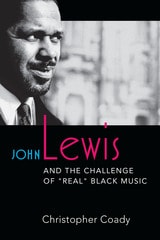
John Lewis and the Challenge of "Real" Black Music
Christopher Coady
University of Michigan Press, 2016
For critics and listeners, the reception of the 1950s jazz-classical hybrid Third Stream music has long been fraught. In John Lewis and the Challenge of “Real” Black Music, Christopher Coady explores the work of one of the form’s most vital practitioners, following Lewis from his role as an arranger for Miles Davis’s Birth of the Cool sessions to his leadership of the Modern Jazz Quartet, his tours of Europe, and his stewardship of the Lenox School of Jazz.
Along the way Coady shows how Lewis’s fusion works helped shore up a failing jazz industry in the wake of the 1940s big band decline, forging a new sound grounded in middle-class African American musical traditions. By taking into account the sociocultural milieu of the 1950s, Coady provides a wider context for understanding the music Lewis wrote for the Modern Jazz Quartet and sets up new ways of thinking about Cool Jazz and Third Stream music more broadly.
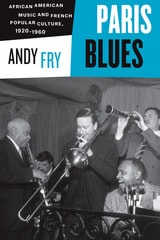
Paris Blues
African American Music and French Popular Culture, 1920-1960Andy Fry
University of Chicago Press, 2014
In Paris Blues, Andy Fry provides an alternative history of African American music and musicians in France, one that looks beyond familiar personalities and well-rehearsed stories. He pinpoints key issues of race and nation in France’s complicated jazz history from the 1920s through the 1950s. While he deals with many of the traditional icons—such as Josephine Baker, Django Reinhardt, and Sidney Bechet, among others—what he asks is how they came to be so iconic, and what their stories hide as well as what they preserve. Fry focuses throughout on early jazz and swing but includes its re-creation—reinvention—in the 1950s. Along the way, he pays tribute to forgotten traditions such as black musical theater, white show bands, and French wartime swing. Paris Blues provides a nuanced account of the French reception of African Americans and their music and contributes greatly to a growing literature on jazz, race, and nation in France.
Sound Experiments
The Music of the AACMPaul Steinbeck
University of Chicago Press, 2022
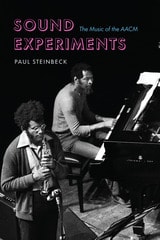
Founded on Chicago’s South Side in 1965 and still thriving today, the Association for the Advancement of Creative Musicians (AACM) is the most influential collective organization in jazz and experimental music. In Sound Experiments, Paul Steinbeck offers an in-depth historical and musical investigation of the collective, analyzing individual performances and formal innovations in captivating detail. He pays particular attention to compositions by Muhal Richard Abrams and Roscoe Mitchell, the Association’s leading figures, as well as Anthony Braxton, George Lewis (and his famous computer-music experiment, Voyager), Wadada Leo Smith, and Henry Threadgill, along with younger AACM members such as Mike Reed, Tomeka Reid, and Nicole Mitchell.
Sound Experiments represents a sonic history, spanning six decades, that affords insight not only into the individuals who created this music but also into an astonishing collective aesthetic. This aesthetic was uniquely grounded in nurturing communal ties across generations, as well as a commitment to experimentalism. The AACM’s compositions broke down the barriers between jazz and experimental music and made essential contributions to African American expression more broadly. Steinbeck shows how the creators of these extraordinary pieces pioneered novel approaches to instrumentation, notation, conducting, musical form, and technology, creating new soundscapes in contemporary music.
The Bone Doctor's Concerto
Music, Surgery, and the Pieces in BetweenAlvin H. Crawford, MD
Ohio University Press, 2023
Published by the University of Cincinnati Press
Born in Memphis, Tennessee in 1939, Dr. Alvin Crawford grew up and attended medical school in a segregated world. Beginning with his early life in Orange Mound—a self-contained community for freed slaves established in the 1890s—Crawford’s autobiography describes his flirtation with a music degree and time spent playing in jazz bands through the segregated South. In 1960, Crawford began his ground-breaking medical career with his entrance into the University of Tennessee College of Medicine, becoming the school’s first African American student. After completing his medical training and traveling the world as a surgeon for the Navy, Crawford found himself in Cincinnati, where he established the Comprehensive Pediatric Orthopedic Clinic at Cincinnati Children’s Hospital, the first in the region.
Underlying this story are the systemic and very personal incidents of racism Crawford experienced throughout his career. His autobiography is a personal account of segregation, integration, ambition, hard work, and taking risks.
The Dark Tree
Jazz and the Community Arts in Los AngelesSteven L. Isoardi
Duke University Press, 2023
The Majesty of Chicago Jazz
Twenty-Five Visionaries Who Define the City's SoundHoward Reich
University of Chicago Press, 2026
The first book to trace the vast influence of Chicago jazz from its origins to today—from Louis Armstrong and Jelly Roll Morton to Anita O’Day, Herbie Hancock, and the AACM.
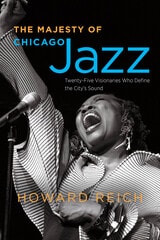
Author and Chicago native Howard Reich gives readers a front-row seat to the history of Chicago jazz as it roared forth in jazz clubs, concert halls, and festivals. Reich covered Chicago jazz for more than thirty years as the Chicago Tribune’s staff critic, and in this collection, he argues that jazz as an art form is inconceivable without Chicago. Carefully choosing from among his thousands of articles on jazz, Reich highlights twenty-five of the most important Chicago jazz artists who pushed the art form forward.
The Majesty of Chicago Jazz begins with two New Orleans visionaries who achieved their artistic pinnacles in Chicago in the Roaring Twenties: Jelly Roll Morton and Louis Armstrong. In the decades that followed, Chicago produced an uninterrupted line of innovators: revolutionaries Ahmad Jamal and Sun Ra, iconoclasts Von Freeman and Fred Anderson, populists Herbie Hancock and Ramsey Lewis, chameleons Patricia Barber and Kurt Elling, and the breakthrough band of the Association for the Advancement of Creative Musicians (AACM), among others. Reich offers two pieces on each of the book’s twenty-five visionaries, including profiles, reviews, appreciations, and obituaries. The book concludes with a beginner-friendly discography, perfect for those looking to listen along.
The Majesty of Chicago Jazz is captivating for jazz newcomers and aficionados alike—all are guaranteed to learn something surprising here. With a musician’s ear and a journalist’s expertise, Reich offers listeners a valuable guide to the groundbreaking jazz that has come out of Chicago, a city that remains a fertile breeding ground for musical experimentation.
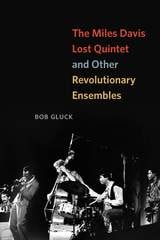
The Miles Davis Lost Quintet and Other Revolutionary Ensembles
Bob Gluck
University of Chicago Press, 2015
Gluck listens deeply to the uneasy tension between this group’s driving rhythmic groove and the sonic and structural openness, surprise, and experimentation they were always pushing toward. There he hears—and outlines—a fascinating web of musical interconnection that brings Davis’s funk-inflected sensibilities into conversation with the avant-garde worlds that players like Ornette Coleman and John Coltrane were developing. Going on to analyze the little-known experimental groups Circle and the Revolutionary Ensemble, Gluck traces deep resonances across a commercial gap between the celebrity Miles Davis and his less famous but profoundly innovative peers. The result is a deeply attuned look at a pivotal moment when once-disparate worlds of American music came together in explosively creative combinations.
Waiting for Buddy Guy
Chicago Blues at the CrossroadsAlan Harper
University of Illinois Press, 2016
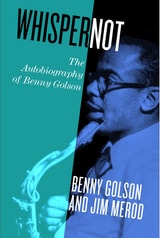
Whisper Not
The Autobiography of Benny GolsonBenny Golson
Temple University Press, 2016
“One of the greatest artists our country has is Benny Golson. He is not only a great musician, but an original and fabulous composer. He is inventive and creative and his work is loved the world over. Benny is a rare, creative genius. All I would like to say is THREE CHEERS for Benny Golson!”—Tony Bennett
“Composer supreme, tenor man supreme, jazz man supreme, good guy supreme: that’s BENNY GOLSON!"—Sonny Rollins
Born during the de facto inaugural era of jazz, saxophonist Benny Golson learned his instrument and the vocabulary of jazz alongside John Coltrane while Golson was still in high school in Philadelphia. Quickly establishing himself as an iconic fixture on the jazz landscape, Golson performed with dozens of jazz greats, from Sonny Rollins, Coleman Hawkins, and Jimmy Heath to Dizzy Gillespie, Freddie Hubbard, and many others. An acclaimed composer, Golson also wrote music for Hollywood films and television and composed such memorable jazz standards as “Stablemates,” “Killer Joe,” and “Whisper Not.”
An eloquent account of Golson’s exceptional life—presented episodically rather than chronologically—Whisper Not includes a dazzling collection of anecdotes, memories, experiences, and photographs that recount the successes, the inevitable failures, and the rewards of a life eternally dedicated to jazz.
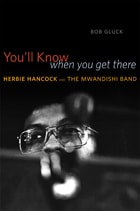
You'll Know When You Get There
Herbie Hancock and the Mwandishi BandBob Gluck
University of Chicago Press, 2012
As the 1960s ended, Herbie Hancock embarked on a grand creative experiment. Having just been dismissed from the celebrated Miles Davis Quintet, he set out on the road, playing with his first touring group as a leader until he eventually formed what would become a revolutionary band. Taking the Swahili name Mwandishi, the group would go on to play some of the most innovative music of the 1970s, fusing an assortment of musical genres, American and African cultures, and acoustic and electronic sounds into groundbreaking experiments that helped shape the American popular music that followed. In You’ll Know When You Get There, Bob Gluck offers the first comprehensive study of this influential group, mapping the musical, technological, political, and cultural changes that they not only lived in but also effected.