Results by title
7 books match the query 'African American troops'
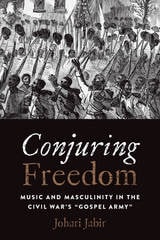
Conjuring Freedom
Music and Masculinity in the Civil War's “Gospel Army”Johari Jabir
The Ohio State University Press, 2017
Reflecting the structure of the ring shout—the counterclockwise song, dance, drum, and story in African American history and culture—Conjuring Freedom offers three new concepts to cultural studies in order to describe the practices, techniques, and implications of the troop’s performance: (1) Black Communal Conservatories, borrowing from Robert Farris Thompson’s “invisible academies” to describe the structural but spontaneous quality of black music-making, (2) Listening Hermeneutics, which accounts for the generative and material affects of sound on meaning-making, and (3) Sonic Politics, which points to the political implications of music’s use in contemporary representations of race and history.
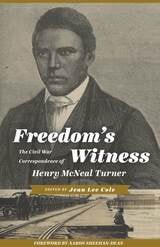
Freedom's Witness
The Civil War Correspondence of Henry McNeal TurnerJean Lee Cole
West Virginia University Press, 2013
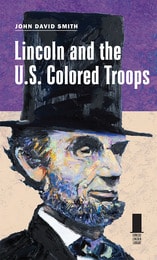
Lincoln and the U.S. Colored Troops
John David Smith
Southern Illinois University Press, 2013
Though scholars have written much on emancipation and the USCT, Smith’s work frames the evolution of Lincoln’s ideas on emancipation and arming blacks within congressional actions, explaining how, when, and why the president seemed to be so halting in his progression to military emancipation. After tracing Lincoln’s evolution from opposing to supporting emancipation as a necessary war measure and to championing the recruitment of black troops for the Union Army, Smith details the creation, mobilization, and diverse military service of the USCT. He assesses the hardships under which the men of the USCT served, including the multiple forms of discrimination from so-called friends and foes alike, and examines the broad meaning of Lincoln’s military emancipation project and its place in African American historical memory.
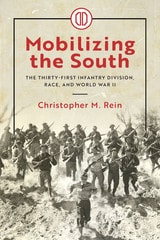
Mobilizing the South
The Thirty-First Infantry Division, Race, and World War IIChristopher M. Rein
University of Alabama Press, 2022
A richly researched account of the social, racial, and political history of a major Deep South infantry division at home and in the Pacific
Chris Rein’s study of the Thirty-First Infantry Division, known officially as the “Dixie Division,” illuminates the complexities in mobilizing American reserve units to meet the global emergency during World War II. Citizen soldiers from Alabama, Florida, Louisiana, and Mississippi formed the core of one of the ninety infantry divisions the Army successfully activated, trained, equipped, and deployed to defeat fascism in Europe and race-based imperialism in the Pacific. But the Army mobilized ideas along with manpower, and soldiers from across the Jim Crow South brought their racial ideas and views with them into the ranks and then exported these across the South Pacific. If the American victory in World War II represents a “double victory” over racism abroad and at home, the division’s service is a cogent reminder that the same powerful force could pull in opposite directions.
While focused on the division’s operational service during the war years, Mobilizing the South: The Thirty-First Infantry Division, Race, and World War II spans the division’s entire service from 1917 to 1967, from an interwar period highlighted by responses to natural disasters and facing down lynch mobs through a postwar service that included protecting activists in the most important struggles of the civil rights era. But the division’s extended service as a training establishment highlights lingering resentments and tensions within the American military system between the active and reserve components. Despite this, the division performed well in General Douglas MacArthur’s island-hopping campaign across the South Pacific. Using official records as well as details drawn from correspondence and oral histories, Rein captures how individual soldiers framed their exposure to a larger world, and how service alongside African American, New Guinean, and Filipino units both reinforced and modified views on race and postwar American society.

Proud Warriors
African American Combat Units in World War IIAlexander M. Bielakowski
University of North Texas Press, 2021
Scouting with the Buffalo Soldiers
John P. Langellier
University of North Texas Press, 2020
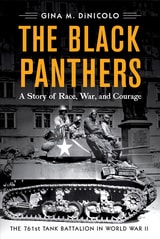
The Black Panthers
A Story of Race, War, and Courage—the 761st Tank Battalion in World War IIGina M. DiNicolo
Westholme Publishing, 2014
Known primarily for being the first African American armored unit to see combat in World War II and as future baseball star Jackie Robinson’s onetime outfit, the 761st Tank Battalion was forged in a devil’s cauldron of heat and prejudice at Camp Claiborne, Louisiana. Here, most viewed the tankers as tokens in a racial experiment, rather than as fellow American soldiers who would actually be deployed to fight a common enemy. Led by a small cadre of white and black officers, the 761st trained to the pinnacle of its craft. The Black Panthers, as they soon were called, proved their battle prowess against other units bound for combat on the parched Texas training fields. For this, they earned a coveted assignment to fight under General George S. Patton and go head-to-head with the best of Hitler’s arsenal. Moving to the front in November 1944, trial by fire soon shook the unit to its core. Ambushed by a veteran German force, the 761st suffered heavy casualties in the confusion as they cut their way out of the trap. But the men rallied to overcome self-doubt and vindicate their losses. Quickly battle hardened, the tankers saw intense combat through November and when Germany launched its last-ditch offensive through the Ardennes in December, the 761st fought side-by-side with Patton’s Third Army. Moving swiftly, the unit helped check the German advance, cut resupply routes to the forces surrounding beleaguered Bastogne, and drove the enemy back, recapturing towns crucial to the final defeat of Germany.
In The Black Panthers: A Story of Race, War, and Courage—the 761st Tank Battalion in World War II, historian Gina M. DiNicolo tells the full and unvarnished history of this important American fighting force. Relying on extensive archival research, including documents that had not been consulted in previous accounts, and interviews with surviving soldiers and family members, the author describes the unit’s training, deployment, combat, and individuals, such as Sgt. Ruben Rivers, one of only seven African American men awarded the Medal of Honor for World War II heroism. The professionalism, dedication, and courage of the 761st and other non-white units made clear that the strength of the American army in the future lay with integration—one of the enduring accomplishments of these servicemen.