Results by title

4 books match the query 'Afro-Brazilian religions'
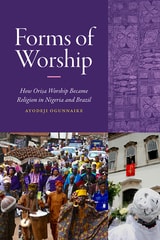
cover of Forms of Worship: How Orisa Worship Became Religion in Nigeria and Brazil

Forms of Worship

How Orisa Worship Became Religion in Nigeria and Brazil

Ayodeji Ogunnaike

Duke University Press, 2026
The worship of Yoruba deities known as oriṣa is commonly understood as an indigenous African religion, but Ayodeji Ogunnaike argues that these traditions initially differed from the modern Western concept of religion. In Forms of Worship, Ogunnaike analyzes how the configuration of oriṣa worship has changed across the Yoruba diaspora and homeland. As the meaning of the Yoruba word ẹsin, usually translated as “religion,” is closer to “form of worship,” he examines how reorienting understandings of oriṣa traditions as multiple forms of worship changes how religious identity, practice, and dynamics can be understood in contemporary and historical perspectives. By developing indigenous models for religious phenomena, Ogunnaike accounts for Yoruba cultural dynamics, including the high degree of religious harmony, syncretism, and interaction prevalent both in Nigeria and Brazil. Furthermore, he tracks the subtle and largely unperceived shift in oriṣa worship toward a more modern, closed, and rigid conception of religion and its resulting complications. Forms of Worship demonstrates how the advent of Western religious rigidity regarding practice and identity has led to rising religious tensions and fragmentation.
[more]
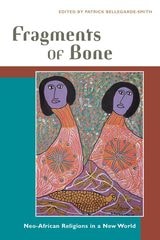
cover of Fragments of Bone: Neo-African Religions in a New World

Fragments of Bone

Neo-African Religions in a New World

Edited by Patrick Bellegarde-Smith

University of Illinois Press, 2005

In Fragments of Bone, thirteen essayists discuss African religions as forms of resistance and survival in the face of Western cultural hegemony and imperialism. The collection presents scholars working outside of the Western tradition with backgrounds in a variety of disciplines, genders, and nationalities. These experts draw on research, fieldwork, personal interviews, and spiritual introspection to support a provocative thesis: that fragments of ancestral traditions are fluidly interwoven into New World African religions as creolized rituals, symbolic systems, and cultural identities.

Contributors: Osei-Mensah Aborampah, Niyi Afolabi, Patrick Bellegarde-Smith, Randy P. Conner, T. J. Desch-Obi, Ina Johanna Fandrich, Kean Gibson, Marilyn Houlberg, Nancy B. Mikelsons, Roberto Nodal, Rafael Ocasio, Miguel "Willie" Ramos, and Denise Ferreira da Silva
[more]
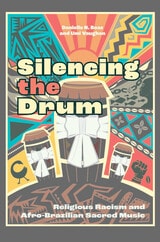
cover of Silencing the Drum: Religious Racism and Afro-Brazilian Sacred Music

Silencing the Drum

Religious Racism and Afro-Brazilian Sacred Music

Danielle N. Boaz and Umi Vaughan

Amherst College Press, 2024

Silencing the Drum exposes the profound struggle of Afro-Brazilian sacred music against escalating intolerance. Danielle N. Boaz and Umi Vaughan blend legal scholarship with ethnomusicology, offering a compelling narrative rooted in interviews with religious leaders, musicians, and activists across Brazil. This multidisciplinary exploration examines the relentless attacks against the practitioners of Afro-Brazilian religions—from discriminatory noise complaints in Bahia to vigilante violence in Rio de Janeiro.

The volume integrates multimedia elements including musical samples to vividly illustrate the struggles and resilience of Afro-Brazilian communities in the face of discrimination. As Silencing the Drum confronts the larger global issues of racism and religious freedom, it provides essential insights for scholars, activists, and anyone passionate about human rights and cultural preservation.
[more]
cover of The Social Life of Spirits

The Social Life of Spirits

Edited by Ruy Blanes and Diana Espírito Santo

University of Chicago Press, 2013

Spirits can be haunters, informants, possessors, and transformers of the living, but more than anything anthropologists have understood them as representations of something else—symbols that articulate facets of human experience in much the same way works of art do. The Social Life of Spirits challenges this notion. By stripping symbolism from the way we think about the spirit world, the contributors of this book uncover a livelier, more diverse environment of entities—with their own histories, motivations, and social interactions—providing a new understanding of spirits not as symbols, but as agents.
 
The contributors tour the spiritual globe—the globe of nonthings—in essays on topics ranging from the Holy Ghost in southern Africa to spirits of the “people of the streets” in Rio de Janeiro to dragons and magic in Britain. Avoiding a reliance on religion and belief systems to explain the significance of spirits, they reimagine spirits in a rich network of social trajectories, ultimately arguing for a new ontological ground upon which to examine the intangible world and its interactions with the tangible one. 
[more]