Results by title
2 books match the query 'Agunahs'

Marriage and Divorce in the Jewish State
Israel's Civil WarSusan M. Weiss and Netty C. Gross-Horowitz
Brandeis University Press, 2012
Israel currently has two recognized systems of law operating side by side: civil and religious. Israeli religious courts possess the exclusive right to conduct and terminate marriages. There is no civil marriage or divorce in Israel, irrespective of one’s religious inclinations. All Muslims must marry and divorce in accordance with shariya laws, all Catholics in accordance with canon law, and all Jews in accordance with Torah law (halakha). The interpretation and implementation of Torah law is in the hands of the Orthodox religious establishment, the only stream of Judaism that enjoys legal recognition in Israel. The rabbinic courts strenuously oppose any changes to this so-called status quo arrangement between religious and secular authorities. In fact, religious courts in Israel are currently pressing for expanded jurisdiction beyond personal status, stressing their importance to Israel’s growing religious community. This book shows how religious courts, based on centuries-old patriarchal law, undermine the full civil and human rights of Jewish women in Israel. Making a broad argument for civil marriage and divorce in Israel, the authors also emphasize that religious marriages and divorces, when they do occur, must benefit from legislation that makes divorce easier to obtain. Making this issue their focal point, they speak to a larger question: Is Israel a democracy or a theocracy?
[more]
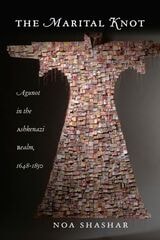
The Marital Knot
Agunot in the Ashkenazi Realm, 1648–1850Noa Shashar
Brandeis University Press, 2024
A long overdue study of agunot based on exhaustive research in rabbinic sources, memoirs, and communal records.
Noa Shashar sheds light on Jewish family life in the early modern era and on the activity of rabbis whose Jewish legal rulings determined the fate of agunot, literally “chained women,” who were often considered a marginal group. Who were these men and women? How did Jewish society deal with the danger of a woman’s becoming an agunah? What kind of reality was imposed on women who found themselves agunot, and what could they do to extricate themselves from their plight? How did rabbinic decisors discharge their task during this period, and what were the outcomes given the fact that the agunot were dependent on the male rabbinic establishment?
This study describes the lives of agunot, and by reexamining the halakhic activity concerning agunot in this period, proposes a new assessment of the attitude that decisors displayed toward the freeing of agunot.
[more]