Results by title
15 books match the query 'Alternative & Complementary Medicine'
Appetites
Food and Sex in Post-Socialist ChinaJudith Farquhar
Duke University Press, 2002
From eating well in improving economic times to memories of the late 1950s famine, from the flavors of traditional Chinese medicine to modernity’s private sexual passions, this book argues that embodiment in all its forms must be invented and sustained in public reflections about personal and national life. As much at home in science studies and social theory as in the details of life in Beijing, this account uses anthropology, cultural studies, and literary criticism to read contemporary Chinese life in a materialist and reflexive mode. For both Maoist and market reform periods, this is a story of high culture in appetites, desire in collective life, and politics in the body and its dispositions.
Biofeedback for the Brain
How Neurotherapy Effectively Treats Depression, ADHD, Autism, and MorePaul G. Swingle, PhD
Rutgers University Press, 2008
Neurofeedback is a cutting-edge, drug-free therapeutic technique used by over a thousand licensed therapists in North America to treat a range of conditions from attention deficit and hyperactivity disorders to epilepsy, stroke, anxiety, migraine, and depression. First popularized in the 1970s, this naturalistic method is based on the idea that we can control our brain activity and that, through training, the brain can learn to modify its own electrical patterns for more efficient processing or to overcome various states of dysfunction.
In Biofeedback for the Brain, Dr. Paul G. Swingle describes in clear and coherent language how these procedures work. With numerous actual case examples, readers follow the progress of clients from the initial “brain map” that shows the location and severity of the neurological abnormalities to the various stages of treatment. Conditions often considered untreatable by conventional health practitioners respond positively to neurotherapeutic treatment and Swingle describes many of these remarkable recoveries. Other chapters describe the use of neurotherapy for a variety of surprising purposes, including performance training for elite athletes, of which the most famous example is the Italian soccer team who considered the technique to be their “secret weapon” in attaining a World Cup victory.
Despite wide-ranging success stories and the endorsement of the American Psychological Association, many health care practitioners remain skeptical of neurofeedback and the procedures are still not well-known by the public or conventional health care providers. This book provides a thorough, definitive, and highly readable presentation of this remarkable health care alternative that offers millions of individuals a chance for healing.
Biomedicine and Alternative Healing Systems in America
Issues of Class, Race, and GenderHans A. Baer
University of Wisconsin Press, 2001
Examining medical pluralism in the United States from the Revolutionary War period through the end of the twentieth century, Hans Baer brings together in one convenient reference a vast array of information on healing systems as diverse as Christian Science, osteopathy, acupuncture, Santeria, southern Appalachian herbalism, evangelical faith healing, and Navajo healing.
In a country where the dominant paradigm of biomedicine (medical schools, research hospitals, clinics staffed by M.D.s and R.N.s) has been long established and supported by laws and regulations, the continuing appeal of other medical systems and subsystems bears careful consideration. Distinctions of class, Baer emphasizes, as well as differences in race, ethnicity, and gender, are fundamental to the diversity of beliefs, techniques, and social organizations represented in the phenomenon of medical pluralism.
Baer traces the simultaneous emergence in the nineteenth century of formalized biomedicine and of homeopathy, botanic medicine, hydropathy, Christian Science, osteopathy, and chiropractic. He examines present-day osteopathic medicine as a system parallel to biomedicine with an emphasis on primary care; chiropractic, naturopathy, and acupuncture as professionalized heterodox medical systems; homeopathy, herbalism, bodywork, and lay midwifery in the context of the holistic health movement; Anglo-American religious healing; and folk medical systems, particularly among racial and ethnic minorities. In closing he focuses on the persistence of folk medical systems among working-class Americans and considers the growing interest of biomedical physicians, pharmaceutical and healthcare corporations, and government in the holistic health movement
Bounding Biomedicine
Evidence and Rhetoric in the New Science of Alternative MedicineColleen Derkatch
University of Chicago Press, 2016
Bounding Biomedicine centers on this boundary-changing era, looking at how consumer demand shook the health care hierarchy. Drawing on scholarship in rhetoric and science and technology studies, the book examines how the medical profession scrambled to maintain its position of privilege and prestige, even as its foothold appeared to be crumbling. Colleen Derkatch analyzes CAM-themed medical journals and related discourse to illustrate how members of the medical establishment applied Western standards of evaluation and peer review to test health practices that did not fit easily (or at all) within standard frameworks of medical research. And she shows that, despite many practitioners’ efforts to eliminate the boundaries between “regular” and “alternative,” this research on CAM and the forms of communication that surrounded it ultimately ended up creating an even greater division between what counts as safe, effective health care and what does not.
At a time when debates over treatment choices have flared up again, Bounding Biomedicine gives us a possible blueprint for understanding how the medical establishment will react to this new era of therapeutic change.
Chinese Medicine in Contemporary China
Plurality and SynthesisVolker Scheid
Duke University Press, 2002
Scheid, a medical anthropologist and practitioner of Chinese medicine in practice since 1983, has produced an ethnography that accepts plurality as an intrinsic and nonreducible aspect of medical practice. It has been widely noted that a patient visiting ten different practitioners of Chinese medicine may receive ten different prescriptions for the same complaint, yet many of these various treatments may be effective. In attempting to illuminate the plurality in Chinese medical practice, Scheid redefines-and in some cases abandons-traditional anthropological concepts such as tradition, culture, and practice in favor of approaches from disciplines such as science and technology studies, social psychology, and Chinese philosophy. As a result, his book sheds light not only on Chinese medicine but also on the Western academic traditions used to examine it and presents us with new perspectives from which to deliberate the future of Chinese medicine in a global context.
Chinese Medicine in Contemporary China is the product of two decades of research including numerous interviews and case studies. It will appeal to a western academic audience as well as practitioners of Chinese medicine and other interested medical professionals, including those from western biomedicine.
Healing Traditions
African Medicine, Cultural Exchange, and Competition in South Africa, 1820–1948Karen E. Flint
Ohio University Press, 2008
In August 2004, South Africa officially sought to legally recognize the practice of traditional healers. Largely in response to the HIV/AIDS pandemic, and limited both by the number of practitioners and by patients’ access to treatment, biomedical practitioners looked toward the country’s traditional healers as important agents in the development of medical education and treatment. This collaboration has not been easy. The two medical cultures embrace different ideas about the body and the origin of illness, but they do share a history of commercial and ideological competition and different relations to state power. Healing Traditions: African Medicine, Cultural Exchange, and Competition in South Africa, 1820–1948 provides a long-overdue historical perspective to these interactions and an understanding that is vital for the development of medical strategies to effectively deal with South Africa’s healthcare challenges.
Between 1820 and 1948 traditional healers in Natal, South Africa, transformed themselves from politically powerful men and women who challenged colonial rule and law into successful entrepreneurs who competed for turf and patients with white biomedical doctors and pharmacists. To understand what is “traditional” about traditional medicine, Flint argues that we must consider the cultural actors and processes not commonly associated with African therapeutics: white biomedical practitioners, Indian healers, and the implementing of white rule.
Carefully crafted, well written, and powerfully argued, Flint’s analysis of the ways that indigenous medical knowledge and therapeutic practices were forged, contested, and transformed over two centuries is highly illuminating, as is her demonstration that many “traditional” practices changed over time. Her discussion of African and Indian medical encounters opens up a whole new way of thinking about the social basis of health and healing in South Africa. This important book will be core reading for classes and future scholarship on health and healing in Africa.
Maya Bonesetters
Manual Healers in a Changing GuatemalaBy Servando Z. Hinojosa; Illustrations by Servando G. Hinojosa
University of Texas Press, 2020
Scholarship on Maya healing traditions has focused primarily on the roles of midwives, shamans, herbalists, and diviners. Bonesetters, on the other hand, have been largely excluded from conversations about traditional health practitioners and community health resources. Maya Bonesetters is the first book-length study of bonesetting in Guatemala and situates the manual healing tradition within the current cultural context—one in which a changing medical landscape potentially threatens bonesetters’ work yet presents an opportunity to strengthen its relevance.
Drawing on extensive field research in highland Guatemala, Servando Z. Hinojosa introduces readers to a seldom documented, though nonetheless widespread, variety of healer. This book examines the work of Kaqchikel and Tz’utujiil Maya bonesetters, analyzes how they diagnose and treat injuries, and contrasts the empirical and sacred approaches of various healers. Hinojosa shows how bonesetters are carefully adapting certain biomedical technologies to meet local expectations for care and concludes that, despite pressures and criticisms from the biomedical community, bonesetting remains culturally meaningful and vital to Maya people, even if its future remains uncertain.
Medical Protestants
The Eclectics in American Medicine, 1825-1939John S. Haller Jr.
Southern Illinois University Press, 1994
John S. Haller,Jr., provides the first modern history of the Eclectic school of American sectarian medicine.
The Eclectic school (sometimes called the "American School") flourished in the mid-nineteenth century when the art and science of medicine was undergoing a profound crisis of faith. At the heart of the crisis was a disillusionment with the traditional therapeutics of the day and an intense questioning of the principles and philosophy upon which medicine had been built. Many American physicians and their patients felt that medicine had lost the ability to cure. The Eclectics surmounted the crisis by forging a therapeutics based on herbal remedies and an empirical approach to disease, a system independent of the influence of European practices.
Although rejected by the Regulars (adherents of mainstream medicine), the Eclectics imitated their magisterial manner, establishing two dozen colleges and more than sixty-five journals to proclaim the wisdom of their theory. Central to the story of Eclecticism is that of the Eclectic Medical Institute of Cincinnati, the "mother institute" of reform medical colleges. Organized in 1845, the school was to exist for ninety-four years before closing in 1939.
Throughout much of their history, the Eclectic medical schools provided an avenue into the medical profession for men and women who lacked the financial and educational opportunities the Regular schools required, siding with Professor Martyn Paine of the Medical Department of New York University, who, in 1846, had accused the newly formed American Medical Association of playing aristocratic politics behind a masquerade of curriculum reform. Eventually, though, they grudgingly followed the lead of the Regulars by changing their curriculum and tightening admission standards.
By the late nineteenth century, the Eclectics found themselves in the backwaters of modern medicine. Unable to break away from their botanic bias and ill-equipped to support the implications of germ theory, the financial costs of salaried faculty and staff, and the research implications of laboratory science, the Eclectics were pushed aside by the rush of modern academic medicine.
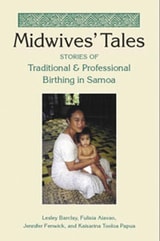
Midwives' Tales
Stories of Traditional and Professional Birthing in SamoaLesley Barclay
Vanderbilt University Press, 2005
The overall picture of changing birthing practices is complex and sometimes tinged with ironies. As the introduction says, "These Samoan nurses and midwives did not immediately attempt to mediate new and old ways of birthing after the colonial leadership of their profession left. They themselves became cultural agents for change as they continued the role of 'colonizing' their own birth tradition and taught the fa'atosaga [Samoan for midwife] Western techniques, at the same time trying to provide a professional midwife for all women. Paradoxically they often chose a social midwife for their own births and supported or at least condoned the social midwives close to them. . . . Kaisarina, while working as the leading professional midwife in the country, and working almost totally in hospital practice herself, simultaneously assisted her mother-in-law with her social practice of midwifery. Vipulo's story shows how a professional midwife preferred to have her mother, a social midwife, deliver her at home."
A particular objective of the authors is to encourage a reconception of maternity care in countries where professional services are rare and not available to all women. The book challenges common assumptions, still held in many postcolonial countries, that a simple migration of Western-style, hospital-focused care is necessarily always an achievable or desirable goal. It also demonstrates the considerable progress that one group has made in rethinking and developing a model of maternity care that works within their society and culture. As these midwives' stories suggest, solutions to some of the problems caused by gaps in the kinds of resources that Westerners take for granted can be found in partnerships and cultural wisdom that already exist in Samoa and, by extension, other developing countries.
Neither Donkey nor Horse
Medicine in the Struggle over China's ModernitySean Hsiang-lin Lei
University of Chicago Press, 2014
Far from being a remnant of China’s premodern past, Chinese medicine in the twentieth century coevolved with Western medicine and the Nationalist state, undergoing a profound transformation—institutionally, epistemologically, and materially—that resulted in the creation of a modern Chinese medicine. This new medicine was derided as “neither donkey nor horse” because it necessarily betrayed both of the parental traditions and therefore was doomed to fail. Yet this hybrid medicine survived, through self-innovation and negotiation, thus challenging the conception of modernity that rejected the possibility of productive crossbreeding between the modern and the traditional.
By exploring the production of modern Chinese medicine and China’s modernity in tandem, Lei offers both a political history of medicine and a medical history of the Chinese state.
Ritual Medical Lore of Sephardic Women
Sweetening the Spirits, Healing the SickIsaac Jack Lévy and Rosemary Lévy Zumwalt
University of Illinois Press, 2002
Winner of the Ellii Kongas-Maranda Prize from the Women's Section of the American Folklore Society, 2003.
Ritual Medical Lore of Sephardic Women preserves the precious remnants of a rich culture on the verge of extinction while affirming women's pivotal role in the health of their communities. Centered around extensive interviews with elders of the Sephardic communities of the former Ottoman Empire, this volume illuminates a fascinating complex of preventive and curative rituals conducted by women at home--rituals that ensured the physical and spiritual well-being of the community and functioned as a vital counterpart to the public rites conducted by men in the synagogues.
Isaac Jack Lévy and Rosemary Lévy Zumwalt take us into the homes and families of Sephardim in Turkey, Israel, Greece, the former Yugoslavia, and the United States to unravel the ancient practices of domestic healing: the network of blessings and curses tailored to every occasion of daily life; the beliefs and customs surrounding mal ojo (evil eye), espanto (fright), and echizo (witchcraft); and cures involving everything from herbs, oil, and sugar to the powerful mumia (mummy) made from dried bones of corpses.
For the Sephardim, curing an illness required discovering its spiritual cause, which might be unintentional thought or speech, accident, or magical incantation. The healing rituals of domesticated medicine provided a way of making sense of illness and a way of shaping behavior to fit the narrow constraints of a tightly structured community. Tapping a rich and irreplaceable vein of oral testimony, Ritual Medical Lore of Sephardic Women offers fascinating insight into a culture where profound spirituality permeated every aspect of daily life.

The Drama Therapy Decision Tree, 2nd Edition
Connecting Drama Therapy Interventions to TreatmentEdited by Paige Dickinson and Sally Bailey
Intellect Books, 2024
The Drama Therapy Decision Tree unites therapy interventions with diagnostic information, individual and group processes, psychological distance, the drama therapy pie, and global outcomes. Rather than using a standardized protocol that makes the decisions for the therapist, drama therapy is based on dynamic, embodied, creative action with participants in the here and now. Conscious planning on the part of the drama therapist before the session supports spontaneity and creativity, preparing them to make good therapeutic decisions in the moment during the session.
The authors strive to provide a common language for communicating what drama therapists do and how they do it in order to demystify drama therapy for other mental health and medical professionals. Using the decision tree as a guide, early career drama therapists can move forward confidently and ground their work with participants in an integrated system.
The History of American Homeopathy
From Rational Medicine to Holistic Health CareHaller, John S
Rutgers University Press, 2009
The History of American Homeopathy traces the rise of lay practitioners in shaping homeopathy as a healing system and its relationship to other forms of complementary and alternative medicine in an age when conventional biomedicine remains the dominant form. Representing the most current and up-to-date history of American homeopathy, readers will benefit from John S. Haller Jr.'s comprehensive explanation of complementary medicine within the American social, scientific, religious, and philosophic traditions.

Weaving the Threads of Life
The Khita Gyn-Eco-Logical Healing Cult among the YakaRené Devisch
University of Chicago Press, 1993
Drawing on many years among urban and rural Yaka, Devisch analyzes their understanding of existence as a fabric of firmly but delicately interwoven threads of nature, body, and society. The fertility healing ritual calls forth forces, feelings, and meanings that allow women to rejoin themselves to the complex pattern of social and cosmic life. These elaborate rites—whether simulating mortal agony and rebirth, gestation and delivery, or flowering and decay; using music and dance, steambath or massage, dream messages or scarification—are not based on symbols of traditional beliefs. Rather, Devisch shows, the rites themselves generate forces and meaning, creating and shaping the cosmic, physical, and social world of their participants.
In contrast to current theoretical methods such as postmodern or symbolical interpretation, Devisch's praxiological approach is unique in also using phenomenological insights into the intent and results of anthropological fieldwork. This innovative work will have ramifications beyond African studies, reaching into the anthropology of medicine and the body, comparative religious history, and women's studies.
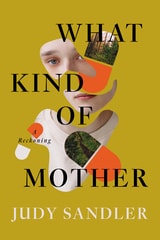
What Kind of Mother
A ReckoningJudy Sandler
West Virginia University Press, 2026
A mother’s memoir that reckons with her son’s descent into severe mental illness. What appears to be substance use disorder in high school later becomes a dual diagnosis as bipolar disorder emerges. Her son soon grows disillusioned with prescribed pharmaceuticals and participates in a residential treatment program that assists people in forgoing medication altogether. However, the program ultimately ejects him from the community for the very behaviors that the medication once managed. The book chronicles Sandler's initial denial of her truth, her painful awakening to mental illness in her family, and her eventual acceptance that she cannot save her son—only he can save himself.