Results by title

4 books match the query 'Alternative agriculture'
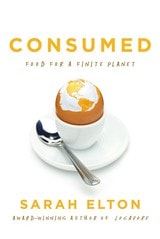
cover of Consumed: Food for a Finite Planet

Consumed

Food for a Finite Planet

Sarah Elton

University of Chicago Press, 2013
By 2050, the world population is expected to reach nine billion. And the challenge of feeding this rapidly growing population is being made greater by climate change, which will increasingly wreak havoc on the way we produce our food. At the same time, we have lost touch with the soil—few of us know where our food comes from, let alone how to grow it—and we are at the mercy of multinational corporations who control the crops and give little thought to the damage their methods are inflicting on the planet. Our very future is at risk.
           
In Consumed, Sarah Elton walks fields and farms on three continents, not only investigating the very real threats to our food, but also telling the little-known stories of the people who are working against time to create a new and hopeful future. From the mountains of southern France to the highlands of China, from the crowded streets of Nairobi to the banks of the St. Lawrence River in Quebec, we meet people from all walks of life who are putting together an alternative to the omnipresent industrial food system. In the arid fields of rural India we meet a farmer who has transformed her community by selling organic food directly to her neighbors. We visit a laboratory in Toronto where scientists are breeding a new kind of rice seed that they claim will feed the world. We learn about Italy’s underground food movement; how university grads are returning to the fields in China, Greece, and France; and how in Detroit, plots of vacant land planted with kale and carrots can help us see what’s possible.
           
Food might be the problem, but as Elton shows, it is also the solution. The food system as we know it was assembled in a few decades—and if it can be built that quickly, it can be reassembled and improved in the same amount of time. Elton here lays out the targets we need to meet by the year 2050. The stories she tells give us hope for avoiding a daunting fate and instead help us to believe in a not-too-distant future when we can all sit at the table.

[more]
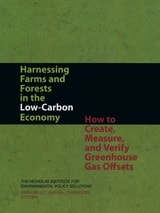
cover of Harnessing Farms and Forests in the Low-Carbon Economy: How to Create, Measure, and Verify Greenhouse Gas Offsets

Harnessing Farms and Forests in the Low-Carbon Economy

How to Create, Measure, and Verify Greenhouse Gas Offsets

Nicholas Institute for Environmental Policy Solutions and Zach Willey and Bill Chameides, editors, eds.

Duke University Press, 2007

As the United States moves to a low-carbon economy in order to combat global warming, credits for reducing carbon dioxide emissions will increasingly become a commodity that is bought and sold on the open market. Farmers and other landowners can benefit from this new economy by conducting land management practices that help sequester carbon dioxide, creating credits they can sell to industry to “offset” industrial emissions of greenhouse gases.

This guide is the first comprehensive technical publication providing direction to landowners for sequestering carbon and information for traders and others who will need to verify the sequestration. It will provide invaluable direction to farmers, foresters, land managers, consultants, brokers, investors, regulators, and others interested in creating consistent, credible greenhouse gas offsets as a tradable commodity in the United States.

The guide contains a non-technical section detailing methodologies for scoping of the costs and benefits of a proposed project, quantifying offsets of various sorts under a range of situations and conditions, and verifying and registering the offsets. The technical section provides specific information for quantifying, verifying, and regulating offsets from agricultural and forestry practices.

Visit the Nicholas Institute for Environmental Policy Solutions website for audio from the press conference announcing the book.
Read the press release announcing the book.
[more]
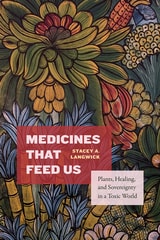
cover of Medicines That Feed Us: Plants, Healing, and Sovereignty in a Toxic World

Medicines That Feed Us

Plants, Healing, and Sovereignty in a Toxic World

Stacey A. Langwick

Duke University Press, 2026
Medicines That Feed Us examines the relationship between toxicity and remedy in the face of the intertwined health and environmental crises that are shaping life in the twenty-first century. Through ethnographic work with organizations that use plant-based healing and sustainable farming practices in Tanzania, Stacey A. Langwick asks what it means to heal in a toxic world. Expanding on the Kiswahili phrase dawa lishe, or medicines that feed us, Langwick describes the potency of plant medicines in therapeutic projects that address bodies and environments together. These efforts challenge biomedicine’s intense focus on the internal dynamics of biological bodies and its externalization of the modern agricultural, industrial, and land management practices that impact it. Dawa lishe is not a call to return to the traditional, but an invitation to join contemporary experiments in how we know, use, and govern therapeutic plants. Medicines That Feed Us offers alternative ways of living and dying, growing and decaying, composing and decomposing which acknowledge the interdependence of bodily and ecological health.
[more]
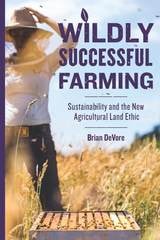
cover of Wildly Successful Farming: Sustainability and the New Agricultural Land Ethic

Wildly Successful Farming

Sustainability and the New Agricultural Land Ethic

Brian DeVore

University of Wisconsin Press, 2020

Wildly Successful Farming tells the stories of farmers across the American Midwest who are balancing profitability and food production with environmental sustainability and a passion for all things wild. They are using innovative techniques and strategies to develop their "wildly" successful farms as working ecosystems. Whether producing grain, vegetables, fruit, meat, or milk, these next-generation agrarians look beyond the bottom line of the spreadsheet to the biological activity on the land as key measures of success.

Written by agricultural journalist Brian DeVore, the book is based on interviews he has conducted at farms, wildlife refuges, laboratories, test plots, and gardens over the past twenty-five years. He documents innovations in cover cropping, managed rotational grazing, perennial polyculture, and integrated pest management. His accounts provide insight into the impacts regenerative farming methods can have on wildlife, water, landscape, soils, and rural communities and suggest ways all of us can support wildly successful farmers.
[more]