Results by title

7 books match the query 'Alzheimer's & Dementia'
cover of Alzheimer's and Dementia: A Practical and Legal Guide for Nevada Caregivers, Revised and Updated

Alzheimer's and Dementia

A Practical and Legal Guide for Nevada Caregivers, Revised and Updated

Kim Boyer

University of Nevada Press, 2025

Individuals or families receiving a diagnosis of Alzheimer’s disease, dementia, or brain damage from a stroke face daunting questions: how to provide care when the patient can no longer manage his or her own affairs, how to protect their rights and property, where to go for help, and how to cope with the day-to-day challenges of fading memory and diminished cognition. First published in 2011, Boyer and Shapiro’s Alzheimer’s and Dementia offers a comprehensive guide to families and professionals taking on the role of caregiver. The newly revised and updated edition offers practical strategies for dealing with Alzheimer's or dementia, including new research and treatment updates.

The book, specific to Nevada, covers state laws including Medicaid planning, asset protection, guardianship, probate, advance directives, and patient rights. It also addresses estate and financial planning, and provides a detailed list of resources available to assist caregivers. Written by an elder law attorney and a gerontologist, Alzheimer’s and Dementiaoffers insights from two professionals who provide practical solutions to common obstacles faced by caregivers, helping them support the needs and overcome the challenges facing those coping with these diseases.

Boyer and Shapiro coauthored The Essential Eldercare Handbook for Nevada also available from the University of Nevada Press.
 
[more]
cover of Alzheimer’s and Dementia: A Practical and Legal Guide for Nevada Caregivers

Alzheimer’s and Dementia

A Practical and Legal Guide for Nevada Caregivers

Kim Boyer

University of Nevada Press, 2012
            Individuals or families receiving a diagnosis of Alzheimer’s disease, dementia, or brain damage from a stroke face daunting questions: how to provide for care when the patient can no longer manage his or her own affairs, how to protect their rights and property, where to go for help, and how to cope with the day-to-day challenges of fading memory and diminished cognition. Here is a comprehensive guide specifically for aging Nevadans and for family members, professional caregivers, and health care workers who help them.
The authors—an elder law attorney and a specialist in geriatric care management—offer readers useful advice from the perspective of Nevada resources and Nevada law, addressing such topics as the legal and financial steps that patients and their families can take to protect themselves and their assets, paying for long-term care, arranging for guardianship, and tending to the details that follow the death of a loved one.
 This edition, updated in 2011, includes information about recent changes in laws that affect seniors, new research and treatments, and a new guide to resources throughout the state that can provide assistance to people afflicted with these medical conditions.
[more]
cover of I Can't Remember: Family Stories of Alzheimer's Disease

I Can't Remember

Family Stories of Alzheimer's Disease

Esther Strauss Smoller

Temple University Press, 1997

I Can't Remember is an intimate photo essay of four families and their process of coping with Alzheimer's disease -- a process of coming to terms with the practical and emotional consequences of a disease that changes the entire family dynamic. Family members tell their stories of first denying that their loved one cold be suffering from Alzheimer's, then dealing with the changing relationships among family members and the intensifying emotions, as old family troubles are stirred up and new feelings of despair and love appear.

Photographs and  personal narratives are woven together to show both the unpleasant and the beautiful sides of the struggle for connection between spouses and across generations. Smoller has a gift for capturing people as they interact, whether it's arguing around the kitchen table or dancing cheek to cheek.

Each family's story is different, but all four families share common pain and frustration. A highway patrolman who has early onset Alzheimer's describes what it is like to have Alzheimer's. His wife tells a parallel story of life together after hearing the diagnosis. A daughter gives the following account of her mother: "I though that it would be helpful if mother spent time in my home in Colorado. Before this visit, I was in denial, convinced that she suffered from depression and not Alzheimer's disease. ... On the plane trip to Colorado, I was brought into the stark, cold reality that Mom had Alzheimer's. She did not know where she was or where she was going. Upon arrival, she did not recognize my home, although she had visited me numerous times in the past. She tried sleeping in the bathtub the first night."

Another daughter relates that she was unaware of the onset of Alzheimer's in her mother, because her mother was such a "wonderful actress." Eventually the memory problems were no longer confined to where things belonged in the kitchen, but extended into driving off at random, driving in circles in a parking lot in the middle of the night or as much as 75 miles away from home.

I Can't Remember gives an intimate glimpse into the hearts and minds of caregivers and patients. Supportive social networks are essential for healthy life. This book provides the impetus caregivers need to develop contacts that can provide support. Smoller offers a glimpse of the frustration and losses faced by those who deal with Alzheimer's, as well as the potential to transcend those losses -- even is only for a time -- through love and hope.
[more]
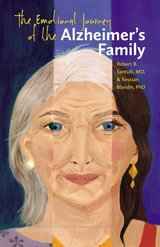
cover of The Emotional Journey of the Alzheimer's Family

The Emotional Journey of the Alzheimer's Family

Robert B. Santulli and Kesstan Blandin

Dartmouth College Press, 2015
Alzheimer’s disease is a growing public health crisis. According to the Alzheimer’s Association, there are 5.4 million victims of this disease; by 2050, there will be close to 15 million people who suffer from this debilitating disorder of memory, thinking, personality, and functioning. The disease profoundly affects immediate family members, close friends, and neighbors. These people—the Alzheimer’s family—undergo tremendous psychological and emotional change as they witness the cruel and relentless progression of the disease in their loved one. Incorporating over thirty years of experience with Alzheimer’s patients and their families with current medical knowledge, the authors chart the complex emotional journey of the Alzheimer’s family from the onset of the disease through the death of the loved one. They discuss the anger that rises in the face of discordant views of the disease, the defenses that emerge when family members are unwilling to accept a dementia diagnosis, and the common emotions of anxiety, guilt, anger, and shame. They focus especially on grief as the core response to losing a loved one to dementia, and describe the difficult processes of adaptation and acceptance, which lead to personal growth. Final chapters emphasize the importance of establishing a care community and how to understand and cope with personal stress. This volume will be useful to medical professionals and ordinary people close to or caring for a person with dementia.
[more]
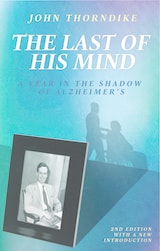
cover of The Last of His Mind, Second Edition: A Year in the Shadow of Alzheimer’s

The Last of His Mind, Second Edition

A Year in the Shadow of Alzheimer’s

John Thorndike

Ohio University Press, 2021
The second, expanded edition of this acclaimed memoir by an Alzheimer’s caregiver living with his father during his final year includes a new introduction that illustrates the immense toll of the disease, important lessons from the author’s experience, and a readers' guide. Joe Thorndike was managing editor of Life at the height of its popularity immediately following World War II. He was the founder of American Heritage and Horizon magazines, the author of three books, and the editor of a dozen more. But at age ninety-two, in the space of six months he stopped reading or writing or carrying on detailed conversations. He could no longer tell time or make a phone call. He was convinced that the governor of Massachusetts had come to visit and was in the refrigerator. Over six million Americans suffer from Alzheimer’s, and like many of them, Joe Thorndike’s one great desire was to remain in his own house. To honor his wish, his son John left his own home and moved into his father’s upstairs bedroom on Cape Cod. For a year, in a house filled with file cabinets, photos, and letters, John explored his father’s mind, his parents’ divorce, and his mother’s secrets. The Last of His Mind is the bittersweet account of a son’s final year with his father and a candid portrait of an implacable disease. It’s the ordeal of Alzheimer’s that draws father and son close, closer than they have been since John was a boy. At the end, when Joe’s heart stops beating, John’s hand is on his chest, and a story of painful decline has become a portrait of deep family ties, caregiving, and love.
[more]
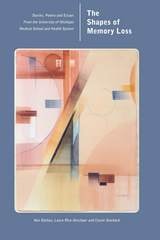
cover of The Shapes of Memory Loss: Stories, Poems and Essays from the University of Michigan Medical School and Health System

The Shapes of Memory Loss

Stories, Poems and Essays from the University of Michigan Medical School and Health System

Michigan Publishing Services, 2013

“Shapes of Memory Loss” is a collection of poetry, fiction, and narrative written by and about people with cognitive impairment or dementia. The authors, all affiliated with the University of Michigan Health System, come forward to share their personal experience as they “navigate this unknown territory”. These pieces offer the reader a view into the often isolated and not fully understood journey that those with memory loss and cognitive impairment are on. The book serves as an educational and support tool for anyone who has been touched by dementia, memory loss, and other related disorders. Healthcare professionals will gain information and insight about these disorders presented from the perspective of patients and families affected by them.
[more]
cover of Your Own Will Leave You: My Mother's Dementia

Your Own Will Leave You

My Mother's Dementia

Manash Firaq Bhattacharjee

Temple University Press, 2026

“Memory’s barriers are without barriers,” writes Manash Firaq Bhattacharjee in the opening of his touching and thoughtful memoir, Your Own Will Leave You. Bhattacharjee eloquently reflects on family, care, and memory as he chronicles his experiences with his elderly mother who suffers from dementia. Working from his journal, Bhattacharjee ruminates on the ways we understand dementia and memory as well as end-of-life issues. He is not only a loving son, but also an Indian with a universal sensibility who turns to ancient and contemporary thinkers that inform his perspective.

Bhattacharjee focuses on the last months of his mother’s life and her changing demeanor—her stubbornness, humor, and vulnerability. He traces her interactions with family members, neighbors, and caregivers, while also addressing burden-of-care issues. Recounting his moments of grief and guilt with candor, Bhattacharjee also re-evaluates how Western culture prejudices popular perceptions of mental illness.

Lyrical, penetrating, occasionally aphoristic, and full of insights, Your Own Will Leave You is a heartfelt, and at times heartbreaking, memoir and a warm elegy for the author’s late mother. 

[more]