Results by title
21 books match the query 'American Indians'

American Indians
William T. Hagan
University of Chicago Press, 1993
"The author has reduced the long story—often as tangled as a five-year-old's fishing line—into a brief, clear, and highly interesting book. . . . A remarkable achievement."—San Francisco Chronicle
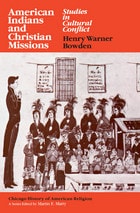
American Indians and Christian Missions
Studies in Cultural ConflictHenry Warner Bowden
University of Chicago Press, 1985
"Bowden makes a radical departure from the traditional approach. Drawing on the theories and findings of anthropologists, archaeologists, and historians, he presents Indian-missionary relations as a series of cultural encounters, the outcomes of which were determined by the content of native beliefs, the structure of native religious institutions, and external factors such as epidemic diseases and military conflicts, as well as by the missionaries' own resources and abilities. The result is a provocative, insightful historical essay that liberates a complex subject from the narrow perimeters of past discussions and accords it an appropriate richness and complexity. . . . For anyone with an interest in Indian-missionary relations, from the most casual to the most specialized, this book is the place to begin."—Neal Salisbury, Theology Today
"If one wishes to read a concise, thought-provoking ethnohistory of Indian missions, 1540-1980, this is it. Henry Warner Bowden's history, perhaps for the first time, places the sweep of Christian evangelism fully in the context of vigorous, believable, native religions."—Robert H. Keller, Jr., American Historical Review

American Indians and National Forests
Theodore Catton
University of Arizona Press, 2016
Marginalized in American society and long denied a seat at the table of public land stewardship, American Indian tribes have at last taken their rightful place and are making themselves heard. Weighing indigenous perspectives on the environment is an emerging trend in public land management in the United States and around the world. The Forest Service has been a strong partner in that movement over the past quarter century.
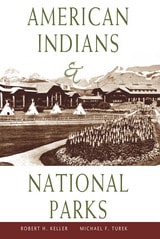
American Indians and National Parks
Robert H. Keller and Michael F. Turek
University of Arizona Press, 1998

American Indians and the American Dream
Policies, Place, and Property in MinnesotaKasey R. Keeler
University of Minnesota Press, 2023
Understanding the processes and policies of urbanization and suburbanization in American Indian communities
Nearly seven out of ten American Indians live in urban areas, yet studies of urban Indian experiences remain scant. Studies of suburban Natives are even more rare. Today’s suburban Natives, the fastest-growing American Indian demographic, highlight the tensions within federal policies working in tandem to move and house differing groups of people in very different residential locations. In American Indians and the American Dream, Kasey R. Keeler examines the long history of urbanization and suburbanization of Indian communities in Minnesota.
At the intersection of federal Indian policy and federal housing policy, American Indians and the American Dream analyzes the dispossession of Indian land, property rights, and patterns of home ownership through programs and policies that sought to move communities away from their traditional homelands to reservations and, later, to urban and suburban areas. Keeler begins this analysis with the Homestead Act of 1862, then shifts to the Indian Reorganization Act in the early twentieth century, the creation of Little Earth in Minneapolis, and Indian homeownership during the housing bubble of the early 2000s.
American Indians and the American Dream investigates the ways American Indians accessed homeownership, working with and against federal policy, underscoring American Indian peoples’ unequal and exclusionary access to the way of life known as the American dream.
Cover alt text: Vintage photo of Native person bathing smiling child in the sink of a midcentury kitchen. Title in yellow.
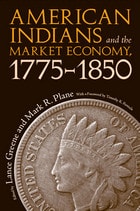
American Indians and the Market Economy, 1775-1850
Edited by Lance Greene and Mark R. Plane,with a foreword by Timothy K. Perttula
University of Alabama Press, 2011
The last quarter of the 18th century was a period of extensive political, economic, and social change in North America, as the continent-wide struggle between European superpowers waned. Native groups found themselves enmeshed in the market economy and new state forms of control, among other new threats to their cultural survival. Native populations throughout North America actively engaged the expanding marketplace in a variety of economic and social forms. These actions, often driven by and expressed through changes in material culture, were supported by a desire to maintain distinctive ethnic identities.
Illustrating the diversity of Native adaptations in an increasingly hostile and marginalized world, this volume is continental in scope—ranging from Connecticut to the Carolinas, and westward through Texas and Colorado. Calling on various theoretical perspectives, the authors provide nuanced perspectives on material culture use as a manipulation of the market economy. A thorough examination of artifacts used by Native Americans, whether of Euro-American or Native origin, this volume provides a clear view of the realities of the economic and social interactions between Native groups and the expanding Euro-American population and the engagement of these Native groups in determining their own fate.
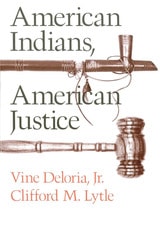
American Indians, American Justice
By Vine Deloria, Jr., and Clifford M. Lytle
University of Texas Press, 1983
Baffled by the stereotypes presented by Hollywood and much historical fiction, many other Americans find the contemporary American Indian an enigma. Compounding their confusion is the highly publicized struggle of the contemporary Indian for self-determination, lost land, cultural preservation, and fundamental human rights—a struggle dramatized both by public acts of protest and by precedent-setting legal actions. More and more, the battles of American Indians are fought—and won—in the political arena and the courts.
American Indians, American Justice explores the complexities of the present Indian situation, particularly with regard to legal and political rights. It is the first book to present an overview of federal Indian law in language readably accessible to the layperson. Remarkably comprehensive, it is destined to become a standard sourcebook for all concerned with the plight of the contemporary Indian.
Beginning with an examination of the historical relationship of Indians and the courts, the authors describe how tribal courts developed and operate today, and how they relate to federal and state governments. They define such key legal concepts as tribal sovereignty and Indian Country. By comparing and contrasting the workings of Indian and non-Indian legal institutions, the authors illustrate how Indian tribes have adapted their customs, values, and institutions to the demands of the modern world. Describing the activities of attorneys and Indian advocates in asserting and defending Indian rights, they identify the difficulties typically faced by Indians in the criminal and civil legal arenas and explore the public policy and legal rights of Indians as regards citizenship, voting rights, religious freedom, and basic governmental services.
American Indians
Fourth EditionWilliam T. Hagan and Daniel M. Cobb
University of Chicago Press, 2012
American Indians
Fourth EditionWilliam T. Hagan and Daniel M. Cobb
University of Chicago Press, 2012
William Hagan’s classic American Indians has become standard reading in the field of Native American history. Daniel M. Cobb has taken over the task of updating and revising the material, allowing the book to respond to the times. Spanning the arrival of white settlers in the Americas through the twentieth century, this concise account includes more than twenty new maps and illustrations, as well as a bibliographic essay that surveys the most recent research in Indian-white relations. With an introduction by Cobb, and a foreword by eminent historian Patricia Nelson Limerick, this fourth edition marks the fiftieth anniversary of the original publication of American Indians.
American Indians
The First of This LandC. Matthew Snipp
Russell Sage Foundation, 1989

Bad Medicine
Settler Colonialism and the Institutionalization of American IndiansSarah A. Whitt
Duke University Press, 2025

Indigenomicon
American Indians, Video Games, and the Structures of DispossessionJodi A. Byrd
Duke University Press, 2025
Interrupted Odyssey
Ulysses S. Grant and the American IndiansMary Stockwell
Southern Illinois University Press, 2018
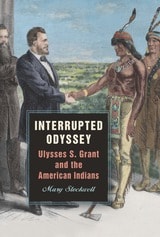
In the late 1860s, before becoming president, Grant collaborated with Ely Parker, a Seneca Indian who became his first commissioner of Indian affairs, on a plan to rescue the tribes from certain destruction. Grant hoped to save the Indians from extermination by moving them to reservations, where they would be guarded by the U.S. Army, and welcoming them into the nation as American citizens. By so doing, he would restore the executive branch’s traditional authority over Indian policy that had been upended by Jackson.
In Interrupted Odyssey, Stockwell rejects the common claim in previous Grant scholarship that he handed the reservations over to Christian missionaries as part of his original policy. In part because Grant’s plan ended political patronage, Congress overturned his policy by disallowing Army officers from serving in civil posts, abandoning the treaty system, and making the new Board of Indian Commissioners the supervisors of the Indian service. Only after Congress banned Army officers from the Indian service did Grant place missionaries in charge of the reservations, and only after the board falsely accused Parker of fraud before Congress did Grant lose faith in his original policy.
Stockwell explores in depth the ousting of Parker, revealing the deep-seated prejudices that fueled opposition to him, and details Grant’s stunned disappointment when the Modoc murdered his peace commissioners and several tribes—the Comanche, Kiowa, Cheyenne, and Sioux—rose up against his plans for them.
Though his dreams were interrupted through the opposition of Congress, reformers, and the tribes themselves, Grant set his country firmly toward making Indians full participants in the national experience. In setting Grant’s contributions against the wider story of the American Indians, Stockwell’s bold, thoughtful reappraisal reverses the general dismissal of Grant’s approach to the Indians as a complete failure and highlights the courage of his policies during a time of great prejudice.
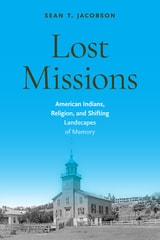
Lost Missions
American Indians, Religion, and Shifting Landscapes of MemorySean T. Jacobson
University of Massachusetts Press, 2026
Tracing how shuttered mission schools became contested commemorative landscapes
During the Early Republic and Jacksonian eras, Euro-American colonists and Native nations in the South and Old Northwest established mission schools intended to Christianize Indigenous peoples. In Lost Missions, Sean T. Jacobson recovers the histories and afterlives of these institutions, arguing that they played a far more consequential role in Native–settler relations than scholars have previously acknowledged. Mission schools advanced a spiritual vision of a multiethnic Christian America—one that ultimately collapsed amid the federally sponsored Indian Removal campaigns of the 1830s and 1840s.
Following the closure of these schools, their physical and symbolic landscapes became powerful sites of memory. Euro-American Christians later transformed former missions into commemorative spaces that celebrated “frontier” piety and national expansion. Through monuments, pageantry, and local histories, Protestant and Catholic Americans alike recast missionary labor as a foundational component of American nation-building. In doing so, these narratives framed the Christianization of Native peoples as a benevolent civilizing project, one that implicitly—and sometimes explicitly—sanitized the coercion, dispossession, and violence that accompanied westward expansion and the forced removal of Indigenous nations.
By the late twentieth century, however, these commemorative narratives faded. Suburban development, commercialization, and shifting cultural priorities rendered many mission sites once again “lost,” stripped of the civic meaning they once held. Yet Jacobson shows that these landscapes still speak, especially when viewed from Indigenous perspectives. Reinterpreted through Native histories of endurance and survival, former missions reveal counternarratives of persistence amid profound loss. As tribal nations increasingly engage with these sites today, Lost Missions probes their contested status as places of memory and conscience, illuminating how public history continues to shape and challenge understandings of America’s colonial past.
Origins of the American Indians
European Concepts, 1492-1729By Lee E. Huddleston
University of Texas Press, 1967
The American Indian—origin, culture, and language—engaged the best minds of Europe from 1492 to 1729. Were the Indians the result of a co-creation? Were they descended from the Ten Lost Tribes of Israel? Could they have emigrated from Carthage, Phoenicia, or Troy? All these and many other theories were proposed.
How could scholars account for the multiplicity of languages among the Indians, the differences in levels of culture? And how did the Indian arrive in America—by using as a bridge a now-lost continent or, as was later suggested by some persons in the light of an expanding knowledge of geography, by using the Bering Strait as a migratory route?
Most of the theories regarding the American Indian were first advanced in the sixteenth century. In this distinctive book Lee E. Huddleston looks carefully into those theories and proposals. From many research sources he weaves an historical account that engages the reader from the very first.
The two most influential men in an early-developing controversy over Indian origins were Joseph de Acosta and Gregorio García. Approaching the subject with restraint and with a critical eye, Acosta, in 1590, suggested that the presence of diverse animals in America indicated a land connection with the Old World. On the other hand, García accepted several theories as equally possible and presented each in the strongest possible light in his Origen de los indios of 1607.
The critical position of Acosta and the credulous stand of García were both developed in Spanish writing in the seventeenth century. The Acostans settled on an Asiatic derivation for the Indians; the Garcians continued to accept most sources as possible. The Garcian position triumphed in Spain, as was shown by the republication of García’s Origen in 1729 with considerable additions consistent within the original framework.
Outside of Spain, Acosta was the more influential of the two. His writings were critical in the thinking of such men as Joannes de Laet (who bested Grotius in their polemic on Indian origins), Georg Horn, and Samuel Purchas. By the end of the seventeenth century the Acostans of Northern Europe had begun to apply physical characteristics to the determination of Indian origins, and by the early eighteenth century these new criteria were beginning to place the question of Indian origins on a more nearly scientific level.

Paths of Life
American Indians of the Southwest and Northern MexicoEdited by Thomas E. Sheridan and Nancy J. Parezo
University of Arizona Press, 1996
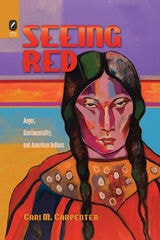
Seeing Red
Anger, Sentimentality, and American IndiansCari M. Carpenter
The Ohio State University Press, 2008

Seeing Red—Hollywood's Pixeled Skins
American Indians and FilmLeAnne Howe
Michigan State University Press, 2013
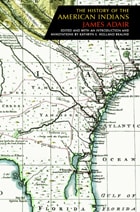
The History of the American Indians
A Critical EditionJames Adair; edited, introduced, and annotated by Kathryn E. Holland Braund
University of Alabama Press, 2009
A fully annotated edition of a classic work detailing the cultures of five southeastern American Indian tribes during the Contact Period
James Adair was an Englishman who lived and traded among the southeastern Indians for more than 30 years, from 1735 to 1768. During that time he covered the territory from the Appalachian Mountains to the Mississippi River. He encountered and lived among Indians, advised governors, spent time with settlers, and worked tirelessly for the expansion of British interests against the French and the Spanish. Adair’s acceptance by the Creeks, Choctaws, Cherokees, and Chickasaws provided him the opportunity to record, compare, and analyze their cultures and traditions.Adair’s written work, first published in England in 1775, is considered one of the finest histories of the Native Americans. His observations provide one of the earliest and what many modern scholars regard as the best account of southeastern Indian cultures. This edition adheres to current standards of literary editing, following the original closely, and provides fully annotated and indexed critical apparatus.
The Worlds between Two Rivers
Perspectives on American Indians in IowaGretchen M. Bataille
University of Iowa Press, 2000
We Are Not a Vanishing People
The Society of American Indians, 1911–1923Thomas Constantine Maroukis
University of Arizona Press, 2021
Historian Thomas Constantine Maroukis discusses the goals, strategies, successes, and failures of the Indigenous intellectuals who came together to form the SAI. They engaged in lobbying, producing publications, informing the media, hundreds of speaking engagements, and annual conferences to argue for reform. Unfortunately, the forces of this era were against reforming federal policies: The group faced racism, a steady stream of negative stereotyping as a so-called vanishing race, and an indifferent federal bureaucracy. They were also beset by internal struggles, which weakened the organization.
This work sheds new light on the origins of modern protest in the twentieth century, and it shows how the intellectuals and activists associated with the SAI were able to bring Indian issues before the American public, challenging stereotypes and the “vanishing people” trope. Maroukis argues that that the SAI was not an assimilationist organization; they were political activists trying to free Indians from government wardship while maintaining their cultural heritage.