Results by title
6 books match the query 'American Institution'
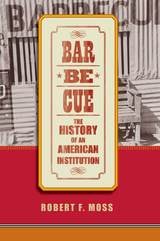
Barbecue
The History of an American InstitutionRobert F. Moss
University of Alabama Press, 2010
The history of barbecue in the United States has until now remained virtually untold. Barbecue has a long, rich history—a history that could be found only through scattered references in old letters, journals, newspapers, diaries, and travel narratives until this book was written.
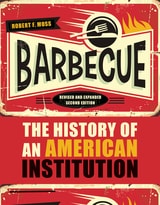
Barbecue
The History of an American Institution, Revised and Expanded Second EditionRobert F. Moss
University of Alabama Press, 2020
The definitive history of an iconic American food, with new chapters, sidebars, and updated historical accounts.
Expert Robert F. Moss researched hundreds of sources—newspapers, letters, journals, diaries, and travel narratives—to document the origins and evolution of barbecue from its origins among Native Americans to its present status as an icon of American culture. In this definitive guide, he maps out the development of the rich array of regional barbecue styles, chronicles the rise of barbecue restaurants, and profiles the famed pitmasters who made the tradition what it is today.
Barbecue is the story not just of a dish but also of a social institution that helped shape many regional cultures of the United States. The history begins with British colonists’ adoption of barbecuing techniques from Native Americans in the 17th and 18th centuries, moves to barbecue’s establishment as the preeminent form of public celebration in the 19th century, and is carried through to barbecue’s ubiquitous standing today.
From the very beginning, barbecues were powerful social magnets, drawing together people from a wide range of classes and geographic backgrounds. Barbecue played a key role in three centuries of American history, both reflecting and influencing the direction of an evolving society. By tracing the story of barbecue from its origins to today, Barbecue: The History of an American Institution traces the very thread of American social history.
Moss has made significant updates in this new edition, offering a wealth of new historical research, sources, illustrations, and anecdotes.
Deconstruction
An American InstitutionGregory Jones-Katz
University of Chicago Press, 2021
Deconstruction begins well before Jacques Derrida’s initial American presentation of his deconstructive work in a famed lecture at Johns Hopkins University in 1966 and continues through several decades of theoretic growth and tumult. While much of the subsequent story remains focused, inevitably, on Yale University and the personalities and curriculum that came to be lumped under the “Yale school” umbrella, Deconstruction makes clear how crucial feminism, queer theory, and gender studies also were to the lifeblood of this mode of thought. Ultimately, Jones-Katz shows that deconstruction in the United States—so often caricatured as a French infection—was truly an American phenomenon, rooted in our preexisting political and intellectual tensions, that eventually came to influence unexpected corners of scholarship, politics, and culture.
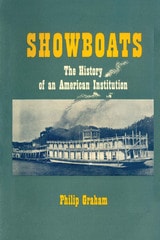
Showboats
The History of an American InstitutionBy Philip Graham
University of Texas Press, 1951
This book is a delightful and authoritative record of America's showboats from the first one, launched in 1831, to the last, ultimately tied up at a St. Louis dock.
It is also a record of the men and women who built and loved these floating theaters, of those who performed on their stages, and of the thousands who sat in their auditoriums.
And, lastly, it is a record of a genuine folk institution, as American as catfish, which for more than a century did much to relieve the social and cultural starvation of our vast river frontier.
For these showboats brought their rich cargoes of entertainment—genuine laughter, a glimpse of other worlds, a respite from the grinding hardship of the present, emotional relaxation—to valley farmers, isolated factory workers and miners, and backwoodsmen who otherwise would have lacked all such opportunities.
To the more privileged , the showboats brought pleasant reminder of a half-forgotten culture. They penetrated regions where churches and school had not gone, and where land theaters were for generations to be impossible. Like circuit preachers, they carried their message to the outer fringes of American civilization. In spite of many faults, it was a good message.
The frontier had created this institution to fill a genuine need, and it lasted only until other and better means of civilizing these regions could reach them—good roads, automobiles, motion pictures, schools, churches, newspapers, and theaters. But although the showboats have passed into history, they have left a rich legacy. As long as the Mississippi flows into the Gulf, their story will fire the imagination of Americans.
Showboating has become so legendary that few Americans know what this unique institution was really like. In Showboats, at long last, the true story emerges. It differs in many important respects from the motion picture and fictional versions to which Americans are accustomed, but it is not a whit the less glamorous.
Philip Graham has told his story with imagination, genuine insight, and complete devotion to facts. No one who is interested in America's past should fail to read it.
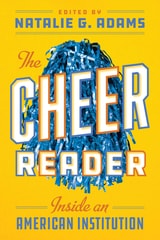
The Cheer Reader
Inside an American InstitutionNatalie G. Adams
University of Texas Press, 2026
Wide-ranging essays on cheerleading, from the pep rally to the NFL sidelines to All-Star competitions, and why it matters.
Cheer is deeply associated with a wholesome, simple Americana. Yet this often clichéd image belies its complex history and current status as a global industry made up of diverse participants and forms. Indeed, cheerleading—its culture, controversies, and evolution—has always offered a revealing lens on race, class, gender, and sexuality in American society..
Cheerleading was born in 1869 as a diversion for Ivy League men. The Cheer Reader collects fourteen wide-ranging essays on what happened next and why it matters: how cheer became feminized, sexualized, professionalized, even radicalized. Contributors examine the role of cheer in the Civil Rights Movement, a landmark student free-speech case, and the emergence of competitive-only and queer cheer teams. Other essays consider cheer’s quest for sport legitimacy, social media “cheerlebrities” and eating disorders, and the working conditions of NFL and NBA cheerleaders. Amid these tensions between empowerment and objectification, cheer is only getting more popular, with some seven million participants worldwide. The Cheer Reader is a nuanced account of the activity they share and what it means today.
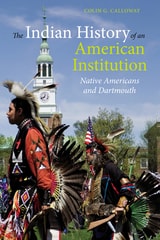
The Indian History of an American Institution
Native Americans and DartmouthColin G. Calloway
Dartmouth College Press, 2010