Results by title

5 books match the query 'American Memory'
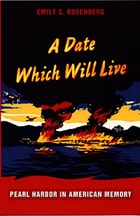
cover of A Date Which Will Live: Pearl Harbor in American Memory

A Date Which Will Live

Pearl Harbor in American Memory

Emily S. Rosenberg

Duke University Press, 2005

December 7, 1941—the date of Japan’s surprise attack on the U.S. fleet at Pearl Harbor—is "a date which will live" in American history and memory, but the stories that will live and the meanings attributed to them are hardly settled. In movies, books, and magazines, at memorial sites and public ceremonies, and on television and the internet, Pearl Harbor lives in a thousand guises and symbolizes dozens of different historical lessons. In A Date Which Will Live, historian Emily S. Rosenberg examines the contested meanings of Pearl Harbor in American culture.

Rosenberg considers the emergence of Pearl Harbor’s symbolic role within multiple contexts: as a day of infamy that highlighted the need for future U.S. military preparedness, as an attack that opened a "back door" to U.S. involvement in World War II, as an event of national commemoration, and as a central metaphor in American-Japanese relations. She explores the cultural background that contributed to Pearl Harbor’s resurgence in American memory after the fiftieth anniversary of the attack in 1991. In doing so, she discusses the recent “memory boom” in American culture; the movement to exonerate the military commanders at Pearl Harbor, Admiral Husband Kimmel and General Walter Short; the political mobilization of various groups during the culture and history "wars" of the 1990s, and the spectacle surrounding the movie Pearl Harbor. Rosenberg concludes with a look at the uses of Pearl Harbor as a historical frame for understanding the events of September 11, 2001.
[more]
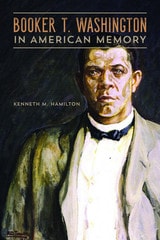
cover of Booker T. Washington in American Memory

Booker T. Washington in American Memory

Kenneth M. Hamilton

University of Illinois Press, 2017
Since the 1960s, many historians have condemned Booker T. Washington as a problematic, even negative, influence on African American progress. This attitude dramatically contrasts with the nationwide outpouring of grief and reverence that followed Washington's death in 1915. Kenneth M. Hamilton describes how, when, where, and why Americans commemorated the life of Booker T. Washington. For months following his death, tens of thousands of Americans, especially blacks, honored his memory. Their memorials revealed that Washington enjoyed widespread national support for his vision of America and the programs that he imparted to achieve his aspirations. Their actions and articulations provide rich insight into how a cross section of Washington's contemporaries viewed him. From private messages of solace to public pronouncements, countless Americans portrayed him as a revered national icon. Among other characteristics, commemorates voiced their appreciation of his humanitarianism, humility, nationalism, perseverance, philanthropy, progressivism, spirituality, and wisdom. Washington was the leading advocate of the Yankee Protestantism Ethic, which promoted education, and personal qualities such as pragmatism, perseverance, cleanliness, thrift, and the dignity of labor among African Americans.
[more]
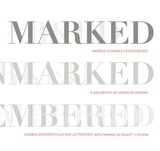
cover of Marked, Unmarked, Remembered: A Geography of American Memory

Marked, Unmarked, Remembered

A Geography of American Memory

Andrew Lichtenstein

West Virginia University Press, 2017

From Wounded Knee to the Edmund Pettus Bridge, and from the Upper Big Branch mine disaster to the Trail of Tears, Marked, Unmarked, Remembered presents photographs of significant sites from US history, posing unsettling questions about the contested memory of traumatic episodes from the nation’s past. Focusing especially on landscapes related to African American, Native American, and labor history, Marked, Unmarked, Remembered reveals new vistas of officially commemorated sites, sites that are neglected or obscured, and sites that serve as a gathering place for active rituals of organized memory.


These powerful photographs by award-winning photojournalist Andrew Lichtenstein are interspersed with short essays by some of the leading historians of the United States. The book is introduced with substantive meditations on meaning and landscape by Alex Lichtenstein, editor of the American Historical Review, and Edward T. Linenthal, former editor of the Journal of American History. Individually, these images convey American history in new and sometimes startling ways. Taken as a whole, the volume amounts to a starkly visual reckoning with the challenges of commemorating a violent and conflictual history of subjugation and resistance that we forget at our peril.
 
[more]
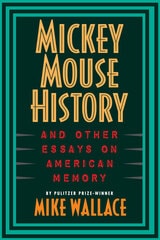
cover of Mickey Mouse History and Other Essays on American Memory

Mickey Mouse History and Other Essays on American Memory

Michael Wallace

Temple University Press, 1996

[more]
cover of The Vietnam War in American Memory: Veterans, Memorials, and the Politics of Healing

The Vietnam War in American Memory

Veterans, Memorials, and the Politics of Healing

Patrick Hagopian

University of Massachusetts Press, 2009

A study of American attempts to come to terms with the legacy of the Vietnam War, this book highlights the central role played by Vietnam veterans in shaping public memory of the war.

Tracing the evolution of the image of the Vietnam veteran from alienated dissenter to traumatized victim to noble warrior, Patrick Hagopian describes how efforts to commemorate the war increasingly downplayed the political divisions it spawned in favor of a more unifying emphasis on honoring veterans and promoting national “healing.”

[more]