Results by title
24 books match the query 'American essays'
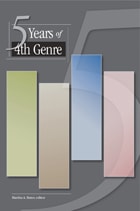
5 Years of 4th Genre
Martha Bates
Michigan State University Press, 2006
In 1999, Michigan State University Press launched Fourth Genre: Explorations in Creative Nonfiction, a journal that began with and has maintained a devotion to publishing notable, innovative work in nonfiction. The title reflects an intent to give nonfiction its due as a literary genre—to give writers of the 'fourth genre' a showcase for their work and to give readers a place to find the liveliest and most creative works in the form.
Given the genre's flexibility and expansiveness, journal editors Michael Steinberg and David Cooper have welcomed a variety of works— ranging from personal essays and memoirs to literary journalism and personal criticism. The essays are lyrical, self-interrogative, meditative, and reflective, as well as expository, analytical, exploratory, or whimsical. In short, Fourth Genre encourages a writer- to-reader conversation, one that explores the markers and boundaries of literary/creative nonfiction.
Since its inaugural issue, contributors have earned many literary awards: 5 Notable Essays of the Year (Best American Essay); the Lowell Thomas Travel Journalism Award; Notable Essay of the Year (Best American Travel Writing); and 4 Pushcart Prizes. Five Years of 4th Genre is a celebration of this significant literary journal. Culling a selection of some of the most creative of Fourth Genre’s first five years—the Pushcart winners are here, as well as those essays that are unique, those that tell us something new, those that startle us, and those that touch our hearts —this volume presents a representative sampling.
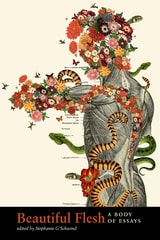
Beautiful Flesh
A Body of EssaysStephanie G'Schwind
University Press of Colorado, 2017
Selected from the country’s leading literary journals and publications—Colorado Review, Creative Nonfiction, Georgia Review, Prairie Schooner, Crazyhorse, The Normal School, and others—Beautiful Flesh gathers eighteen essays on the body, essentially building a multi-gender, multi-ethnic body out of essays, each concerning a different part of the body: belly, brain, bones, blood, ears, eyes, hair, hands, heart, lungs, nose, ovaries, pancreas, sinuses, skin, spine, teeth, and vas deferens. The title is drawn from Wendy Call’s essay “Beautiful Flesh,” a meditation on the pancreas: “gorgeously ugly, hideously beautiful: crimson globes embedded in a pinkish-tan oval, all nestled on a bed of cabbage-olive green, spun through with gossamer gold.”
Other essays include Dinty W. Moore’s “The Aquatic Ape,” in which the author explores the curious design and necessity of sinuses; Katherine E. Standefer’s “Shock to the Heart, Or: A Primer on the Practical Applications of Electricity,” a modular essay about the author’s internal cardiac defibrillator and the nature of electricity; Matt Roberts’s “Vasectomy Instruction 7,” in which the author considers the various reasons for and implications of surgically severing and sealing the vas deferens; and Peggy Shinner’s “Elective,” which examines the author’s own experience with rhinoplasty and cultural considerations of the “Jewish nose.” Echoing the myriad shapes, sizes, abilities, and types of the human body, these essays showcase the many forms of the genre: personal, memoir, lyric, braided, and so on.
Contributors: Amy Butcher, Wendy Call, Steven Church, Sarah Rose Etter, Matthew Ferrence, Hester Kaplan, Sarah K. Lenz, Lupe Linares, Jody Mace, Dinty W. Moore, Angela Pelster, Matt Roberts, Peggy Shinner, Samantha Simpson, Floyd Skloot, Danielle R. Spencer, Katherine E. Standefer, Kaitlyn Teer, Sarah Viren, Vicki Weiqi Yang
Beginning to See the Light
Sex, Hope, and Rock-and-RollEllen Willis
University of Minnesota Press, 2012
From the New Yorker’s inimitable first pop music critic comes this pioneering collection of essays by a conscientious writer whose political realm is both radical and rational, and whose prime preoccupations are with rock ’n’ roll, sexuality, and above all, freedom. Here Ellen Willis assuredly captures the thrill of music, the disdain of authoritarian culture, and the rebellious spirit of the ’60s and ’70s.
Don't Look Now
Things We Wish We Hadn't SeenEdited by Kristen Iversen and David Lazar
The Ohio State University Press, 2020
Featuring essays by Jericho Parms, XU XI, Jerald Walker, José Orduña, Kristen Iversen, Nicole Walker, Mary Cappello, Lina Ferreira, Colleen O’Connor, Sonya Huber, Paul Crenshaw, Alyce Miller, Patrick Madden, Amelia María de la Luz Montes, Yalie Kamara, Emily Heiden, Lee Martin, and David Lazar,
this collection bares all. The authors invite readers into a dream that resurrects a departed mother each night, only to lose her again each morning upon waking; the post-mortem newspaper photos of a former student; kaleidoscope childhood memories of the mundane mixed up together with the traumatic; an unplanned pregnancy; a bullfight and a spouse’s mortality; a teen witnessing the suicide of her father; a parent trying to shield his children from witnessing a violent death. What these writers are after, though, is not the melancholic/grotesque/violent moment itself, but the process of remembering—and trying to forget. They examine the way these memories take hold, resurface, and never leave, and what it means for a life lived long after these moments have passed. These scenes, slowly enfolding us like bad dreams or flying by like trains on elevated platforms, demand we reach some kind of accommodation with them—make peace or make sense or make amends. The one thing they insist with certainty is this: they cannot—will not—be unseen.

E.B. White
The Emergence of an EssayistRobert L., Jr. Root
University of Iowa Press, 1999
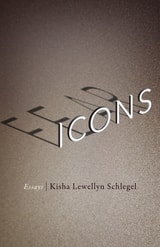
Fear Icons
EssaysKisha Lewellyn Schlegel
The Ohio State University Press, 2018
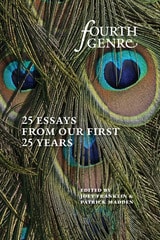
Fourth Genre
Twenty-Five Essays from Our First Twenty-Five YearsJoey Franklin
Michigan State University Press, 2025
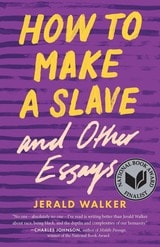
How to Make a Slave and Other Essays
Jerald Walker
The Ohio State University Press, 2020
Winner, 2021 Massachusetts Book Award, Nonfiction Category
A Book of the Year pick from Kirkus, BuzzFeed, and Literary Hub
“The essays in this collection are restless, brilliant and short. . . . The brevity suits not just Walker’s style but his worldview, too.…Keeping things quick gives him the freedom to move; he can alight on a truth without pinning it into place.” —Jennifer Szalai, the New York Times
For the black community, Jerald Walker asserts in How to Make a Slave, “anger is often a prelude to a joke, as there is broad understanding that the triumph over this destructive emotion lay in finding its punchline.” It is on the knife’s edge between fury and farce that the essays in this exquisite collection balance. Whether confronting the medical profession’s racial biases, considering the complicated legacy of Michael Jackson, paying homage to his writing mentor James Alan McPherson, or attempting to break free of personal and societal stereotypes, Walker elegantly blends personal revelation and cultural critique. The result is a bracing and often humorous examination by one of America’s most acclaimed essayists of what it is to grow, parent, write, and exist as a black American male. Walker refuses to lull his readers; instead his missives urge them to do better as they consider, through his eyes, how to be a good citizen, how to be a good father, how to live, and how to love.
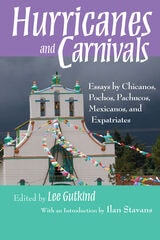
Hurricanes and Carnivals
Essays by Chicanos, Pochos, Pachucos, Mexicanos, and ExpatriatesEdited by Lee Gutkind, with an Introduction by Ilan Stavans
University of Arizona Press, 2007
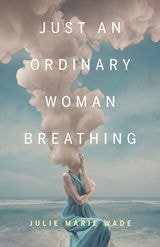
Just an Ordinary Woman Breathing
Julie Marie Wade
The Ohio State University Press, 2020
Finalist for the Publishing Triangle's Judy Grahn Award for Lesbian Nonfiction
You have a history, and a body. You are a history, and a body. Your body has (is) a history, too. As a girl, Julie Marie Wade was uninterested in makeup, boy-watching, and other trappings of conventional girlhood, much to her mother’s disappointment. Grace Kelly and Marilyn Monroe—movie stars immortalized as feminine ideals, even as they both died tragically and young—were lodestars that threw Wade’s own definition of beauty into relief as she stumbled into adulthood.
Now, in Just an Ordinary Woman Breathing, Wade traces the intimate story of coming of age in one particular body (as a lesbian, an only child, a Protestant attending Catholic school). She uses the language and tenets of music, math, religion, fairy tales, poetry, and art to reckon with the many facets of embodiment, sexuality, and love in our contemporary world. The diet industry, popular culture, and her own family all provide rich material for what is ultimately a lyrical and unflinching investigation into the questions that prickle deep within the human heart.
Kept Secret
The Half-Truth in NonfictionJen Hirt
Michigan State University Press, 2017
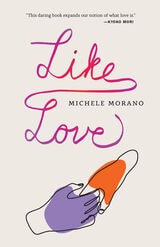
Like Love
Michele Morano
The Ohio State University Press, 2020
Crushes. Infatuations. Attractions. Unexpected, inexplicable allure. Entanglements steeped in taboo and disruption. In Like Love, nothing is off limits.
In these remarkable essays, Michele Morano explores the pleasures, possibilities, strangeness, and lessons of unconsummated romance. With insight and imagination, Like Love interweaves poignant, humorous episodes from adulthood with the backstory of a young family’s turbulent breakup. When Morano was an adolescent in blue-collar Poughkeepsie, New York, her mother left her father for a woman in an era when LGBTQ parents were widely viewed as “unfit.” Through the turmoil, adolescent Morano paid attention, tucking away the stories that were shaping her and guiding her understanding of love.
Turning romantic clichés inside out and challenging us to rethink our notions about what it means to love, Like Love tells hard and necessary truths about the importance of desire in growing, traveling, mourning, parenting, and figuring out who you are in the world. With precision and depth, Morano explores what it means to find ourselves in relationships that are not quite—but almost—like love.
Mapping the Invisible Landscape
Folklore, Writing, and the Sense of PlaceKent C. Ryden
University of Iowa Press, 1993
Any landscape has an unseen component: a subjective component of experience, memory, and narrative which people familiar with the place understand to be an integral part of its geography but which outsiders may not suspect the existence of—unless they listen and read carefully. This invisible landscape is make visible though stories, and these stories are the focus of this engrossing book.
Traveling across the invisible landscape in which we imaginatively dwell, Kent Ryden—himself a most careful listener and reader—asks the following questions. What categories of meaning do we read into our surroundings? What forms of expression serve as the most reliable maps to understanding those meanings? Our sense of any place, he argues, consists of a deeply ingrained experiential knowledge of its physical makeup; an awareness of its communal and personal history; a sense of our identity as being inextricably bound up with its events and ways of life; and an emotional reaction, positive or negative, to its meanings and memories.
Ryden demonstrates that both folk and literary narratives about place bear a striking thematic and stylistic resemblance. Accordingly, Mapping the Invisible Landscape examines both kinds of narratives. For his oral materials, Ryden provides an in-depth analysis of narratives collected in the Coeur d'Alene mining district in the Idaho panhandle; for his consideration of written works, he explores the “essay of place,” the personal essay which takes as its subject a particular place and a writer's relationship to that place.
Drawing on methods and materials from geography, folklore, and literature, Mapping the Invisible Landscape offers a broadly interdisciplinary analysis of the way we situate ourselves imaginatively in the landscape, the way we inscribe its surface with stories. Written in an extremely engaging style, this book will lead its readers to an awareness of the vital role that a sense of place plays in the formation of local cultures, to an understanding of the many-layered ways in which place interacts with individual lives, and to renewed appreciation of the places in their own lives and landscapes.

Nemerov's Door
EssaysRobert Wrigley
Tupelo Press, 2021
Reading Relations
How Authors Enter Our LivesDixon, Dan
University of Iowa Press, 2026
Drawing on the ordinary language philosophy of Toril Moi and Stanley Cavell, Dan Dixon argues that the act of reading shares emotional ground with our social lives. It prompts us to attend to the kinds of affective attachments that frequently resist description, as well as the attachments that encourage debate among scholars of literature.
Dixon posits that the interpretation of a text is significantly shaped by our impression of the writer. Through the lens of persona, this book examines the work of influential and iconic post-1945 American essayists, such as Joan Didion, Maggie Nelson, James Baldwin, Janet Malcolm, Teju Cole, David Foster Wallace, and Ben Lerner. The attachments we form might facilitate insight, consolation, distrust, or vanity. But whatever their effects, they can’t be ignored.
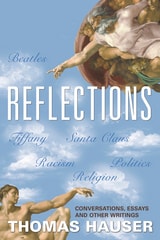
Reflections
Conversations, Essays, and Other WritingsThomas Hauser
University of Arkansas Press, 2014
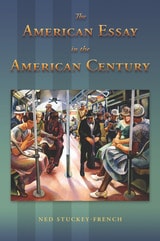
The American Essay in the American Century
Ned Stuckey-French
University of Missouri Press, 2011
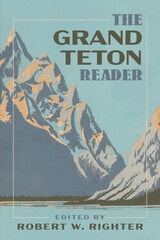
The Grand Teton Reader
Robert W. Righter
University of Utah Press, 2021
Editor Robert Righter has selected thirty-five contributors whose work takes readers from the Tetons’ geological origins to the time of Euro-American encroachment and the park’s politically tumultuous creation. Selections range from Laine Thom’s Shoshone legend of the Snake River and Owen Wister’s essay “Great God! I’ve Just Killed a Bear,” to Grace Gallatin Seton-Thompson’s humorous yet fearful account of crossing the Snake River, and William Owen’s first attempt to climb the Grand Teton. Conservationists, naturalists, and environmentalists are also represented: Terry Tempest Williams chronicles her multiyear encounter with her “Range of Memory,” and Olaus and Mardy Murie recount the difficulties of “park-making” in an often-hostile human environment.
Anyone seeking a deeper understanding of the park’s wild beauty and controversial past will want to read these stories by people who lived it.
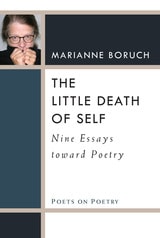
The Little Death of Self
Nine Essays toward PoetryMarianne Boruch
University of Michigan Press, 2017
The line between poetry (the delicate, surprising not-quite) and the essay (the emphatic so-there!) is thin, easily crossed. Both welcome a deep mulling-over, endlessly mixing image and idea and running with scissors; certainly each distrusts the notion of premise or formulaic progression. Marianne Boruch’s essays in The Little Death of Self emerged by way of odd details or bothersome questions that would not quit—Why does the self grow smaller as the poem grows enormous? Why does closure in a poem so often mean keep going? Must we stalk the poem or does the poem stalk us until the world clicks open?
Boruch’s intrepid curiosity led her to explore fields of expertise about which she knew little: aviation, music, anatomy, history, medicine, photography, fiction, neuroscience, physics, anthropology, painting, and drawing. There’s an addiction to metaphor here, an affection for image, sudden turns of thinking, and the great subjects of poetry: love, death, time, knowledge. There’s amazement at the dumb luck of staying long enough in an inkling to make it a poem at all. Poets such as Keats, Stevens, Frost, Plath, Auden, and Bishop, along with painters, inventors, doctors, scientists, composers, musicians, neighbors, friends, and family—all traffic blatantly or under the surface—and one gets a glimpse of such fellow travelers now and then.
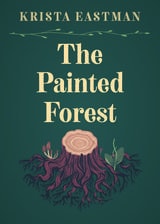
The Painted Forest
Krista Eastman
West Virginia University Press, 2019
Council for Wisconsin Writers, Norbert Blei/August Derleth Nonfiction Book Award winner
In this often-surprising book of essays, Krista Eastman explores the myths we make about who we are and where we’re from. The Painted Forest uncovers strange and little-known “home places”—not only the picturesque hills and valleys of the author’s childhood in rural Wisconsin, but also tourist towns, the “under-imagined and overly caricatured” Midwest, and a far-flung station in Antarctica where the filmmaker Werner Herzog makes an unexpected appearance.
The Painted Forest upends easy narratives of place, embracing tentativeness and erasing boundaries. But it is Eastman’s willingness to play—to follow her curiosity down every odd path, to exude a skeptical wonder—that gives this book depth and distinction. An unlikely array of people, places, and texts meet for close conversation, and tension is diffused with art, imagination, and a strong sense of there being some other way forward. Eastman offers a smart and contemporary take on how we wander and how we belong.
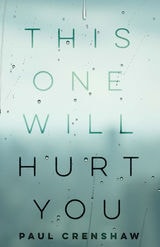
This One Will Hurt You
Paul Crenshaw
The Ohio State University Press, 2019
With eloquence, subtle humor, and an urgent poignancy, Crenshaw delivers a powerful and moving collection of nonfiction essays, tied together by place and the violence of the world in which we live.
To Be At Music
Essays & TalksNorma Cole
Omnidawn, 2010
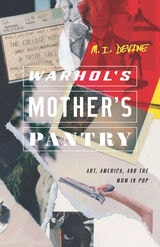
Warhol's Mother's Pantry
Art, America, and the Mom in PopM. I. Devine
The Ohio State University Press, 2020
“What are these fragments we’ve Jersey Shored against our ruin?” asks M. I. Devine, remixing T. S. Eliot, in this dizzying collection of essays that pays homage to the cultural forms that hold us steady. These fragments are stored in Warhol’s Mother’s Pantry, which takes us deep beneath the surfaces of pop to explore our shared quest for meaning today. Julia Warhola, an immigrant who arrived as the US was closing its borders a century ago, is the muse of reuse in these essays that cross boundaries—between now and then, high and low. She is the mom in pop who cut tin cans into flowers and taught Andy (and us) how to reshape and redeem our world. In essays as lyrical, witty, and experimental as the works they cover, Devine offers a new account of pop humanism. How we cut new things from the traditions we’re given, why we don’t stop believin’ (and carry on, wayward sons) when so much is stacked against us. Here are Leonard Cohen’s last songs and Molly Bloom’s last words; Vampire Weekend’s Rostam and Philip Larkin too; Stevie Smith, John Donne, and Kendrick Lamar; sonnets and selfies; early cinema and post–9/11 film, pop hooks, and pop art. In Devine’s hands, these literary and cultural artifacts are provocatively reassembled into an urgent and refreshing history that refuses to let its readers forget where pop came from and where it can go.
What Happens Next?
Matters of Life and DeathDouglas Bauer
University of Iowa Press, 2013