Results by title
10 books match the query 'Among'

Among the Afghans
Arthur Bonner
Duke University Press, 1987
Bonner therefore brings both recent experience and the sharp eye of a veteran journalist to an analysis of the Afghan situation: the tenacity and courage of the resistance, the massive emmigration, and the toll taken by the seemingly endless conflict on the country and its people.
The author has seen both the great and small of Afghanistan--both the seared flesh of the hand that an Afghan mujahidin held in the fire to demonstrate his courage and the geopolitical reasons that impelled the former Soviet Union of set its might and treasure against a people who resisted with a fierce and sometimes (to Western eyes) thoughtless courage. This is the story of these antagonists--sobering, chilling, and finally enlightening.
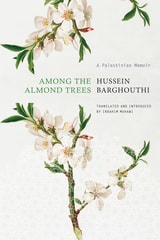
Among the Almond Trees
A Palestinian MemoirHussein Barghouthi
Seagull Books, 2021
Palestinian writer Hussein Barghouthi was in his late forties when he was diagnosed with lymphoma. He had feared it was HIV, so when the cancer diagnosis was confirmed, he left the hospital feeling a bitter joy because his wife and son would be spared. The bittersweetness of this reaction characterizes the alternating moods of narration and reflection that distinguish this meditative memoir, Among the Almond Trees.
Barghouthi’s way of dealing with finality is to return to memories of childhood in the village of his birth in central Palestine, where the house in which he grew up is surrounded by almond and fig orchards. He takes many healing walks in the moonlit shadows of the trees, where he observes curious foxes, dancing gazelles, a badger with an unearthly cry, a weasel, and a wild boar with its young—a return not only to the house but to nature itself. The author decides to build a house where he would live with his wife and son, in whom he sees a renewal of life. The realization of his impending death also urges him to vocalize this experience, and he relates the progress of the disease at infrequent intervals. And, ultimately, he details the imaginative possibility of a return to life—to the earth, where he would be buried among the almond trees.
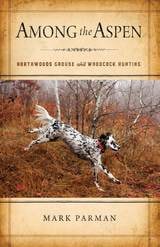
Among the Aspen
Northwoods Grouse and Woodcock HuntingMark Parman
University of Wisconsin Press, 2018
Among the Aspen interweaves tales of companionable dogs, lucky hunts, and favorite coverts where quarry lurks with ruminations on the demise of hunting traditions, the sale of public lands and the privatization of places to hunt, the growing indifference to science, and the loss of wilderness on a planet increasingly transformed by the sprawl of humanity.
Among the Bieresch
Klaus Hoffer
Seagull Books, 2016
Among the Bieresch is Hans’s story—one of bizarre customs, tangled relationships, and the struggle between two mystical sects. The novel, translated by Isabel Fargo Cole, is a German cult favorite and a masterwork of culture shock fiction that revels in exploring oppressive cultural baggage and assimilation. Readers will encounter here an amalgam drawing from Kafka, Borges, and Beckett, among others, combining to make Klaus Hoffer’s novel a world utterly its own.
“One of the few works that will loom from the dust of this century one day.”—Urs Widmer
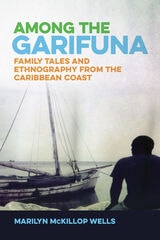
Among the Garifuna
Family Tales and Ethnography from the Caribbean CoastMarilyn McKillop Wells
University of Alabama Press, 2015
An intimate ethnographic narrative of one indigenous family in the twentieth-century Caribbean
Among the Garifuna is the first ethnographic narrative of a Garifuna family. The Garifuna are descendants of the “Black Carib,” whom the British deposited on Roatan Island in 1797 and who settled along the Caribbean coast from Belize City to Nicaragua.
In 1980, medical anthropologist Marilyn McKillop Wells found herself embarking on an “improbable journey” when she was invited to the area to do fieldwork with the added challenge of revealing the “real” Garifuna. Upon her arrival on the island, Wells was warmly embraced by a local family, the Diegos, and set to work recording life events and indigenous perspectives on polygyny, Afro-indigenous identity, ancestor-worshiping religion, and more. The result, as represented in Among the Garifuna, is a lovingly intimate, earthy human drama.
The family narrative is organized chronologically. Part I, “The Old Ways,” consists of vignettes that introduce the family backstory with dialogue as imagined by Wells based on the family history she was told. We meet the family progenitors, Margaret and Cervantes Diego, during their courtship, experience Margaret’s pain as Cervantes takes a second wife, witness the death of Cervantes and ensuing mourning rituals, follow the return of Margaret and the children to their previous home in British Honduras, and observe the emergence of the children’s personalities.
In Part II, “Living There,” Wells continues the story when she arrives in Belize and meets the Diego children, including the major protagonist, Tas. In Tas’s household Wells learns about foods and manners and watches family squabbles and reconciliations. In these mini-stories, Wells interweaves cultural information on the Garifuna people with first-person narrative and transcription of their words, assembling these into an enthralling slice of life. Part III, “The Ancestor Party,” takes the reader through a fascinating postmortem ritual that is enacted to facilitate the journey of the spirits of the honored ancestors to the supreme supernatural.
Among the Garifuna contributes to the literary genres of narrative anthropology and feminist ethnography in the tradition of Zora Neal Hurston and other women writing culture in a personal way. Wells’s portrait of this Garifuna family will be of interest to anthropologists, Caribbeanists, Latin Americanists, students, and general readers alike.

Among the Lowest of the Dead
The Culture of Capital PunishmentDavid Von Drehle
University of Michigan Press, 2010
"Has all the tension of the best true crime stories . . . This is journalism at its best."
--Library Journal
"A compelling argument against capital punishment. . . . Examining politicians, judges (including Supreme Court Justices), prosecutors, defense attorneys and the condemned themselves, the author makes an effective case that, despite new laws, execution is no less a lottery than it has always been."
--Publishers Weekly
"In a fine and important book, Von Drehle writes elegantly and powerfully. . . . Anyone certain of their opinion about the death penalty ought to read this book."
-- Booklist
"An extremely well-informed and richly insightful book of great value to students of the death penalty as well as intelligent general readers with a serious interest in the subject, Among the Lowest of the Dead is also exciting reading. The book is an ideal guide for new generations of readers who want to form knowledgeable judgments in the continuing--and recently accelerating--controversies about capital punishment."
--Anthony Amsterdam, New York University
"Among the Lowest of the Dead is a powerfully written and meticulously researched book that makes an invaluable contribution to the growing public dialogue about capital punishment in America. It's one of those rare books that bridges the gap between mass audiences and scholarly disciplines, the latter including sociology, political science, criminology and journalism. The book is required reading in my Investigative Journalism classes--and my students love it!"
--David Protess, Northwestern University
"Among The Lowest of the Dead deserves a permanent place in the literature as literature, and is most relevant to today's death penalty debate as we moderate advocates and abolitionists search for common ground."
--Robert Blecker, New York Law School
David Von Drehle is Senior Writer, The Washington Post and author of Triangle: The Fire that Changed America.
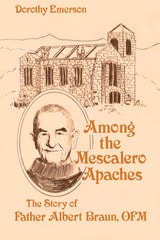
Among the Mescalero Apaches
The Story of Father Albert Braun, O.F.M.Dorothy Emerson
University of Arizona Press, 1973
Among the Monarchs
Christine Garren
University of Chicago Press, 2000
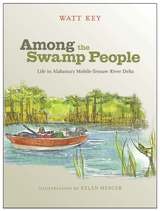
Among the Swamp People
Life in Alabama's Mobile-Tensaw River DeltaWatt Key
University of Alabama Press, 2015
Among the Swamp People is the story of author Watt Key’s discovery of the Mobile-Tensaw River Delta. “The swamp” consists of almost 260,000 acres of wetlands located just north of Mobile Bay. There he leases a habitable outcropping of land and constructs a primitive cabin from driftwood to serve as a private getaway. His story is one that chronicles the beauties of the delta’s unparalleled natural wonders, the difficulties of survival within it, and an extraordinary community of characters—by turns generous and violent, gracious and paranoid, hilarious and reckless—who live, thrive, and perish there.
There is no way into the delta except by small boat. To most it would appear a maze of rivers and creeks between stunted swamp trees and mud. Key observes that there are few places where one can step out of a boat without “sinking to the knees in muck the consistency of axle grease. It is the only place I know where gloom and beauty can coexist at such extremes. And it never occurred to me that a land seemingly so bleak could hide such beauty and adventure.”
It also chronicles Key’s maturation as a writer, from a twenty-five-year-old computer programmer with no formal training as a writer to a highly successful, award-winning writer of fiction for a young adult audience with three acclaimed novels published to date.
In learning to make a place for himself in the wild, as in learning to write, Key’s story is one of “hoping someone—even if just myself—would find value in my creations.”
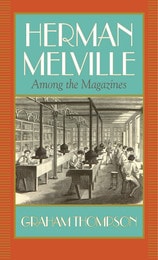
Herman Melville
Among the MagazinesGraham Thompson
University of Massachusetts Press, 2018
What I feel most moved to write, that is banned,—it will not pay. Yet, altogether, write the other way I cannot. Herman Melville wrote these words as he struggled to survive as a failing novelist. Between 1853 and 1856, he did write “the other way,” working exclusively for magazines. He earned more money from his stories than from the combined sales of his most well known novels, Moby-Dick, Pierre, and The Confidence-Man.
In Herman Melville Graham Thompson examines the author's magazine work in its original publication context, including stories that became classics, such as “Bartelby, the Scrivener” and “Benito Cereno,” alongside lesser-known work. Using a concept he calls “embedded authorship,” Thompson explores what it meant to be a magazine writer in the 1850s and discovers a new Melville enmeshed with forgotten materials, editors, writers, and literary traditions. He reveals how Melville responded to the practical demands of magazine writing with dazzling displays of innovation that reinvented magazine traditions and helped create the modern short story.