Results by title
64 books match the query 'Anarchism' and 12 start with a

Against Capital in the Twenty-First Century
A Reader of Radical UndercurrentsJohn Asimakopoulos
Temple University Press, 2018
The problems of capitalism have been studied from Karl Marx to Thomas Piketty. The latter has recently confirmed that the system of capital is deeply bound up in ever-growing inequality without challenging the continuance of that system. Against Capital in the Twenty-First Century presents a diversity of analyses and visions opposed to the idea that capital should have yet another century to govern human and non-human resources in the interest of profit and accumulation. The editors and contributors to this timely volume present alternatives to the whole liberal litany of administered economies, tax policy recommendations, and half-measures. They undermine and reject the logic of capital, and the foregone conclusion that the twenty-first century should be given over to capital just as the previous two centuries were.
Providing a deep critique of capitalism, based on assessment from a wide range of cultural, social, political, and ecological thinking, Against Capital in the Twenty-First Century insists that transformative, revolutionary, and abolitionist responses to capital are even more necessary in the twenty-first century than they ever were.
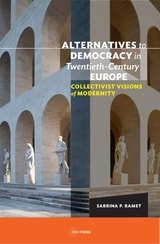
Alternatives to Democracy in Twentieth-Century Europe
Collectivist Visions of ModernitySabrina P. Ramet
Central European University Press, 2019

American Community
Radical Experiments in Intentional LivingMark S. Ferrara
Rutgers University Press, 2020
American Community takes us inside forty of the most interesting intentional communities in the nation’s history, from the colonial era to the present day. You will learn about such little-known experiments in cooperative living as the Icarian communities, which took the utopian ideas expounded in a 1840 French novel and put them into practice, ultimately spreading to five states over fifty years. Plus, it covers more recent communities such as Arizona’s Arcosanti, designed by architect Paolo Soleri as a model for ecologically sustainable living.
In this provocative and engaging book, Mark Ferrara guides readers through an array of intentional communities that boldly challenged capitalist economic arrangements in order to attain ideals of harmony, equality, and social justice. By shining a light on these forgotten histories, it shows that far from being foreign concepts, communitarianism and socialism have always been vital parts of the American experience.
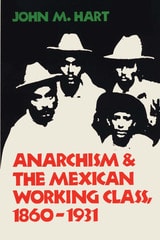
Anarchism & The Mexican Working Class, 1860-1931
By John M. Hart
University of Texas Press, 1978
The anarchist movement had a crucial impact upon the Mexican working class between 1860 and 1931. John M. Hart destroys some old myths and brings new information to light as he explores anarchism's effect on the development of the Mexican urban working-class and agrarian movements.
Hart shows how the ideas of European anarchist thinkers took root in Mexico, how they influenced revolutionary tendencies there, and why anarchism was ultimately unsuccessful in producing real social change in Mexico. He explains the role of the working classes during the Mexican Revolution, the conflict between urban revolutionary groups and peasants, and the ensuing confrontation between the new revolutionary elite and the urban working class.
The anarchist tradition traced in this study is extremely complex. It involves various social classes, including intellectuals, artisans, and ordinary workers; changing social conditions; and political and revolutionary events which reshaped ideologies. During the nineteenth century the anarchists could be distinguished from their various working- class socialist and trade unionist counterparts by their singular opposition to government. In the twentieth century the lines became even clearer because of hardening anarchosyndicalist, anarchistcommunist, trade unionist, and Marxist doctrines. In charting the rise and fall of anarchism, Hart gives full credit to the roles of other forms of socialism and Marxism in Mexican working-class history.
Mexican anarchists whose contributions are examined here include nineteenth-century leaders Plotino Rhodakanaty, Santiago Villanueva, Francisco Zalacosta, and José María Gonzales; the twentieth-century revolutionary precursor Ricardo Flores Magón; the Casa del Obrero founders Amadeo Ferrés, Juan Francisco Moncaleano, and Rafael Quintero; and the majority of the Centro Sindicalista Ubertario, leaders of the General Confederation of Workers.
This work is based largely on primary sources, and the bibliography contains a definitive listing of anarchist and radical working-class newspapers for the period.
Anarchism and the Black Revolution
The Definitive EditionLorenzo Kom’boa Ervin
Pluto Press, 2021
'A powerful – even startling – book that challenges the shibboleths of 'white' anarchism'. Its analysis of police violence and the threat of fascism are as important now as they were at the end of the 1970s. Perhaps more so' - Peter James Hudson, Black Agenda Report
Anarchism and the Black Revolution first connected Black radical thought to anarchist theory in 1979. Now amidst a rising tide of Black political organizing, this foundational classic written by a key figure of the Civil Rights movement is republished with a wealth of original material for a new generation.
Anarchist theory has long suffered from a whiteness problem. This book places its critique of both capitalism and racism firmly at the center of the text. Making a powerful case for the building of a Black revolutionary movement that rejects sexism, homophobia, militarism and racism, Lorenzo Kom’boa Ervin counters the lies and distortions about anarchism spread by its left- and right-wing opponents alike.
New material includes an interview with writer and activist William C. Anderson, as well as new essays, and a contextualizing biography of the author’s inspiring life.

Anarchist Immigrants in Spain and Argentina
James A. Baer
University of Illinois Press, 2015
James A. Baer follows the lives, careers, and travels of Diego Abad de Santillán, Manuel Villar, and other migrating anarchists to highlight the ideological and interpersonal relationships that defined a vital era in anarchist history. Drawing on extensive interviews with Abad de Santillán, José Grunfeld, and Jacobo Maguid, along withunusual access to anarchist records and networks, Baer uncovers the ways anarchist migrants in pursuit of jobs and political goals formed a critical nucleus of militants, binding the two countries in an ideological relationship that profoundly affected the history of both. He also considers the impact of reverse migration and discusses political decisions that had a hitherto unknown influence on the course of the Spanish Civil War.
Personal in perspective and transnational in scope, Anarchist Immigrants in Spain and Argentina offers an enlightening history of a movement and an era.
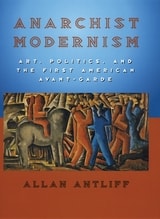
Anarchist Modernism
Art, Politics, and the First American Avant-GardeAllan Antliff
University of Chicago Press, 2001
By situating American art's evolution in the progressive politics of the time, Antliff offers a richly illustrated chronicle of the anarchist movement and also revives the creative agency of those who shaped and implemented modernism for radical ends.
Anarchist Prophets
Disappointing Vision and the Power of Collective SightJames R. Martel
Duke University Press, 2022

Anarchy Alive!
Anti-Authoritarian Politics From Practice to TheoryUri Gordon
Pluto Press, 2008
Anarchist politics are at the heart of today’s most vibrant and radical social movements. From squatted social centres and community gardens to acts of sabotage and raucous summit blockades, anarchist groups and networks are spreading an ethos of direct action, non-hierarchical organizing and self-liberation that has redefined revolutionary struggle for the 21st century.
Anarchy Alive! is a fascinating, in-depth look at the practice and theory of contemporary anarchism. Uri Gordon draws on his activist experience and on interviews, discussions and a vast selection of recent literature to explore the activities, cultures and agendas shaping today’s explosive anti-authoritarian revival. Anarchy Alive! also addresses some of the most tense debates in the contemporary movement, using a theory based on practice to provocatively reshape anarchist discussions of leadership, violence, technology and nationalism.
This is the ideal book for anyone looking for a fresh, informed and critical engagement with anarchism, as a mature and dynamic political force in the age of globalisation.
Anarchy and Culture
The Aesthetic Politics of ModernismDavid Weir
University of Massachusetts Press, 1997
Anarchism is generally understood as a failed ideology, a political philosophy that once may have had many followers but today attracts only cranks and eccentrics. This book argues that the decline of political anarchism is only half the story; the other half is a tale of widespread cultural success.
David Weir develops this thesis in several ways. He begins by considering the place of culture in the political thought of the classical anarchist thinkers William Godwin, Pierre-Joseph Proudhon, Mikhail Bakunin, and Peter Kropotkin. He then shows how the perceived “anarchy” of nineteenth-century society induced writers such as Matthew Arnold, Henry James, and Fyodor Dostoyevsky to turn away from politics and seek unity in the idea of a common culture.
Yet as other late-nineteenth-century writers and artists began to sympathize with anarchism, the prospect of a common culture became increasingly remote. In Weir's view, the affinity for anarchism that developed among members of the artistic avant-garde lies behind much of fin de siècle culture. Indeed, the emergence of modernism itself can be understood as the aesthetic realization of anarchist politics. In support of this contention, Weir shows that anarchism is the key aesthetic principle informing the work of a broad range of modernist figures, from Henrik Ibsen and James Joyce to Dadaist Hugo Ball and surrealist Luis Buñuel.
Weir concludes by reevaluating the phenomenon of postmodernism as only the most recent case of the migration of politics into aesthetics, and by suggesting that anarchism is still very much with us as a cultural condition.

Anarchy—In a Manner of Speaking
Conversations with Mehdi Belhaj Kacem, Nika Dubrovsky, and Assia Turquier-ZaubermanDavid Graeber
Diaphanes, 2020
Graeber has offered up perhaps the most credible path for exiting capitalism—as much through his writing about debt, bureaucracy, or “bullshit jobs” as through his crucial involvement in the Occupy Wall Street movement, which led to his more-or-less involuntary exile from the American academy. In short, Anarchy—In a Manner of Speaking presents a series of interviews with a first-rate intellectual, a veritable modern hero on the order of Julian Assange, Edward Snowden, Linus Torvald, Aaron Swartz, and Elon Musk.
Interviewers Mehdi Belhaj Kacem and Assia Turquier-Zauberman asked Graeber not only about the history of anarchy, but also about its contemporary relevance and future. Their conversation also explores the ties between anthropology and anarchism, and the traces of its DNA in the Occupy Wall Street and Yellow Vest movements. Finally, Graeber discussed the meaning of anarchist ethics—not only in the political realm, but also in terms of art, love, sexuality, and more. With astonishing humor, verve, and erudition, this book redefines the contours of what could be (in the words of Peter Kropotkin) “anarchist morality” today.

Assassins against the Old Order
Italian Anarchist Violence in Fin de Siecle EuropeNunzio Pernicone, Fraser Ottanelli
University of Illinois Press, 2018
Nunzio Pernicone and Fraser M. Ottanelli dig into the transnational experiences and the historical, social, cultural, and political conditions behind the phenomenon of anarchist violence in Italy. Looking at political assassinations in the 1890s, they illuminate the public effort to equate anarchy's goals with violent overthrow. Throughout, Pernicone and Ottanelli combine a cutting-edge synthesis of the intellectual origins, milieu, and nature of Italian anarchist violence with vivid portraits of its major players and their still-misunderstood movement.
A bold challenge to conventional thinking, Assassins against the Old Order demolishes a century of myths surrounding anarchist violence and its practitioners.