Results by title

21 books match the query 'Angels'
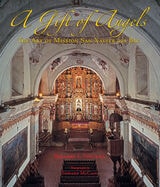
cover of A Gift of Angels: The Art of Mission San Xavier del Bac

A Gift of Angels

The Art of Mission San Xavier del Bac

Bernard L. Fontana; photographs by Edward McCain

University of Arizona Press, 2010

It rises suddenly out of the Sonoran Desert landscape, towering over the tallest tree or cactus, a commanding building with a sensuous dome, elliptical vaults, and sturdy bell towers. There is nothing else like it around, nor does it seem there should be. This incongruity of setting is what strikes first-time visitors to Mission San Xavier del Bac. This great church is of another place and another time, while its beauty is universal and timeless.

Mission San Xavier del Bac is a two-century-old Spanish church in southern Arizona located just a few miles from downtown Tucson, a metropolis of more than half a million people in the American Southwest. A National Historic Landmark since 1963, the mission’s graceful baroque art and architecture have drawn visitors from all over the world.

Now Bernard Fontana—the leading expert on San Xavier—and award-winning photographer Edward McCain team up to bring us a comprehensive view of the mission as we’ve never seen it before. With 200 stunning full-color photographs and incisive text illuminating the religious, historical, and motivational context of these images, A Gift of Angels is a must-have for tourists, scholars, and other visitors to San Xavier.

From its glorious architecture all the way down to the finest details of its art, Mission San Xavier del Bac is indeed a gift of angels.

[more]
cover of An Ocean Full of Angels: The Autobiography of 'Isa Ben Adam

An Ocean Full of Angels

The Autobiography of 'Isa Ben Adam

Peter Kreeft

St. Augustine's Press, 2011
[more]
cover of Angels and Absences: Child Deaths in the Nineteenth Century

Angels and Absences

Child Deaths in the Nineteenth Century

Laurence Lerner

Vanderbilt University Press, 1997

What is the difference between public and private feeling, and how far can we deduce past feelings from the words that have been left us? Why do child deaths figure so often and so prominently in the literature of the nineteenth century, and how was the theme of the death of a child used to elicit such poignant responses in the readers of that era? In this fascinating new book, Laurence Lerner vividly contrasts the contempt with which twentieth- century criticism so often dismisses such works as mere sentimentality with the enthusiasm and tears of nineteenth-century contemporaries.

Drawing examples from both real and literary deaths, Lerner delves into the writings of well-known authors such as Dickens, Coleridge, Shelley, Flaubert, Mann, Huxley, and Hesse, as well as lesser known writers like Felicia Hemans and Lydia Sigourney. In the process, he synthesizes fresh ideas about the thorny subjects of sentimentality, aesthetic judgment, and the function of religion in literature.

Lerner's forthright and evocative prose style is enjoyable reading, and he excels in teasing out the moral implications and the psychosocial entanglements of his chosen narrative and lyrical texts. This is a book that will illuminate an important aspect of the history of private life. It should have wide application for those interested in the history, sociology, and literature of the nineteenth century.
[more]
cover of Angels and Demons

Angels and Demons

Serge-Thomas Bonino

Catholic University of America Press, 2016

Angels occupy a significant space in contemporary popular spirituality. Yet, today more than ever, the belief in the existence of intermediary spirits between the human and divine realms needs to be evangelized and Christianized. Angels and Demons offers a detailed synthesis of the givens of the Christian tradition concerning the angels and demons, as systematized in its essential principles by St. Thomas Aquinas. Certainly, the doctrine of angels and demons is not at the heart of Christian faith, but its place is far from negligible. On the one hand, as part of faith seeking understanding, angelology has been and can continue to be a source of enrichment for philosophy. Thus, reflection on the ontological constitution of the angel, on the modes of angelic knowledge, and on the nature of the sin of Satan can engage and shed light on the most fundamental areas of metaphysics, epistemology, and ethics. On the other hand, angelology, insofar as it is inseparable from the ensemble of the Christian mystery (from the doctrine of creation to the Christian understanding of the spiritual life), can be envisioned from an original and fruitful perspective.
[more]
cover of Angels and Outcasts: An Anthology of Deaf Characters in Literature

Angels and Outcasts

An Anthology of Deaf Characters in Literature

Trent Batson

Gallaudet University Press, 1985
"This is a fascinating, enjoyable book. It could well be used in study groups at the high school or college level to explore both history and attitudes toward deafness." --Rehabilitation Literature "The editors are not enthralled, as so many of us seem to be, simply that deaf (or disabled) characters exist in literature; they ask why... The rest of the disability movement could learn from them." --The Disability Rag Dickens, Welty, and Turgenev are only three of the master storytellers in Angels and Outcasts. This remarkable collection of 14 short stories offers insights into what it means to be deaf in a hearing world. The book is divided into three parts: the first section explores works by nineteenth-century authors; the second section concentrates on stories by twentieth-century authors; and the final section focuses on stories by authors who are themselves deaf. Each section begins with an introduction by the editors, and each story is preceded by a preface. Angels and Outcasts concludes with an annotated bibliography of other prose works about the deaf experience. In addition to fascinating reading, it provides valuable insights into the world of the deaf. Trent Batson is Director of Academic Technology at Gallaudet University. Eugene Bergman, former Associate professor of English at Gallaudet University, is now retired.
[more]
cover of Angels in the American Theater: Patrons, Patronage, and Philanthropy

Angels in the American Theater

Patrons, Patronage, and Philanthropy

Edited by Robert A. Schanke

Southern Illinois University Press, 2007
Angels in the American Theater: Patrons, Patronage, and Philanthropy examines the significant roles that theater patrons have played in shaping and developing theater in the United States. Because box office income rarely covers the cost of production, other sources are vital. Angels—financial investors and backers—have a tremendous impact on what happens on stage, often determining with the power and influence of their money what is conceived, produced, and performed. But in spite of their influence, very little has been written about these philanthropists.
Composed of sixteen essays and fifteen illustrations, Angels in the American Theater explores not only how donors became angels but also their backgrounds, motivations, policies, limitations, support, and successes and failures. Subjects range from millionaires Otto Kahn and the Lewisohn sisters to foundation giants Ford, Rockefeller, Disney, and Clear Channel. The first book to focus on theater philanthropy, Angels in the American Theater employs both a historical and a chronological format and focuses on individual patrons, foundations, and corporations.
[more]
cover of Angels, Devils: The Supernatural and Its Visual Representation

Angels, Devils

The Supernatural and Its Visual Representation

Gerhard Jaritz

Central European University Press, 2011
Supernatural phenomena and causalities played an important role in medieval society. Religious practice was relying upon a set of cult images and the sacral status of these depictions of divine or supernatural persons became the object of heated debates and provoked iconoclastic reactions.The miraculous intervention of saints or other divine agents, the wondrous realities beyond understanding, or the manifestations of magic attributed to diabolic forces, were contained by a variety of discourses, described and discussed in religion, philosophy, chronicles, literature and fiction, and also in a large number of pictures and material objects. The nine essays in this collection discusses how supernatural phenomena – especially angels and devils – found visual manifestation in Latin and Eastern Christianity as well as Judaism in the late medieval, early renaissance period.
[more]
cover of Approaching the Millennium: Essays on Angels in America

Approaching the Millennium

Essays on Angels in America

Deborah R. Geis and Steven F. Kruger, Editors

University of Michigan Press, 1997
Tony Kushner's complex and demanding play Angels in America: A Gay Fantasia on National Themes has been the most talked about, analyzed, and celebrated play of the decade. The critic Harold Bloom has included Kushner's play in his "Western canon" alongside Shakespeare and the Bible, and drama scholar John M. Clum has termed it "a turning point in the history of gay drama, the history of American drama, and of American literary culture." While we might be somewhat wary of the instant canonization that such critical assessments confer, clearly Kushner's play is an important work, honored by the Pulitzer Prize, thought worthy of recognition on "purely aesthetic" grounds at the same time that it has been embraced--and occasionally rejected--for its politics.
Kushner's play explicitly positions itself in the current American conflict over identity politics, yet also situates that debate in a broader historical context: the American history of McCarthyism, of immigration and the "melting pot," of westward expansion, and of racist exploitation. Furthermore, the play enters into the politically volatile struggles of the AIDS crisis, struggles themselves interconnected with the politics of sexuality, gender, race, and class.
The original essays in Approaching the Millennium explore the complexities of the play and situate it in its particular, conflicted historical moment. The contributors help us understand and appreciate the play as a literary work, as theatrical text, as popular cultural phenomenon, and as political reflection and intervention. Specific topics include how the play thematizes gender and sexuality, race and ethnicity; the postmodern incarnation of the Brechtian epic; AIDS and the landscape of American politics. The range of different international productions of Angels in America provides a rich basis for discussion of its production history, including the linguistic and cultural shifts required in its "translation" from one stage to the next.
The last section of Approaching the Millennium includes interviews with Tony Kushner and other key creators and players involved in the original productions of Angels. The interviews explore issues raised earlier in the volume and dialogues between the creative artists who have shaped the play and the critics and "theatricians" engaged in responding to it.
Contributors to this volume are Arnold Aronson, Art Borreca, Gregory W. Bredbeck, Michael Cadden, Nicholas de Jongh, Allen J. Frantzen, Stanton B. Garner, Deborah R. Geis, Martin Harries, Steven F. Kruger, James Miller, Framji Minwalla, Donald Pease, Janelle Reinelt, David Román, David Savran, Ron Scapp, and Alisa Solomon.
Deborah Geis is Associate Professor of English, Queens College, City University of New York. Steven F. Kruger is Professor and Chair of the Department of English, Queens College, City University of New York.
[more]
cover of Armenian Apocrypha Relating to Angels and Biblical Heroes

Armenian Apocrypha Relating to Angels and Biblical Heroes

Michael E. Stone

SBL Press, 2016

Explore how the vivid and creative Armenian spiritual tradition shaped biblical stories to serve new needs

Michael E. Stone’s latest book includes texts from Armenian manuscripts that are relevant to the development and growth of biblical themes and subjects. Most of these texts have not been published previously. Stone has collected a fascinating corpus of texts about biblical heroes, such as Joseph and Jonah, Nathan the Prophet, and Asaph the Psalmist. In addition, he has included documents illustrating particular points of the biblical story. This work reflects not just on how the Bible was interpreted in medieval times, but also how its stories and details were shaped by and served the needs of the vivid and creative Armenian spiritual tradition.

Features:

  • Expanded stories from Exodus
  • Introductions,translations, and notes
  • Insights into the Armenian "Embroidered Bible," through which many biblical incidents were known to Armenian literature, art, and thought

[more]
cover of Become Like the Angels

Become Like the Angels

Benjamin P. Blosser

Catholic University of America Press, 2012
Become Like the Angels explores Origen's legacy and, in particular, his teachings about the origin, nature, and destiny of the human person. By way of a historical critical approach, Benjamin P. Blosser discusses the influence of Middle Platonic philosophy on the human soul and then compares it with Origen's teaching.
[more]
cover of Before the Closet: Same-Sex Love from "Beowulf" to "Angels in America"

Before the Closet

Same-Sex Love from "Beowulf" to "Angels in America"

Allen J. Frantzen

University of Chicago Press, 1998

Allen J. Frantzen challenges the long accepted view that the early Middle Ages tolerated and even fostered same-sex relations and that intolerance of homosexuality developed only late in the medieval period. Frantzen shows that in early medieval Europe, the Church did not tolerate same-sex acts, in fact it was an age before people recognized the existence—or the possibility—of the "closet."

With its ambitious scope and elegant style, Before the Closet sets same-sex relations in Anglo-Saxon sources in relation to the sexual themes of contemporary opera, dance, and theatre. Frantzen offers a comprehensive analysis of sources from the seventh to the twelfth century and traces Anglo-Saxon same-sex behavior through the age of Chaucer and into the Renaissance.

"Frantzen's marvelous book . . . opens up a world most readers will never have even known was there. It's a difficult topic, but Frantzen's comprehensive, readable and even wryly funny treatment makes this an unexpected pleasure."—Publishers Weekly, starred review
[more]
cover of Believing in South Central: Everyday Islam in the City of Angels

Believing in South Central

Everyday Islam in the City of Angels

Pamela J. Prickett

University of Chicago Press, 2021

The area of Los Angeles known as South Central is often overshadowed by dismal stereotypes, problematic racial stigmas, and its status as the home to some of the city’s poorest and most violent neighborhoods. Amid South Central’s shifting demographics and its struggles with poverty, sociologist Pamela J. Prickett takes a closer look, focusing on the members of an African American Muslim community and exploring how they help each other combat poverty, job scarcity, violence, and racial injustice. Prickett’s engaging ethnography relates how believers in this longstanding religious community see Islam as a way of life, a comprehensive blueprint for individual and collective action, guiding how to interact with others, conduct business, strive for progress, and cultivate faith.

Prickett offers deep insights into the day-to-day lived religion of the Muslims who call this community home, showing how the mosque provides a system of social support and how believers deepen their spiritual practice not in spite of, but through, conditions of poverty. Prickett breaks past the stigmas of urban poverty, revealing a complex and vibrant community by telling the stories of longstanding residents of South Central—like Sister Ava, who offers food to the local unhoused people and finds the sacred in her extensive DVD collection. In addition to her portraits of everyday life among Muslims in South Central, Prickett also provides vivid and accessible descriptions of Ramadan and histories of the mosque, situates this community within the larger story of the Nation of Islam, explores gender issues, and unpacks the interaction between African American Muslims and South Asian and Arab American Muslims, revealing both the global and local significance of this religious tradition.
 
[more]
cover of Brutes or Angels: Human Possibility in the Age of Biotechnology

Brutes or Angels

Human Possibility in the Age of Biotechnology

James T. Bradley

University of Alabama Press, 2013

A guide to the rapidly progressing Age of Biotechnology, Brutes or Angels provides basic information on a wide array of new technologies in the life sciences, along with the ethical issues raised by each

With stem cell research, Dolly the cloned sheep, in vitro fertilization, age retardation, and pharmaceutical mind enhancement, humankind is now faced with decisions that it has never before had to consider. The thoughtfulness, or lack of it, that we bring to those decisions will largely determine the future character of the living world.
 
Brutes or Angels will facilitate informed choice making about the personal use of biotechnologies and the formulation of public policies governing their development and use. Ten biotechnologies that impact humans are considered: stem cell research, embryo selection, human genomics, gene therapies, human reproductive cloning, age retardation, cognition enhancement, the engineering of nonhuman organisms, nanobiology, and synthetic biology.
 
With deft and assured use of metaphors, analogies, diagrams, and photographs, James T. Bradley introduces important biological principles and the basic procedures used in biotechnology. Various ethical issues--personhood, personal identity, privacy, ethnic discrimination, distributive justice, authenticity and human nature, and the significance of mortality in the human life cycle--are presented in a clear and unbiased manner. Personal reflection and group dialogue are encouraged by questions at the end of each chapter, making this book not only a general guide to better informed and nuanced thinking on these complex and challenging topics but also an appropriate text for bioethics courses in university science departments and for adult education classes.
 
Standing at the beginning of the twenty-first century, with burgeoning abilities to enhance and even create life in ways unimaginable just a few decades ago, humans have an awesome responsibility to themselves and other species. Brutes or Angels invites us to engage each other in meaningful dialogue by listening, gathering information, formulating thoughtful views, and remaining open to new knowledge and ethical argumentation.
[more]
cover of Catching Hell In The City Of Angels: Life And Meanings Of Blackness In South Central Los Angeles

Catching Hell In The City Of Angels

Life And Meanings Of Blackness In South Central Los Angeles

João H. Costa Vargas

University of Minnesota Press, 2006

Since the 1980s, Los Angeles has become the most racially and economically divided city in the United States. In the poorest parts of South Central Los Angeles, buildings in disrepair—the legacy of racial unrest. Moving beyond stereotypes of South Central's predominantly African American residents, João H. Costa Vargas recounts his almost two years living in the district. Personal, critical, and disquieting, Catching Hell in the City of Angels examines the ways in which economic and social changes in the twentieth century have affected the black community, and powerfully conveys the experiences that bind and divide its people.

Through compelling stories of South Central, including his own experience as an immigrant of color, Vargas presents portraits of four groups. He talks daily with women living in a low-income Watts apartment building; works with activists in a community organization against police brutality; interacts with former gang members trying to maintain a 1992 truce between the Bloods and the Crips; and listens to amateur jazz musicians who perform in a gentrified section of the neighborhood. In each case he describes the worldviews and the definitions of “blackness” these people use to cope with oppression. Vargas finds, in turn, that blackness is a form of racial solidarity, a vehicle for the renewal of African American culture, and a political expression of revolutionary black nationalism.

Vargas reveals that the social fault lines in South Central reflect both contemporary disparities and long-term struggles. In doing so, he shows both the racialized power that makes “blackness” a prized term of identity and the terrible price that African Americans have paid for this emphasis. Ultimately, Catching Hell in the City of Angels tells the story of urban America through the lives of individuals from diverse, overlapping, and vibrant communities.

João H. Costa Vargas is assistant professor in the Center for African and African American Studies and the department of anthropology at the University of Texas, Austin.

Robin D. G. Kelley is the William B. Ransford Professor of Cultural and Historical Studies at Columbia University. He is the author of numerous books, including Yo Mama's Disfunktional: Fighting the Culture Wars in Urban America.

[more]
cover of Con Thien: The Hill of Angels

Con Thien

The Hill of Angels

James P. Coan

University of Alabama Press, 2007

Holding the Hill of Angels: A Marine’s Fight for Survival at the DMZ.

Throughout much of 1967, a remote United States Marine firebase only two miles from the demilitarized zone (DMZ) captured the attention of the world’s media. That artillery-scarred outpost was the linchpin of the so-called McNamara Line intended to deter incursions into South Vietnam by the North Vietnamese Army. As such, the fighting along this territory was particularly intense and bloody, and the body count rose daily.

Con Thien combines James P. Coan’s personal experiences with information taken from archives, interviews with battle participants, and official documents to construct a powerful story of the daily life and combat on the red clay bulls-eye known as "The Hill of Angels." As a tank platoon leader in Alpha Company, 3d Tank Battalion, 3d Marine Division, Coan was stationed at Con Thien for eight months during his 1967-68 service in Vietnam and witnessed much of the carnage.

Con Thien was heavily bombarded by enemy artillery with impunity because it was located in politically sensitive territory and the U.S. government would not permit direct armed response from Marine tanks. Coan, like many other soldiers, began to feel as though the government was as much the enemy as the NVA, yet he continued to fight for his country with all that he had. In his riveting memoir, Coan depicts the hardships of life in the DMZ and the ineffectiveness of much of the U.S. military effort in Vietnam.
 

[more]
cover of Concerning the Angels

Concerning the Angels

Rafael Alberti

Four Way Books, 2025

In his first full-length translation, celebrated poet John Murillo (Winner of the Kingsley Tufts Award and the Four Quartets Prize) brings Rafael Alberti’s Concerning the Angels (Sobre los ángeles) to an English-reading audience. Murillo’s foreword introduces Sobre los ángeles as “a monument—albeit a severely neglected monument—of early twentieth-century literature.” Despite having “penned a masterwork of social and psychic malaise as deserving as any of its place in the global canon,” Alberti has disappeared into relative obscurity among readers of English language poetry, and Murillo’s crucial intervention allows the Spanish poet’s voice to once again echo prophetically from this book’s opening poem, “Paradise Lost”: “throughout the centuries, / through the nothingness of the world, / I, without sleep, search for you.” Insofar as the speaker addresses a figure named Shadow, he also seems to imagine us, his future readers, who need these prescient lyrics written in the time leading up to Spain’s civil war and ensuing decades of fascist rule. Bringing his signature gifts to translating from the Spanish, Murillo has given new life to what many consider Alberti’s magnum opus and delivered our marching orders for the resistance the future will require. “It is time you gave me your hand / and scratched into me the little light that catches a hole as it closes / and killed for me this evil word I plan to plunge into the thawing earth.” 
 
[more]
cover of Impasse of the Angels: Scenes from a Moroccan Space of Memory

Impasse of the Angels

Scenes from a Moroccan Space of Memory

Stefania Pandolfo

University of Chicago Press, 1997

The image of the ethnographer in the field who observes his or her subjects from a distance while copiously taking notes has given way in recent years to a more critical and engaged form of anthropology. Composed as a polyphonic dialogue of texts, Stefania Pandolfo's Impasse of the Angels takes this engagement to its limit by presenting the relationship between observer and observed as one of interacting equals and mutually constituting interlocuters.

Impasse of the Angels explores what it means to be a subject in the historical and poetic imagination of a southern Moroccan society. Passionate and lyrical, ironic and tragic, the book listens to dissonant, often idiosyncratic voices—poetic texts, legends, social spaces, folktales, conversations—which elaborate in their own ways the fractures, wounds, and contradictions of the Maghribî postcolonial present. Moving from concrete details in a traditional ethnographic sense to a creative, experiential literary style, Impasse of the Angels is a tale of life and death compellingly addressing readers from anthropology, literature, philosophy, postcolonial criticism, and Middle Eastern studies.
[more]
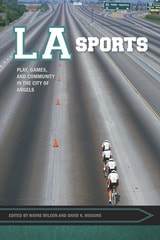
cover of LA Sports: Play, Games, and Community in the City of Angels

LA Sports

Play, Games, and Community in the City of Angels

Wayne Wilson

University of Arkansas Press, 2018
LA Sports brings together sixteen essays covering various aspects of the development and changing nature of sport in one of America’s most fascinating and famous cities. The writers cover a range of topics, including the history of car racing and ice skating, the development of sport venues, the power of the Mexican fan base in American soccer leagues, the intersecting life stories of Jackie and Mack Robinson, the importance of the Showtime Lakers, the origins of Muscle Beach and surfing, sport in Hollywood films, and more.
[more]
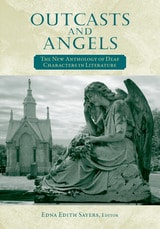
cover of Outcasts and Angels: The New Anthology of Deaf Characters in Literature

Outcasts and Angels

The New Anthology of Deaf Characters in Literature

Edna Edith Sayers

Gallaudet University Press, 2012

In 1976, Trent Batson and Eugene Bergman released their classic Angels and Outcasts: An Anthology of Deaf Characters in Literature. In it, they featured works from the 19th and 20th centuries by well-known authors such as Charles Dickens and Eudora Welty. They also presented less-well-known deaf authors, and they prefaced each excerpt with remarks on context, societal perceptions, and the dignity due to deaf people. Since then, much has transpired, turning around the literary criticism regarding portrayals of deaf people in print. Edna Edith Sayers reflects these changes in her new collection Outcasts and Angels: The New Anthology of Deaf Characters in Literature.

       Sayers mines the same literary vein as the first volume with rich new results. Her anthology also introduces rare works by early masters such as Daniel Defoe. She includes three new deaf authors, Charlotte Elizabeth, Howard T. Hofsteater, and Douglas Bullard, who offer compelling evidence of the attitudes toward deaf people current in their eras. In search of commonalities and comparisons, Sayers reveals that the defining elements of deaf literary characters are fluid and subtly different beyond the predominant dueling stereotypes of preternaturally spiritual beings and thuggish troglodytes.

       Outcasts and Angels demonstrates these subtle variations in writings by Ambrose Bierce, Isak Dinesen, Nadine Gordimer, and Flannery O’Connor. Stories by Juozas Grušas, Julian Barnes, and many other international authors broaden the scope of this updated inquiry into the deaf literary character. Sayer’s preface and closing essay bring any disparate parts together, completing Outcasts and Angels as a fitting, contemporary companion to the original classic collection.

[more]
cover of The Book of Stones and Angels

The Book of Stones and Angels

Harold Schweizer

Tupelo Press, 2015

Thematically exploring the contrasts and dynamic interplay between solidity and ephemerality, in his first book of poems Harold Schweizer creates great dramatic tension by poising complex, expansive sentences against the strictures of taut margins. While portraying angels as unfettered, Schweizer doesn’t accept the platonic notion that we ever transcend our physical world. Instead, he imagines angels as immanent, everywhere: “they / inhabit all things.” The Book of Stones and Angels attempts to disclose the angelic lightness of stones in the obstinate materiality of angels, amid the lightness and frailty of our existence.
[more]
cover of The Reprobation of Humans and Angels: Augustinus, Tome III, Book X

The Reprobation of Humans and Angels

Augustinus, Tome III, Book X

Cornelius Jansen

Catholic University of America Press, 2026

Cornelius Jansen’s masterful Augustinus (1641) has recently been the center of renewed interest in the theological academic community. After the translation and publication of the chapter Jansen devoted in his work to the topic of predestination of human beings and angels, this is the first ever translation in the English language of the last chapter of the Augustinus, addressing the fate of the reprobates. Jansen illustrated the causes and justice of the divine decision to exclude the damned from the beatific vision by mostly drawing from Augustine’s works. The readers will find that Jansen’s treatment on the subject to be balanced and fair, tracing a middle course between the eschatological optimism of Universalism, which claims that all human beings, and possibly angels as well, will one day be restored to fellowship with God, and the exclusivist soteriology typical of some pre-Vatican II Catholic theology and Evangelicalism. This volume builds upon the translation of some of its central chapters in The Predestination of Humans and Angels, also in the Early Modern Catholic Sources series.
[more]