Results by title
14 books match the query 'Animal Husbandry'
All Flesh Is Grass
The Pleasures and Promises of Pasture FarmingGene Logsdon
Ohio University Press, 2004
Amidst Mad Cow scares and consumer concerns about how farm animals are bred, fed, and raised, many farmers and homesteaders are rediscovering the traditional practice of pastoral farming. Grasses, clovers, and forbs are the natural diet of cattle, horses, and sheep, and are vital supplements for hogs, chickens, and turkeys. Consumers increasingly seek the health benefits of meat from animals raised in green paddocks instead of in muddy feedlots.
In All Flesh Is Grass: The Pleasures and Promises of Pasture Farming, Gene Logsdon explains that well-managed pastures are nutritious and palatable—virtual salads for livestock. Leafy pastures also hold the soil, foster biodiversity, and create lovely landscapes. Grass farming might be the solution for a stressed agricultural system based on an industrial model and propped up by federal subsidies.
In his clear and conversational style, Logsdon explains historically effective practices and new techniques. His warm, informative profiles of successful grass farmers offer inspiration and ideas. His narrative is enriched by his own experience as a “contrary farmer” on his artisan-scale farm near Upper Sandusky, Ohio.
All Flesh Is Grass will have broad appeal to the sustainable commercial farmer, the home-food producer, and all consumers who care about their food.
Animals as Food
(Re)connecting Production, Processing, Consumption, and ImpactsAmy J. Fitzgerald
Michigan State University Press, 2015
Animals under the Swastika
J. W. Mohnhaupt, translated by John R. J. Eyck
University of Wisconsin Press, 2022
Drawing from diaries, journals, school textbooks, and printed propaganda, J.W. Mohnhaupt tells these animals’ stories vividly and with an eye for everyday detail, focusing each chapter on a different facet of Nazism by way of a specific animal species: red deer, horses, cats, and more. Animals under the Swastika illustrates the complicated, thought-provoking relationship between Nazis and animals.
Breeds of Empire
The Invention of the Horse in Southeast Asia and Southern Africa 1500-1950Edited by Greg Bankoff and Sandra Swart
National University of Singapore Press, 2007
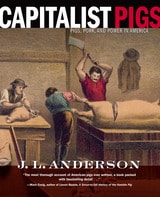
Capitalist Pigs
Pigs, Pork, and Power in AmericaJ. L. Anderson
West Virginia University Press, 2019
Pigs are everywhere in United States history. They cleared frontiers and built cities (notably Cincinnati, once known as Porkopolis), served as an early form of welfare, and were at the center of two nineteenth-century “pig wars.” American pork fed the hemisphere; lard literally greased the wheels of capitalism.
J. L. Anderson has written an ambitious history of pigs and pig products from the Columbian exchange to the present, emphasizing critical stories of production, consumption, and waste in American history. He examines different cultural assumptions about pigs to provide a window into the nation’s regional, racial, and class fault lines, and maps where pigs are (and are not) to reveal a deep history of the American landscape. A contribution to American history, food studies, agricultural history, and animal studies, Capitalist Pigs is an accessible, deeply researched, and often surprising portrait of one of the planet’s most consequential interspecies relationships.
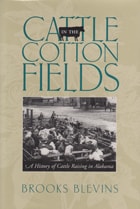
Cattle in the Cotton Fields
A History of Cattle Raising in AlabamaBrooks Blevins
University of Alabama Press, 2013
Cattle raising today is the most widely practiced form of agriculture in Alabama and ranks second only to the poultry industry in terms of revenue. Brooks Blevins not only relates the development and importance of the industry to agricultural practices but also presents it as an integral component of southern history, inextricably linked to issues of sectional politics, progressivism, race and class struggles, and rural depopulation. Most historians believe cattle were first introduced by the Spanish explorers and missionaries during the early decades of the 16th century. Native Americans quickly took up cattle raising, and the practice was reinforced with the arrival of the French and the British. By 1819--after massive immigration of Anglo-American herders, farmers, and planters--cattle played an integral role in the territory's agriculture and economy. Despite the dominance of the cotton industry during the antebellum period, cattle herding continued to grow and to become identified as an important part of the region's agriculture.
In the early decades of the 20th century, the boll weevil drove many planters out of the cotton business. These planters adopted a midwestern model of cattle raising consisting of purebred English breeds, enclosed pastures, scientific breeding and feeding practices, and intimate cooperation among cattlemen, government agents, and business interests. This model of farming gradually replaced the open range herding tradition.
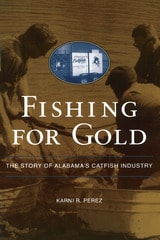
Fishing for Gold
The Story of Alabama's Catfish IndustryKarni R. Perez
University of Alabama Press, 2006
A captivating story of the industry's rise in Alabama.
With a wonderful ear for dialogue and in flowing narrative style, Karni Perez weaves together oral histories collected from early hatchery owners, catfish farmers, processors, and researchers to recount the important contributions made by Alabamians to the channel catfish industry. Perez describes the struggles and glories of fish culture from its early days as an experimental venture to the thriving present-day commercial enterprise that supplies warmwater fish for the American food industry.
As Perez states, "The catfish industry started out in Alabama as a do-it-yourself and figure-it out-yourself kind of enterprise." We hear how men who were mostly cattle farmers learned to nudge male and female fish into spawning in crudely constructed aquaria, how growers discovered the dissolved oxygen needs of their "herd" when big die-offs occurred, how Lenson Montz and Otis Breland designed the first paddle aerator to remedy the problem, how farmers eventually trained a bottomfeeding species to rise to the water surface to eat so their numbers could be better estimated. In one dramatic story, we learn how a man experimenting with the first skinning machine lost a piece of his hand in front of a crowd of horrified locals. (After it was retrieved from the skin basket, it was reattached by a town doctor and healed perfectly.) Ironically, the man was a representative of the engineering firm tasked with designing the machine; he had never before seen a catfish in his life. The machine was modified and became an essential component of modern fish processing.
In addition to telling the remarkable stories of individual contributions by farmers and researchers, Perez explains the positive effects played by improved public infrastructure, continued biological research, state legislation, and federal recognition of aquaculture as agriculture.
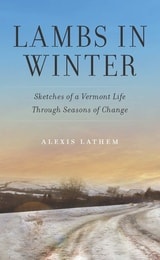
Lambs in Winter
Sketches of a Vermont Life Through Seasons of ChangeAlexis Lathem
University of Massachusetts Press, 2025
Finding hope in a small farm, an engaged community, and an age-old connection to the earth
After half a lifetime spent moving from place to place, Alexis Lathem at last settled down with her husband on a small farm near Vermont’s largest city. The lyric essays of Lambs in Winter take readers through the seasonal cycles of raising sheep and hens and growing fruits and vegetables while confronting the challenges of winter storms, summer floods, invasive weeds, and pests and diseases.
Ever conscious of her place in a historically colonized and ecologically degraded landscape, Lathem wrestles with ethical questions that come to many rural dwellers who—following Thoreau—set out to “live deliberately,” in a time of climate crisis, persistent racial inequity, and growing economic inequality. Likewise, she grapples with the moral complexities of small-scale animal husbandry. Through her efforts at self-provisioning, without holding illusions of the self-reliant individual, Lathem finds herself deeply embedded in the community and reliant on others, especially as her region deals with repeated catastrophic flooding brought on by climate change.
Through elegant prose and insightful investigations into pressing contemporary issues, Lathem evokes the world of her farm and the surrounding countryside with a spiritual awareness of the human journey on this earth. Living in place, attuned to the unfolding changes in the world around her, gives her much to grieve, but the pages of Lambs in Winter are luminous with moments of joy and beauty.
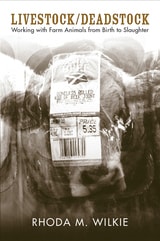
Livestock/Deadstock
Working with Farm Animals from Birth to SlaughterAuthored by Rhoda M. Wilkie
Temple University Press, 2010
The connection between people and companion animals has received considerable attention from scholars. In her original and provocative ethnography Livestock/Deadstock, sociologist Rhoda Wilkie asks, how do the men and women who work on farms, in livestock auction markets, and slaughterhouses, interact with—or disengage from—the animals they encounter in their jobs?
Wilkie provides a nuanced appreciation of how those men and women who breed, rear, show, fatten, market, medically treat, and slaughter livestock, make sense of their interactions with the animals that constitute the focus of their work lives. Using a sociologically informed perspective, Wilkie explores their attitudes and behaviors to explain how agricultural workers think, feel, and relate to food animals.
Livestock/Deadstock looks at both people and animals in the division of labor and shows how commercial and hobby productive contexts provide male and female handlers with varying opportunities to bond with and/or distance themselves from livestock. Exploring the experiences of stockpeople, hobby farmers, auction workers, vets and slaughterers, she offers timely insight into the multifaceted, gendered, and contradictory nature of human roles in food animal production.
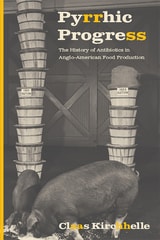
Pyrrhic Progress
The History of Antibiotics in Anglo-American Food ProductionClaas Kirchhelle
Rutgers University Press, 2020
2020 Choice Outstanding Academic Title
Winner of the 2020 Turriano Prize from ICOHTEC
Short-listed and highly commended for the Antibiotic Guardian Award from Public Health England
Long-listed for the Michel Déon Prize from the Royal Irish Academy
Pyrrhic Progress analyses over half a century of antibiotic use, regulation, and resistance in US and British food production. Mass-introduced after 1945, antibiotics helped revolutionize post-war agriculture. Food producers used antibiotics to prevent and treat disease, protect plants, preserve food, and promote animals’ growth. Many soon became dependent on routine antibiotic use to sustain and increase production. The resulting growth of antibiotic infrastructures came at a price. Critics blamed antibiotics for leaving dangerous residues in food, enabling bad animal welfare, and selecting for antimicrobial resistance (AMR) in bacteria, which could no longer be treated with antibiotics. Pyrrhic Progress reconstructs the complicated negotiations that accompanied this process of risk prioritization between consumers, farmers, and regulators on both sides of the Atlantic. Unsurprisingly, solutions differed: while Europeans implemented precautionary antibiotic restrictions to curb AMR, consumer concerns and cost-benefit assessments made US regulators focus on curbing drug residues in food. The result was a growing divergence of antibiotic stewardship and a rise of AMR. Kirchhelle’s comprehensive analysis of evolving non-human antibiotic use and the historical complexities of antibiotic stewardship provides important insights for current debates on the global burden of AMR. This Open Access ebook is available under a CC-BY-NC-ND license, and is supported by a generous grant from Wellcome Trust.
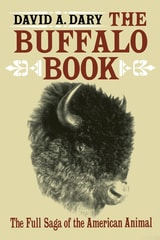
The Buffalo Book
The Full Saga Of The American AnimalDavid A. Dary
Ohio University Press, 1989
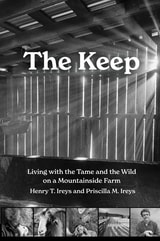
The Keep
Living with the Tame and the Wild on a Mountainside FarmHenry T. Ireys
West Virginia University Press, 2025
Written separately by wife and husband with distinctly separate voices, the book’s essays illustrate different perspectives of life on a farm dedicated to the compassionate treatment of livestock and a deep appreciation of nature’s complexities. Priscilla embraces the intensity of loving animals; Henry explores the mysteries of living in a beautiful place. And, in telling their tales, the authors provide a glimpse into their own marriage—as complicated, improbable, and enduring as life itself. The Keep—the term for “the strongest or central tower of a castle, acting as a final refuge”—is a love letter to an unexpected place and adopted lifestyle.
The Perfection of Nature
Animals, Breeding, and Race in the RenaissanceMackenzie Cooley
University of Chicago Press, 2022
The Renaissance is celebrated for the belief that individuals could fashion themselves to greatness, but there is a dark undercurrent to this fêted era of history. The same men and women who offered profound advancements in European understanding of the human condition—and laid the foundations of the Scientific Revolution—were also obsessed with controlling that condition and the wider natural world.
Tracing early modern artisanal practice, Mackenzie Cooley shows how the idea of race and theories of inheritance developed through animal breeding in the shadow of the Spanish Empire. While one strand of the Renaissance celebrated a liberal view of human potential, another limited it by biology, reducing man to beast and prince to stud. “Race,” Cooley explains, first referred to animal stock honed through breeding. To those who invented the concept, race was not inflexible, but the fragile result of reproductive work. As the Spanish empire expanded, the concept of race moved from nonhuman to human animals. Cooley reveals how, as the dangerous idea of controlled reproduction was brought to life again and again, a rich, complex, and ever-shifting language of race and breeding was born.
Adding nuance and historical context to discussions of race and human and animal relations, The Perfection of Nature provides a close reading of undertheorized notions of generation and its discontents in the more-than-human world.

The Sheep Book
A Handbook for the Modern Shepherd, Revised and UpdatedRon Parker
Ohio University Press, 2001