Results by title
19 books match the query 'Animation'
Animating Film Theory
Karen Beckman, ed.
Duke University Press, 2014
Contributors. Karen Beckman, Suzanne Buchan, Scott Bukatman, Alan Cholodenko, Yuriko Furuhata, Alexander R. Galloway, Oliver Gaycken, Bishnupriya Ghosh, Tom Gunning, Andrew R. Johnston, Hervé Joubert-Laurencin, Gertrud Koch, Thomas LaMarre, Christopher P. Lehman, Esther Leslie, John MacKay, Mihaela Mihailova, Marc Steinberg, Tess Takahashi
Animation
Curtis, Scott
Rutgers University Press, 2019
Animation and America
Wells, Paul
Rutgers University Press, 2002
In Animation and America, Paul Wells looks afresh at this unique art, discussing the distinctiveness of the cartoon form, as well as myriad other types of animation production. Insisting upon the "modernity" of the genre, Wells examines its importance as a barometer of the social conditions in which it is made and which it reflects. This book is not a standard history of animation in America, but rather uses animation as a way of discussing social and political change. Wells concentrates on the ways in which the form continues to grow, experiment, and remain subversiveand, increasingly, gaining acclaim and recognition. Now in the vanguard of visual culture, animation occupies an important position in representing both the outcomes and impacts of new technologies, and it also has laid the foundations for a new understanding of social and artistic practice.

Anime's Identity
Performativity and Form beyond JapanStevie Suan
University of Minnesota Press, 2021
A formal approach to anime rethinks globalization and transnationality under neoliberalism
Anime has become synonymous with Japanese culture, but its global reach raises a perplexing question—what happens when anime is produced outside of Japan? Who actually makes anime, and how can this help us rethink notions of cultural production? In Anime’s Identity, Stevie Suan examines how anime’s recognizable media-form—no matter where it is produced—reflects the problematics of globalization. The result is an incisive look at not only anime but also the tensions of transnationality.
Far from valorizing the individualistic “originality” so often touted in national creative industries, anime reveals an alternate type of creativity based in repetition and variation. In exploring this alternative creativity and its accompanying aesthetics, Suan examines anime from fresh angles, including considerations of how anime operates like a brand of media, the intricacies of anime production occurring across national borders, inquiries into the selfhood involved in anime’s character acting, and analyses of various anime works that present differing modes of transnationality.
Anime’s Identity deftly merges theories from media studies and performance studies, introducing innovative formal concepts that connect anime to questions of dislocation on a global scale, creating a transformative new lens for analyzing popular media.

Anime's Knowledge Cultures
Geek, Otaku, ZhaiJinying Li
University of Minnesota Press, 2024
Unlocking the technosocial implications of global geek cultures
Why has anime, a “low-tech” medium from last century, suddenly become the cultural “new cool” in the information age? Through the lens of anime and its transnational fandom, Jinying Li explores the meanings and logics of “geekdom” as one of the most significant sociocultural groups of our time. In Anime’s Knowledge Cultures, Li shifts the center of global geography in knowledge culture from the computer boys in Silicon Valley to the anime fandom in East Asia.
Drawing from film studies, animation studies, media theories, fan studies, and area studies, she provides broad cultural and theoretical explanations of anime’s appeal to a new body of tech-savvy knowledge workers and consumers commonly known as geeks, otaku, or zhai. Examining the forms, techniques, and aesthetics of anime, as well as the organization, practices, and sensibilities of its fandom, Anime’s Knowledge Cultures is at once a theorization of anime as a media environment as well as a historical and cultural study of transnational geekdom as a knowledge culture. Li analyzes anime culture beyond the national and subcultural frameworks of Japan or Japanese otaku, instead theorizing anime’s transnational, transmedial network as the epitome of the postindustrial knowledge culture of global geekdom.
By interrogating the connection between the anime boom and global geekdom, Li reshapes how we understand the meanings and significance of anime culture in relation to changing social and technological environments.
Birth of an Industry
Blackface Minstrelsy and the Rise of American AnimationNicholas Sammond
Duke University Press, 2015

Comic Book Movies
Davis, Blair
Rutgers University Press, 2018
Film scholar Blair Davis also considers how the genre’s visual style is equally important as its weighty themes, and he details how advances in digital effects have allowed filmmakers to incorporate elements of comic book art in innovative ways. As he reveals, comic book movies have inspired just as many innovations to Hollywood’s business model, with film franchises and transmedia storytelling helping to ensure that the genre will continue its reign over popular culture for years to come.

From Walt to Woodstock
How Disney Created the CountercultureBy Douglas Brode
University of Texas Press, 2004
With his thumbprint on the most ubiquitous films of childhood, Walt Disney is widely considered to be the most conventional of all major American moviemakers. The adjective "Disneyfied" has become shorthand for a creative work that has abandoned any controversial or substantial content to find commercial success.
But does Disney deserve that reputation? Douglas Brode overturns the idea of Disney as a middlebrow filmmaker by detailing how Disney movies played a key role in transforming children of the Eisenhower era into the radical youth of the Age of Aquarius. Using close readings of Disney projects, Brode shows that Disney's films were frequently ahead of their time thematically. Long before the cultural tumult of the sixties, Disney films preached pacifism, introduced a generation to the notion of feminism, offered the screen's first drug-trip imagery, encouraged young people to become runaways, insisted on the need for integration, advanced the notion of a sexual revolution, created the concept of multiculturalism, called for a return to nature, nourished the cult of the righteous outlaw, justified violent radicalism in defense of individual rights, argued in favor of communal living, and encouraged antiauthoritarian attitudes. Brode argues that Disney, more than any other influence in popular culture, should be considered the primary creator of the sixties counterculture—a reality that couldn't be further from his "conventional" reputation.
How to Create a Universe
Jakob Ion Wille, Simon Jon Andreasen, and Gunnar Wille
University of Westminster Press, 2025
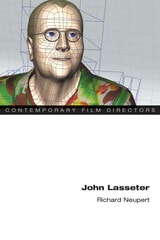
John Lasseter
Richard Neupert
University of Illinois Press, 2016
Richard Neupert explores Lasseter's signature aesthetic and storytelling strategies and details how he became the architect of Pixar's studio style. Neupert contends that Lasseter's accomplishments emerged from a unique blend of technical skill and artistic vision, as well as a passion for working with collaborators. In addition, Neupert traces the director's career arc from the time Lasseter joined Pixar in 1984. As Neupert shows, Lasseter's ability to keep a foot in both animation and CGI allowed him to thrive in an unconventional corporate culture that valued creative interaction between colleagues. The ideas that emerged built an animation studio that updated and refined classical Hollywood storytelling practices--and changed commercial animation forever.

Molecular Capture
The Animation of BiologyAdam Nocek
University of Minnesota Press, 2021
How computer animation technologies became vital visualization tools in the life sciences
Who would have thought that computer animation technologies developed in the second half of the twentieth century would become essential visualization tools in today’s biosciences? This book is the first to examine this phenomenon. Molecular Capture reveals how popular media consumption and biological knowledge production have converged in molecular animations—computer simulations of molecular and cellular processes that immerse viewers in the temporal unfolding of molecular worlds—to produce new regimes of seeing and knowing.
Situating the development of this technology within an evolving field of historical, epistemological, and political negotiations, Adam Nocek argues that molecular animations not only represent a key transformation in the visual knowledge practices of life scientists but also bring into sharp focus fundamental mutations in power within neoliberal capitalism. In particular, he reveals how the convergence of the visual economies of science and entertainment in molecular animations extends neoliberal modes of governance to the perceptual practices of scientific subjects. Drawing on Alfred North Whitehead’s speculative metaphysics and Michel Foucault’s genealogy of governmentality, Nocek builds a media philosophy well equipped to examine the unique coordination of media cultures in this undertheorized form of scientific media. More specifically, he demonstrates how governmentality operates across visual practices in the biosciences and the popular mediasphere to shape a molecular animation apparatus that unites scientific knowledge and entertainment culture.
Ultimately, Molecular Capture proposes that molecular animation is an achievement of governmental design. It weaves together speculative media philosophy, science and technology studies, and design theory to investigate how scientific knowledge practices are designed through media apparatuses.

Next Time on Dragon Ball
Playing with a Manga and Anime FranchiseVincent Haddad
University of Minnesota Press, 2026
How media production and fan play interact to shape the aesthetics of a global anime franchise
Since its debut in 1984, Dragon Ball has become one of the most popular, influential, and lucrative media franchises in the world. In Next Time on Dragon Ball, Vincent Haddad investigates how the franchise has maintained huge global demand despite its formulaic plotlines. Examining its exhaustive repetition of storytelling forms across comics, TV series, games, and merchandise, Haddad argues that the convergence of play, fandom, and narrative made Dragon Ball an unlikely success—and a harbinger of broader shifts in the media landscape of franchises from the 1980s to the present.
Haddad conceives of Dragon Ball as a “franchise toy,” a corporate media property that is constantly remixed by its fans in ways that its owners resist but also ultimately embrace: appropriation is essential to the franchise’s popularity. Over the past forty years, Haddad argues, Dragon Ball’s deployment of familiar tropes, cultural references, and narrative forms—from classical Chinese stories and the films of Bruce Lee and Jackie Chan to American franchises like Superman and Star Wars—has invited unique transcultural play. Through diverse examples of how fans use its characters as “playthings,” Haddad shows how Dragon Ball travels across international networked fandoms, highlighting the queer, gendered, and racialized dimensions of this play.
Parsing the dynamics of “sites of conflict” between authorized media and fan content, Next Time on Dragon Ball illuminates how fan engagement across the Americas changes the parameters of what a manga and anime franchise is and can be.
Retail e-book files for this title are screen-reader friendly with images accompanied by short alt text and/or extended descriptions.

On the Animation of the Inorganic
Art, Architecture, and the Extension of LifeSpyros Papapetros
University of Chicago Press, 2012
Throughout human history, people have imagined inanimate objects to have intelligence, language, and even souls. In our secular societies today, we still willingly believe that nonliving objects have lives of their own as we find ourselves interacting with computers and other equipment. In On the Animation of the Inorganic, Spyros Papapetros examines ideas about simulated movement and inorganic life during and after the turn of the twentieth century—a period of great technical innovation whose effects continue to reverberate today.
Exploring key works of art historians such as Aby Warburg, Wilhelm Worringer, and Alois Riegl, as well as architects and artists like Fernand Léger, Mies van der Rohe, and Salvador Dalí, Papapetros tracks the evolution of the problem of animation from the fin de siècle through the twentieth century. He argues that empathy—the ability to identify with objects of the external world—was repressed by twentieth-century modernist culture, but it returned, projected onto inorganic objects such as machines, automobiles, and crystalline skyscrapers. These modern artifacts, he demonstrates, vibrated with energy, life, and desire of their own and had profound effects on people. Subtle and insightful, this book will change how we view modernist art, architecture, and their histories.
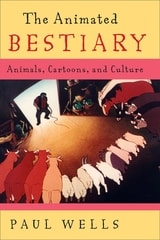
The Animated Bestiary
Animals, Cartoons, and CultureWells, Paul
Rutgers University Press, 2008
The Animated Bestiary critically evaluates the depiction of animals in cartoons and animation more generally. Paul Wells argues that artists use animals to engage with issues that would be more difficult to address directly because of political, religious, or social taboos. Consequently, and principally through anthropomorphism, animation uses animals to play out a performance of gender, sex and sexuality, racial and national traits, and shifting identity, often challenging how we think about ourselves.
Wells draws on a wide range of examples, from the original King Kongto Nick Park's Chicken Run to Disney cartoonsùsuch as Tarzan, The Jungle Book, and Brother Bearùto reflect on people by looking at the ways in which they respond to animals in cartoons and films.
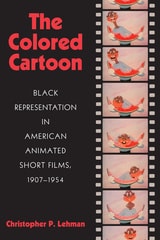
The Colored Cartoon
Black Presentation in American Animated Short Films, 1907-1954Christopher P. Lehman
University of Massachusetts Press, 2007
From the introduction of animated film in the early 1900s to the 1950s, ethnic humor was a staple of American-made cartoons. Yet as Christopher Lehman shows in this revealing study, the depiction of African Americans in particular became so inextricably linked to the cartoon medium as to influence its evolution through those five decades. He argues that what is in many ways most distinctive about American animation reflects white animators' visual interpretations of African American cultural expression.
The first American animators drew on popular black representations, many of which were caricatures rooted in the culture of southern slavery. During the 1920s, the advent of the sound-synchronized cartoon inspired animators to blend antebellum-era black stereotypes with the modern black cultural expressions of jazz musicians and Hollywood actors. When the film industry set out to desexualize movies through the imposition of the Hays Code in the early 1930s, it regulated the portrayal of African Americans largely by segregating black characters from others, especially white females. At the same time, animators found new ways to exploit the popularity of African American culture by creating animal characters like Bugs Bunny who exhibited characteristics associated with African Americans without being identifiably black.
By the 1950s, protests from civil rights activists and the growing popularity of white cartoon characters led animators away from much of the black representation on which they had built the medium. Even so, animated films today continue to portray African American characters and culture, and not necessarily in a favorable light.
Drawing on a wide range of sources, including interviews with former animators, archived scripts for cartoons, and the films themselves, Lehman illustrates the intimate and unmistakable connection between African Americans and animation.
The Flesh of Animation
Bodily Sensations in Film and Digital MediaSandra Annett
University of Minnesota Press, 2024
How animation can reconnect us with bodily experiences
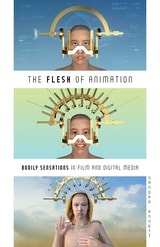
Film and media studies scholarship has often argued that digital cinema and CGI provoke a sense of disembodiment in viewers; they are seen as merely fantastic or unreal. In her in-depth exploration of the phenomenology of animation, Sandra Annett offers a new perspective: that animated films and digital media in fact evoke vivid embodied sensations in viewers and connect them with the lifeworld of experience.
Starting with the emergence of digital technologies in filmmaking in the 1980s, Annett argues that contemporary digital media is indebted to the longer history of animation. She looks at a wide range of animation—from Disney films to anime, electro swing music videos to Vocaloids—to explore how animation, through its material forms and visual styles, can evoke bodily sensations of touch, weight, and orientation in space. Each chapter discusses well-known forms of animation from the United States, France, Japan, South Korea, and China, examining how they provoke different sensations in viewers, such as floating and falling in Howl’s Moving Castle and My Beautiful Girl Mari, and how the body is mediated in films that combine animation and live action, as seen in Who Framed Roger Rabbit and Song of the South. These films set the stage for an exploration of how animation and embodiment manifest in contemporary global media, from CGI and motion capture in Disney’s “live action remakes” to new media installations by artists like Lu Yang.
Leveraging an array of case studies through a new approach to film phenomenology, The Flesh of Animation offers an enlightening discussion of why animation provides a sensational experience for viewers not replicable through other media forms.
The Live-Action Animated Film
Kyle Meikle
Rutgers University Press, 2026
To Embody the Marvelous
The Making of Illusions in Early Modern SpainEsther Fernández
Vanderbilt University Press, 2021
Winner of the Nancy Staub Award, UNIMA-USA (Union Internationale de la Marionnette), 2023
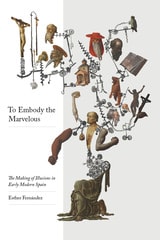
In its exploration of puppetry and animation as the performative media of choice for mastering the art of illusion, To Embody the Marvelous engages with early modern notions of wonder in religious, artistic, and social contexts.
From jointed, wood-carved figures of Christ, saintly marionettes that performed hagiographical dramas, experimental puppets and automata in Cervantes' Don Quixote, and the mechanical sets around which playwright Calderón de la Barca devised secular magic shows to deconstruct superstitions, these historical and fictional artifacts reenvisioned religious, artistic, and social notions that led early modern society to critically wrestle with enchantment and disenchantment.
The use of animated performance objects in Spanish theatrical contexts during the sixteenth and seventeenth centuries became one of the most effective pedagogical means to engage with civil society. Regardless of social strata, readers and spectators alike were caught up in a paradigm shift wherein belief systems were increasingly governed by reason—even though the discursive primacy of supernatural doxa and Christian wonder remained firmly entrenched. Thanks to their potential for motion, religious and profane puppets, automata, and mechanical stage props deployed a rationalized sense of wonder that illustrates the relationship between faith and reason, reevaluates the boundaries of fiction in art and entertainment cultures, acknowledges the rise of science and technology, and questions normative authority.
To Embody the Marvelous
The Making of Illusions in Early Modern SpainEsther Fernández
Vanderbilt University Press, 2022
Winner of the Nancy Staub Award, UNIMA-USA (Union Internationale de la Marionnette), 2023
In its exploration of puppetry and animation as the performative media of choice for mastering the art of illusion, To Embody the Marvelous engages with early modern notions of wonder in religious, artistic, and social contexts.
From jointed, wood-carved figures of Christ, saintly marionettes that performed hagiographical dramas, experimental puppets and automata in Cervantes' Don Quixote, and the mechanical sets around which playwright Calderón de la Barca devised secular magic shows to deconstruct superstitions, these historical and fictional artifacts reenvisioned religious, artistic, and social notions that led early modern society to critically wrestle with enchantment and disenchantment.
The use of animated performance objects in Spanish theatrical contexts during the sixteenth and seventeenth centuries became one of the most effective pedagogical means to engage with civil society. Regardless of social strata, readers and spectators alike were caught up in a paradigm shift wherein belief systems were increasingly governed by reason—even though the discursive primacy of supernatural doxa and Christian wonder remained firmly entrenched. Thanks to their potential for motion, religious and profane puppets, automata, and mechanical stage props deployed a rationalized sense of wonder that illustrates the relationship between faith and reason, reevaluates the boundaries of fiction in art and entertainment cultures, acknowledges the rise of science and technology, and questions normative authority.