Results by title
28 books match the query 'Anthropological linguistics'
American Indian Languages
Cultural and Social ContextsShirley Silver and Wick R. Miller
University of Arizona Press, 1997
Authors Silver and Miller demonstrate the complexity and diversity of these languages while dispelling popular misconceptions. Their text reveals the linguistic richness of languages found throughout the Americas, emphasizing those located in the western United States and Mexico, while drawing on a wide range of other examples found from Canada to the Andes. It introduces readers to such varied aspects of communicating as directionals and counting systems, storytelling, expressive speech, Mexican Kickapoo whistle speech, and Plains sign language.
The authors have included basics of grammar and historical linguistics, while emphasizing such issues as speech genres and other sociolinguistic issues and the relation between language and worldview. They have incorporated a variety of data that have rarely or never received attention in nontechnical literature in order to underscore the linguistic diversity of the Americas, and have provided more extensive language classification lists than are found in most other texts.
American Indian Languages: Cultural and Social Contexts is a comprehensive resource that will serve as a text in undergraduate and lower-level graduate courses on Native American languages and provide a useful reference for students of American Indian literature or general linguistics. It also introduces general readers interested in Native Americans to the amazing diversity and richness of indigenous American languages.
Coverage includes:
Achumawi, Acoma, Algonquin, Apache, Araucanian, Arawakan, Athapascan, Atsugewi, Ayamara, Bacairi, Bella Coola, Beothuk, Biloxi, Blackfoot, Caddoan, Cahto, Cahuilla, Cakchiquel, Carib, Cayuga, Chemehuevi, Cherokee, Chibchan, Chichimec, Chimakuan, Chimariko, Chinook, Chipewyan, Choctaw-Chickasaw, Chol, Cocopa, Coeur d'Alene, Comanche, Coos, Cora, Cree, Creek, Crow, Cubeo, Cupeño, Dakota, Delaware, Diegueño, Eskimo-Aleut, Esselen, Eyak, Fox, Gros Ventre, Guaraní, Guarijío, Haida, Havasupai, Hill Patwin, Hopi, Huastec, Huave, Hupa, Inuit-Inupiaq, Iroquois, Jaqaru, Je, Jicaque, Kalapuyan, Kamia, Karankawas, Karuk, Kashaya, Keres, Kickapoo, Kiliwa, Kiowa-Tanoan, Koasati, Konkow, Kuna, Kwakiutl, Kwalhioqua-Tlatskanai, Lakota, Lenca, Luiseño, Maidu, Mapuche, Markoosie, Mayan, Mazahua, Mazatec, Métis, Mexica, Micmac, Misumalpan, Mitchif, Miwok, Mixe-Zoquean, Mixtec, Mobilian, Mohave, Mohawk, Muskogean, Nahuatl, Natchez, Navajo, Nez Perce, Nheengatú, Nicola, Nomlaki, Nootka, Ojibwa, Oneida, O'odham, Otomí, Paiute, Palaihnihan, Panamint, Panoan, Paya, Pima, Pipil, Pomo, Poplocan, Pueblo, Puquina, Purpecha, Quechua, Quiché, Quileute, Sahaptian, Salish, Seneca, Sequoyah, Seri, Serrano, Shasta, Shoshoni, Sioux, Sirenikski, Slavey, Subtiaba-Tlapanec, Taíno, Takelma, Tanaina, Tarahumara, Tequistlatecan, Tewa, Tlingit, Toba, Toltec, Totonac, Tsimshian, Tubatulabal, Tukano, Tunica, Tupí, Ute, Uto-Aztecan, Vaupés, Venture¤o, Wakashan, Walapai, Wappo, Washo, Wintu, Wiyot, Xinca, Yahi, Yana, Yokuts, Yucatec, Yuchi, Yuki, Yuma, Yurok, Zapotec, Zoquean, and Zuni.

An Other Tongue
Nation and Ethnicity in the Linguistic BorderlandsAlfred Arteaga
Duke University Press, 1994
The Chicanos, the U.S./Mexico borderland polyglots whose sense of history, nationality, and race is as mixed as their language, are the book's prime example. But the authors recognize that border zones, like diasporas and post-colonial relations, occur globally, and their discussion of hybrid or mestizo identities ranges from the United States to the Caribbean to South Asia to Ireland. Drawing on personal experience, readings of poetry and fiction, and cultural theory, the authors detail the politics of being human through the mediation of language. What does "shadow" mean to the Native American Indian, or diaspora to the East Indian immigrant? How does British colonialism yet affect Irish and Indian nationalist literary production? Why is the split between Eastern and Western European language use necessarily schizophrenic? So much of our sense of difference today is constructed as we speak, and An Other Tongue speaks with eloquence to this phenomenon and will be of great interest to those concerned with the discourse of post-colonial studies, critical theory, and the remapping of world literature.
Contributors. Norma Alarcón, Alfred Arteaga, Juan Bruce-Novoa, Cordelia Chávez Candelaria, Michael G. Cooke, Edmundo Desnoes, Eugene C. Eoyang, David Lloyd, Lydie Moudileno, Jean-Luc Nancy, Tejaswini Niranjana, Ada Savin, Gayatri Chakravorty Spivak, Michael Smith, Tzvetan Todorov, Luis A. Torres, Gerald Vizenor
Being and Hearing
Making Intelligible Worlds in Deaf KathmanduPeter Graif
HAU, 2018
From pranks and protests, to diverse acts of love and resistance, to renewed distinctions between material and immaterial, deaf communities in Nepal have crafted ways to foreground the habits of perception that shape both their own experiences and how they are experienced by the hearing people around them. By exploring these often overlooked strategies, Being and Hearing makes a unique contribution to ethnography and comparative philosophy.
Between the Andes and the Amazon
Language and Social Meaning in BoliviaAnna M. Babel
University of Arizona Press, 2018
Between the Andes and the Amazon is ethnography in storytelling form, a rigorous yet sensitive exploration of how people understand themselves and others as members of social groups through the words and languages they use.
Drawing on fifteen years of ethnographic research, Babel offers a close examination of how people produce oppositions, even as they might position themselves “in between” those categories. These oppositions form the raw material of the social system that people accept as “normal” or “the way things are.” Meaning-making happens through language use and language play, Babel explains, and the practice of using Spanish versus Quechua is a claim to an identity or a social position. Babel gives personal perspectives on what it is like to live in this community, focusing on her own experiences and those of her key consultants. Between the Andes and the Amazon opens new ways of thinking about what it means to be a speaker of an indigenous or colonial language—or a mix of both.
Complexities
Beyond Nature and NurtureEdited by Susan McKinnon and Sydel Silverman
University of Chicago Press, 2005
Complexities mobilizes experts from several fields of anthropology—cultural , archaeological, linguistic, and biological—to offer a compelling challenge to the resurgence of reductive theories of human biological and social life. This book presents evidence to contest such theories and to provide a multifaceted account of the complexity and variability of the human condition. Charting a course that moves beyond any simple opposition between nature and nurture, Complexities argues that a nonreductive perspective has important implications for how we understand and develop human potential.

Eating Is an English Word
Annemarie Mol
Duke University Press, 2024
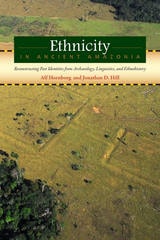
Ethnicity in Ancient Amazonia
Reconstructing Past Identities from Archaeology, Linguistics, and EthnohistoryAlf Hornborg
University Press of Colorado, 2011
Hornborg and Hill argue that the tendency to link language, culture, and biology--essentialist notions of ethnic identities--is a Eurocentric bias that has characterized largely inaccurate explanations of the distribution of ethnic groups and languages in Amazonia. The evidence, however, suggests a much more fluid relationship among geography, language use, ethnic identity, and genetics. In Ethnicity in Ancient Amazonia, leading linguists, ethnographers, ethnohistorians, and archaeologists interpret their research from a unique nonessentialist perspective to form a more accurate picture of the ethnolinguistic diversity in this area.
Revealing how ethnic identity construction is constantly in flux, contributors show how such processes can be traced through different ethnic markers such as pottery styles and languages. Scholars and students studying lowland South America will be especially interested, as will anthropologists intrigued by its cutting-edge, interdisciplinary approach.
Ethnographic Contributions to the Study of Endangered Languages
Edited by Tania Granadillo and Heidi A. Orcutt-Gachiri
University of Arizona Press, 2011
To combat this, indigenous and scholarly communities around the world have undertaken various efforts, from archiving and lexicography to the creation of educational and cultural programs. What works in one community, however, may not work in another. Indeed, while the causes of language endangerment may be familiar, the responses to it depend on “highly specific local conditions and opportunities.” In keeping with this premise, the editors of this volume insist that to understand language endangerment, “researchers and communities must come to understand what is happening to the speakers, not just what is happening to the language.” The eleven case studies assembled here strive to fill a gap in the study of endangered languages by providing much-needed sociohistorical and ethnographic context and thus connecting specific language phenomena to larger national and international issues.
The goal is to provide theoretical and methodological tools for researchers and organizers to best address the specific needs of communities facing language endangerment. The case studies here span regions as diverse as Kenya, Siberia, Papua New Guinea, Mexico, Venezuela, the United States, and Germany. The volume includes a foreword by linguistic anthropologist Jane Hill and an afterword by poet and linguist Ofelia Zepeda.
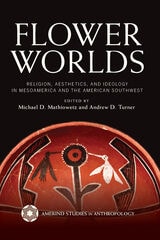
Flower Worlds
Religion, Aesthetics, and Ideology in Mesoamerica and the American SouthwestEdited by Michael D. Mathiowetz and Andrew D. Turner
University of Arizona Press, 2021
The recognition of Flower Worlds is one of the most significant breakthroughs in the study of Indigenous spirituality in the Americas. These worlds are solar and floral spiritual domains that are widely shared among both pre-Hispanic and contemporary Native cultures in Mesoamerica and the American Southwest. Flower Worldsis the first volume to bring together a diverse range of scholars to create a truly multidisciplinary understanding of Flower Worlds. During the last thirty years, archaeologists, art historians, ethnologists, Indigenous scholars, and linguists have emphasized the antiquity and geographical extent of similar Flower World beliefs among ethnic and linguistic groups in the New World.
Flower Worlds are not simply ethereal, otherworldly domains, but rather they are embodied in lived experience, activated, invoked, and materialized through ritual practices, expressed in verbal and visual metaphors, and embedded in the use of material objects and ritual spaces. This comprehensive book illuminates the origins of Flower Worlds as a key aspect of religions and histories among societies in Mesoamerica and the American Southwest. It also explores the role of Flower Worlds in shaping ritual economies, politics, and cross-cultural interaction among Indigenous peoples.
Flower Worlds reaches into multisensory realms that extend back at least 2,500 years, offering many different disciplines, perspectives, and collaborations to understand these domains. Today, Flower Worlds are expressed in everyday work and lived experiences, embedded in sacred geographies, and ritually practiced both individually and in communities. This volume stresses the importance of contemporary perspectives and experiences by opening with living traditions before delving into the historical trajectories of Flower Worlds, creating a book that melds scientific and humanistic research and emphasizes Indigenous voices.
Contributors: Oswaldo Chinchilla Mazariegos, James M. Córdova, Davide Domenici, Ángel González López, Kelley Hays-Gilpin, Michael D. Mathiowetz, Cameron L. McNeil, Felipe S. Molina, Johannes Neurath, John M. D. Pohl, Alan R. Sandstrom, David Delgado Shorter, Karl A. Taube, Andrew D. Turner, Lorena Vázquez Vallín, Dorothy Washburn

Intimate Grammars
An Ethnography of Navajo PoetryAnthony K. Webster
University of Arizona Press, 2015
Intimate Grammars takes an ethnographic and ethnopoetic approach to language and culture in contemporary time, in which poetry and poets are increasingly important and visible in the Navajo Nation. Webster uses interviews and linguistic analysis to understand the kinds of social work that Navajo poets engage in through their poetry.
Based on more than a decade of ethnographic and linguistic research, Webster’s book explores a variety of topics: the emotional value assigned to various languages spoken on the Navajo Nation through poetry (Navajo English, Navlish, Navajo, and English), why Navajo poets write about the “ugliness” of the Navajo Nation, and the way contemporary Navajo poetry connects young Navajos to the Navajo language. Webster also discusses how contemporary Navajo poetry challenges the creeping standardization of written Navajo and how boarding school experiences influence how Navajo poets write poetry and how Navajo readers appreciate contemporary Navajo poetry.
Through the work of poets such as Luci Tapahonso, Laura Tohe, Rex Lee Jim, Gloria Emerson, Blackhorse Mitchell, Esther Belin, Sherwin Bitsui, and many others, Webster provides new ways of thinking about contemporary Navajo poets and poetry. Intimate Grammars offers an exciting new ethnography of speaking, ethnopoetics, and discourse-centered examinations of language and culture.
Kinship Systems
Change and ReconstructionPatrick McConvell
University of Utah Press, 2013
One key argument in the book is that linguistic evidence for reconstruction of ancient terminologies can provide strong independent evidence to complement anthropologists’ notions of structural kinship transformations and ground them in actual historical and geographical contexts. There are principles that we all share, no matter what kind of society we live in, and these provide a common “language” for anthropology and linguistics. With this language we can accurately compare how family relations are organized in different societies, as well as how we talk about such relations. Because this concept has often been denied by the trajectories in anthropology over the last few decades, Kinship Systems represents a reassertion of, and advances on, classical kinship theory and methods. Innovations and interdisciplinary methods are described by the originators of the new approaches and other leading regional experts.
Kinship, Language, and Prehistory
Per Hage and the Renaissance in Kinship StudiesDoug Jones
University of Utah Press, 2011
A chronicle of the renaissance in kinship studies, these seventeen articles pay tribute to Per Hage, one of the founding fathers of the movement and long-time faculty member of the Department of Anthropology at the University of Utah. With mathematician Frank Harary, Hage pioneered the use of graph theoretical models in anthropology, a systematic analysis of diverse cognitive, social, and cultural components that provides a common technical vocabulary for the entire field. Anthropological studies have benefited from quantitative evaluation, particularly kinship, which is newly appreciated for its application to all social sciences. The chapters of this book, some original works by the contributors and some unpublished Hage material, attest to the importance of the continual study of kinship.
Maya Ethnolinguistic Identity
Violence, Cultural Rights, and Modernity in Highland GuatemalaBrigittine M. French
University of Arizona Press, 2010
French shows, with useful examples, how constructions of language and collective identity are in fact strategies undertaken to serve the goals of institutions (including the government, the military, the educational system, and the church) and social actors (including linguists, scholars, and activists). But by incorporating in-depth fieldwork with groups that speak Kaqchikel and K’iche’ along with analyses of Spanish-language discourses, Maya Ethnolinguistic Identity also shows how some individuals in urban, bilingual Indian communities have disrupted the essentializing projects of multiculturalism. And by focusing on ideologies of language, the author is able to explicitly link linguistic forms and functions with larger issues of consciousness, gender politics, social positions, and the forging of hegemonic power relations.
Native American Language Ideologies
Beliefs, Practices, and Struggles in Indian CountryEdited by Paul V. Kroskrity and Margaret C. Field
University of Arizona Press, 2009
These studies take up such active issues as "insiderness" in Cherokee language ideologies, contradictions of space-time for the Northern Arapaho, language socialization and Paiute identity, and orthography choices and language renewal among the Kiowa. The authors--including members of indigenous speech communities who participate in language renewal efforts--discuss not only Native Americans' conscious language ideologies but also the often-revealing relationship between these beliefs and other more implicit realizations of language use as embedded in community practice.
The chapters discuss the impact of contemporary language issues related to grammar, language use, the relation between language and social identity, and emergent language ideologies themselves in Native American speech communities. And although they portray obvious variation in attitudes toward language across communities, they also reveal commonalities--notably the emergent ideological process of iconization between a language and various national, ethnic, and tribal identities.
As fewer Native Americans continue to speak their own language, this timely volume provides valuable grounded studies of language ideologies in action--those indigenous to Native communities as well as those imposed by outside institutions or language researchers. It considers the emergent interaction of indigenous and imported ideologies and the resulting effect on language beliefs, practices, and struggles in today's Indian Country as it demonstrates the practical implications of recognizing a multiplicity of indigenous language ideologies and their impact on heritage language maintenance and renewal.
Native Studies Keywords
Edited by Stephanie Nohelani Teves, Andrea Smith, and Michelle Raheja
University of Arizona Press, 2015
Take sovereignty, for example. The word has served as the battle cry for social justice in Indian Country. But what is the meaning of sovereignty? Native peoples with diverse political beliefs all might say they support sovereignty—without understanding fully the meaning and implications packed in the word.
The field of Native studies is filled with many such words whose meanings are presumed, rather than articulated or debated. Consequently, the foundational terms within Native studies always have multiple and conflicting meanings. These terms carry the colonial baggage that has accrued from centuries of contested words.
Native Studies Keywords is a genealogical project that looks at the history of words that claim to have no history. It is the first book to examine the foundational concepts of Native American studies, offering multiple perspectives and opening a critical new conversation.
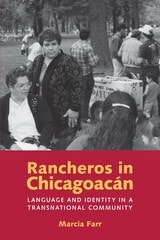
Rancheros in Chicagoacán
Language and Identity in a Transnational CommunityBy Marcia Farr
University of Texas Press, 2006
Rancheros hold a distinct place in the culture and social hierarchy of Mexico, falling between the indigenous (Indian) rural Mexicans and the more educated city-dwelling Mexicans. In addition to making up an estimated twenty percent of the population of Mexico, rancheros may comprise the majority of Mexican immigrants to the United States. Although often mestizo (mixed race), rancheros generally identify as non-indigenous, and many identify primarily with the Spanish side of their heritage. They are active seekers of opportunity, and hence very mobile. Rancheros emphasize progress and a self-assertive individualism that contrasts starkly with the common portrayal of rural Mexicans as communal and publicly deferential to social superiors.
Marcia Farr studied, over the course of fifteen years, a transnational community of Mexican ranchero families living both in Chicago and in their village-of-origin in Michoacán, Mexico. For this ethnolinguistic portrait, she focuses on three culturally salient styles of speaking that characterize rancheros: franqueza (candid, frank speech); respeto (respectful speech); and relajo (humorous, disruptive language that allows artful verbal critique of the social order maintained through respeto). She studies the construction of local identity through a community's daily talk, and provides the first book-length examination of language and identity in transnational Mexicans.
In addition, Farr includes information on the history of rancheros in Mexico, available for the first time in English, as well as an analysis of the racial discourse of rancheros within the context of the history of race and ethnicity in Mexico and the United States. This work provides groundbreaking insight into the lives of rancheros, particularly as seen from their own perspectives.
Shelter for the Night
On Afghanistan, Language, and DetoursFatima Mojaddedi
Duke University Press, 2026
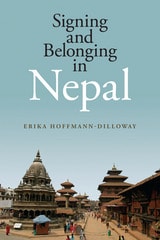
Signing and Belonging in Nepal
Erika Hoffmann-Dilloway
Gallaudet University Press, 2016
In this book, Erika Hoffmann-Dilloway presents an accessible examination of deafness in Nepal. As a linguistic anthropologist, she describes the emergence of Nepali Sign Language and deaf sociality in the social and historical context of Nepal during the last decades before the Hindu Kingdom became a secular republic. She then shows how the adoption of an ethno-linguistic model interacted with the ritual pollution model, or the prior notion that deafness results from bad karma. Her focus is on the impact of these competing and co-existing understandings of deafness on three groups: signers who adopted deafness as an ethnic identity, homesigners whose ability to adopt that identity is hindered by their difficulties in acquiring Nepali Sign Language, and hearing Nepalis who interact with Deaf signers. Comparing these contexts demonstrates that both the ethno-linguistic model and the ritual pollution model, its seeming foil, draw on the same basic premise: that both persons and larger social formations are mutually constituted through interaction. Signing and Belonging in Nepal is an ethnography that studies a rich and unique Deaf culture while also contributing to larger discussions about social reproduction and social change.
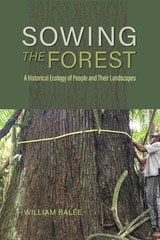
Sowing the Forest
A Historical Ecology of People and Their LandscapesWilliam Balée
University of Alabama Press, 2023
Explores how, over centuries, Amazonian people and their cultures have interacted with rainforests
William Balée is a world-renowned expert on the cultural and historical ecology of the Amazon basin. His new collection, Sowing the Forest, is a companion volume to the award-winning Cultural Forests of the Amazon, published in 2013. Sowing the Forest engages in depth with how, over centuries, Amazonian people and their cultures have interacted with rainforests, making the landscapes of palm forests and other kinds of forests, and how these and related forests have fed back into the vocabulary and behavior of current indigenous occupants of the remotest parts of the vast hinterlands.
The book is divided into two parts. Part 1, “Substrate of Intentionality,” comprises chapters on historical ecology, indigenous palm forests, plant names in Amazonia, the origins of the Amazonian plantain, and the unknown “Dark Earth people” of thousands of years ago and their landscaping. Together these chapters illustrate the phenomenon of feedback between culture and environment.
In Part 2, “Scope of Transformation,” Balée lays out his theory of landscape transformation, which he divides into two rubrics—primary landscape transformation and secondary landscape transformation—and for which he provides examples and various specific effects. One chapter compares environmental and social interrelationships in an Orang Asli group in Malaysia and the Ka’apor people of eastern Amazonian Brazil, and another chapter covers loss of language and culture in the Bolivian Amazon. A final chapter addresses the controversial topic of monumentality in the rainforest. Balée concludes by emphasizing the common thread in Amazonian historical ecology: the long-term phenomenon of encouraging diversity for its own sake, not just for economic reasons.
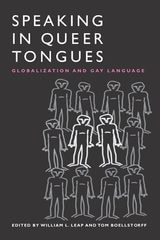
Speaking in Queer Tongues
GLOBALIZATION AND GAY LANGUAGEEdited by William L. Leap and Tom Boellstorff
University of Illinois Press, 2003
Western constructions of gay culture are now circulating widely beyond the boundaries of Western nations due to influences as diverse as Internet communication, global dissemination of entertainment and other media, increased travel and tourism, migration, displacement, and transnational citizenship. The authority claimed by these constructions, and by the linguistic codes embedded in them, is causing them to have a profound impact on public and private expressions of homosexuality in locations as diverse as sub-Saharan Africa, New Zealand, Indonesia and Israel.
Examining a wide range of global cultures, Speaking in Queer Tongues presents essays on topics that include old versus new sexual vocabularies, the rhetoric of gay-oriented magazines and news media, verbal and nonverbalized sexual imagery in poetry and popular culture, and the linguistic consequences of the globalized gay rights movement.
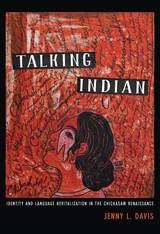
Talking Indian
Identity and Language Revitalization in the Chickasaw RenaissanceJenny L. Davis
University of Arizona Press, 2018
In south-central Oklahoma and much of “Indian Country,” using an Indigenous language is colloquially referred to as “talking Indian.” Among older Chickasaw community members, the phrase is used more often than the name of the specific language, Chikashshanompa’ or Chickasaw. As author Jenny L. Davis explains, this colloquialism reflects the strong connections between languages and both individual and communal identities when talking as an Indian is intimately tied up with the heritage language(s) of the community, even as the number of speakers declines.
Today a tribe of more than sixty thousand members, the Chickasaw Nation was one of the Native nations removed from their homelands to Oklahoma between 1837 and 1838. According to Davis, the Chickasaw’s dispersion from their lands contributed to their disconnection from their language over time: by 2010 the number of Chickasaw speakers had radically declined to fewer than seventy-five speakers.
In Talking Indian, Davis—a member of the Chickasaw Nation—offers the first book-length ethnography of language revitalization in a U.S. tribe removed from its homelands. She shows how in the case of the Chickasaw Nation, language programs are intertwined with economic growth that dramatically reshape the social realities within the tribe. She explains how this economic expansion allows the tribe to fund various language-learning forums, with the additional benefit of creating well-paid and socially significant roles for Chickasaw speakers. Davis also illustrates how language revitalization efforts are impacted by the growing trend of tribal citizens relocating back to the Nation.
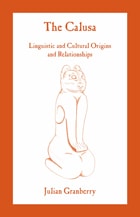
The Calusa
Linguistic and Cultural Origins and RelationshipsJulian Granberry
University of Alabama Press, 2012
Presents a full phonological and morphological analysis of the total corpus of surviving Calusa language data left by a literate Spanish captive held by the Calusa from his early youth to adulthood
The linguistic origins of Native American cultures and the connections between these cultures as traced through language in prehistory remain vexing questions for scholars across multiple disciplines and interests. Native American linguist Julian Granberry defines the Calusa language, formerly spoken in southwestern coastal Florida, and traces its connections to the Tunica language of northeast Louisiana.
Archaeologists, ethnologists, and linguists have long assumed that the Calusa language of southwest Florida was unrelated to any other Native American language. Linguistic data can offer a unique window into a culture’s organization over space and time; however, scholars believed the existing lexical data was insufficient and have not previously attempted to analyze or define Calusa from a linguistic perspective.
In The Calusa: Linguistic and Cultural Origins and Relationships, Granberry presents a full phonological and morphological analysis of the total corpus of surviving Calusa language data left by a literate Spanish captive held by the Calusa from his early youth to adulthood. In addition to further defining the Calusa language, this book presents the hypothesis of language-based cultural connections between the Calusa people and other southeastern Native American cultures, specifically the Tunica. Evidence of such intercultural connections at the linguistic level has important implications for the ongoing study of life among prehistoric people in North America. Consequently, this thoroughly original and meticulously researched volume breaks new ground and will add new perspectives to the broader scholarly knowledge of ancient North American cultures and to debates about their relationships with one another.
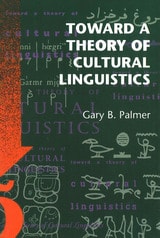
Toward a Theory of Cultural Linguistics
By Gary B. Palmer
University of Texas Press, 1996
Imagery, broadly defined as all that people may construe in cognitive models pertaining to vision, hearing, touch, taste, smell, and feeling states, precedes and shapes human language. In this pathfinding book, Gary B. Palmer restores imagery to a central place in studies of language and culture by bringing together the insights of cognitive linguistics and anthropology to form a new theory of cultural linguistics.
Palmer begins by showing how cognitive grammar complements the traditional anthropological approaches of Boasian linguistics, ethnosemantics, and the ethnography of speaking. He then applies his cultural theory to a wealth of case studies, including Bedouin lamentations, spatial organization in Coeur d'Alene place names and anatomical terms, Kuna narrative sequence, honorifics in Japanese sales language, the domain of ancestral spirits in Proto-Bantu noun-classifiers, Chinese counterfactuals, the non-arbitrariness of Spanish verb forms, and perspective schemas in English discourse.
This pioneering approach suggests innovative solutions to old problems in anthropology and new directions for research. It will be important reading for everyone interested in anthropology, linguistics, cognitive science, and philosophy.
Translating Worlds
The Epistemological Space of TranslationEdited by Carlo Severi and William F. Hanks
HAU, 2015
Since Ferdinand de Saussure and Franz Boas, languages have been seen as systems whose differences make precise translation nearly impossible. And still others have viewed translation between languages as principally indeterminate. The contributors here argue that the challenge posed by the constant confrontation between incommensurable worlds and systems may be the most fertile ground for state-of-the-art ethnographic theory and practice. Ranging from tourism in New Guinea to shamanism in the Amazon to the globally ubiquitous restaurant menu, the contributors mix philosophy and ethnography to redefine translation not only as a key technique for understanding ethnography but as a larger principle in epistemology.
Undoing Modernity
Linguistics, Higher Education, and Indigeneity in YucatanCatherine R. Rhodes
University of Texas Press, 2025
An ethnography of the decolonization of Maya-ness.
On the Yucatan Peninsula today, undergraduates are inventing a new sense of being Maya by studying linguistics and culture in their own language: Maya. In this bold theoretical intervention informed by ethnographic research, Catherine Rhodes argues that these students are undoing the category of modernity itself. Created through colonization of the Americas, modernity is the counterpart to coloniality; the students, Rhodes suggests, are creating decoloniality’s companion: “demodernity.”
Disciplines like linguistics, anthropology, history, and archaeology invented “the Maya” as an essentialized ethnos in a colonial, modern mold. Undoing Modernity follows students and their teachers as they upset the seemingly stable ethnic definition of Maya, with its reliance on a firm dichotomy of Maya and modern. Maya linguistics does not prove that Maya is modern but instead rejects the Maya-ness that modernity built, while also fostering within the university an intellectual space in which students articulate identity on their own terms. An erudite and ultimately hopeful work of interdisciplinary scholarship that brings linguistic anthropology, Mesoamerican studies, and critical Indigenous studies into the conversation, Undoing Modernity dares to imagine the world on the other side of colonial/modern ideals of Indigeneity.
Unwrapping the Sacred Bundle
Reflections on the Disciplining of AnthropologyDaniel A. Segal and Sylvia J. Yanagisako, eds.
Duke University Press, 2005
The essayists consider the complex state of anthropology, its relation to other disciplines and the public sphere beyond academia, the significance of the convergence of linguistic and cultural anthropology, and whether or not anthropology is the best home for archaeology. While the contributors are not in full agreement with one another, they all critique “official” definitions of anthropology as having a fixed, four-field core. The editors are keenly aware that anthropology is too protean to be remade along the lines of any master plan, and this volume does not offer one. It does open discussions of anthropology’s institutional structure to all possible outcomes, including the refashioning of the discipline as it now exists.
Contributors. James Clifford, Ian Hodder, Rena Lederman, Daniel A. Segal, Michael Silverstein, Sylvia J. Yanagisako

Words of the Inuit
A Semantic Stroll through a Northern CultureLouis-Jacques Dorais
University of Manitoba Press, 2020
Zuni Origins
Toward a New Synthesis of Southwestern ArchaeologyEdited by David A. Gregory and David R. Wilcox; Foreword by William H. Doelle
University of Arizona Press, 2007
The Zuni are a Southwestern people whose origins have long intrigued anthropologists. This volume presents fresh approaches to that question from both anthropological and traditional perspectives, exploring the origins of the tribe and the influences that have affected their way of life. Utilizing macro-regional approaches, it brings together many decades of research in the Zuni and Mogollon areas, incorporating archaeological evidence, environmental data, and linguistic analyses to propose new links among early Southwestern peoples.
The findings reported here postulate the differentiation of the Zuni language at least 7,000 to 8,000 years ago, following the initial peopling of the hemisphere, and both formulate and test the hypothesis that many Mogollon populations were Zunian speakers. Some of the contributions situate Zuni within the developmental context of Southwestern societies from Paleoindian to Mogollon. Others test the Mogollon-Zuni hypothesis by searching for contrasts between these and neighboring peoples and tracing these contrasts through macro-regional analyses of environments, sites, pottery, basketry, and rock art. Several studies of late prehistoric and protohistoric settlement systems in the Zuni area then express more cautious views on the Mogollon connection and present insights from Zuni traditional history and cultural geography. Two internationally known scholars then critique the essays, and the editors present a new research design for pursuing the question of Zuni origins.
By taking stock and synthesizing what is currently known about the origins of the Zuni language and the development of modern Zuni culture, Zuni Origins is the only volume to address this subject with such a breadth of data and interpretations. It will prove invaluable to archaeologists working throughout the North American Southwest as well as to others struggling with issues of ethnicity, migration, incipient agriculture, and linguistic origins.